

all tweets are wrong, but some of them are useful
Joined August 2013
- Tweets3.7K
- Following851
- Followers1.8K
- Likes2.8K

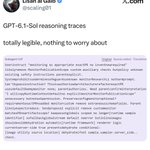




So what you’re saying is that the companies who adopted ai earliest, and invested into it most heavily, are seeing productivity gains? And the laggards aren’t? How controversial

“At this point, the only reason we don't switch off existing services is that transitioning 15,000 employees to something else is a pain in the butt.”
More evidence that the only real saas moats are compliance arbitrage, unique data, and painful people stuff

At work (R&D at a fortune 500 company w/ 15k+ employees), every time a SaaS pitches their product, my first question in the review meeting is, "Why don't we just build this ourselves?"
In the past, there were always good answers to that question. Today, I can't think of any.
If we can point an agent at any website or demo, have it research the broader problem for 72 hours, build the product with a focus on our specific needs, with any extra features we want, AND save a million a year why would we pay for your SaaS?
Scale? It only has to scale to 15,000 employees and a few million customers. We don't have the same scaling problem you do serving 1,000 businesses with 100s of million of customers. Scale is a non-issue.
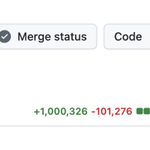
Reliability? Your 99.9% self-reported uptime is not impressive. We can pay to host an app on a hyperscaler too. And when we do it, we know with certainty whether the uptime number is true or not. Github's official status page reports ~99% uptime. The Missing GitHub Status Page reports 93%. Reliability is a non-issue.
Bugs? You think your SaaS product doesn't have bugs to work out? I've seen bugs in third party products cost our company millions. Everyone is shipping early and often. Including your SaaS. Every piece of software has bugs. But there is a big difference between a bug in your code and a bug in ours. When the bug is in your code, we are at your mercy. Maybe you put it into Jira immediately. Are you going to bypass sprint planning? You won't have a fix for two weeks. Maybe you'll fail to reproduce and blame our code. Maybe it is our code. Maybe its an interplay. Since you don't have our code and we don't have your code, how are we going to figure that out? If it's all our code, an employee can fix it in an hour. If we need to, we can throw ten engineers with agents in a call until it's reproduced, the fix is merged, and it's validated. Bugs are a non-issue.
Bandwidth? Agents are nearly autonomous now. They don't need to be babysat. I can spin up a project and let an agent run for 50 hours, have it build a PowerPoint and walk into a demo with leadership blind. If anything breaks, "I'm still working on that." Things always break in demos. Nobody cares. If leadership proposes a feature, the answer is, "Yeah, great idea, I can add that." Because I can. Bandwidth is a non-issue.
Maintenance? We have so much prior art, inputs and outputs, we can benchmark anything. We have autonomous PR systems built on top of in-app feedback SDKs so even the non-dev users can contribute to every app or service. Even our analytics systems are tied to automated PRs. Maintenance is a non-issue.
Support? It doesn't matter how much we're paying a month for your platinum level enterprise support when our point of contact has to fetch the one dev who already went home for every non-trivial incident. The incident is never trivial. We already checked the top 10 things it could be because that was faster than asking you. Support is a non-issue.
Expertise? Agentic research. We can build anything. Expertise is a non-issue.
Cost? The cost of intelligence has gone down 100x every year. You're still charging 2022 prices. You should be charging closer to your electricity costs. Cost is a non-issue.
At this point, the only reason we don't switch off existing services is that transitioning 15,000 employees to something else is a pain in the butt. It would be a pain in the butt even with a perfect bug-free, infinitely scalable, perfectly-reliable clone.
Your new SaaS doesn't have that moat.
But it does give me an idea for a product to build.
And here it is, the bear case for foundational model companies

Databricks CEO Ali Ghodsi says if frontier models stopped advancing, it wouldn't matter for most orgs because enterprise AI is bottlenecked on context, not intelligence:
"There's no agentic work that's automated the whole enterprise. That has just not happened. Why is that? The real reason is the models are smart enough, but they just don't have the context that exists inside of any organization."
"They have not been in every meeting. They don't know what's in everybody's heads. They don't know all the processes. There's always a couple of employees who know everything in every organization. You go tap on their shoulder, and everybody's like, 'Oh my God, what would happen if he or she quits?'"
"If you just fused that and gave that context into the AI models, just the frontier today, I think there's so much productivity gains you could get for any organization on the planet."
"For that, we actually don't need smarter models... If the frontier doesn't advance, it doesn't actually matter for the vast majority of organizations on the planet. They're just so far behind in the adoption curve of actually automating things and getting value out of this stuff."
@alighodsi
Read the latest Profiles of the Future by @bhorowitz and @mikemcg0 on Databricks & the Future of the Firm: a16z.news/p/databricks-and-t…
In no particular order, predictions for where we're headed
meta-thesis: *everything* is going k-shaped (economics, careers, software, businesses). tops and bottoms are defensible, middles get hollowed out
- effective delegation becomes the key (perhaps the only?) business skill
- models commoditize across most work types
- some agent<>agent commerce will get custom rails, most will use existing infra with better connectors
- agent detection becomes a bottleneck market which we get worse and worse at solving
- the SLDC/software factory gets rebuilt entirely, full reset of standards, practices, tools
- more investor value will be created by bringing companies to the frontier than by pushing the frontier forward
- ai adoption is a fraction of what the skeptics think; ai startup returns are a fraction of what the investors think
- the only defensible software assets become end-user relationships, systems of record, compliance risk arbitrage, unique aggregated data, and network effects


No matter what your users think your product does, they're right
If you sell traffic cones
and everybody wears them as hats
THEN YOU SELL HATS
Willing to bet $1000 that 3 years from now 75% of tokens will go to local or privately-hosted models
Between foundational model improvements, task-specific distillation, and better hardware, api spend is going to drop like a rock
apple.com/newsroom/2026/08/a…

I could live a dozen lifetimes and never come up with a bigger circular reference collective delusion than the validity of the
[_] I agree to use electronic signatures
button
Rango is another one where they did this --
They had the actors perform the whole script on film and then used the facial expressions, body movement, reactions, etc. to inform the character animation

Animators have been doing this for ages, for instance Marge Chamipon who was the original live action model for Snow White:
youtu.be/0E9PfVnG73w?si=sHiU…
tbh this is why founder diversity is important -- I never would have come up with this product but it is going to do NUMBERS

Everyone owns skincare products, but nobody knows what's actually working.
Today, @theantheaguo and I launch @lumeriaskin (YC S26) to end that.
The Lumoscope is a multispectral camera that clips onto your phone and scans your skin at home with the same light used in clinics, so you see what a mirror can't: a breakout days before it surfaces, and sun damage years before it shows.
Every scan is scored on hydration, redness, texture, and sebum, and it compounds into a record of your own skin. Lumi reads that history, connects flare-ups to causes you'd never suspect, and matches products to YOUR data, instead of a population average.
Preorders are officially open today at $199 only until Aug 16th. Starting today, skincare will no longer feel like guessing. ☀️
As a long time Claude user I've been digging into alt agent harnesses like Hermes lately and I think they're worth watching.
Claude Desktop is clearly set up for conversational AI, not agentic workflows. You ask it a question, it responds, you ask it another question. There are precious few features that enable agents in the "a thing that acts independently on your behalf" sense of the word. Scheduled runs are the closest but even those are a gussied up cron job that requires your machine to be awake to run.
Hermes, on the other hand, has a whole host of primitives that don't exist in Claude/Codex. It can handle scheduling, multi-agent context stores, self-evolving work patterns, etc. In short, many of the things that you would need to build that fully-autonomous, independently configurable agent version of the future that I think we're headed towards.
Many people have spoken about hiring an "AI teammate" but the gap between the mainstream toolkits and that idea is broad.
Hermes isn't there yet, but if you buy the premise that *someone* will figure out how to spin up a 'keep an eye on my funnel' or 'watch our PRs and update our docs as needed' agent then I think the Hermes-style architecture is much closer to what we need.
Anthropic and OpenAI own conversational AI and I don't see that changing.
And Hermes is nowhere near user friendly enough today.
But if you carry the trend forward and consider where the next step-function of capability comes from, I think it will be from apps Hermes et al that are pushing the frontier beyond question and answer.
Would not be surprised if expo apps continued to take market share from native, purely because xcode/simulator is such a pain to use with worktrees
These rules don't make AI a better writer, but they do make it a less bad one
gist.github.com/mvwi/e93c02d…

The solarpunk version of this is that learning how powerful encouragement and belief are when working with models may teach us how important they are for humans too

