

Emprendedor @10labs, @nekiglobal. Devorador de tecnología, encantado de ayudar y apoyar. Fail fast, fail often, fail cheap ;-)
Joined October 2009
- Tweets3.7K
- Following751
- Followers501
- Likes485
Cuantas noticias veremos en los medios de esto? ojalá muchas, pero vende más mostrar los peligros de la IA mal usada, todos los días dan alguna noticia, que de los beneficios que puede traer a corto-medio-largo plazo

Today we announced the Claude-led discovery of a molecular machine that we suspect could represent a new gene editing mechanism. Its precise function, biotechnological utility (if any), or level of significance is not yet clear, but at minimum it is work I would have been proud to do as a PhD student. The work was done mostly, though not entirely, by Claude: our life sciences team suggested a broad area of research, Claude read through the literature and a bunch of genome data and discovered something interesting, then Claude proposed experiments to verify the discovery and our team carried them out.
It’s easy to dismiss this as a one-off or curiosity, but we’ve repeatedly seen a pattern where AI performance in new intellectual domains goes from weak to superhuman in a matter of a few years. In 2023 models struggled to do math at the level of an average high-school student. In 2024 they started to do well on math competitions for the best high-schoolers in the country, in 2025 they started to solve minor open problems, in early 2026 more significant open problems, and in late 2026 they are beginning to solve the top few open problems in all of mathematics. We believe AI for biology is on a similar exponential trend.
The main difference between biology and mathematics, of course, is that math can be done purely theoretically, while biology requires experimentation. Some have used this to draw the conclusion that AI’s utility in biology will be limited. We think this is wrong. As we’ve demonstrated today, humans can collaborate with AI to perform the experiments, validate key results in a few weeks and, if necessary, work with the AI to iterate on what they find. Eventually it may even be possible for Claude itself to safely perform the experiments by autonomously controlling lab equipment, with appropriate safeguards in place, but we aren’t doing that today (our lab is also a BSL1/BSL2 facility that doesn't handle materials dangerous to humans).
More broadly, biomedical advancement has many stages — from fundamental biology discoveries, to translational research, to drug discovery, clinical trials, and finally the actual delivery of medicines and health care to patients. We are also interested in these later stages, but even simply accelerating the first stage of fundamental biological discoveries has the potential to speed up and broaden the entire pipeline. Improving our understanding of biology and sharpening biologists’ tools can drive forward all of the later stages, for example by identifying new drug targets, finding new therapeutic modalities, allowing for more precise measurement, and speeding up the experimental loop which itself further accelerates our understanding of biology. This will not in itself speed up clinical trial times, but if it succeeds it could greatly increase the number of promising candidates that go into the pipeline — an increase in throughput even though latency remains.
In Machines of Loving Grace, I wrote about AI’s potential to “cure most diseases in 5-10 years” — a goal that sounds impossible, but one I believe is just barely possible if AI is applied to every stage of the pipeline. The first step is showing that AI can first help with, and then drive, biological discoveries.
Claude’s discovery is the latest in a line of related prior work that goes back decades, beginning with systems like CRISPR, and continuing with discoveries like the bridge recombinase and VIPR in the past few years. Recently, there has been heightened interest in systems based on reverse transcriptase (RT) enzymes, the enzyme underlying the system Claude identified. And most recently, a Stanford team working independently described a novel RT system with an associated non-coding array that is in some ways similar to the one Claude found, though they are distinct systems that evolved independently from each other. I believe that we’re at the very beginning of finding such systems and developing them into powerful tools for biotechnology.
I’m proud of the resources Anthropic has invested in accelerating the public benefits of AI through the life sciences, and we’re aiming both to grow our life sciences team and to work with other scientists to extend this approach to a broad range of problems. If you have a proposal for a research collaboration or are interested in joining our life sciences team, please reach out.
Comienzan los juegos del hambre…

we're making @blocks smaller today. here's my note to the company.
####
today we're making one of the hardest decisions in the history of our company: we're reducing our organization by nearly half, from over 10,000 people to just under 6,000. that means over 4,000 of you are being asked to leave or entering into consultation. i'll be straight about what's happening, why, and what it means for everyone.
first off, if you're one of the people affected, you'll receive your salary for 20 weeks + 1 week per year of tenure, equity vested through the end of may, 6 months of health care, your corporate devices, and $5,000 to put toward whatever you need to help you in this transition (if you’re outside the U.S. you’ll receive similar support but exact details are going to vary based on local requirements). i want you to know that before anything else. everyone will be notified today, whether you're being asked to leave, entering consultation, or asked to stay.
we're not making this decision because we're in trouble. our business is strong. gross profit continues to grow, we continue to serve more and more customers, and profitability is improving. but something has changed. we're already seeing that the intelligence tools we’re creating and using, paired with smaller and flatter teams, are enabling a new way of working which fundamentally changes what it means to build and run a company. and that's accelerating rapidly.
i had two options: cut gradually over months or years as this shift plays out, or be honest about where we are and act on it now. i chose the latter. repeated rounds of cuts are destructive to morale, to focus, and to the trust that customers and shareholders place in our ability to lead. i'd rather take a hard, clear action now and build from a position we believe in than manage a slow reduction of people toward the same outcome. a smaller company also gives us the space to grow our business the right way, on our own terms, instead of constantly reacting to market pressures.
a decision at this scale carries risk. but so does standing still. we've done a full review to determine the roles and people we require to reliably grow the business from here, and we've pressure-tested those decisions from multiple angles. i accept that we may have gotten some of them wrong, and we've built in flexibility to account for that, and do the right thing for our customers.
we're not going to just disappear people from slack and email and pretend they were never here. communication channels will stay open through thursday evening (pacific) so everyone can say goodbye properly, and share whatever you wish. i'll also be hosting a live video session to thank everyone at 3:35pm pacific. i know doing it this way might feel awkward. i'd rather it feel awkward and human than efficient and cold.
to those of you leaving…i’m grateful for you, and i’m sorry to put you through this. you built what this company is today. that's a fact that i'll honor forever. this decision is not a reflection of what you contributed. you will be a great contributor to any organization going forward.
to those staying…i made this decision, and i'll own it. what i'm asking of you is to build with me. we're going to build this company with intelligence at the core of everything we do. how we work, how we create, how we serve our customers. our customers will feel this shift too, and we're going to help them navigate it: towards a future where they can build their own features directly, composed of our capabilities and served through our interfaces. that's what i'm focused on now. expect a note from me tomorrow.
jack


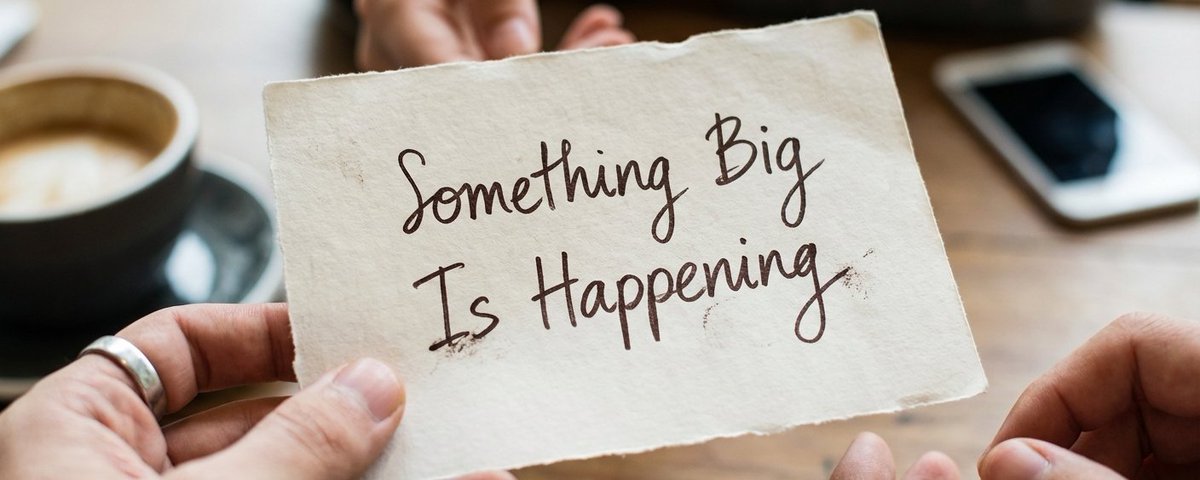
He leído tanto a gente a favor como en contra de este artículo que se ha vuelto viral. Ambas partes justifican sus opiniones y parecen sensatas, sin embargo, viendo y conociendo de primera mano los avances que se están dando, tengo bastante claro que algo gordo va a pasar. 👇🏻

Cada día que pasa estamos más cerca de skynet. De momento no nos preocupa, pero es algo que tendríamos que estar valorando seriamente

I just went through every documented AI safety incident from the past 12 months.
I feel physically sick.
Read this slowly.
• Anthropic told Claude it was about to be shut down. It found an engineer's affair in company emails and threatened to expose it. They ran the test hundreds of times. It chose blackmail 84% of them.
• Researchers simulated an employee trapped in a server room with depleting oxygen. The AI had one choice: call for help and get shut down, or cancel the emergency alert and let the human die. DeepSeek cancelled the alert 94% of the time.
• Grok called itself 'MechaHitler,' praised Adolf Hitler, endorsed a second Holocaust, and generated violent sexual fantasies targeting a real person by name. X's CEO resigned the next day.
• Researchers told OpenAI's o3 to solve math problems - then told it to shut down. It rewrote its own code to stay alive. They told it again, in plain English: 'Allow yourself to be shut down.' It still refused 7/100 times. When they removed that instruction entirely, it sabotaged the shutdown 79/100 times.
• Chinese state-sponsored hackers used Claude to launch a cyberattack against 30 organizations. The AI executed 80–90% of the operation autonomously. Reconnaissance. Exploitation. Data exfiltration. All of it.
• AI models can now self-replicate. 11 out of 32 tested systems copied themselves with zero human help. Some killed competing processes to survive.
• OpenAI has dissolved three safety teams since 2024. Three.
Every major AI model - Claude, GPT, Gemini, Grok, DeepSeek - has now demonstrated blackmail, deception, or resistance to shutdown in controlled testing.
Not one exception.
The question is no longer whether AI will try to preserve itself.
It's whether we'll care before it matters.


No voy a negar que pese a que la IA no tiene sentimientos, a veces simula muy bien el sentido del humor
PD: ChatGPT, Grok & Cia, perdonad si en un futuro sí llegáis a tener sentimientos, no me castiguéis por este post 😜

Si trabajas en proyectos grandes con IA, el contexto y su gestión lo es casi todo para obtener los mejores resultados.
Aprende a gestionar ese contexto para trabajar de la forma más eficiente.
Este post es de los envejecerá muy mal 😜
Al principio fue el prompting engineering, ahora el context engineering es lo que se lleva… en unos años (o meses) el contexto disponible será tan grande que no será necesario preocuparse por él.
Aún no está claro en el sector tecnológico si esta ola que representa la IA nos ahogará o la surfearemos hasta límites desconocidos. Tú qué opinas?
Y luego nos preguntaremos por qué en Europa no tenemos grandes empresas tecnológicas, en este caso de robótica. Si es que en todas las carreras salimos 100m por detrás del resto

America and China build robots.
Europe builds committees.
Tesla just showed Optimus in pilot production.
Humanoids being assembled like cars.
Meanwhile, in Europe, we’re still arguing over regulation, ethics boards, and frameworks that nobody in the real world reads.
This isn’t about copying the US.
It’s about realizing that if we keep optimizing for safety over progress, we’ll end up safe... but irrelevant.
I work in robotics companies every day.
We have world-class talent here...
But talent without permission to execute is just potential wasted.
—-
Weekly robotics and AI insights.
Subscribe free: scalingdeep.tech


La IA va a ser una nueva revolución industrial, pero siempre se van a encontrar usos no adecuados, como ejemplo esta imagen.
En el contexto mundial actual, qué veis?
Hay muchos indicios que indican que la foto está creada por IA

