




nanne retweeted

We’re not going to win by lobbying, plotting, or manipulating. We’re going to win by building, in the open, with the whole community!
Today, with @ggerganov we’re super excited to announce the release of llama.cpp v1, the first major fully stable version of the most used library to run AI models locally, meaning on your phone, your laptop, and your workstation.
It means you can own your intelligence for free, not send your data to anyone and be 100% in control, wherever you are in the world. It shows our commitment to support every hardware, platform and model type out there and makes AI distributed rather than concentrated in a few Silicon Valley orgs.
Huge thanks to the team, the long-time maintainers and every contributor who helped make this happen. Let’s build! 💛🧡💚

llama.cpp v1.0.0 is now available
huggingface.co/blog/ggml-org…


nanne retweeted

我现在确实没有一点对加密行业的悲观情绪。
记得我21年入行以来,一直听着的口号就是 “Long Bitcoin, Short the World” ,比特币作为世界下行趋势的对冲。而过去的 2025 年,如果真的有什么确实的观察的话,一定是世界在真真切切的下行。
邮件组里的密码朋克们出生于 1950~1975,长大于《守望者》中末日时钟滴答的年代。他们在一个国与国间分阵营对抗,地缘和意识形态冲突较今天远更激烈的时代中开始构想去中心化的协作系统或组织方式、赛博弱国家空间 和 无中介的储值/结算体系。或者说,比特币和区块链本就不是为昨日“搁置争议,共同发展” 的世界而准备,反是为今天和未来的世界设计的。

nanne retweeted

This is the Kimchi Premium of convexity.
Same underlying ETH. Two venues. Two fundamentally different volatility pricing regimes.
Onchain (Panoptic): AMM-native mechanics, DeFi-native flows, and compressed IV.
Offchain (Deribit): CLOB-based price discovery, institutional liquidity, and a mature volatility surface.
Buy vol onchain at ~42%. Sell it offchain at ~52%.
~10 vol points of apparent edge across two structurally segmented markets.
Panoptic's perpetual options work as intended. But functional mechanics don't guarantee efficient price discovery.
And that's precisely where the opportunity lies.
Buy convexity where it's cheap. Sell it where it's rich.
The Kimchi Premium, expressed through volatility rather than spot.


nanne retweeted

Yeah, much easier to cool in space.
~1300 W/m^2 is easily achievable for an aluminum radiator pointed away from the Sun, as it is mostly just seeing cosmic background radiation at ~3 degrees above absolute zero!
Solar panels generate ~250 W/m^2, so you should expect them to have ~5 times the area of the radiator. Most of the mass of the satellite is solar panels.

nanne retweeted

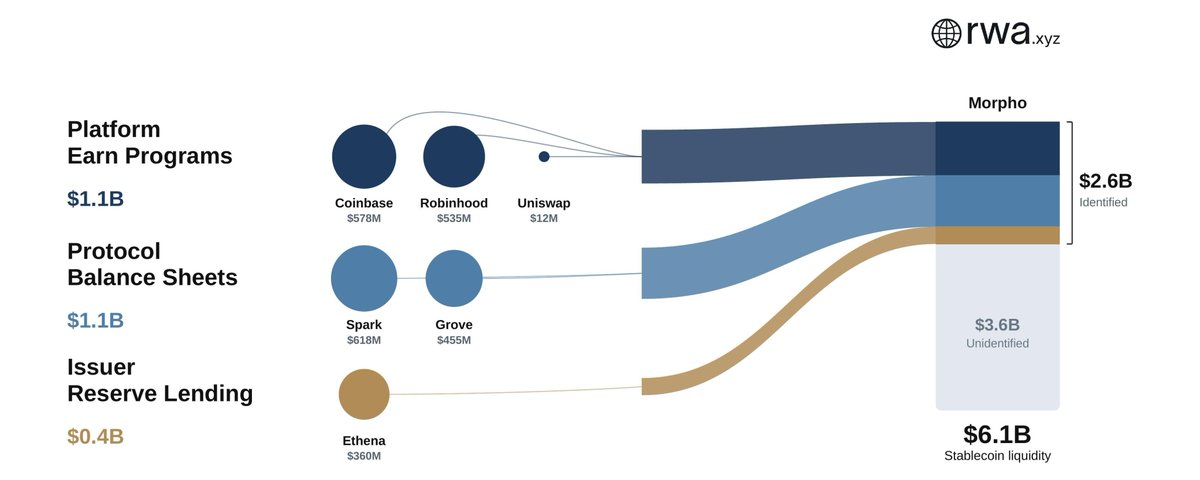
Today we are announcing OneBalance OES
A neutral, cryptographically verifiable off-exchange settlement network, designed to eliminate counterparty risk by keeping collateral in your control.
onebalance.io/blog/onebalanc…

nanne retweeted

🚨 PSA for anyone running a Linux server, node, or relay
CVE-2026-98432 is a critical Linux kernel bug (CVSS 9.8). Someone on the internet can send crafted TCP packets and take over your machine. No login needed.
Ubuntu and Red Hat haven't shipped a fixed kernel yet. Debian, SUSE, Oracle and Amazon have.
What to do today:
1. Check your kernel: uname -r
Fixed versions: 6.1.190+, 6.6.159+, 6.12.113+, 6.18.56+, 7.2.10+ or 7.3+. Below that, you're exposed.
2. If your distro has a fix, update and reboot.
3. If not, block the attack. It needs TCP packets with "IP options," which normal traffic never uses. One nftables rule drops them. Log what gets dropped so you can see if someone's probing you.
4. Turn off MPTCP unless you need it:
sysctl -w net.mptcp.enabled=0
Programs built with Go 1.24+ use MPTCP automatically, and that's how the known exploit gets in.
5. Make it survive a reboot, and check it still works after one.
If you run a Bitcoin node, a Lightning node or a Nostr relay, your machine is on the internet by design. Do this today.
Self-hosting is freedom. Patching is part of the job. 🛡️

nanne retweeted

"imagine you take a stock token and make it programmable, like software, what can you do?" - vlad
i discuss in the paper below what i believe is a genuinely new financial primitive that is now only possible because of stock tokenization
i present, Isolated Exposure Tokens


nanne retweeted

The coding interview is dead, at least for my team at Anthropic. I've seen enough to know that it no longer provides signal. I removed it from loops this month.
I have a spicy, optimistic take - I think there's an opportunity for junior engineers: felixrieseberg.com/hunger-be…


nanne retweeted

前两天发了条推文,问大家天天用 AI 写代码,到底怎么避免项目快速劣化成屎山。
原帖跑了九万多次浏览,评论区收到一百八十多条回复。
把大家的实战经历串起来看,能看清一个很有意思的现象:在软件工程里,复杂度的膨胀从来没有像今天这样迅速。
正如 @WEEXAILabs 调侃的那样,以前系统的屎山往往是几年积攒下来的祖传包袱,现在上午刚建完项目,晚上就已经能看到历史包袱的影子了。
@justmaocom 讲得很直接,现在用模型写代码,最麻烦的地方在于代码劣化的速度远远超过了人类肉眼审查的速度。
在过去,手写每一行代码都要耗费脑力和时间,这种体力上的约束,本身就是给系统设计踩刹车的过程。你写每一行函数、做每一次抽象,都会下意识地权衡开销。
但现在这个刹车不存在了。模型吐出几千行逻辑只要几十秒,一旦遇到报错,它天生倾向于选择阻力最小的局部路径往下走。
修一个小 Bug,它习惯在最外层包一层异常拦截;补一个小功能,它随手在模块下面塞几个功能重复的辅助函数。甚至像 @jkliu_tt 吐槽的那样,让模型删掉一段不需要的逻辑,它代码删了,反而在文档里自作聪明补上大段文字解释为什么不需要,代码还没整明白,文档先成了一团乱麻。
如果不加干预,整套系统很快就会被各种互相冲突的临时补丁填满。
面对这种代码膨胀,评论区里真正长期用 AI 跑工程的一线开发者,给出的解法惊人地一致:必须重新立起软件工程的防御堤坝。
第一道堤坝立在动手写代码之前,也就是架构与契约的收敛。
很多人的习惯是有了想法直接丢给模型去发挥,再让模型反过来给自己讲解。但 @icebeeeeeef 提醒,模型天然带着过度设计和过度优化的倾向,会把很多简单的问题搞得很臃肿。
真正能跑稳的项目,往往是人先想清楚系统的骨架。@litang0908 和 @RiverAi7z 都会要求在写代码前先写好详细的设计文档和接口规格,把数据结构和业务边界锁死,写代码只是照着规格填空。
为了防止系统野蛮生长,@eric_wu_666 建议在新增模块前加一道硬规矩:让模型必须先去检索仓库里现有的相似实现,并解释清楚为什么现有代码无法复用,拦截同一套业务长出好几个入口。
@XiaotiaoWang 同样强调入口处的纪律:一个状态只允许有一个所有者,一条业务只保留一条主链路。落地新实现的同时必须顺手把废弃的旧路径删干净,绝不在外面继续堆叠无意义的包装层。
第二道堤坝立在执行阶段,死死卡住每一次改动的范围。
@MotecJack 和 @openintentos 都提到把改动范围限制在很小的粒度,单次只改一个清晰的微小单元,严禁跨层随意引入依赖。
也有工程师开始利用多模型互相制约。@kopstill 会拆出两个独立的智能体,一个专心负责写代码,另一个全程卡在前面负责审查方案、任务和测试覆盖。彭博工程师 @PengZhangCom 分享的官方原生工程规范,核心也是通过极小粒度的任务拆解来压制模型的幻觉扩散。
第三道堤坝立在测试与验证环节。
模型写完代码之后顺手写出来的新测试,往往最具有欺骗性。新测试哪怕全部亮绿灯,也不代表核心逻辑没有被改坏。
@970426Com 给出的经验很管用:挑出一条真实用户每天都在跑的黄金业务主链路,每次改动之后无论如何都要跑一遍老路径,确保老功能没有被误伤。
@echo_vic 也提醒了一件很容易被忽视的陷阱:很多项目的测试之所以失效,往往是测试通过的范围被悄悄缩小了,实际只覆盖挑出来的那一小块。在验证跑不全的时候,必须在提交记录里写清楚哪一部分没测到。
最后一道堤坝,是面对失控时的果断止损。
大模型写代码如果开始跑偏,试图顺着它的错误逻辑去纠错,往往只会让补丁越叠越厚。
@DailyAIDev 给出的做法非常干脆:只要模型折腾了二十分钟没跑通、或者开始在文件底部堆积奇怪的补丁,立刻一键执行 git checkout 撤销所有改动。在 AI 时代,代码本身是最廉价的消耗品,换个思路重新给提示词,成本远低于帮模型擦屁股。
把这一百多条讨论通读下来,会发现一个规律:
这几年很多人在聊氛围编程,以为靠自然语言就能跳过枯燥的工程规范。
但现实给出的反馈完全相反。
AI 没有降低对系统设计的要求,它只是把机械打字的速度推到了极限。
当写代码的边际成本归零时,代码本身反而成了最廉价的副产品。真正拉开工程差距的,依然是那套最朴素的软件工程底子:怎么收敛设计、怎么切断冗余依赖、怎么在代码飞速膨胀的冲动面前把多余的枝桠剪掉。
工具跑得越快,懂得怎么踩刹车的人越稀缺。

nanne retweeted

推荐一个接私活必备的后台神器:shadcn-admin,管理后台的“壳”基本不用自己写了。
侧边栏、登录页、表格、全局搜索、明暗主题、响应式布局、RTL、无障碍适配……十几个页面直接做好,拿过来改业务就行。
技术栈也很舒服:Shadcn UI + Vite + TanStack Router + TypeScript,MIT 开源,GitHub 已经 1.4 万+ Star。
作者也说得很清楚:它不是脚手架,而是一套已经做好的成品界面,直接抄布局、拆组件、按需求改。
前端最浪费时间的,就是每接一个项目重新搭一遍后台壳子。这个能省一天是一天。
github.com/satnaing/shadcn-a…

nanne retweeted

Cloudflare 要自己做 CA 了~
Cloudflare 宣布将申请成为公共证书颁发机构(CA),已向 Chrome、Apple、Microsoft、Mozilla 四大根证书计划提交申请。
blog.cloudflare.com/cloudfla…
