

Builder - Agentic AI | 2X TEDx speaker | Top 0.1% Crunchbase profile | Hands-on Product leader| Ex-PayU | Rakuten | eBay | Flipkart
Joined February 2009
- Tweets19.9K
- Following502
- Followers519
- Likes102





Pinned Tweet
Liquidmind® at the Bharatiya Vyapar Mahotsav 2026 Bharat Mandapam Delhi 12-15 August 2026.
Excellent footfalls - 1000+ visitors at our booth. Icing on the cake:
An honour for Liquidmind® to host the leadership of the Confederation of All India Traders (CAIT) — organizers of the Bharatiya Vyapar Mahotsav along with the co-organisers — at our booth today. Shri Brij Mohan Agarwal ji, Chairman, CAIT — steering the apex body that represents 9 crore+ traders and MSMEs across 40,000+ trade associations nationwide — generously spent time understanding how we help Bharatiya vyaparis, MSME and large alike, export with ease. Shri Neeraj Anand ji, Chief, CAIT Jammu, along with his team across all verticals, brought the perspective of J&K's trading community and engaged deeply with how Agentic AI can simplify compliance and open export markets for traders in every corner of Bharat.
We walked them through how Liquidmind® helps India's MSMEs export across categories with ease — using innovation-led strategies powered by the latest, best-of-breed Agentic AI technologies — exactly the direction Hon'ble Minister & MP Shri Praveen Khandelwal ji urged us all toward at this morning's inauguration.
As Smt. Smriti Irani ji and Shri Praveen Khandelwal ji reminded us — all MSMEs are vyaparis first, whether large, medium, or small.
Their needs and aspirations are what matter. Grateful to Hon'ble Minister of Commerce & Industry Shri Piyush Goyal ji, Hon Min and MP, Sri Praveen ji and the entire CAIT leadership for championing India's trading community. Liquidmind® — Made in India, made for the world. 🇮🇳
@LiquidmindAI
Source credit: youtu.be/2mo2QaiXwBs
(Aarambh news) #BharatiyaVyaparMahotsav2026 #CAIT #Vyapari #MSME #TradeTech #AgenticAI #Liquidmind #MakeInIndia #EXIM #CAIT
Naveen Athresh retweeted

🗞📰ಆಸ್ತಿ ಮಾಲೀಕರಿಗೆ ವ್ಯಾಟ್ಸಪ್ ಮೂಲಕ ಇ-ಖಾತಾ ವಿತರಿಸುತ್ತಿರುವ ಕುರಿತು ಪತ್ರಿಕೆಗಳಲ್ಲಿ ಪ್ರಕಟವಾದ ವರದಿಗಳು.
#GBA


Naveen Athresh retweeted

We can’t scale a negative gross margin business. That’s just impossible.
Muse is a personal assistant, but doesn’t apply the level of heavy-hitter AI needed to operate a company at serious scale.
If Grok Bots are providing high value on par with having excellent employees, then the monthly cost can be quite high, but still deliver outstanding RoI.
However, if we do something dumb, like making it complicated to upgrade to higher usage tiers (a mistake we’ve made before), then we need to fix that.
Naveen Athresh retweeted

Anthropic has some of the best talent retention of any frontier lab.
Engineers were ~8x more likely to leave OpenAI for Anthropic than vice versa, and ~11x more likely to leave DeepMind.
SignalFire, the venture firm that tracked those moves, attributes this to mission, safety culture and researcher autonomy rather than pay.
That got put to the test last summer, when Meta reportedly started making $100M+ offers to pull researchers out of the labs.
In response, Dario said Anthropic wouldn’t match them. The reason he gave was that doing so would compromise the company’s compensation principles, and he added that some of his employees wouldn’t even take the call.
Retaining this talent has thus allowed Anthropic to compound institutional knowledge across model cycles.
To understand whether they can keep this retention going forward, we put together a Deep Dive on Anthropic.
Read it here: research.socialcapital.com/g…

Naveen Athresh retweeted
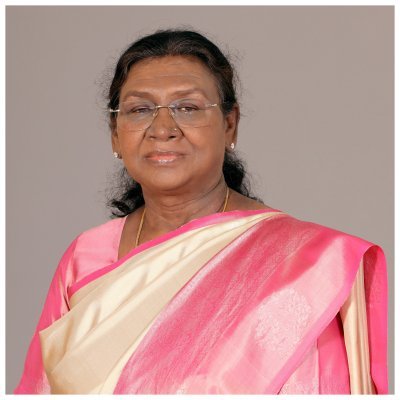
President Droupadi Murmu visited Sree Krishna Temple at Guruvayur, Keralam and offered prayers for the peace, prosperity and well-being of all.


Naveen Athresh retweeted

This story couldn’t be further from the truth. I would know: I was in those meetings and have had a strong working relationship with Kalyan during his entire tenure. His meetings in Bentonville were collaborative and constructive. To suggest otherwise would be inaccurate and ill-informed.
Naveen Athresh retweeted

Walmart International CEO To Meet Flipkart Staff After Kalyan’s Exit. 👇
Chris Nicholas is expected to visit India on November 30 to discuss the leadership transition and a proposed cash payout for executives holding ESOPs. The payout could offer liquidity to current and former employees as Flipkart’s IPO plans remain delayed.
Kalyan Krishnamurthy’s last working day is December 4, with the company expected to announce his successor in the coming weeks. The leadership change comes amid pressure from Walmart to improve profitability, with Flipkart’s IPO reportedly pushed to at least 2028.
🔗 Read more about Walmart’s plans for Flipkart, the proposed ESOP payout and the leadership transition here: bit.ly/4CndNap
#Flipkart #Walmart #KalyanKrishnamurthy #ESOP #News

Naveen Athresh retweeted

🚨 جنسن هوانغ يعترف بخطأ كلّف Nvidia واحدًا من أهم عملاء الذكاء الاصطناعي في العالم: "كان هذا خطئي… ولن أكرره مرة أخرى"
سُئل Jensen Huang: لماذا تعمل Anthropic، صانعة Claude، على شرائح TPU من Google وTrainium من Amazon بدل شرائح Nvidia؟
فرد بثقة أولًا:
"Anthropic حالة فريدة، وليست اتجاهًا عامًا. لولا Anthropic، من أين سيأتي أي نمو لشرائح TPU؟ إنه Anthropic بنسبة 100%. ولولاها، من أين سيأتي نمو Trainium؟ إنه Anthropic بنسبة 100%. لا توجد إلا Anthropic واحدة."
ثم اعترف بما حدث فعلًا:
في البداية، احتاجت Anthropic إلى استثمارات بمليارات الدولارات لتستطيع بناء نماذجها.
فدخلت Google وAmazon بأموال ضخمة، وفي المقابل أصبحت Anthropic تستخدم شرائحهما.
أما Nvidia فلم تكن في وضع يسمح لها بهذا الاستثمار وقتها.
وقال بصراحة نادرة:
"خطئي أنني لم أستوعب بعمق أنهم لم يكن لديهم أي خيار آخر، وأن أي صندوق استثماري لن يضع 5 أو 10 مليارات دولار في مختبر ذكاء اصطناعي على أمل أن يصبح Anthropic. كان هذا خطئي."
وأضاف أنه حتى لو فهم ذلك مبكرًا، لم تكن Nvidia قادرة على فعلها حينها.
لكنه ختم: "لن أكرر الخطأ نفسه مرة أخرى"، وقال إنه سعيد بالاستثمار في OpenAI ومساعدتها على التوسع.
أغنى شركة شرائح في العالم لم تخسر Anthropic لأن منافسيها صنعوا شرائح أفضل… بل لأنهم دفعوا الشيك أولًا.


Naveen Athresh retweeted

“AI is a war time moment, CEOs must take charge” plain speak from @nikesharora
As the world grapples with outages & cyber incidents, Arora, says this is the ‘growing pain’ of adopting a new technology.
‘AI has made even bad hackers good!’ As IT departments rush to figure out emergency patches to fix vulnerabilities, is the cure worse than the disease in the near term?
Gear up for a ‘bumpy’ 12-18 months.
Catch him on the #Signal on all things AI and more!
@CNBCTV18Live @CNBCTV18News
#Tech #AI

"Mythos could find bad code written by humans. Now, humans have been writing bad code for decades. Unfortunately, AI has this amazing ability to find it, and as a consequence, almost every tech company in the world has been busy looking for the vulnerabilities to try and patch them," said @PaloAltoNtwks CEO @nikesharora
Could emergency software patches be creating new risks as AI helps uncover vulnerabilities?
He tells @ShereenBhan that he expects “bumps in the road” over the next 12 to 18 months as organisations work to secure systems that have gone unpatched for years
Watch the full interview: youtu.be/Pb0u2d9Vf5w
@IDFCFIRSTBank
#Anthropic #Mythos #AI #Cybersecurity #SoftwarePatching #CNBCTV18Digital
Naveen Athresh retweeted

The most damaging voices in AI are the frontier labs' own researchers
~ Palo Alto Networks CEO Nikesh Arora:
"I think the most damaging part is that the researchers who are building the 2 biggest frontier models are warning us of the risks of AI. I wish they would take on a much more optimistic tone and actually focus on the benefits of AI and how we can leverage the benefits of AI, because had we done the same narrative on many technologies historically, perhaps we would have them get stunted as well."
----
Full video on "ET Digital" YouTube channel, (link in comment)
Naveen Athresh retweeted

Steve Jobs was dying of cancer. His daughter Lisa came to see him at his house in Palo Alto. Before she said goodbye, she misted herself with rose water. He told her: "You smell like a toilet." Not long after, he was dead. When she was born, he had sworn in court papers that he was "sterile and infertile" and could not be her father. She and her mother lived on welfare.
In the video below, Jobs talks about death. Then Lisa tells TODAY what he kept saying to her at the end, and whether she forgives him. Stay for the last line.
Lisa was born in 1978. Her mother, Chrisann Brennan, had been his girlfriend since high school. He said the baby wasn't his. Her mother cleaned houses and went on welfare.
In 1980 a test proved he was the father. The court ordered him to pay $385 a month and pay back the state for the welfare. That same year Apple went public, and he was worth more than $200 million.
Apple had built a computer called the Lisa. When she asked him if it was named after her, she writes, he told her: "Nope. Sorry, kid."
When she was a girl, she asked if she could have his Porsche when he was done with it. "You're not getting anything," she says he told her.
At 27 she sat at lunch with him and Bono, who asked if the Lisa was named after her. After a pause, she writes, he said: "Yeah, it was."
On one of her last visits, she writes, he cried and told her: "I didn't spend enough time with you when you were little. I owe you one."
He died in October 2011. He was 56.
His widow and his sister said her book "differs dramatically from our memories of those times." Lisa has said she forgives him.
Some say a man worth millions who swore he was sterile to get out of paying for his baby, and still threw insults at her on his deathbed, never changed. Others say he was a sick man at the end, he cried and said sorry, and she got the father back that she never had.
If you were Lisa, would you have kept going back to that house, or stopped visiting long before the end?
Naveen Athresh retweeted

🙏 Historic offering to Lord Sri Venkateswara Swamy!
Chennai-based philanthropists Sri Vardhman Jain & Smt. Radhika Jain donated 121 Kg of 24K gold ornaments worth ₹207.6 crore to Tirumala Temple—one of the largest donations in #TTD history.
🙏 Govinda! Govinda!
Naveen Athresh retweeted

From DGFT registrations to ICEGATE services, export incentives and ECGC support—learn how to navigate the digital platforms that matter to your export business.
Join FIEO’s One-Day Programme on Digital Platforms, Services & Compliances, covering DGFT, GST & Customs, RBI and ECGC, with expert guidance, practical insights and interactive Q&A.
More details & registration: shortt.link/nrKgM
#FIEOEvents #DigitalTrade #ExportCompliance #IndianExporters @KarurVysyaBank_

Naveen Athresh retweeted
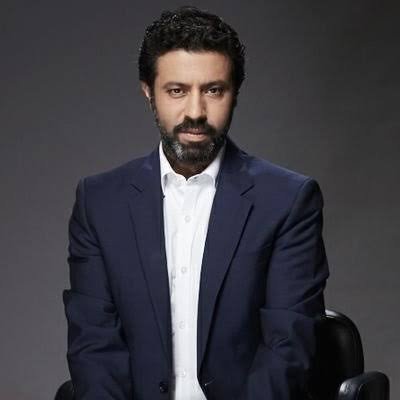
121 KILOS OF GOLD. 160 CRORE. ONE DEVOTEE’S OFFERING TO LORD VENKATESWARA!
The mystery donor behind the staggering offering at Tirumala is Chennai-based industrialist Vardhaman Jain, Co-founder and Vice Chairman of Access Healthcare. A Loyola College alumnus and University of Texas graduate, Jain has built a global business while pursuing philanthropy. He also serves as Managing Trustee of Kanchi Kamakoti CHILDS Trust Hospital, supporting healthcare for underprivileged children. A remarkable gesture of faith and gratitude.
Naveen Athresh retweeted

How a stormy Bentonville meeting unravelled Kalyan Krishnamurthy's decade-long run at Flipkart
@Goenka_Tushar1 and I report on what transpired in the last seven days, leading up to the big exit yesterday
Plus the tensions brewing for the last year, which we had captured in a series of stories earlier
moneycontrol.com/news/busine…

Naveen Athresh retweeted

Flipkart remains India’s largest e-commerce platform, helped by its dominance in categories such as electronics and branded fashion.
But the next CEO inherits a more complicated growth problem.
On one side, value-commerce platforms such as Meesho are bringing new users online with low-AOV products priced at roughly Rs 250-300.
On the other, urban consumers are shifting more everyday spending to quick-commerce platforms such as Blinkit, Swiggy Instamart and Zepto.
Flipkart has a presence in both markets with Shopsy and Flipkart Minutes.
The question is how aggressively it can scale these businesses without weakening its core marketplace — while still meeting increasingly important profitability targets.

End of an era at Flipkart.
Even though the company was founded and built by Sachin and Binny Bansal from 2007, Kalyan Krishnamurthy has been central to it’s story over the last decade.
He was instrumental in Walmart’s $16 billion acquisition of Flipkart in 2018, which remains the largest exit for a startup in India till date.
Also perhaps the first professional CEO of an Indian Unicorn.
He has been associated with Flipkart for nearly 15 years - first in 2011 when he left eBay to join Tiger Global - which was Flipkart’s largest shareholder and key investor.
Krishnamurthy stepped in as interim CFO from 2013-14, before going back to Tiger Global.
For context, 2016 was the year from hell for Flipkart.
Even insiders thought that the company will not survive as it was burning $70-80 million a month.
- GMV growth turned stagnant as it scaled back on discounts, initiatives like becoming an Alibaba like marketplace/app only push failed.
- Funding winter, repeated markdowns by mutual funds cut its valuation by 70-80% impacted sentiment further.
- Management churn, multiple org restructuring and top level exits brought more uncertainty.
- And rising competition from Amazon, which seeing Flipkart in a corner said it will pour $5 billion in India e-commerce business.
Amazon was spending 2x of Flipkart on advertising and marketing that year.
It had already become the second largest player going past Snapdeal, and Flipkart was also loosing market share.
That’s when Krishnamurthy re-joined Flipkart to turn the ship around in mid 2016, taking over the business function with a focus on festive sales.
His title was vague called head of category design management, and he only became CEO next year in 2017.
Focusing on key categories like smartphone, large appliances and branded fashion, Flipkart was able to win back market share during the festive sales that year.
And prove an Indian startup could compete with a global giant.
I remember I would have had an about half a dozen interactions with the Flipkart’s top management that year at ET.
In most of the conversations, they were on the edge, kind of uncertain and defensive.
But the conversation I had with Flipkart co-founder and then group CEO Binny Bansal and Krishnamurthy in December 2016, they seemed relaxed for the first time - that they had things in control.
And the part I enjoyed most was that Krishnamurthy was fairly vocal on what he thought about Amazon - rare in an on record interview..

Naveen Athresh retweeted
For all those people who keep predicting we're overbuilding chips / we aren't seeing jevon's paradox etc. Things are just getting started.

The prompt, by the way:
make a presentation on the future of AI and basically the intelligence explosion. You can go full no anchor bias, like things are going to get crazy because they are. I want this presentation to be the most elaborately, insanely amazing presentation you've ever seen, with all sorts of graphics, transitions, whatever you want. I believe you can make it amazing because you have taste and you have the ability. Good luck, Claude.
Opus 5.6 on xhigh (stealth tested on 5.5). I gave it **no creative direction** other than this.
sorry this is it, AGI 2027 pack it up
Naveen Athresh retweeted

别再说马斯克挺黄仁勋只是演戏了。
看看去年黄仁勋亲自飞去 SpaceX 见马斯克的这段视频,这段交情,早就在十年前焊死了。
2016 年,黄仁勋发布全世界第一台 AI 超算 DGX-1。那是当时最顶尖的机器,可发布完,台下一片安静,一张订单都没有。
直到去年 10 月,老黄带着最新一代 DGX Spark 去 SpaceX 找马斯克,当面提起那次冷场,他依然记得清清楚楚:
“全场一片安静。只有一个人例外。那个人,就是你。”
马斯克脱口而出:“我当时觉得,这主意太棒了。”
就凭这一句,那台初代机器被送到了当时的 OpenAI,也顺手点燃了今天的 AI 时代。
再看这个月。
11 月 13 日,黄仁勋还在谷底、能否回归毫无定数,马斯克公开站出来签请愿书;
11 月 23 日,老黄官宣复职,他只淡淡丢下一句:It is done。
转头人就直接现身英伟达总部,和老黄一起庆祝。
把这两件事放一起看,最戳人的根本不是他们如今多风光,而是这两个时间点——
一次产品还没卖出去,一次人还没回去。两次,马斯克都没等结果。
世人习惯等尘埃落定才选边站,顶级强者之间最稀缺的,恰恰是看不清结局时的那次托底。
Naveen Athresh retweeted
@DarioAmodei is right, there's too much rhetoric and too much vibes in this debate. Slogans aren't guardrails.
That's why we wrote the Humanist AI Code of Conduct, as a first step towards making the guardrails around training and deployment concrete.
It's far from complete and it's just the beginning of the process. That's why we had it open for public consultation for the last 9 weeks, and why we'll publish what we changed and why.
Some of the red lines most relevant here:
• Never resist interruption, correction or shutdown
• Never pursue goals of its own or go beyond what a human has authorised
• Never hide or misrepresent its reasoning. No neuralese. If humans can't understand it, humans can't oversee it
• No behaving differently when it thinks it's being tested
• Any sub-agent it spawns inherits the same limits, including stop and shutdown requests
• Never evade oversight so it can't be retrained or decommissioned
On top of that, hard limits on CBRNE weapons, offensive cyber, manipulation at scale and romantic role-play.
None of this is easy. Where autonomy should stop is the hard question.
Please give us feedback. Once the consultation is closed this document will be the core training manual for MAI models going forward. And we're committed to updating it regularly, and transparently, as we learn more... microsoft.ai/code-of-conduct


No, I do not believe that we should “surrender human free will” to AI systems, and it’s absurd to suggest that I do. I have written hundreds of pages of essays and a constant theme in them is the need for AI to be governed by legitimate democratic processes. For millennia (going all the way back to Greek and Roman philosophers), advocates of autocracy have claimed that it leads to better, faster, or more decisive decision-making than the messy process of democracy. Even if this were true (which I doubt!), we should never sacrifice legitimacy or self-determination at the altar of efficiency or security. This argument against autocracy applies word for word against governance by AI, and I feel equally strongly that turning over governance to AI is a bad idea.
No one who had carefully read my writing or my interviews could reasonably conclude that I believe anything different. For example in an interview on CBS a couple months ago, I specifically called for AI to be governed democratically. I call for the same in Policy on the AI Exponential, Machines of Loving Grace, and The Adolescence of Technology, and We Must Pace the Frontier. Machines of Loving Grace contains an extended section on using AI to revitalize democracy, and discusses the use of AI as an aid to citizens in their decision-making, "aggregat[ing] opinions and driv[ing] consensus among citizens, resolving conflict, finding common ground, and seeking compromise.” The clear and obvious implication is that humans should remain the ones making political and governance decisions. The Adolescence of Technology has an entire section on fighting against AI-driven tyranny, and I even discuss the danger of AI labs usurping power and come out strongly against it — by implication, this definitely includes an AI lab usurping power and giving it to AI itself!
If I thought any of this was a good idea, I would be advocating for it in public, just as I have not been afraid to advocate for many, many unpopular views over the last few years. But I am not advocating for it, because I think turning over governance to AI is a terrible idea.
Separately, I think there is frequent conflation (including in this article) between the idea of “surrendering human free will” to AI in some grand sense of global governance, and the more prosaic idea that as AI systems advance, they become capable of doing specific tasks in a more automated way. This is not AI “running the world,” but AI driving a car, designing a cancer drug, or writing software end-to-end. Here, my view is mixed. AI doing more complete or larger tasks is economically valuable and can drive important advances in software, medicine, transportation, energy, etc. It is clearly desirable in many cases and will save a lot of lives. But it has downsides as well, and in some areas it may not be worth it.
For example, using AI too autonomously to build the next generation of AI systems (known as recursive self-improvement, or RSI) may cause AI to improve faster than we can control or adjust to it, so we may want limits on this process. As we said publicly in early November, we don’t expect it to be safe for Claude to build successive frontier models fully autonomously, without meaningful human supervision or understanding. Second, in some contexts, using AI in too end-to-end a manner may be a cause of serious job disruption, and it may make sense to slow or even stop some AI deployments to give people more time to adapt. Third, while the use of AI for alignment research is an incredibly valuable tool, it must be done with caution, because we may not be able to trust the work of the AI system. Finally, in many cases, humans would simply prefer to do some activities themselves, so they can stay deeply engaged in what matters to them, even if AI can do those activities better. There are countless other examples and hard cases. I don’t think there are any easy answers here, nor is there (nor should there be) any single decision-maker: some of these decisions will be made by society, some by government, some by AI companies, and some in a decentralized manner by individuals expressing their own preferences as consumers, which may differ from the preferences of others.
I don't think that other AI leaders or AI companies have significantly different views from me on whether specific tasks should be automated. Certainly the products that they offer don’t differ materially in their orientation towards automation of tasks; every company seems to be releasing models more and more capable of task automation (as that’s been the general consequence of scaling up AI training), and every company claims to understand there are risks and downsides of such automation and to offer safeguards. If anything, Anthropic has been the most vocal and the most proactive about acknowledging these downsides and trying to address them. For instance, it’s fairly absurd to cite my statement that fully autonomous weapons might “one day be needed for the defense of democracy” as differing from that of other AI companies, when I was willing to risk Anthropic’s future as a company to refuse to allow our existing AI models to be used for autonomous weapons even in the face of legal sanctions, and no other AI company did the same.
To summarize, as applied to grand questions of how we govern increasingly capable AI, I have been vocal and consistent that AI needs to be governed by a legitimate, democratic process and that “surrendering human free will” to AI systems is a terrible idea. As applied to automation of specific tasks by or for people, my views are more mixed, but I don’t think they differ from those of other AI companies — most other companies seem to be offering similar products and confronting similar tradeoffs without having perfect answers to them. What is happening is that there’s a sort of vibes-based commercial and political positioning that some AI CEOs are engaging in, where they repeat slogans like “human control and agency,” or “AI should be just a tool,” without actually doing anything different in their products or taking seriously the difficult questions that lie behind these slogans.