

Big Picture,Great Powers,Military History,Technology & Poetry. De-mystifying China and its Army through primary source analysis. Can speak Chinese.
India
Joined March 2013
- Tweets38.7K
- Following95
- Followers1.2K
- Likes13.3K






Pinned Tweet
*Attack Plan of Qamdo by PLA*
The attack on Qamdo was conducted between 06-24 October 1950. It was the starting move of PLA’s entry into Tibet
Tibetan army strength was 7000. Attacking troops were more than two Divisions with 52 Division of 18th Army of 2nd Field Army being the main force
Sometimes a map is better than a thousand words..so in the same spirit ..See the plan of this attack in the map below..
Leave a question if any aspect is not understood. Will share a detailed article on this campaign shortly..


PLA Advance into Tibet : Qamdo Campaign
Excerpts from Lt General Yin Fatang’s book,”From Mount Tai to Mount Everest: The Memoirs of Yin Fatang (从泰山到珠峰 阴法唐回忆)”, Pages 83-103. Part I Covers,
1-Political Directions to PLA
2-Logistical Preparation for PLA Advance
3-Interesting bit about Yak Transport which became backbone of PLA Logistics
chinaview.in/p/pla-advance-i…

Three Chinese naval personnel defect to Taiwan’s Matsu island in 1966 with their boat. It leads to an aerial encounter worth reading. The incident shows,
1- Criticality of loss of face in Chinese scheme of things
2-Poor crisis response by Taiwanese side
3-Deception is in-built in PLA system of operations
4-The decision cycle was swift and decisive..meaning strategic judgement for such actions pre-existed and leadership was decisive
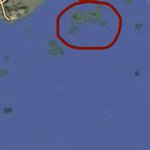
Adding a map for its location..


1-“For the advance into Tibet one had not only to follow the general principles but to prepare more things…material preparation…physical training and safeguarding the health of men and horses…military training, especially mountain warfare…learning Tibetan script and language..learning to live on the plateau.”
2-“Comrade Deng Xiaoping, the Southwest Military District and the 2nd Field Army put it as “politics weighs more than military affairs, supply weighs more than fighting”.
3-“Every part of the yak is precious: its meat can be eaten, its hide twisted into rope, its dung burned for fuel — it is the most valuable possession in the life of the Tibetan people.”
See more at attached tweet,
PLA Advance into Tibet : Qamdo Campaign
Excerpts from Lt General Yin Fatang’s book,”From Mount Tai to Mount Everest: The Memoirs of Yin Fatang (从泰山到珠峰 阴法唐回忆)”, Pages 83-103. Part I Covers,
1-Political Directions to PLA
2-Logistical Preparation for PLA Advance
3-Interesting bit about Yak Transport which became backbone of PLA Logistics
chinaview.in/p/pla-advance-i…
Since 20th Party Congress in 2022, China has seen three Defence Ministers..
Two defence ministers before Dong Jun..namely Wei Fenghe and Li Shengfu..were both members of Central Military Commission. They were both sacked for corruption and later given suspended death sentences in May 2026
bbc.com/news/articles/clypjx…
There were also talks in 2024 that Dong Jun was also under investigation..
aljazeera.com/amp/news/2024/…
But clearly he survived those investigations and still remains the Defence Minister..


Chinese Defense Minister Dong Jun held talks with British Secretary of State for Defence Wes Streeting during his visit to the UK at the invitation of the British side on Thursday. The two sides held in-depth discussions on bilateral and military-to-military relations, international and regional developments, and issues of mutual concern. They agreed to work together to implement the important consensus reached by the leaders of the two countries and promote the continued, healthy and stable development of military ties, according to China’s Ministry of National Defense.

200
PLA Advance into Tibet : Qamdo Campaign
Excerpts from Lt General Yin Fatang’s book,”From Mount Tai to Mount Everest: The Memoirs of Yin Fatang (从泰山到珠峰 阴法唐回忆)”, Pages 83-103. Part I Covers,
1-Political Directions to PLA
2-Logistical Preparation for PLA Advance
3-Interesting bit about Yak Transport which became backbone of PLA Logistics
chinaview.in/p/pla-advance-i…
Important outcome of trilateral meeting between Xi-Trump (&Putin). In my opinion, Xi may have actually meant these 4 points,
1-Mutual Respect—meaning US should stop it’s ‘propaganda’ on democracy versus non-democracy distinction vis-à-vis China and accept it as a distinct but equal system
2-Peaceful Coexistence-Bottom line is US should agree to not fight ‘any war’ over any issue..eg Taiwan.
3-Win-Win Cooperation-US & China should cooperate where they agree
4-Dialogue & Consultation-US & China should talk where they disagree

Xi Jinping's four points to Putin and Trump in their trilateral meeting, as per Xinhua:
"First, adhere to mutual respect. Mutual respect is the basic norm for interactions between major countries. China, Russia and the US have different national conditions, and none can change the other; this has been shaped by history, and it is also the independent choice of their respective peoples. The correct attitude is to respect each other, seek common ground while shelving differences, and pursue common development. It is necessary to respect each other’s sovereignty and territorial integrity, respect the social systems and development paths each has chosen, and respect each other’s core interests and major concerns. It is necessary to uphold the principle of non-interference in other countries' internal affairs and not interfere in one another's internal affairs. On major and sensitive issues concerning the other side, communicate in advance, put oneself in the other’s shoes, and act with prudence, and in particular, do not touch the other's red lines.
Second, adhere to peaceful coexistence. The 'Thucydides Trap' is by no means an inevitable destiny; the key lies in the choices made by the major powers. China, Russia, and the United States should be partners and friends, with no conflict and no confrontation, hold the bottom line of peaceful coexistence, and strive to overcome the 'Thucydides Trap'. China, Russia and the US are all major victorious countries of WWII, and should firmly safeguard the post-war international order, uphold the purposes of the UN Charter and defend the hard-won fruits of victory of WWII. Nuclear weapons are the 'Sword of Damocles' hanging over humanity’s head, and should be comprehensively prohibited and completely destroyed, ultimately building a world free of nuclear weapons. A nuclear war cannot be won and must never be fought. It is necessary to make every effort to prevent nuclear war, abide by the NPT, and maintain global strategic stability.
Third, adhere to win-win cooperation. The three countries have different development endowments and strong economic complementarity, and can leverage their respective strengths and meet each other’s needs. They should abandon the Cold War mentality, strengthen economic and trade cooperation, connect the respective strengths of a major resource country, a major manufacturing country and a major consumer country, jointly make the pie of cooperation bigger, and achieve mutual benefit and win-win results, and must not engage in 'decoupling and breaking supply chains'. Global energy security faces severe challenges, and the three countries can strengthen communication and coordination, jointly maintain the stability and smooth flow of energy industrial and supply chains, and maintain the security and stability of the global energy market.
Fourth, adhere to dialogue and consultation. Differences between major countries are inevitable; if there is no communication, suspicion will spread, and small frictions could also evolve into major conflicts. The three countries should maintain regular high-level exchanges, keep dialogue channels at all levels open, and establish crisis communication and prevention mechanisms, that misjudgments occur less frequently, disagreements remain manageable, and frictions do not escalate. At present, disputes of all kinds around the world continue unabated, and no sooner is one hotspot issue calmed than another flares up; the international community expects the major countries to do more to persuade for peace and promote talks. China, Russia and the US should continue to push the parties to conflicts to sit down and start talking, and resolve disputes through political and diplomatic means."
176
But what are the Chinese difficulties in agreeing to a status quo solution?
Ma Jiali, a respected Chinese Scholar on India, is quoted in Ananth Krishnan’s book “India’s China Challenge” as saying that “People will criticise Xi Jinping for mai guo (selling the country) if he gives up claims. The key question is how to educate people and handle national sentiment.”
He further adds, “With Russia, we started with joint research with Chinese and Russian scholars; I think that’s one possible way to start. You need, on both sides, scholars with enough authority to come out and say something. Maybe Indian and Chinese scholars need to take the lead to work towards the basis of a final settlement”
May read the full article tracing Chinese perspectives on India-China boundary dispute here,
chinaview.in/p/chinese-persp…

*Quoting From Views of Chinese Social Media Users*
A user who regularly comments on military issues and has excellent knowledge of terrain and history of border areas (as evident from detailed maps shared by him, professes that along India-China border areas, “one who controls, rules (实控为王).”
The user also mentions that ground control is often the most critical basis of settlement for negotiations of border problems.
Another user claims, “the current reality is that India controls [Arunachal Pradesh], while China controls Aksai Chin and the Karakoram Corridor—a status quo that is unlikely to change.”
On Tawang, this user claims that even if China is willing to make the Tawang area a demilitarised zone, it is unacceptable to India from a military perspective.
More here,
substack.com/@newreckk/note/…

Anoop Singh retweeted

Duality of Google Maps in & out of 🇮🇳
For strategic context &conflicting map alignments refer
1. teapaw.org/NatureDesai/status/207…
Infrastructure dictates leverage in the Eastern Himalayas as the race to frontier grabs headlines & civilizational states race to gain geostrategic advantage

ALT Google shows different map in India and outside India, above map shows both in one map for context.

Update:
My take on recent news on PLA setting up camps inside Indian territory!
There is a large area of differing perception in the upper sunbansiri frontier.
IA's perception of Border, IA LAC, PLA's perception of Border, SOI Border, Tribe's perception of border etc...
1/3

ALT Map showing frontiers in the Arunachal Pradesh, India
*Quoting From Views of Chinese Social Media Users*
A user who regularly comments on military issues and has excellent knowledge of terrain and history of border areas (as evident from detailed maps shared by him, professes that along India-China border areas, “one who controls, rules (实控为王).”
The user also mentions that ground control is often the most critical basis of settlement for negotiations of border problems.
Another user claims, “the current reality is that India controls [Arunachal Pradesh], while China controls Aksai Chin and the Karakoram Corridor—a status quo that is unlikely to change.”
On Tawang, this user claims that even if China is willing to make the Tawang area a demilitarised zone, it is unacceptable to India from a military perspective.
More here,
substack.com/@newreckk/note/…
On the subject of American Presidents or Media’s Praise for Indian Prime Ministers..got reminded of this excerpts of letter from Prime Minister Nehru to Indian Ambassador to China on 25 October 1950,
“It may interest you to know that after a period of an attempt at courting me as “the great leader of Asia”, those in authority in the United States, and this includes the State Department and the press, and the radio, have decided to “debunk” me.
Word has gone out to do so and, in the course of the last two or three weeks, there has been a succession of virulent attacks on me all over the States. Some of these attacks are quite hysterical. It appears to be a well-organised campaign.
Primarily, these attacks are due to our China and Korea policy. With American thoroughness, it is sought to be made out that I have no real influence in India and that in fact I stand rather alone in this policy, most of my colleagues being against it, that I am a kind of Hamlet in Indian politics, that I am an ambitious politician and not a statesman, and so on and so forth.
A week or two before this, I was supposed to be one of the topmost men of the age, a man whose goodwill was more important than any number of armies, whose influence was predominant in Asia, and so on and so forth.
It is interesting, from the psychological point of view, to study this phenomenon in America.
All this, of course, does not affect our policy in the slightest. It only confirms it, and shows the immaturity of American judgment and also the lack of stability in it.
I am informing you of this as it will help you to realise what the reactions of our policy are in the rest of the world. I am supposed to have ‘sold out’ to Mao through your bad influence. Panikkar is referred to as “Panicky”. It really is amazing how great nations are governed by very small people.”
Link -nehruarchive.in/documents/to…
2
201
The Tibetan Parliament-in-Exile writes to European Union heads of state regarding China’s Ethnic Unity Law which came into force on 1 July 2026, calling the law “one of the most serious threats to the survival of Tibetan identity in
recent decades”
Their letter also draws attention to Tibetan activist Lobga Rangzen’s self immolation outside the United Nations Headquarters in New York on 02 July 2026. Link to their letter here,
riigikogu.ee/wp-json/riigiko…
1/3
What is significant is the over-arching mandate of the law. Such as,
1-The families are responsible for instilling in their minor kids love for Communist Party (Article 20).
2-Mandarin has been made basic language to be used by educational institutions (Article 15).
3-Citizens of any part of China can seek employment or start a business in ethnic areas such as Tibet and Xinjiang (Article 25).
4-Religious organizations, religious schools, and places of religious activity are required to conduct publicity and education and adhere to the Sinicization of religion in country (Article 46).
1
2
489
It’s noteworthy that Wang Huning, a member of the Standing Committee of the Politburo of the Communist Party visited Tibet between 19-22 July 2026. Huning is responsible for Ethnic Work
As part of his visit, being called a “research tour”, he also went to Zanda county of Ngari prefecture opposite Ladakh. Link to report of his visit
en.cppcc.gov.cn/2026-07/23/c…
Prior to this his last known visit was in July 2023. When he had been reported as visiting Nyingchi opposite Arunachal Pradesh. Link to report of his visit
chinafile.com/photo/wang-hun…
If you can, please spot the difference between photos of both visits
2/3


1
171
The 10 Points are,
1-Principle of Active Defence. In essence Active Defence means, having well defined strategic interests and actively looking for opportunities to further own strategic interests.
Each opportunity is to be exploited to keep the enemy unhinged. This requires active preparation and readiness at all levels.
Active Defence remains core PLA strategy even though, overall PLAs aim against India is to maintain strategic stability along Western Borders.
1/5
10 Points on Chinese Military’s Approach Towards India
newreckk.substack.com/p/10-p…

7-Close Integration between Political, Military, Informational & Legal Aspects. Whether it is creation of Counties on territory of Arunachal Pradesh, Land Border Law, re-naming of places, stand-off along borders or crisis communication, all elements of national power in China, emanate from single source of Chinese Communist Party. Resultantly, there is high degree of coordination amongst elements of state power thus transmitting a highly coherent strategic message.
8-All Major Crisis along LAC have a Strategic Aim. PLA follows a dual leadership system. There decision making follows a party committee collegiate system at all levels. Essentially meaning that local initiative is also a collegiate decision in PLA.
Invariably it means that all major crisis have a top driven strategic aim often borne out of Strategic considerations.
For example, during 2020 Galwan Crisis, Chinese commentators cite China’s mobilisation and posturing as a response to India’s institutionalisation under Quad framework (starting 2018), creation of Ladakh Union Territory (2019) and completion of Durbuk-Shyok-Daulat Beg Oldie road(2020).
4/5
9-PLA View of India is a Subset of Overall Chinese View of India. This is again an important aspect to understand. In short, China views India at three levels which mixed aspects of cooperation and competition. These are :-
· Priority I - In its global strategy, China places India as part of its strategic competition with US. In general, the Chinese view is that India is a tool that US uses to constrain China in Indo-Pacific and Indian Ocean.
· Priority II - China sees Global South as a vehicle to advance its own vision for change the global order. As part of Global South, India is seen as an important member with whom cooperation is necessary for projecting unity and to advance Chinese global ambitions.
· Priority III - In the regional context, South Asia has comparatively lower priority for China due to poor connectivity, lesser trade and security issues in the region.
10-Chinese Assessment of Great Power Ambitions of India. Chinese commentators concede that India has great power ambitions and argue that a stable government and active diplomacy under present government have heightened India’s great power ambitions.
But what they are more concerned about is, heightened likelihood of inter-state crisis (with both Pakistan and China) thus requiring better strategy for crisis management by PLA.
5/5