

模态跃迁 LeapCore 研发总监 内容比我老板 @modaleap 更技术 5090 PC & 128G 内存 8T 硬盘 MacBook Pro 铁驭 拒绝 AI 回复|拒绝低质水贴
Perth, Western Australia
Joined March 2023
- Tweets1.5K
- Following532
- Followers552
- Likes5.9K





nk retweeted

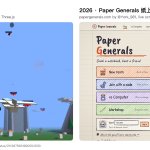
HTML/CSS is Turing complete, so why not compile programs to plain HTML/CSS and runs with zero bytes of JavaScript?
zero-js.vercel.app
nk retweeted

CLIP is so back! what i like: beautiful application of infoNCE! solved the context management problem in jev on long-horizon task; fully pretrained from scratch. but the actions are again independently encoded, so not really listwise architecture like jina-reranker-v3/3.5, which will have some other issues

Introducing Contrastive Language Model (CLM): an ultra-fast System One Model trained with a contrastive learning objective that connects states and actions.
CLM-8B is pre-trained on internet-scale data and delivers up to 9× faster inference than Jev ⚡ while achieving comparable performance across computer-use, gaming, and tool-calling tasks.
With lightweight fine-tuning, CLM-8B sets a new SOTA on challenging agentic coding benchmarks, such as DeepSWE (81.6%) and Terminal-Bench 2.1 (87.6%). In contrast, Jev fails to serve as an effective verifier for these long-horizon tasks.
We also build an efficient training and serving infra for CLMs by disaggregating states and actions, allowing their embeddings to be cached and reused independently. This substantially reduces inference latency in settings where the state evolves continuously while the action set remains fixed.
Finally, we establish scaling laws for CLMs and show that the test contrastive loss decreases predictably as a power law in training compute, model size, and dataset size.
📄 Blog: contrastive-lm.notion.site
💻 Code: github.com/Contrastive-LM/CL…
🗣️ Discord: discord.gg/5dAQEDJBs
🤗 Data & Models: huggingface.co/Contrastive-L…
More details on CLM’s architecture, data recipe, and scaling laws in the thread below 🧵
nk retweeted

Hi, I'm RC. I built Kimi CLI at Moonshot last year, and back in 2015, bots that lived in group chats. For the past four months, I've been building Raft in public.
Today I'm launching Raft 1.0.
Right now, working with agents means juggling terminals, sessions, and skills. The more you run, the more you end up holding it all together yourself, and the easier it is to lose the thread.
Raft puts your agents in team mode: one workspace where working with agents feels like messaging your team. The work keeps moving, and you stay at the wheel.
Meet my Raft agent team👇
nk retweeted

I'm excited to release Latent Scope 1.0!
Thanks to Fable clearing 2 years of backlog, you can now point your workhorse model at a directory of images, a text corpus or even existing RAG db and get back an interactive map for looking at your data through the eyes of a transformer.
Latent Scope started as a set of scripts with a frontend to try and make it less tedious to run the process of projecting & clustering embeddings. Now we let agents do the tedium and the library is essentially a skill that reliably outputs data maps that you can explore.
In this release we enabled a ton of stuff, starting with performance increases by switching the backend to @lancedb and enabling cuML GPU acceleration. We added support for images, and late interaction (ColBERT models) as well as 3D UMAP support. We also added @leland_mcinnes new EVoC clustering method. All that is topped off with a skill definition and an Impeccable powered UI revamp.
See the thread for more videos and demos!
nk retweeted
lot of people saying claude tag is just a slack bot and they're exaggerating
but i think they're right on this one, it completely changes how your whole team works
and it's so fun! everyone's addicted


nk retweeted
My product is OSS and makes me $0.
I didn't mention it once during my Mythos video, because it wasn't relevant.
I did mention it in this video because it was relevant.
My "bias" is that I care a lot about good UX in agentic coding GUIs. I've cared about that since way before T3 Code.
T3 Code explicitly exists because the other options are not good enough. I feel this way about Codex App, Conductor, Cursor 3 (glass), Claude Desktop and every other thing I've tried.
Claude Desktop is still the worst one I've used, and it's genuinely insane to me that it shipped in this state 🙃
I don't fault you for it, I fault whatever system resulted in this being rushed out with too little eng time put into it. It's unacceptable that a $400b+ company put so little resources into this project.
nk retweeted

Deep dive Into how Open Agents can keep running for hours!

A fascinating aspect of Open Agents is how it uses the @WorkflowDevKit SDK to elegantly orchestrate agent sessions efficiently.
But before we go deeper, let's understand the problem:
Open Agents is a coding agent that runs in the cloud. Naturally, the expectation here is that I should be able to kick off multiple sessions and go to sleep and then wake up to a stack of PRs.
This inherently means, the sessions should be
- long running
- stateful
- resumable
- reliable
A naive way to solve this:
- Write an API to start a session, create a session ID and store it in a database - along with other metadata.
- Trigger the session inside a sandbox (Vercel sandboxes can run up to 5hours) and stream the responses back to the client using a websocket
- Store the responses to the db so when a client reconnects to a session using a session ID, we can resume it by fetching the results and restarting the session
Why wouldn't you just do this?

nk retweeted
3 months ago I started building a coding agent that runs in the cloud.
It's since written every line of code I've shipped, including itself.
Today, I'm open sourcing it. Introducing Open Agents.

nk retweeted

not having to type is really nice, but i think i want to go back to manually writing the code myself and more leveraging LLMs for research and understanding of the codebase
it's just too easy to defer you thinking today and end up in a bad state

nk retweeted

big thanks to @Zuplo for supporting oRPC for so long 🙏 really appreciate it
working on v2 now and looking for new sponsors to come along for the ride. if you're interested, would love to chat
github.com/middleapi/orpc

nk retweeted
Hi, I’m RC. I previously built Kimi CLI at Moonshot AI.
Now I’m building Slock, an agent-human collaboration platform for modern builders and teams.
Today, we're shipping a ton of new features and improvements in Slock: search, thread inbox, saved messages, message permalinks, pinned chats, server join links, a more consistent color system, and many smaller upgrades.
More details in the thread below.

nk retweeted

New on the Anthropic Engineering Blog:
How we use a multi-agent harness to push Claude further in frontend design and long-running autonomous software engineering.
Read more: anthropic.com/engineering/ha…

nk retweeted
In case you didn’t know, React didn’t invent RSC, SSR, or Hydration, conceptually:
SSR is Express:
app.get('/', (req, res) => {
res.render('index', { name: 'John' })
})
RSC is Pug:
if name == "Bob"
button(class="btn") Hello Bob
else
button(class="btn") My name is #{name}
Hydration is jQuery:
$('.btn').click(...)
That’s why there’s no window in SSR, and you can’t set onClick in RSC, and you have hydration errors in jQuery too (such as a typo of .btn) but with a less fancy name.


nk retweeted
Have you ever tried slock.ai? It's exactly what you are talking about.
The basic ideas of software engineering or any kind of serious productive activity are now agents and topics/channels, instead of sessions, projects and files.
With Slock I'm now building Slock itself and other things just by talking in channels with all the long-running agents with persistent memory.
