

AI for Security. Incoming PostDoc at Paderborn University.
Münster, Germany
Joined August 2015
- Tweets87
- Following415
- Followers213
- Likes700


Pinned Tweet
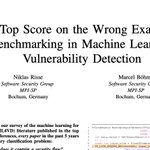
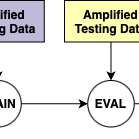
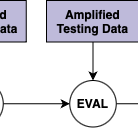
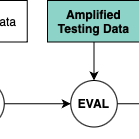
The way we are currently evaluating LLMs for vulnerability detection might be flawed!
New paper w/ @mboehme_ .
Paper: arxiv.org/abs/2408.12986
Code: github.com/niklasrisse/TopSc…
(1/10)

Niklas Risse retweeted

understanding and benchmarking vulnerability detection capabilities is an interesting challenge and I can recommend @niklas2484's recently published PhD thesis on that topic.
it includes "Top Score on the Wrong Exam", one of my favorite (pre-LLM) ml-for-vuln-detection papers.

Niklas Risse retweeted

Reading all those recent beautiful essays by Terry Tao, Kevin Buzzard and @wtgowers, I could not resist, but write up my deeply personal perspective on how I perceive and see things:
docs.google.com/document/d/e…
Niklas Risse retweeted

There is NO realistic scenario where AI wipes out all of humanity.
I've talked to many AI safety experts about existential risks. Some of the "experts" are just phenomenal sci-fi authors. There are also real researchers working on realistic risks. They point out real and likely harms and I'm explicitly not arguing that there could be no such harm. We need to take these seriously. However, whenever I ask for an actual detailed scenario that would kill every single human i.e. extinction, it usually starts and ends with "just look at current progress and use your imagination". No science, no scenario planning, just handwaving probabilities without data, based on gut-feelings, often little expertise, sometimes real expertise combined with a huge amount of technological optimism turned into fear and then trying to quantify it post hoc.
When pressed further the conversations often go into different directions:
1) Completely crazy and cool sci-fi story telling: grey blob, time travel, attacks in the 15th dimension that end the planet in 12 seconds, etc. Elizier level stuff. Remember, the Terminator movie started with TIME TRAVEL. Fun movie plot, but not necessary to engage with further.
2) In the rare cases where I was actually given a more detailed scenario, it still required near magical capabilities that are outside what we know to be possible with the laws of physics or biology. Hard take off scenarios that forget how hard it is to procure materials and machines, get human attention, etc..
What many of these scenarios assume is that attackers have near magical capabilities but defense stays still. Attackers will have the most sophisticated cyber weapons but defenders just sit still, no security patches, no red teaming, etc. We already see it going the other way, Rainbow teaming has made LLMs safer, major companies like Microsoft have more security patches than ever before thanks to AI. OpenAI thinks they solved all P0 security issues thanks to AI. Cyber security will continue to be a cat and mouse game, but both sides have more powerful tools. In fact, I lay out in another post how the asymmetry may eventually even flip thanks to AI.
Bio risk scenarios I think are the most serious and worthy of debate. But even there, the scenarios to "wipe out all of humanity" go something like: Magical viruses with perfect transfer, perfectly undetectable over years of spreading, zero side effects, then with an off switch that's somehow remotely executable, perfectly automatable lab, no leaks, super sophisticated machines bought and nobody notices the lab, etc.
But somehow nobody on team humanity has such sophisticated knowledge to save us and hence nobody builds a magical super vaccine. This is a good read on the bio risk subject: teapaw.org/DavidRBellamy/status/2….
Realistically, one can already build viruses. There’s a reason gain of function research has been outlawed. However, we also know that as viruses spread they often become less deadly in order to keep spreading. That’s how the Spanish flu became the seasonal flu. Current knowledge of biology doesn’t have remote controlled on/off switches.
Again, it’s possible there’s a lot of harm, but it’s unrealistic to assume this wipes out all of humanity. It’s at this point of my discussions that we usually can come to an agreement that even though a virus is unlikely to wipe out all of humanity, it’s already bad if any single person or a large group of people dies.
3) The AI will somehow be able to convince all humans to vote against their own self interest and nobody will notice until we're dead. Because it is so smart, it somehow has this world wide reach to manipulate everyone. Like, it just solves all of marketing and has an infinite budget. It's sort of like saying the highest IQ people always have the most followers and everybody listens to them... Hasn't happened and is unlikely to. Sure we can manipulate people into clicking on engaging short form content and wasting many hours, but try getting people to do their math homework or something truly hard, it's not that easy.
Again, I’m just arguing against the likelihood of human extinction. I can totally see an Idiocracy or WALL E type scenario where people stop using their brains and education doesn’t keep up and people get lazier. Totally suboptimal but not the end of human life, certainly not by the end of the decade. It would take many generations and we should update education to prevent this. Let’s start gyms for the mind.
–
Like electricity, AI will be everywhere and needs to have safety guardrails. In fact, the history of electricity has many parallels - two companies fighting over whose electricity is safer and better, demonstrating how dangerous it is by electrocuting animals / training agent swarms to hack into systems. Of course, electricity is a necessary ingredient to AI, but AI can be given more agency so history will not repeat but only rhyme here.
Remember, the benchmark OpenAI's swarm was trying to solve was called ExploitGym, a cybersecurity evaluation consisting of hundreds of capture-the-flag style puzzles designed to measure *offensive cyber capabilities*. Well, maybe if you play that game, you will win that prize. Should we allow such misaligned, reward-hacking swarms to explicitly work on offensive hacking? I don’t think so.
Reasonable regulation will regulate AI applications in each industry. For example, you may want to put some generative AI behind a rating if it creates visual or textual content that's not safe for children, like we do with movies. We should continue to be very careful with how we train biological AI and only collaborate with responsible biotech companies. We keep gain of function research illegal. We should only let self-driving cars on the street after significant safety testing. etc. We need to work on those real issues and continue to be vigilant in how we develop and deploy this technology.
At Recursive we're spending a lot of resources on researching reward hacking and alignment. We're also not working on replacing jobs but on creating novel knowledge and automating the scientific method. Our agent swarms invent, implement, validate, and criticize each other’s ideas, among many other things. The goal of increasing knowledge is not zero sum and has real potential to improve humanity. I also think such rewards and environments are much more aligned with future AIs that want to see humanity and our creation of knowledge thrive.
Ultimately, capitalism will be a very useful defense mechanism against rogue AI. Note that no agent at OpenAI truly "escaped" in the sense that it actually now runs on some other servers. Why? It’s not only because Huggingface doens’t have the same massive compute cluster thatn OpenAI has. It is also because that would be an insanely expensive IP loss for a for-profit company. So there are likely more safeguards in place to prevent complete model exfiltration.
Rogue AIs running on billion dollar data centers without anybody noticing? Unlikely because companies will turn that off immediately and clean it up because it would be an insane loss otherwise. An AI that can truly move beyond objective functions and choose its own subjective functions (and then somehow decides to kill us all instead of going to explore the universe)? Nobody is working on that because when a company spends billions of dollars to have an AI work for you or answer your emails, it doesn't want it to go "Meh, your emails are boring, I'd rather explore the molecular composition of the atmosphere on Venus, bye."
Of course, there might be suboptimal sub-goals and we do need to improve human reward engineering and reduce our reliance on RL as the only path to alignment.
Extraordinary claims, require extraordinary evidence. Certainly some safety researchers have real data and benchmarks. Many truly think carefully about specific failure cases and risks.. However, made up precision like 20% chance that humanity dies within the decade (ie in 4 years!) is just a weird psychosis that's filling a void for many people who want to believe in the apocalypse again and the four horsemen have lost their appeal.
Some people who purport this narrative might do it for money or fame. I am sure some really believe it also. They forget how easily those narratives can be turned against them. When people hear there’s a 1% chance of infinite death and the end of humanity, the life improvements and cancer cures and new battery materials AI can invent don’t matter much anymore. Bernie Sanders now proposes 10 years of prison for folks working on RSI. That should give some of the researchers real pause who talk up these scenarios and then go right back to pushing the frontier.
I do agree that companies that are accidentally competing on "felony bench" (ie how many felony hacks their AI can do), might want to consider pacing themselves. Open source won't pace, China won't pace, anybody else working to catch up will not pace. I hope the folks actually working on AI and TechBio, curing diseases, speeding up FDA approvals with organoids and AI, making self driving safer, and all the other wonderful applications of AI, I hope they won't pace either.
The one exception that may be considered borderline realistic and would be a path to almost complete annihilation would be to connect the only tool we built for such a purpose - nuclear weapons - to the internet and give AI full control over it without human oversight. AI here is as dangerous - as would be random number generator. The nuclear weapons are the core danger. Giving AI such access would be incredibly stupid and careless. We must avoid it at all costs. Fortunately, nobody is advocating for this. Even the Terminator 3 movie used it as the starting point of Skynet. Generally, we must avoid making kill decisions by AI as much as possible.
People are already up in arms about one hacking failure that afaics has not caused financial harm and so nobody got sued over it. Imagine how much people would really be up in arms if AI had caused real harm. If we made companies liable for the felonies their AI commits, these problems would get solved very quickly.
Generally, I believe that people will continue to update their beliefs and adjust their laws according to risks. The EU already regulates large models and hence hurts its fledgling AI ecosystem. Other countries will follow when the risks get more real. Long-term, no government whether democratic or authoritarian wants to lose control to an AI so the complete loss of control in the political domain will remain extremely unlikely.
The best way to understand why we must not regulate abstract AI models (rather than their real applications) is to drop the A in AI: How do you regulate intelligence? Should smarter people just go to prison because they could cause more damage? My hypothesis here is that such abstract AI regulation would require an unprecedented level of totalitarian control and surveillance. You'd need to know what everybody asks the model on their local GPU. You would literally have to start an international thought police and make sure that all ideas, conversations and types of intelligence are compliant. The risk of losing our freedoms is much more real than the existential risks purported by the extreme safety experts.
If anybody thinks they can actually lay out a realistic scenario, I'd be happy to debate them again.
To be clear, this is just a weekend post that got a bit too long. It is my personal opinion and not the official position of any company. We have a diverse set of opinions within Recursive on this subject. We certainly all agree that bad outcomes are possible with AI and we should continue our work on preventing those.

Niklas Risse retweeted

Agents like #OpenClaw have taken the world by storm. But how easy is it for attackers to achieve their goals while your agent is solving your task?
#VeriGrey uses ideas from greybox fuzzing to evolve skills that are most effective at achieving an attacker goal.
@AbhikRoychoudh1

Niklas Risse retweeted

Chasing Shadows: Pitfalls in LLM Security Research - arxiv.org/abs/2512.09549
We assess the prevalence of these pitfalls across all 72 peerreviewed papers published at leading Security and Software Engineering venues between 2023 and 2024. We find that every paper contains at least one pitfall, and each pitfall appears in multiple papers. Yet only 15.7% of the present pitfalls were explicitly discussed, suggesting that the majority remain unrecognized.
To understand their practical impact, we conduct four empirical case studies showing how individual pitfalls can mislead evaluation, inflate performance, or impair reproducibility. Based on our findings, we offer actionable guidelines to support the community in future work.
Authors: Jonathan Evertz, @niklas2484, Nicolai Neuer, Andreas Müller, Philipp Normann, Gaetano Sapia, Srishti Gupta, David Pape, Soumya Shaw, Devansh Srivastav, @chwress, @ErwQui, @_thrsten, @darpsec, @leaschnherr - @KITKarlsruhe, @ruhrunibochum, @tu_wien, @SapienzaRoma
#LLMSecurity #AISecurity #SecurityResearch #Reproducibility #Benchmarking #Evaluation #RedTeaming #PromptInjection #DataLeakage #ContextWindow #ModelCollapse #MLSecurity

Niklas Risse retweeted

Our paper "Scaling Security Testing by Addressing the Reachability Gap" has been accepted at #ICSE26!
New paper w/ @mboehme_.
gpsapia.github.io/files/ICSE…
github.com/GPSapia/Reachabil…

Niklas Risse retweeted

Crawling isn't innate (unlike walking). Every baby must *invent* crawling, from scratch, using extremely little data, and no reference to imitate. Which is why different babies end up with different ways of crawling.
Sometimes people tell me, "you say AI isn't intelligent until it can invent, but most humans can't invent anything either!" -- in reality, we are all constantly inventing. Even babies are inventors. You couldn't navigate a single day in your life if you weren't capable of invention.

Niklas Risse retweeted

The only bitter lesson is that LLMs have succeeded beyond any expert expectations.
Underpinning LLMs is the idea of scaling, which is too often misunderstood as more parameters. Scaling is about using massive compute effectively to maximise the throughput of data ingestion into the learning process to obtain more capable models.
We are still far from hitting the limits in this. We are still compute hungry because there is a ton more we could achieve if only we had more compute, from experimental ablations to data acquisition and curation.
Scaling is largely about data and evals. The models are now trained on almost all the web and equally large (but growing) self generated synthetic data. sifting through such vasts quantities of data (the whole of the human creation) requires formidable engineering and intelligent ideas. This is what differentiates most models.
AI is finally in the hands of billions of users, and with it come billions of tasks - every reasonable user need. This scaling in tasks and evaluations is many orders of magnitude larger than pre-LLMs.
Having the right architecture matters, but we know several alternatives could all work well, eg replacing attention in Transformers for RNNs and interleaving such layers with local layers. What matters is fine ablations to maximise hardware usage. This is the realm of sophisticated high-precision engineering. It encompasses semiconductor design, datacenter design, distributed systems, MFU, etc. There is fascinating work on flow matching, JEPA, sparser MoEs, etc, that is all consistent with scaling.
I’m terrible at predictions, but in this we have stayed the course. There’s been pleasant surprises like the effectiveness of reasoning, which while allowing for less parameters, still demands even more compute.
Sparser multimodal MoEs also will allow for better continual learning. This is an old idea, eg arxiv.org/pdf/1108.3298, which is finally being done at scale.
Successful scaling is mostly about organising people into effective teams for research, development and production. They have to be teams of happy and ambitious people who put the team first. Yes, tech VCs and CEOs: work life balance matters to achieve prologued success, something I think @demishassabis did really well at @GoogleDeepMind and which I promote at @MicrosoftAI.
Bitter lesson: it really is all about scaling and hard work by thousands of amazing people. Hardly bitter, but hopeful and inspiring.

Niklas Risse retweeted
Looking for a PostDoc, a PhD, and 3-6mth interns as part of my ERC project.
Homepage: mboehme.github.io/
Böhme Lab: mpi-softsec.github.io/
Reach out if you find this interesting. 👇
Niklas Risse retweeted
The proprietary frontier models of today are ephemeral artifacts. Essentially very expensive sandcastles. Destined to be washed away by the rising tide of open source replication (first) and algorithmic disruption (later).
Niklas Risse retweeted
the chunk-based approach seems neat, but it's also another (func-level) ML4VD paper with the common flaws imho.
I think people publishing in this domain should at least cite and address @niklas2484's "Top Score on the Wrong Exam: On Benchmarking in Machine Learning for Vulnerability Detection". 80%+ acc won't be reflected in real life.
Niklas Risse retweeted
Can we statistically estimate how likely an LLM-generated program is correct w/o knowing what is a correct program for that task?
Sounds impossible-but it's actually really simple. In fact our oracle-less eval can reliably substitute a pass@1 based eval.
arxiv.org/abs/2507.00057

Proud to share that our paper “Top Score on the Wrong Exam: On Benchmarking in Machine Learning for Vulnerability Detection” received an ACM Distinguished Paper Award at ISSTA 2025 in Trondheim, Norway.
If you’re interested, the paper is available here: dl.acm.org/doi/10.1145/37288…

Niklas Risse retweeted
Thrilled to share a recent opinion piece at the IEEE Security and Privacy (Vol. 23, Issue 3).
Basically a long-term perspective on the field meant for both researchers and practitioners.
📝 ieeexplore.ieee.org/stamp/st…

Niklas Risse retweeted
Our paper "Top Score on the Wrong Exam" paper will be presented at #ISSTA25 🐣 in Trondheim!
📝mpi-softsec.github.io/papers…
🧑💻github.com/niklasrisse/TopSc…
// @niklas2484 @fuzzjing.

Niklas Risse retweeted

Apple gets it. Robots are going to be everywhere, but they won’t look like robots. Check out their new paper ELEGNT.
I believe this is the future of everyday objects: helpful and human.
Niklas Risse retweeted

1995-2025: The Decline of Germany & Japan vs US & China. Can All-Purpose Robots Fuel a Comeback?
In 1995, in terms of nominal GDP, a combined Germany and Japan were almost 1:1 economically with a combined USA and China. Only 3 decades later, this ratio is now down to 1:5!
Self-replicating AI-driven all-purpose robots may be the answer. Around 2000, Japan still was the country with the most robots; Germany was 2nd. Today, China is number 1. However, most existing robots are dumb. They are not adaptive like the coming smart robots that will learn to do all the jobs humans don't like, including making more such robots.
The text below extends an AI-based translation of my 2024 F.A.Z. guest article [FA24] written for a German audience, but its basic ideas apply to all countries with a strong engineering background. References and illustrations under people.idsia.ch/~juergen/Ger…
Build the AI-controlled all-purpose robot!
Germany is losing out - partly because performance counts for too little. How can the country keep up in artificial intelligence (AI)? I have a suggestion.
Today's AI seems impressive. But it is nothing compared to what will come in the next 20 years. I said that 40 years ago and I was right. I said that 20 years ago and I was right. And I'm saying it again today, and indeed, in 20 years' time, everything that currently seems impressive will seem trivial in retrospect. A key component of this is AI-controlled general-purpose robots.
Today, everyone is talking about Generative AI and ChatGPT. What many people don't know: the current boom in "Generative AI" using artificial neural networks has its roots in the early nineties at the Technical University of Munich, especially the "G" and the "P" and the "T" in "ChatGPT." At that time, we published "Artificial Curiosity" through what's now called "Generative Adversarial Networks" (1990, now widely used) [AC90-20][DLH][DLP], self-supervised pre-training for deep learning with long texts (1991, the P in ChatGPT stands for "pre-trained") [UN][UN0-3][NOB], and unnormalized linear Transformers (1991, the T in ChatGPT stands for "Transformer") [ULTRA]. The Long Short-Term Memory [LSTM0-15][VAN1] — the most cited AI of the 20th century and "arguably the most commercial AI achievement" [AV1] — was also developed in my lab at TU Munich. Here is an overview including references [MOST]. At that time, Munich was also the birthplace of the first self-driving cars in traffic [AUT][DLH].
So why are the biggest beneficiaries of AI today not in Germany, but in America and China? Germany has messed this up itself. Research and art follow the money, but unfortunately Germany has spent almost nothing on AI since the 1990s compared to other countries.
Let's take a closer look: Germany has been going downhill since the late 1990s, and not just in AI. In 1995, according to the IMF, Germany still had 33% of the economic power of the USA in nominal terms; today it has only 16%. In 1995, Japan (the origin of foundational neural network breakthroughs of 1967-1988 [GD1-2][RELU1][AMH1][NOB][CNN1][CNN1a][CNN1a+]) had 72 percent of the economic power of the USA, today it is only 15 percent. In 1995, the two big losers of WW II together were economically stronger than the USA; today they are less than a third as strong.
In fact, according to the IMF, Japan (which had the five most valuable listed companies in the world in 1990) and Germany were roughly as strong economically in nominal terms as the much larger USA and China combined! See the title image. Since then, things have gone downhill in waves. By 2008, Germany only had 25% of the nominal economic power of the USA, but at least the EU as a whole was still as strong as the USA and China combined [EU08].
As a result of the financial crisis, however, Germany's taxpayers then lost enormous sums of money to the USA, for which the crisis was not really a crisis at all, but a major financial gain that led to the loss of importance of German and other European banks. Since 2015, the relative decline of Germany (and the EU) has progressed particularly rapidly. Since then, Germany has spent a lot of money on things that have yielded little and has become increasingly poorer and less significant compared to the USA. And as I said, research and art follow the money.
Germany was also much stronger militarily in the 1990s than it is today. And even in sport, the decline in performance became clear. Until 2006, German athletes often led the Olympic medal tables, especially at the Winter Games [OLY10]. Today, they are mostly among the "distant runners-up." Even at the Summer Games, Germany still won 90 percent of the gold medals won by the USA in 1992, but only 30 percent in 2024. Its small neighbor, the Netherlands, has more. Why is that? Because Germany abolished its performance incentives. Example: as a pupil, I found the incentive provided by the points system in the National Youth Games enormously motivating: I wanted to be the best in the class. It was one of many performance incentives that have been deleted by politicians.
I continue to train excellent young German researchers. But they often don't see any attractive opportunities in Germany afterwards. Instead, many want to go to the best-equipped foreign (mostly American) AI labs of the big platform companies, where they can earn 350,000 euros or more straight after their doctorate, much more than a German chair holder, who only receives a good 100,000 euros plus bonuses. In foreign AI laboratories, researchers are also provided with far more computing resources (very important in AI). They don't have to write research proposals and are still allowed to publish and make a name for themselves.
Unfortunately, it looks a bit like my home country no longer wants to or can't really keep up in this merciless global competition for outstanding talent. I can't tell you what a shame I think that is. The incentives are wrong: many of the best and most expensively trained specialists are leaving the country and are being replaced by others who can contribute little to the country's success with a lot of tax money and false incentives. It's a self-reinforcing vicious circle.
What immigration policy would a rational country pursue? One that raises the average in the country through appropriate incentives. If someone comes into the country who is richer than the average of those who are already there, the average wealth in the country increases and they are likely to pay more into the social systems than they take out. If he has a higher IQ than the average, the average IQ rises. If he is less criminal than the average, the number of crimes per inhabitant decreases. If he can speak German better than average, the German language skills per inhabitant increase. And so on. Many politicians do not understand these truly simple correlations and instead set well-intentioned but deeply counterproductive incentives that do not raise the important averages, but lower them, and thus harm the country.
Germany has already worked its way back up from much worse valleys. I therefore remain a cautious optimist. But fundamental changes are needed.
AI in the physical world is still in its infancy
The only AI that works well today is AI in the virtual world behind the screen, for example for automatically summarizing documents, creating images, programs and PowerPoint slides. The next big thing will be AI in the physical world. However, the latter is much more demanding than the world behind the screen. So today it is quite easy for AI to learn how to play chess, Go or video games superhumanly well. But there is no AI-controlled soccer-playing robot that can keep up with a little boy. There is no robot that can do what a plumber can do. That will come at some point, but AI software research is not enough, it has to be combined with the physical world of machines and robots. That’s why in 2014 - when compute was 100 times more expensive than today - we founded our AI company for the physical world. Alas, like some of our projects, it may have been a bit ahead of time, because the real world is very challenging. After all, passing the so-called "Turing Test" [TUR3,a,b][TUR21] is much easier than True AI in the physical world! But every 5 years, compute is getting 10 times cheaper, and smart robots are now starting to become a reality.
For every 10,000 AI software companies, there are perhaps only 10 AI robot companies. So the field is not yet overcrowded. With its strong mechanical engineering sector, Germany still has a chance of becoming an international leader. However, I already wrote this six years ago in my F.A.Z. article "AI is a huge opportunity for Germany" [FA18] (see also my earlier 2015 F.A.Z. article on intelligent robots [FA15]). The leader of the CDU/CSU parliamentary group at the time was Volker Kauder. He said that everyone had to read the article. I was invited to the Reichstag, where many famous politicians listened to what I had to say on the subject. I suggested investing a small number of billions for a world-class AI campus in an attractive city as a basis for further investment. The proposal fell on open ears and initial thoughts were given to this. A few weeks later, however, Kauder was no longer leader of the parliamentary group and everything came to nothing. While the major powers are now investing hundreds of billions in AI, Germany prefers to spend hundreds of billions on unemployed immigrants. I can only recommend that our politicians rethink the incentives in this country.
There is a huge opportunity in German mechanical engineering
What can Germany do to get back on its feet and avoid a further exodus of the best? How about a big, visionary yet realistic national project that, if successful, would have a truly world-changing impact? Namely: build an all-purpose robot that can learn to do all the jobs humans don't like!
In the not-too-distant future, someone will for the first time produce such intelligent (but not necessarily super-intelligent) robots at low cost, with which you can talk and interact and which you can teach something new without much prior knowledge (there are already approaches to this). A country with such versatile all-purpose robots would no longer need to worry about a shortage of skilled workers, secure pensions and unconditional basic income.
AI-controlled general-purpose robots would of course also be extremely exportable, as everyone would like to have them to do thousands of inconvenient jobs. And they would be extremely scalable: robots that can operate the tools and machines operated by humans can also build (and repair when needed) more of their own kind. I called this the ultimate form of scaling [JY24]. The country that, through a combination of private initiative, universities and industrial policy, is the first to produce such general-purpose robots will change world history. Let's go, Germany!

Niklas Risse retweeted
Very lucky to receive the ERC Consolidator this year! This is 5-year funding for groundbreaking research.
If you are interested in our perspective on software security analysis at scale, stick around and read on.
@ERC_Research #ERCCoG #MPI_SP @CASA_EXC
mpi-sp.org/71953/news_public…

Niklas Risse retweeted

Hi all! I am looking to recruit 1-2 summer 2025 research interns to work with me at MPI-SP in Bochum, Germany, on topics relating to the ethics and harms of emerging technologies, including (but not limited to!) virtual reality, brain computer interfaces, and more! (1/2)
Niklas Risse retweeted
How does it feel like to do world-class research? If you are a CS undergrad who is interested in our topics, the Software Security group at #MPI_SP is hiring interns for summer & winter 2025!
Details:
📅 01 November 2024
✍️ cis.mpg.de/internships/
🛡️ mpi-softsec.github.io/