





Pinned Tweet
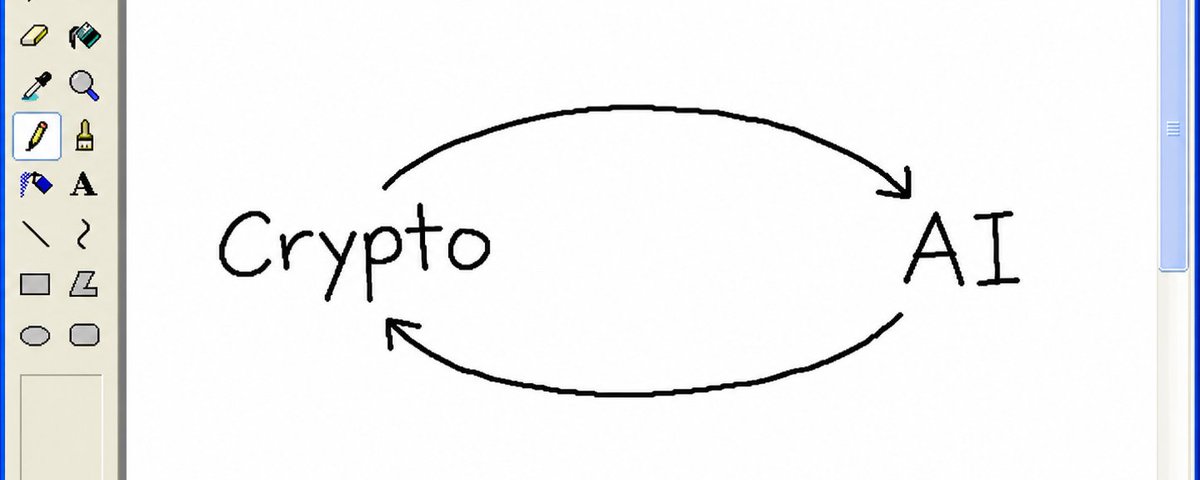
I spent years building in crypto, and AI is repeating one of its biggest mistakes.
We're making people learn the infrastructure before they can benefit from it.
Agents, models, MCPs, orchestration...
Brilliant technology. Backwards UX.
Wrote about why this needs to change.

Every model launch week goes the same way. Day one it's AGI, day three it's unusable, and by day seven everyone has quietly gone back to whatever they were using before.
3
132
Model releases are on a three-week cycle now and I've stopped treating any single one as a decision. Whatever we build has to survive the next swap, so the work that lasts is the eval set and the tool definitions. Prompt tuning for one model mostly gets thrown away.
4
107
What I took from Nvidia last night is gross margin still around 75% with data center up 110%. That much demand and they didn't need to give anything on price.
For a small team paying for compute, I wouldn't plan on GPU hours getting much cheaper next year. Whatever savings we get will come from smaller models and routing more of the work to them.
4
44
Every multi-agent setup eventually has one agent that's been doing the wrong job for three days and writing really good status updates about it.
7
120
Token spend per employee is a more useful number for a small team than people give it credit for. I'd rather see ours go up than headcount, as long as the work coming out is actually better and not just more of it.
3
68
Rough couple of days for AI stocks going into Nvidia tonight and the IPO on Thursday. I don't read much into it for demand. Usage only seems to go one way, what the market is nervous about is who ends up keeping the margin.
For a small team building on top of the models, the price per token matters a lot more to us than any of this.
1
4
71
The "most SaaS should become an MCP server" argument makes sense to me for back-office software. Nobody opens the HR system because they enjoy it, they open it to approve something.
What I haven't seen anyone work out is pricing. Per seat stops making sense when most of the clicks come from an agent, and usage pricing makes the bill hard to predict for the customer.

I came to the conclusion that most SaaS should become an MCP server.
we’re getting the economics of AI software backwards. A lot of AI startups are building their own chat interfaces, agents, and workflows, essentially reselling tokens from the big labs at low to negative gross margins.
What if SaaS companies did the opposite?
Take HR software. Instead of building an AI assistant, become the best MCP server for HR. Expose tools to:
- Benchmark salaries against proprietary market data
- Run compensation reviews and calculate pay equity
- Model salary increases against a department’s budget
- Recommend promotions based on company policies
- Update employee compensation in the HRIS
- Manage approvals, permissions, and audit trails
Let ChatGPT, Claude, or Copilot handle the conversation, reasoning, and orchestration. Let the customer pay for the tokens.
The SaaS company keeps the valuable stuff: proprietary data, integrations, business logic, permissions, compliance, and the system of record.
You still charge a SaaS subscription, but you’re no longer paying to generate every answer. You can ship faster, with fewer engineers, and potentially restore software-like gross margins.
The next generation of SaaS might not have much of a UI at all. Just an incredibly good MCP server.
4
35
Fable 5.2 completing 41% of the Remote Labor Index projects is a big jump. The best agent on it was at 2.5% a bit over a year ago.
The setup matters though. Each project comes with the brief already written, and client calls are left out. In real freelance work, figuring out what the client actually wants takes a good part of the time, and none of that is being measured here. Still an impressive number.
Google's EGM plugin splits planning between two kinds of agents. One holds the project context and drafts the spec. The reviewers only get the written doc and the code it points to, without any of the earlier chat.
That's the gap I'd worry about most with agent plans. Something gets agreed in the conversation, never makes it into the doc, and the build quietly depends on it.
It runs in Claude Code, Codex CLI and Antigravity, Apache-2.0. Link below.
Fable 5.2 in Claude Code scores 58 on high and 56 on max in the new Artificial Analysis coding agent index. Max costs $44.22 per task, high costs $7.51. Their explanation is that more of the max runs hit the task time limit.
I'd guess plenty of people leave it on max for anything that feels hard. Honestly nobody should have to tune this. The harness should pick the effort per task.
most "when does quantum break bitcoin" takes are one year and a vibe.
we modeled it as two curves. fault-tolerant qubits you can build, going up. qubits needed to break RSA-2048 or the bitcoin curve, going down. where they cross is the date, plus an access lag and a fat-tailed chance the whole thing stalls for decades.
one thing that would pull it in sharply: a factoring algorithm that needs under 100k qubits.
the model runs live in your browser. what would you set the stall risk to?
1
5
210
agent standup
yesterday: refactored the auth module
today: fixing the auth module
blockers: the guy who said lgtm
1
5
213
google shipped a model that can't write. gemini decision 1 only gives yes/no, a pick from a list, or a score, plus a confidence number.
that's exactly the part of an agent loop i trust a chat model with least. "should i run this tool", "is this done", "does a human need to see this".
are you splitting those calls out to a separate model yet or is it all one prompt?
1
3
169