

Angel Investor, Founder at Beyond Security Seed Investor at Eclypsium Angel Investor at FLYTech Investor at ArcusTeam CTO at Beyond Security
Joined July 2009
- Tweets14.7K
- Following10
- Followers1.4K
- Likes31.4K



Noam Rathaus 🌪️ retweeted
CODEBLUE Day 2! Meet SSD Labs, discover our Tokyo lab, and explore vulnerability research opportunities. Grab some merch and enter our LEGO raffle!
Draw will be today at 5PM JST
#codeblue2026

Noam Rathaus 🌪️ retweeted
🎤 Live from #codeblue2026!
Our very own @aaronsjcho is on stage right now, digging into a vulnerability that went undetected for over a decade! 🔥 Great to see SSD Labs research in the spotlight!

Noam Rathaus 🌪️ retweeted

Phrack 73 just dropped. Tell your SOC you'll be busy
phrack.org/issues/73/1

Noam Rathaus 🌪️ retweeted
In Tokyo for #codeblue2026 tomorrow?
Come meet the SSD Labs team! Discover our Tokyo research lab, explore our vulnerability acquisition program, and learn about exciting research opportunities and how to turn your zero-day discoveries into real rewards.
📍 B2 Floor – next to the Track 1 conference hall entrance.
Stop by, say hi, and let's talk research!
Noam Rathaus 🌪️ retweeted
CODEBLUE 2026 is officially underway!
Our team is excited to be in Tokyo, connecting with the cybersecurity community and talking all things security.
And there's more! We're giving away an awesome LEGO set!
Stop by our booth, enter the raffle, and you could be taking it home!

Noam Rathaus 🌪️ retweeted

FTP has been running in production for 55 years, and when we tested seven independent servers using penzzer, we found basic issues with six.
FTP uses two connections. Commands go over one, and files go over a second one that is opened separately. You authenticate on the first. Nothing in the protocol ties the two together, so the server has to check that the data connection comes from the same peer it authenticated. Six of the seven never check. Whoever reaches the port first gets the data.
The Penzzer team found 47 defects across those seven servers. The one I keep thinking about: 5 of the 7 can stop serving permanently while the process stays alive. If your test is watching for a crash, it reports a clean run.
The path containment bugs are also worth a look, because none of them is a missing check. One server compares the number of path components to the number of ".." entries, so its boundary is really a ratio. Another calls a UTF-8 length function that returns zero to mean "not UTF-8". The caller reads that zero as a length, so a single invalid byte turns the guard off. These are old, heavily used servers, and they still have bugs like this.
I'm in Tokyo for CODE BLUE this week (Nov 17-18). If you're there, come find me and I'm happy to talk through any of it.
Noam Rathaus 🌪️ retweeted

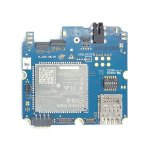
PS5 13.60 kernel booting inside QEMU.
Sony's real Orbis OS kernel — FreeBSD-derived, firmware 13.60 — running in a stock x86-64 QEMU virtual machine. A hand-built multiboot loader copies the 62 MB kernel image into RAM, applies 676 in-memory patches, and jumps straight to Sony's cold entry point.
What it reaches: full SYSINIT march through 1,235 stages, CPU/APIC/ACPI enumeration, device configuration, 1,000+ sysctl registrations, filesystem init, TCP/IP stack, and timecounters. Sony's own confidential banner and build ID print to the console.
50+ crash-site guards intercept every point where the kernel expects real PS5 hardware and reroute through its own error handling. 32 documented work packages of reverse engineering to get here.
github.com/R0nov4/ps5-kernel…


Noam Rathaus 🌪️ retweeted

We're cooked.
terminal2shell.com

Noam Rathaus 🌪️ retweeted
Are you attending CODEBLUE next week?
Stop by our booth or drop us a DM to schedule a meetup during the conference.
Noam Rathaus 🌪️ retweeted

The full run cost $1,213,430 in API credits—about $1,279 per distinct local privilege escalation vulnerability.
For context, applying historical Pwn2Own and TyphoonPWN bounty rates gives a hypothetical value of $18.9M–$66.3M.
This demonstrates the relative efficacy of using AI models for securing software—defenders should proactively analyze software to make cyber attacks cost-prohibitive.
Noam Rathaus 🌪️ retweeted

1/ We are doing it totally wrong with vulns.
In my new post I dig into @googlechrome’s vuln data to show that the AI-driven Vulnpocalypse settled a 20-year-old debate: vulnerabilities are dense. Our defenses are still built as if they were sparse.
medium.com/@TalBeerySec/dens…

Noam Rathaus 🌪️ retweeted

*sshole is out
if you run sshd on alpine, openwrt or any musl box with password auth on: update now
official writeup: sshhole.com

Noam Rathaus 🌪️ retweeted
F5 BIG-IP Pre-Auth RCE is now in high demand!
Found a vulnerability of this kind? Now is the perfect time to submit your research.
Check out our full list of high-demand targets and see what we're actively looking for: ssd-disclosure.com/in-high-d…
Noam Rathaus 🌪️ retweeted
Attending CODE BLUE 2026? We'd love to meet you there!
DM us to arrange a meetup with our team, or simply drop by our booth.
Noam Rathaus 🌪️ retweeted
🚨 New advisory was just published!
A framebuffer size integer overflow in TightVNC can be leveraged by a malicious VNC server to trigger out-of-bounds writes in the viewer.
Read all the details at: ssd-disclosure.com/tightvnc-…

Noam Rathaus 🌪️ retweeted
We're excited to sponsor CODEBLUE 2026 and meet the cybersecurity community in Japan.
Attending? Drop us a DM, and let's arrange a meetup at the conference.
#codeblue_jp #codeblue2026


Noam Rathaus 🌪️ retweeted
🚨 New advisory was just published!
An exploit chain was found in LG webOS, leading to root command execution. The chain starts with a client-key issuance bypass, progresses through service-level access, and ultimately leads to root command execution.
This vulnerability earned 3rd place in the LG webOS category at TyphoonPWN 2026. Read all the details at: ssd-disclosure.com/lg-webos-…
Noam Rathaus 🌪️ retweeted

Got a security technique worth teaching?
TyphoonCon 2027 Call for Training is open!
We’re looking for advanced, hands-on courses in exploitation, vulnerability research, reverse engineering, AI-assisted security research, and more.
Seoul. May 23–26, 2027.
Submit: typhooncon.com/call-for-trai…
