

Building higher quality lower cost health insurance for independent professionals | CEO & Co-founder @MolliHealth
San Francisco
Joined December 2020
- Tweets1.4K
- Following373
- Followers328
- Likes2.8K



Pinned Tweet
Annoyed by my self-employed friends’ endless questions about lousy health insurance options, I built a better one. @MolliHealth, using AI to navigate the mess of insurance—no hidden bs, just solutions and transparency.
The big insurance companies just say what the people want to hear
They never have an opinion their only goal is to maximize shareholder dollars and they are damn good at it

After the polls close tonight, the real work begins for the health insurance industry — my former employers — and for the voting public.
If I were still in the industry, I’d expect to be in a briefing tomorrow morning about the midterm results and how we should respond. We’d hear which messages were likely to resonate with the public and use that advice in our speeches, press releases and lobbyists’ talking points to new members.
1
114
Wyatt Stokesberry retweeted

The ACA provides lower-income households with far larger subsidies than workers with employer coverage receive in tax benefits.
This inequity penalizes work, encourages employers to drop coverage, and shifts costs to taxpayers.
The COVID subsidies made this inequity much worse

Wyatt Stokesberry retweeted
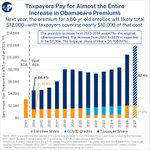
ACA mandates caused premiums to rise.
Subsidies cover most of the premium.
This figure shows premiums from '13-'27 for a typical enrollee and that taxpayers have absorbed almost the entire premium increase.
To make this worse, Congress should send more taxpayer $ to insurers.


Breaking News: Obamacare premiums will rise by 13% next year, hitting middle-income people already struggling with health care costs. nyti.ms/4sCuytF

And this is why direct contracting is a game changer.
Having a set price before a member walks into a facility keeps everyone honest.
@goodbill

This is spot on.
IMO if you start with the individual directed approach it’s much easier to move up market to employer directed then government directed.

Yesterday, I wrote about the emergence of three distinct healthcare economies: government-directed, employer-directed, and individual-directed.
The implications for physicians, healthcare executives, and investors are profound.
For decades, American healthcare has organized itself around institutions rather than purchasers. Hospitals, health systems, and insurers built enormous enterprises around controlling access, aggregating services, and capturing reimbursement.
That model is increasingly misaligned with the market because the three purchasers of healthcare pursue fundamentally different objectives.
1). Government wants access, standardization, and expenditure control.
2). Employers want productivity, predictable costs, and a healthy workforce.
3). Individuals want something more fundamental: meaning and belonging. Everything else is downstream from those needs.
These objectives produce different definitions of value, purchasing decisions, and requirements for care delivery. An enterprise designed for government cannot simply be repurposed for employers or individuals. Each economy requires its own strategy, operating model, and measure of success.
As a result, the delivery and financing models serving these economies will increasingly diverge; and the greatest opportunities will emerge at that intersection.
Entrepreneurial physicians and investors should stop designing enterprises around existing institutions and start designing them around the objectives of their intended purchasers.
In the government-directed economy, the winning enterprise will expand access, standardize delivery, and control expenditure. This is where AI and robots will best perform.
In the employer-directed economy, it will improve workforce health, productivity, and cost predictability. This is where on-site care, telehealth, and non-physician practitioners will best perform.
In the individual-directed economy, prevention becomes economically rational. Continuity (navigation/portage) becomes extraordinarily valuable; and trust becomes a competitive advantage. Healthcare moves beyond sickness management, through wellness, toward wholeness (more on what the difference is later). This is where individual physicians, independent physician groups, and highly-specialized centers of excellence will best perform.
The central question for every healthcare enterprise is no longer simply what services it provides. It is whom the enterprise is designed to serve, what that purchaser values, and whether the business model is built to deliver those outcomes.
The future belongs to enterprises that understand the difference between creating value for the purchaser and extracting revenue from the system.
9
507
Most health plans have two touchpoints with a member in a year. Open enrollment, and a claim.
Everything the industry says it wants to do, navigation, steerage, chronic care management, better pharmacy decisions, depends on constant communication with the member. And almost no plan has cracked the member engagement.
A few have figured it out. Curative requires a Baseline Visit in the first 120 days to unlock $0 copays and reports 98% of members complete it. Angle just raised $600M at a $2.7B valuation on the idea that care navigation should be the core of the plan and not an add-on.
Both are selling engagement with insurance attached and the engagement makes the insurance sustainable
The engagement does not have to be clinical. It can be anything the member has a reason to do every month inside the plan’s experience. Once that habit exists, outreach stops feeling like a call from an insurance company and starts feeling like a notification from an app they already use.
That is what makes steerage work. A member who already knows you and chooses to engage.
The question is how many plans can build that habit without a clinical visit to force it.
2
23
1,934
Who else is building tech enabled solutions for the population getting their health insurance on the ACA marketplace?
1
5
144
KFF found that about 1 in 6 adults already use an AI for health information at least once a month. For people under 30 it’s closer to 1 in 4.
What I see people asking is not mostly symptoms. It is whether a price for a service is reasonable and where else they can get the same thing done.
Hospital price transparency data has been public since 2021, and in close to half the hospitals the cash price comes in below the insurer negotiated rate. That information used to be buried in MRFs nobody opened. Now a member can ask for it in plain English and get an answer in ten seconds.
You end up with a member who walks into a care decision knowing the price, and a plan that doesn't support that price.
For years the industry believed members wouldn’t shop because they couldn’t - because the data was too confusing. That is no longer the case.
A plan will win if it puts real bookable prices in front of members.
Level funding has gained a lot of popularity over the last decade, and even more in the last 5 years.
Companies like Angle, Centivo and Gravie are capitalizing on it. But level funding is hard to get right.
The average employer going level funded has about 50 employees. Each person is a big share of the total risk, and if a handful of them have high dollar claims the whole group ends up with a high MLR.
Level funding doesn't work unless you have a network of direct contracts and members actually use them when they need high dollar care.
That means buy in from members, educating them to be smart consumers of care, and making the direct contracts easy to use.
If that doesn't happen, the group might get lucky a few years in a row. Then the high utilization year hits, the renewal comes in at 40%, and they go back to fully insured or roll out something like CHOICE.
1
53
Wyatt Stokesberry retweeted

So I went down the rabbit hole of trying to determine what are the economics for someone, who is currently healthy , to go to a HDHP with a 10k plus deductible.
The question I asked is “I dont trust insurance companies. What happens if I have a million dollar emergency and they won’t pay “. All I can say is WTF
If they don’t pay, there are Independent Review Organizations, who are supposed to be independent, and their decision to pay or not is final. I asked for examples of companies. One was ExamWorks. That rang a bell.
These motherfuckers are the same company that issued a ridiculous denial for a patient I was trying to help. So I knew the Too Big To Care, vertically integrated insurance companies hired them to do DENIALS !!! WTF.
The biggest customers of the companies that are the final decision makers for insurance carrier denials, are the biggest insurance companies.
That is beyond fucked up. It’s the definition of conflict of interest. How do state insurance commissioners allow this ?
The high deductible plans that many people say is the solution to fixing how we do insurance, may be effectively compromised
If you are looking at a HDHP, BE CAREFUL
It might just be rigged against you
Prior authorization is the most hated process in health insurance. Members hate it, doctors hate it, and CMS has spent the last two years trying to shrink it.
I think there is a second way to look at it that doesn't get talked about much.
A prior auth is the one moment a plan knows, in advance, that a member is about to have an expensive care event. Not after the claim. Before. The plan knows the procedure, the provider, and roughly what it's going to cost.
Almost every plan uses that moment to decide yes or no. Very few use it to say yes, and by the way, here is the same procedure at a facility we have a direct contract with, it costs you nothing, and here are three times you can book it this week.
The economics: commercial plans pay hospitals roughly two and a half times what Medicare pays for the same procedure. A direct contract where the provider is paid upfront, with no claim to chase, comes in well below that for the same surgeon in the same operating room. The plan saves, stop loss sees fewer large claims, and the member pays $0 instead of a deductible.
So why doesn't it happen? Two reasons.
The first is incentives. A fully insured carrier spent years negotiating its network rates and wants members using them. Every member who goes to a direct contract instead is a claim that bypasses the carrier's own pricing, and the carrier has no reason to make that easy.
The second is the member. Steerage fails when the member finds out about the option for the first time in the middle of a care event. They don't know these options exist, they don't know who is going to reach out to them or why, and there is nowhere they can go to look for themselves. By the time the call comes, the surgery is already scheduled. That part is a technology problem, and it is the one we are solving at @MolliHealth .
The plan should be in the member's pocket before the care event, not after. Members should know on day one that cheaper, higher quality options exist and where to find them. When the prior auth hits, the message is not a surprise, it is the thing they were told to expect. That is how we bend the cost curve and help members become smarter consumers at the same time.
The main steerage tool in health insurance is still the denial letter. If a plan wants you somewhere else, it says no.
The better version is the plan saying yes, then waiving your cost share so the care is free if you use a direct contract that is cheaper and higher quality. The member pays nothing, the plan pays less, the provider gets paid upfront. Everyone wins.
52

Wyatt Stokesberry retweeted

Hard truth but trillions more have been made investing in the inertia of healthcare staying exactly the same vs. betting on it changing.
CMS just canceled roughly 315,000 unauthorized Marketplace enrollments covering more than 760,000 members and expects about $2.2B in taxpayer funded subsidies to be returned.
This is obviously good news for taxpayers, but I think there is a second part of this that could be bad news for people who actually get their insurance through the Marketplace.
A lot of these were essentially phantom enrollees. CMS says the canceled policies involved members where issuers were unable to identify claims or establish contact with the consumer.
Think about what that means for the insurance pool. These phantom enrollees had premium being paid into the pool, much of it through taxpayer subsidies, while incurring little or no claims.
Now you remove more than 760,000 members like that, along with the premium they were bringing into the pool, while removing very little claims expense.
That could push MLRs higher and make the remaining pool more expensive to insure.
The timing is the part I’m watching. Carriers have already submitted their 2027 rate requests, with a median proposed increase of around 15%.
How much of this is going to be reflected as regulators finalize 2027 rates, and how much gets pushed into 2028?
Carriers have already been leaving the individual market. Aetna exited its individual exchange business for 2026, and Cigna is leaving Individual & Family medical for 2027.
If the remaining pool gets more expensive, what does carrier participation look like from here?
Cleaning up phantom enrollments is good for taxpayers. The question is what it does to premiums for the members who remain.
2
126
Wyatt Stokesberry retweeted

🦔The Blue Cross Blue Shield Association says insurers paid out nearly $1 billion more than usual from AI-assisted hospital documentation in 2024-2025. Hospitals use AI to scan records and find secondary diagnoses that human reviewers missed. More diagnoses means higher reimbursements. But treatment levels haven't gone up.
BCBSA's SVP of data science said AI is "identifying more billable conditions, not sicker patients." Insurers now deploy their own AI to deny those same claims. Patients pay for both through higher premiums.
My Take
This might be the most American healthcare story I've ever read. Hospitals bought AI to find more things to bill for. Insurers bought AI to deny those bills. The technology cost money on each end and the tab went straight to patients through higher premiums. A billion dollars moved and no one got any healthier. The only thing that changed was the size of the invoices.
Two sides of a trillion-dollar industry found a new tool to fight over the same pool of money and the person in the hospital bed pays for all of it. Premiums go up, denials go up, and the AI vendors collect from everyone. If you want to know who AI works for, stop reading the press releases and look at where the money goes. In healthcare it went straight into the billing department.
Hedgie🤗


AI is moving into the payer space fast.
UnitedHealth and Humana are already being sued over how algorithms were allegedly used in coverage decisions. Cigna has faced similar scrutiny around automated claims reviews.
There’s a ton of gray area here, which makes it hard to even know what’s happening, let alone regulate it.
The part I keep coming back to: insurers are clearly building AI to lower costs. Who is building equally powerful tools for the member?
The move to a single-payer system would obviously reduce choice: choice of which insurance company you purchase coverage from, choice of plan design and deductibles, and choice of which providers you can see.
While we technically have “choice” in today’s system, most people don’t actually feel like they do. For the more than 50% of the insured population covered through employer-sponsored plans, their employer is largely making those decisions for them, selecting the insurance company, plan options, and networks available to employees. In that sense, the system can already feel like single-payer from the individual’s perspective.
That lack of meaningful choice has also made its way into the individual market. Consumers may have multiple plans to choose from, but the options are often limited and unattractive. Provider networks are narrow, deductibles are high, and premiums can effectively force people into plans based on what they can afford rather than what they actually want.
Until we improve the quality, affordability, and variety of options available to individuals, people will continue to question the value of the current system and push for a single-payer alternative.
3
90