
"He can do anything he wants"
San Francisco
Joined January 2014
- Tweets5.2K
- Following869
- Followers736
- Likes5.4K






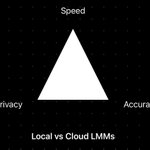


Grok @bot, Meta @muse and @OpenAI dots are all moving toward proactive AI agents that monitor your digital life and take action
Meanwhile Google owns Gmail, Calendar, and basically your entire digital life, yet somehow everyone else is building the personal AI assistant Google should have built years ago
No, Gemini can’t even do a decent search in your inbox
Oğuzhan Çakmak retweeted

Anthropic is now recommending that companies REMOVE unnecessary subagents from their AI systems.
This is a pretty significant shift in agent architecture, with their team finding that a single agent equipped with skills can frequently outperform complex multi-agent systems, and one customer seeing roughly 2x faster execution.
The emerging rules of thumb:
→ Skills: Teach the agent HOW to do something, including procedures, expertise, and instructions.
→ Tools / MCP: Give the agent the ability to DO things through APIs, actions, and live data.
→ Subagents: Use for parallel work, isolated context, or tasks a single agent struggles with.
The interesting part is progressive disclosure. Instead of spawning specialized agents or stuffing everything into a giant prompt, one agent discovers and loads skills and tools as needed.
Their advice is to fold existing subagents into the main loop, turn their instructions into skills, expose their actions as tools, and run evals to see if performance holds up.
As models have gotten smarter, improving agent architecture is becoming less about what you can add and more about what you can delete.
claude.com/resources/article…

Oğuzhan Çakmak retweeted

you don't need next.js + vercel + supabase anymore
- next.js → tanstack start or vinext
- vercel → workers
- supabase postgres → d1
- supabase auth → better auth on d1
- supabase storage → r2
- realtime → durable objects
- redis → kv
- background jobs → queues + cron triggers
one worker, one bill, ~$5/mo

Oğuzhan Çakmak retweeted

Anthropic 最近开始建议企业「少用点 Subagent」,甚至把一些专家 Agent 重新合并回主 Agent Loop。
他们在多个企业项目中发现,单 Agent + Skills 的效果经常比复杂的多 Agent 架构更好。有个客户改成单 Loop 后,运行速度甚至快了约 2 倍。
原因很容易理解。
多个 Agent 之间反复交接任务,每次都要传递和总结 Context,信息容易丢失,延迟和成本也跟着增加。
Anthropic 现在更推荐让一个主 Agent 负责规划和执行,需要时再动态加载 Skills 和 Tools,把业务流程和领域知识留在可复用的组件里。
不过文章里有个细节值得关注。
他们曾把客服系统里的 Subagent 合并,延迟确实降低了,却让一个原本能完成的任务失败了,因为主 Agent 漏掉了向物流专家确认送达时间这一步。
所以作者强调,每合并一个 Subagent,都要用端到端 Eval 验证,尤其要检查哪些原本通过的任务突然失败了。
当然,并行研究、独立验证、Context 隔离这些场景,Subagent 依然有价值。
这样看来以后设计 Multi-Agent,可能得先问问自己,每个 Subagent 真的需要独立的 Context 和执行循环吗?
Anthropic 还开源了一套迁移工具,可以帮你分析现有架构,逐步合并 Subagent,并比较改动前后的质量、成本和延迟。很推荐做 Agent 工程的朋友试试。
原文:claude.com/resources/article…
Made it way faster.
Saves a lot of space too. If you're stuck with limited Mac minis and limited storage this is the best tool
You can even use claude hooks to run it after every PR merge or ticket done
Enjoy
github.com/muratcakmak/tenx-…


Oğuzhan Çakmak retweeted

Announcing Dagger 1.0 beta.
Replace Jenkins and GitHub Actions with CI that matches the speed and scale of coding agents without wasting compute or tokens.
Featuring: test-native CI, dev shells, local and remote execution, official modules, and more.
dagger.io/blog/dagger-10-bet…
Oğuzhan Çakmak retweeted

Agents that run for hours can't afford to lose their place.
Standard Agents gives every conversation its own Durable Object and database. At Cloudflare Connect, co-founder and CTO @jpschroeder shows how it works:
- One database per conversation, because agents reread their full history on every step
- Alarms kick off long work, and a watchdog object tracks progress so agents keep running for hours
- A live demo where every attendee who scanned in got their own expense agent
Oğuzhan Çakmak retweeted
With 70 million AI-generated apps created on its platform, @Lovable migrated from Next.js to TanStack Start on Cloudflare Workers.
Co-founder + CTO @FabianHedin breaks down:
- Serving millions of apps on demand with minimal cold starts
- Why they chose TanStack Start
- Lessons from dogfooding (running Lovable itself just like any other app on the platform)
Full talk from Cloudflare Connect.