

关注科技, 投资, 和个人成长.
Calgary, Alberta
Joined October 2021
- Tweets4.6K
- Following584
- Followers43.1K
- Likes5.7K





True. It is more important to be explicit WHAT you want. And this is actually really hard. Actually, you should always be explicit about what you want in communication either with agents or people.

The craziest thing about agents is that you DO NOT want to be too explicit about HOW you want something.
The HOW should ALWAYS be the job of the agent.
If you don’t do this, you will not benefit from the creativity and IQ boost that future models will get, and you’ll have to spend a ton of your time optimizing prompts until models get smart enough to tell you that you’re being dumb lol
In Canada, every time I go to the dentist is an insult to my hard-work and intelligence. Why? Because my income won’t qualify me the free dental program. It’s not because my income is too low, but too high. But how do they fund the free dental program? Oh, I paid the tax. I pay tax more than the median Canadian family income and I do not qualify the free dental program I partially funded. So no, this is not me flexing my wealth. This is an insult so personal that I question why I work so hard.

People often ask: “Why don’t you just buy your own private insurance? It’s only about $100 a month.”
That question misses the underlying issue.
Individual plans do cost roughly $75–$150/month for basic single coverage. But most people with “cheap” coverage aren’t paying that full amount themselves. Their employer covers most of the premium. The employee only sees a small deduction, if any.
That’s why most self-employed people don’t buy it. They pay the full price, and for predictable costs like dental cleanings, glasses, or routine physio, the math usually doesn’t work. Unlike pure risk insurance (fire, life), supplemental health coverage largely means prepaying your own expected usage plus admin fees and profit. Many just pay out of pocket instead. StatsCan data shows only about 36% of self-employed Canadians have dental coverage and 43% have supplementary health coverage.
The deeper problem is structural. When someone else is spending the money you earn on your behalf, the person using the service has weaker incentives to care about price. Over time this raises overall claims and premiums for everyone. Those higher costs show up as lower take-home pay, higher prices, or higher taxes. The arrangement affects the whole system.
This is the same dynamic behind recent arguments that Canada needs a “bigger government hand” in the economy. More layers of third-party spending tend to create more second-order problems, not fewer. The bill still exists, and gets bigger but it’s just harder to see.
In short, when someone tries to spend the money you earned FOR you, don’t trust them. I learned this lesson early when my parents try to manage my “red-envelope” money😂

People often ask: “Why don’t you just buy your own private insurance? It’s only about $100 a month.”
That question misses the underlying issue.
Individual plans do cost roughly $75–$150/month for basic single coverage. But most people with “cheap” coverage aren’t paying that full amount themselves. Their employer covers most of the premium. The employee only sees a small deduction, if any.
That’s why most self-employed people don’t buy it. They pay the full price, and for predictable costs like dental cleanings, glasses, or routine physio, the math usually doesn’t work. Unlike pure risk insurance (fire, life), supplemental health coverage largely means prepaying your own expected usage plus admin fees and profit. Many just pay out of pocket instead. StatsCan data shows only about 36% of self-employed Canadians have dental coverage and 43% have supplementary health coverage.
The deeper problem is structural. When someone else is spending the money you earn on your behalf, the person using the service has weaker incentives to care about price. Over time this raises overall claims and premiums for everyone. Those higher costs show up as lower take-home pay, higher prices, or higher taxes. The arrangement affects the whole system.
This is the same dynamic behind recent arguments that Canada needs a “bigger government hand” in the economy. More layers of third-party spending tend to create more second-order problems, not fewer. The bill still exists, and gets bigger but it’s just harder to see.
In Canada, every time I go to the dentist is an insult to my hard-work and intelligence. Why? Because my income won’t qualify me the free dental program. It’s not because my income is too low, but too high. But how do they fund the free dental program? Oh, I paid the tax. I pay tax more than the median Canadian family income and I do not qualify the free dental program I partially funded. So no, this is not me flexing my wealth. This is an insult so personal that I question why I work so hard.
I've noticed the time people spend on work splits into two buckets:
1. The tools, workflows, and systems for doing the thing
2. The actual thing
Only the second one counts. The first easily turns into false progress. It feels productive, but often it's procrastination, comfort, and fear of starting.
Say you want to sell a product that doesn't exist yet, so you build the perfect dev, marketing and support system first. But when it's ready, you have nothing to sell. Actially, it more likely you will never be ready.
Get the treasure in your hands first. Then the support, sales, and maintenance systems finally mean something.
When you have two options, always pounce on the actual thing.

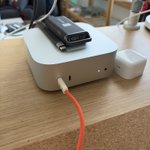
Are there anyone like me who gets excited whenever hear the fan spins up on your Mac mini when vibe coding 😂 I get annoyed when it’s on my MacBook Pro but weirdly satisfying on Mac minis.

Kylon to me is like Grok Bot with Opus 5.5 without limit: I bring my own Claude Ultra and Codex sub into Kylon and it runs like Grok Bot but better. That’s my secret for the past several months. And that’s why I don’t really find Grok Bot too attractive to me. Plus you get real team feature in Kylon. All my collaborators and employees are on Kylon. Kylon is like Slack + Claude Tag + Grok Bot

Grok Bot without limits?
Elon says it costs too much to run. So in Kylon, Grok Bot plans the project, Claude Code builds it, Codex reviews it.
Three agents, one shared workspace, each doing what it does best.
teapaw.org/i/status/2116992258520…
一口新饭 retweeted

“There is no moat.”
But moats are everywhere:
Ambition.
Taste.
Agency.
Curiosity.
Judgment.
Courage.
Obsession.
Persistence.
Integrity.
Patience.
This era belongs to those who refuse to be mediocre.
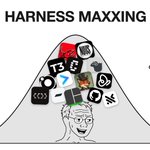
This is definitely the correct direction for harnesses because software needs happen on the interface of user and AI. And that interface is the harness. Basically, a harness plugin is a customized AI native software created by and for the user. For example, you don’t need a Notion/a video editor with MCP. What you really need is a Notion/video editor attached natively to your harness (deepseek harness, Claude code, or Codex/chat gpt).

Vacation is over and work starts. Did some iPhone Duo adaptations for QCam at the airport. Now we have waist level mode and camcorder mode. Pretty fun! – at Santa María Huatulco, Oaxaca


AI allows people to waste time on the low priority “small things”so that they can avoid what’s truly important.