

A creative studio. Art, Animation, IP Development Hong Kong (HQ) • Los Angeles • Ho Chi Minh City
Joined July 2023
- Tweets659
- Following40
- Followers5.1K
- Likes2K


3 years of Otsu Animation 🎂
Today, we had a little talk with ourselves. Turns out, the plan still holds. But what doesn’t show is everyone behind it.
The artists who said ‘yes’ to styles they’d never tried before. The extra rounds that turned ‘almost there’ into ‘that’s it’. The partners who handed us their stories and trusted us to get them right.
Three years of that changes a studio and it shows in every frame we make. In the years to come, we’re bringing the same care to our own original stories.
#OtsuAnimation #3yearsanniversary🎂
And suddenly, we’ve been animating for three years.
#OtsuAnimation #3yearsAnniversary

2 months left in 2026, let’s see what we have done so far.
Can’t help but smile looking back at everything we’ve shipped so far. There’re still a few released projects we can't share just yet, but no worries, more bangers are on the way 👀
#OtsuAnimation


Running is one of basic movements in animation.
A simple run cycle usually has 4 key poses: contact, down, up and take-off.
One thing to note: the arms stay bent during the whole cycle and move opposite to the legs. When the left foot is forward, the left arm moves back.
Produced by Otsu Animation & HSBC
#OtsuAnimation
Hi! Here’re several cuts we worked on for clean-up and color in Knights of Guinevere Ep2 with @glitch_prod 🔥
Gonna share more about the process soon!
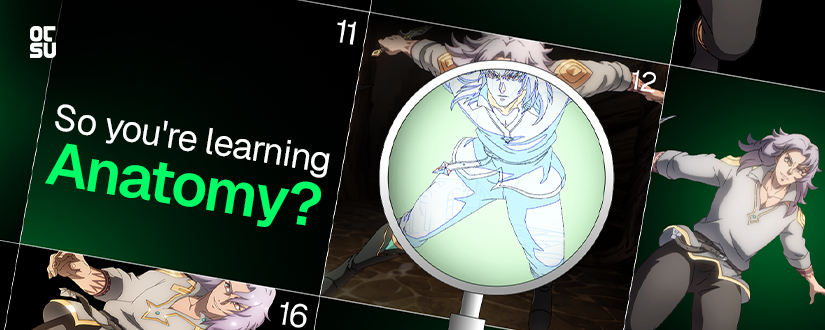
Gatekeeping the colorscript for Zofia would’ve been a crime. So here we are.
The story is set in a retro-futuristic Kraków main square, mid-2030s, partially destroyed, reinforced with metal structures and defense lines. The color palette had to carry that weight: gritty, tense, and atmospheric enough to put you in the middle of a battlefield without a single word of dialogue.
Credit goes to our director, Pipou Phuong Nguyen, for designing this colorscript.
#OtsuAnimation
Not every drawing in animation needs to be clean, but some absolutely do.
In layout, enshutsu, and sakkan, drawings can stay rough. The focus at these stages is establishing movement and correcting proportion, not line quality.
But in Genga and Douga, the lines have to be clean. This is where the final line art is decided, what goes into Shiage for coloring and ultimately what the audience sees on screen.
#OtsuAnimation

Quick breakdown of our girls in Erene Mochi’s Debut PMV.
Produced by Otsu Animation & Studio Questline
The sakkan sheet 🟨


Too many frogs, but only one is real.
You may not know, every frog you see started as a single jump sequence. We animated it once, then multiplied and offset the timing across different positions to make it feel like a whole crowd.
Can you spot the original? 🐸
Produced by Otsu Animation & Fwog
Otsu Animation retweeted

🪣 Dropping Bucket Man new trailer🔥
@stephenfungfdl #anime
To draw the douga, the animators have to know the project’s frame rate first.
For this Neuro-sama animation, we worked on 3s, meaning each drawing is held for 3 frames. That determines how many inbetweens are needed and how the movement is spaced out across the sequence.
Produced by Otsu Animation & @Vedal987
In pre-production, alongside the character sheet, we create a color bible. This is a document that locks down the exact color codes for every part of the character, including highlight, shadow and base colors.
When Shiage (coloring) begins, animators can pick the colors directly from this sheet and add to the drawing, so the colors will be consistent across every cut.
Created by Otsu Animation
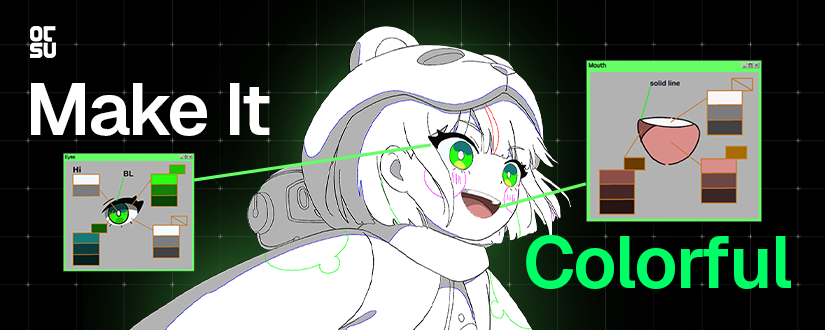
In anime films, you’ll see characters keep the same look throughout the production.
Keeping them on-model is essential to making sure characters stay recognizable. Their proportions and key features need to stay consistent, even when different animators work on different cuts.
Let’s take a closer look at how this consistency is maintained.
#OtsuAnimation
(1/2)


It’s a great experience to work on the Clean-up & Coloring for ‘KNIGHTS OF GUINEVERE’ Episode 2 with @glitch_prod. We’re grateful to have contributed to the show.
Big thanks to the team at @glitch_prod, and to our animators for the care and dedication they put into this work.
Hope you enjoy the episode!


