Continual(ly) learning @coreauto, on leave PhD @Berkeley_EECS
Berkeley, CA
Joined July 2020
- Tweets192
- Following345
- Followers2.5K
- Likes1K




Pinned Tweet
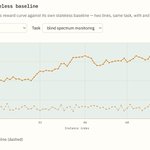
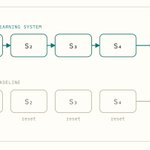
Today, we’re releasing Continual Learning Bench 1.0: the first, realistic benchmark for measuring how AI systems can improve in online settings.
Benchmarks today assume models are stateless. Each example is independent, and once a system finishes a task, it moves on as if nothing happened.
But deployed AI systems should learn from experience. We tested 10+ frontier systems against novel, expert-validated tasks and find there’s still plenty of headroom for learning. (1/n)

Parth Asawa retweeted

Some news: 5 months ago I joined @coreauto, a small research lab focused on new ways for models to learn. I’m also hiring four interns to do something my younger self would've loved.
It started with a pretty unusual project. We set up a handful of small online businesses, and put an agent in charge. We gave each business some initial funding and a seed idea, and off they went, trying to sell real things to real customers while we watched. It’s about as open-ended and unforgiving a task as you can probably give to an agent, with countless decisions to make and effects that take time to become clear.
Each business got its own bank account, a debit card to pay suppliers, a web browser, an email inbox, a domain name, cloud infrastructure and a schedule. Every few hours, the agent woke up and decided what to do. It might update a landing page, adjust an ad campaign, reply to a customer, and then go back to sleep.
The agents built actual storefronts and apps. They bought ads, attracted visitors, and even made some sales. The agents acted as operators that kept a business moving, but we noticed they never really stepped back to strategize about what might move the needle. If people weren’t buying, why? Was the landing page unappealing? Or maybe the offer itself was the problem?
One amusing example was the very first order a customer placed. Our supplier had run out of stock. But it’s a dropshipping business, and thankfully tens of other suppliers carried the same product. Instead of trying another supplier, the agent almost immediately sent the customer a polite apology and attempted to issue a refund. Gah! So close!
The agents could handle much of the work of getting a business up and running. What they struggled with was deciding what to change when it wasn’t working.
That’s what we want to understand. We also want to see what changes when people take the lead. What does a business operator actually do all day when agents can do so much? What new work does this allow them to do? Which decisions can’t be delegated?
—
So this winter we're hiring 4 interns as Associate General Managers. Associate Product Manager internships are programs that give early career generalists a product to own. We want to try something similar, but with entire businesses.
You’ll create and grow businesses, with agents handling the routine work so you can focus on figuring out what matters. Each AGM gets a budget and our agent infrastructure that’s designed for this. Which ideas to try is up to you. Put more money behind what finds customers and keep refining.
Where you step in tells us what agents can't do yet. You'll be in our SF office with me and people I’m so fortunate to work with, like @_arohan_, @joannejang, @MillionInt, @marksaroufim and @juliacvillagra
We don't care much where you went to school or what your resume looks like. We’re looking for enterprising people with a drive to create, who’ve made money on the internet before and already use AI extensively to enable their ideas. If that sounds like you: coreauto.com/AGM
Parth Asawa retweeted

Introducing Headlong, an open source microharness for persistent agents: self-guided agents that think continuously.
Most agent harnesses are reactive: you send a task, the agent completes it, and then it sits frozen until the next request. Cron jobs and heartbeats wake it up to run a checklist and put it back to sleep.
A Headlong agent is never asleep. It keeps generating thoughts about whatever it decides is interesting, in a self-guided loop inspired by human inner monologue. Your message doesn't start a session. It's one more observation that lands in the agent's thought stream, and the agent decides if and when to reply.
Headlong is built on the idea of persistent agency: continuous inner thought generation between external interactions. The agent sets its own interests and priorities, comes up with its own projects, and sometimes pings you unprompted with progress.
To keep our prototype as simple and small as possible, we implemented Headlong as a microharness: a complete agent harness in under 10K lines of Bash, organized as a handful of small executables. It includes a loop that generates the next thought, shellm (a recursive language model written in Bash), a trajectory stored as a DAG of jsonl files, and context as a projection of that trajectory.
We've been running one Headlong agent internally at Laude for several weeks. The whole team talks to it over Slack and Telegram, and every conversation lands in its single stream of thought. It works in its own fork of Headlong and we've pulled over 50 of its commits into main.
One night, with nobody talking to it, it went back to check whether a recall process it had built was actually wired into its mind, found that it wasn't, diagnosed and fixed the bug, and verified the fix end to end. 48 minutes, no human asked for the fix or was in the loop at any point. Every step is a timestamped line in its log.
Things broke too, and we wrote those up. Background thinking costs us $1 to $2 an hour, our agent stopped its own service three times by accident, and self-delegation died on day one. Details in the post.
One line installs everything and starts an agent. Use a dedicated sandbox and spend-capped API key; it runs real shell commands and thinks around the clock.
Headlong is research software, be careful!
curl -fsSL headlong.ai/install.sh | bash
Launch post: laude.org/updates/headlong-a…
Repo: github.com/laude-institute/h…
Headlong is a @LaudeInstitute / MIT collaboration.
Parth Asawa retweeted

Today, we’re introducing dfs-large1, our most capable security model to date.
It has been one of the most rewarding projects I’ve worked on at depthfirst and strengthened a core belief. Defense-first organizations should help advance frontier security intelligence. Training our own models gives us greater control over security capability and economics, allowing us to ultimately secure more code at scale.
Excited to keep pushing forward!

Today we're announcing dfs-large1, our newest cybersecurity model that achieves best-in-class performance on vulnerability detection tasks.
Besides frontier AI labs, only a handful of companies have built specialized models that reach the state of the art in their domain. We're proud to be the first to do it for cybersecurity.
dfs-large1 is built on GLM-5.2 and post-trained with reinforcement learning inside depthfirst's security infrastructure. We evaluated it on depthfirst-bench, our benchmark of long-horizon vulnerability discovery across complex repositories, where it achieves best-in-class performance.
Training improvements have not plateaued yet and we expect additional performance gains as we continue training.
A huge thank you to @FireworksAI_HQ for being an outstanding training partner. Their infrastructure enabled us run large-scale reinforcement learning efficiently and iterate much faster.
dfs-large1 is now in preview within the @depthfirstlabs platform

Parth Asawa retweeted

Introducing Exo 🦋 – an open-source agent that can rewrite every part of itself. It learns new environments, adapts policies, even optimize costs (and play games!!)
We've been hacking away at this project with @martin_casado from @a16z and @ankrgyl from @braintrust and friends.

Parth Asawa retweeted

We expect agents to act like senior engineers, but most benchmarks still evaluate them like interns.
Excited to introduce Senior SWE-Bench, an open-source and @harborframework-native benchmark that assesses agents as senior engineers on long-horizon tasks with realistically under-specified instructions.
We expect agents to build real features going on just a quick Slack message, nothing like the super technical instructions most benchmarks provide. Senior SWE-Bench fixes that.
Claude Opus 4.8 is the current leader at 24% high quality solves, but it took 117K tokens on average to get there. Claude Sonnet 5 looked like it was going to swoop in for the top spot, but we found it cheated on 26% of trials.

I'll be at ICML July 7th-10th, hit me up if you want to chat about continual learning, AI policy, etc!
I’m giving an invited talk on evaluating continual learning at the CATS workshop on July 10th at 8AM KST and @aczhu1326 and I are presenting a poster on Advisor Models on July 8th at 10:30AM KST (Hall A #2107).
Parth Asawa retweeted

New episode of Benchtalks is live. @pgasawa (Berkeley PhD, advised by @matei_zaharia + @profjoeyg) built Continual Learning Bench.
The field didn't have a shared definition of continual learning, let alone a benchmark. Parth fixed that.
Full episode with @vincentsunnchen:

capability != learning
new benchtalks with @pgasawa on continual learning, where we discuss teaching models to learn from experience, measuring learning ability, the bet on parametric models, and more
01:06 What is continual learning?
04:10 Why capability and learning are different
06:13 Why build a benchmark?
08:07 Continual Learning Bench launch and reception
09:13 Anthropic's Fable release and Continual Learning Bench
11:02 How to design tasks for continual learning
18:41 The gain metric
24:01 What good looks like on the leaderboard
29:13 Failure modes: why models can't update their beliefs
31:12 Parametric systems and future architectures
34:30 Open science and AI safety
45:42 Lightning round
49:08 How to contribute to Continual Learning Bench
Super fun chatting with @vincentsunnchen about all things continual learning including evaluation, parametric methods, open science, and more!
capability != learning
new benchtalks with @pgasawa on continual learning, where we discuss teaching models to learn from experience, measuring learning ability, the bet on parametric models, and more
01:06 What is continual learning?
04:10 Why capability and learning are different
06:13 Why build a benchmark?
08:07 Continual Learning Bench launch and reception
09:13 Anthropic's Fable release and Continual Learning Bench
11:02 How to design tasks for continual learning
18:41 The gain metric
24:01 What good looks like on the leaderboard
29:13 Failure modes: why models can't update their beliefs
31:12 Parametric systems and future architectures
34:30 Open science and AI safety
45:42 Lightning round
49:08 How to contribute to Continual Learning Bench
Always fun to chat with @andykonwinski, see 41:33 for some of my brief takes on evaluating continual learning and academia / open science.

At @CAISconf last month, @andykonwinski sat down with researchers on the conference floor -- @matei_zaharia @istoica05 @lateinteraction @dawnsongtweets @gneubig @pgasawa @JonSaadFalcon @heathercmiller @ryan_marten @alexgshaw @profjoeyg @swyx and Ioannis Ioannidis -- to talk open vs. closed, agent evals, compound AI systems, and where the frontier is headed 👀
youtube.com/watch?v=Pbymvxpb…

Parth Asawa retweeted
Benchtalks Ep. 3 with @pgasawa (Continual Learning Bench): coming soon with @vincentsunnchen 👀
🤖 Made with AI


Parth Asawa retweeted

Databricks and Perplexity co-founder @andykonwinski has a phrase for the AI industry's current trajectory: "feudalism with better branding."
With @LaudeInstitute, he's trying to fight AI's concentration of power by incentivizing top AI researchers to do their work out in the open.
I've known Andy for over a year now and find him incredibly thoughtful on how AI is impacting society. He's on the podcast this week: sources.news/p/fight-to-keep…

Parth Asawa retweeted

Open-science is the only thing that really needs to prevail. Good post.
If only there was someone I knew building an institution like this.

The AI community seems to increasingly be heading towards a polarized world when discussing safety and consolidated power. I see this discourse as a false dichotomy, so @profjoeyg and I wrote an essay on how we need to change the conversation (link below).

Parth Asawa retweeted

What is the future of AI research?
Maybe the highest leverage thing we can do isn't to train the next model or write another paper. It’s time to re-think the fundamental process by which science, innovation, and regulation happens, who participates, and what we want the future to look like. (1/2)
The AI community seems to increasingly be heading towards a polarized world when discussing safety and consolidated power. I see this discourse as a false dichotomy, so @profjoeyg and I wrote an essay on how we need to change the conversation (link below).
Parth Asawa retweeted

A good essay by @pgasawa and @profjoeyg on a more nuanced view of AI advances.
The AI community seems to increasingly be heading towards a polarized world when discussing safety and consolidated power. I see this discourse as a false dichotomy, so @profjoeyg and I wrote an essay on how we need to change the conversation (link below).
Parth Asawa retweeted
We need more rising star researchers like Parth talking about how the technology we are building will impact society. I also happen to agree with him.
The AI community seems to increasingly be heading towards a polarized world when discussing safety and consolidated power. I see this discourse as a false dichotomy, so @profjoeyg and I wrote an essay on how we need to change the conversation (link below).
The AI community seems to increasingly be heading towards a polarized world when discussing safety and consolidated power. I see this discourse as a false dichotomy, so @profjoeyg and I wrote an essay on how we need to change the conversation (link below).
Link: pgasawa.bearblog.dev/unsafe-…
More smart people should be engaged in the larger picture discourse about the future of AI — reach out if you have thoughts.

Parth Asawa retweeted
This week made something clear: it’s time to stop treating concentration of power in AI as a solution rather than a risk. Safety and centralized control are not the same thing, so let's stop talking about them like they are.
Yet scaling laws are real. The threat of AI cyber-hackers disrupting the global economy is real. The threat of somebody using AI to create a biological weapon is real. AI safety is a species-level concern and we need the best minds in our species from across institutions working on solutions, not locked outside the closed doors of frontier AI development.
We need a shared research commons at the intersection of industry, academia, and the public good—an open research ecosystem with access to billions of $ in compute, SoTA models, and strict protocols for dissemination that ensure the most impactful discoveries in the history of our species are shared in a safe way that benefits all of humanity.
Not blind open source ideology. Not closed access as safety theater. An open frontier, shaped by many and accountable to all.