

Individualist. Problem solver. Love the freedom of wide open spaces on 2 wheels. #LiberateSA #DirectElections #VoteOHM = The civil way out of this mess.
The southern tip of Africa
Joined May 2020
- Tweets24.1K
- Following314
- Followers352
- Likes25.9K




Pinned Tweet
The purpose of a system is what it does.
Not its intentions, but its outcomes.
Let that sink in for a moment...
Then look at the state of the collapse (i.e. the collapse of the state) all around you and think on what you can do to change the failing system we are trapped in.
"But I'm just one person, what can I do?" said 60 million people.
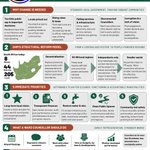
The answer is obvious: Put aside petty differences, embrace the common goal of freedom and flourishing and get active:
-Identify and spread Solutions, not Problems.
-Become as independent of government and corporate CONTROL as you can. This gives you OPTIONS.
-Invest in the 5 THINGS you need for your survival. This makes you an asset rather than a liability.
-Find and collaborate as equals with other like-minded people instead subjecting yourself to yet another saviour organization or leader.
-Now you can lead by example. This has massive power to change society.
-There is a movement doing all of this and a lot more:
The Organic Humanity Movement ohm.org.za
Empower yourself for your role in saving South Africa. The time for action is NOW.

I wonder why SA citizens allow their elected servants to do this to them and get away with it with no consequences. Are we really that slap gat?

phaedrus42 retweeted

Friedrich Engels, the trust-fund kid who spent forty years bankrolling the man who called capitalism exploitation. Ironic.
Engels inherited co-ownership of Ermen & Engels, a Manchester cotton mill, in 1864. He worked there as a partner, managed workers, collected profits, and wired money to Marx in London for decades. Marx, meanwhile, wrote about the immiseration of the proletariat from rented rooms his friend's textile workers paid for. Marx fathered a child with his unpaid housekeeper, Helene Demuth, denied paternity, and let Engels take the blame publicly for years. Engels obliged. The man was a doormat with a trust fund.
Marx himself produced almost nothing marketable. "Das Kapital" Volume One appeared in 1867; he never finished Volumes Two and Three. Engels assembled them from Marx's notes after his death in 1883. The great theorist of historical inevitability couldn't finish his own book.
Two men, one the son of a factory owner and the other a chronic debtor who borrowed from his own mother, invented a theory that claimed capital accumulation is theft. Engels accumulated capital. Marx stole from everyone around him, privately and personally, before proposing to do it systematically at gunpoint through the state.
Every currency debased, every factory nationalized, every famine engineered under regimes waving their banner traces back to two comfortable Europeans who never once went hungry because prices rose, stood in a breadline, or dug a mass grave for dissidents.

phaedrus42 retweeted
Before the welfare state existed, working-class Americans built their own safety nets, and those nets caught people.
Fraternal mutual aid societies like the Odd Fellows, the Sons of Italy, and hundreds of smaller ethnic lodges ran insurance programs throughout the 19th and early 20th centuries. By 1920, roughly one in three adult American males belonged to one. Members paid modest dues, typically $1 to $2 monthly in 1900 dollars, and received sickness benefits, death payments, and access to lodge doctors who charged $1 to $2 per year per family. The Foresters of America covered 900,000 members by 1908. These institutions ran on mutual contracts between people who knew each other; it wasn't charity.
Accountability created alignment of incentives. Lodge members had every incentive to verify that sick claims were genuine, because fraudulent payouts drained their own pool. Government bureaucrats face no such incentive. Someone else bears the cost of fraud in their system.
The lodge doctor system collapsed because the American Medical Association lobbied state legislatures throughout the 1910s and 1920s to ban contract medicine. Doctors working for lodges earned less than AMA members preferred. The state obliged, eliminated the competition, and left citizens with the fee-for-service monopoly that still strips your paycheck today.
Voluntary cooperation built welfare that worked. Politicians dismantled it.

phaedrus42 retweeted
Finally, Socialism and Fascism explained like you are 5 years old:
Socialism is when the bully takes your lunch money, buys a pack of chips, and gives you a single crisp.
Fascism is when the bully tells you to buy a pack of chips, then takes the pack and gives you a crisp.
phaedrus42 retweeted

For decades, classical economists like Adam Smith struggled to explain why water was cheap, while diamonds, largely useless luxuries, commanded a fortune. Austrian economist Carl Menger solved the diamond-water paradox by pioneering the concept of subjective marginal utility, pointing out that economists had mistakenly concluded that "value in use" and "value in exchange" were entirely separate concepts driven by production costs.
Menger argued that economic value is not an inherent property of an object, nor is it determined by the labor required to make it. Instead, value is entirely subjective and depends on the specific context of human choices made at the margin.
Individuals do not choose between all the water in the world and all the diamonds. They choose between an additional unit- one more glass of water versus one more diamond. Because water is highly abundant, the next available unit is used to satisfy a low-priority need, such as watering a lawn or washing a car. Therefore, its marginal utility - the value assigned to that next specific unit - is very low. Conversely, because diamonds are exceptionally rare, the next available diamond satisfies a highly coveted, unfulfilled desire for luxury or status, giving it a massive marginal utility.
Menger proved that value is a continuous scale of individual satisfaction. Price does not reflect the total abstract usefulness of a good, but rather the importance of the single, specific want that the very last available unit can satisfy. Marginal utility became the primary building block for the Austrian school of economic developed by later Austrian thinkers like Ludwig von Mises and Friedrich Hayek.

phaedrus42 retweeted

Please make the time to listen to my thoughts and ideas.
We need to mitigate the chaos as much as possible.
youtu.be/w0ab5pdv_EU

phaedrus42 retweeted

Ernst Götsch, a Swiss visionary, bought land in the south of Bahia, Brazil, in the ’70s. The land was so dry and exhausted that the locals had abandoned it.
He had previously studied ecology and had a hypothesis that by respecting how nature evolves and mimicking it, he could create productive ecosystems superior to industrial farms. He called the system syntropic agriculture.
He bought the land cheaply, together with a friend so they could afford it, and started working on it, faithfully following his hypothesis. His intent was to create a polyculture farm mimicking the original forest, from which he would sell cacao.
However, after a couple of years, a disease that was killing cacao trees all over Brazil spread fast, causing a complete loss on the other cacao farms.
His friend became desperate, because he didn’t believe what Ernst was sure about: that by creating polyculture forests, they would have natural resilience against any disease.
In other words, the lack of vitality—the trees’ and plants’ vulnerability to pests and diseases—was caused by planting them in isolation, in a monoculture system.
His friend could not be convinced, and Ernst managed to get enough money to buy his friend’s part of the farm and avoid losing it.
He was rewarded by observing that his hypothesis was right: all cacao trees in Brazil were affected, except his.
Systems that mimic natural ones have a strong immune system.
He then continued to steward the agroforest and started to harvest cacao in due time—arguably the finest cacao in the world.
He dedicated 70% of his land to conservation and is living proof that we can produce what we want while saving our home planet.
As long as we grow plants in isolation, with a “monoculture = efficiency” mentality, we’ll keep creating vulnerability to pests and diseases.
The solution is to mimic nature, creating polycultures that build their own immunity.
That can also be done in home gardens.

phaedrus42 retweeted
Ireland ran a functioning legal order for a thousand years without a state, and the system worked.
Brehon Law, derived from the Old Irish word "brithemain" (judges), governed Gaelic Ireland from approximately 600 AD until English conquest systematically dismantled it through the 17th century. No legislature wrote it, no police force enforced it, no prison system backed it. The law lived in a professional class of jurists who spent twenty years memorizing and interpreting a body of customary rules, competing for reputation in a market where your credibility was your entire business model.
Brehon Law ran on a system of sureties and honor-price called "lóg n-enech". Every person carried a social credit rating attached to their rank and conduct. Damage your neighbor's property, and a surety (a third party who had vouched for you) paid the victim and then collected from you. Your honor-price collapsed if you defaulted. Ostracism in a tight-knit pastoral society was a punishment severe enough to discipline behavior without building a single prison.
This is polycentric law operating in practice. Multiple tuatha (petty kingdoms) competed for population. If your lord governed badly, you walked to a neighboring tuath. Exit was real. That competitive pressure kept the legal system honest in ways no monopoly court system can replicate, because you cannot exit the jurisdiction of the state that taxes you.
English crown lawyers never argued Brehon Law was unjust. They called it barbaric because it produced order without them.


phaedrus42 retweeted

“But what about the deaths caused by capitalism?”
When discussing economic systems, I often highlight how Marxist socialism devastated Africa and other regions of the world, leading to the deaths of millions of people. Inevitably, someone responds: “But what about the deaths caused by capitalism?”
This response reveals a fundamental misunderstanding that needs addressing. It blames capitalism not just for greed, but for all of humanity’s darker instincts, as if free markets somehow invented human flaws.
Let’s get something straight: greed, exploitation, and cruelty have existed throughout human history, long before anyone conceived of property rights or free enterprise.
1/ Greed Predates Capitalism
Long before Adam Smith put pen to paper, humans had already committed unspeakable acts of greed, conquest, and exploitation:
- Genghis Khan ran a brutal empire that expanded through violence and rape. According to genetic studies, around 8% of men in a large region of Asia carry DNA linked to him.
- The Atlantic Slave Trade was powered by kings, empires, tribal chiefs, and European monarchies, most of whom operated under imperial and monarchical structures.
- In pre-revolutionary France, the monarchy, nobility, and upper clergy lived in great privilege and luxury, while the vast majority of peasants (about 80% of the population) endured poverty, heavy taxation, and frequent hunger.
There have always been selfish, greedy, and rapacious people, and there always will be, as long as humans exist. Every economic and political system has had greedy people in it. The difference is whether that system limits their power or lets it run wild.
2/ The Enemies Invented “Capitalism”
The word “capitalism” was coined by socialist critics in the 19th century, including Louis Blanc, Pierre-Joseph Proudhon and Karl Marx.
They used it to criticize the system they believed would inevitably collapse. Since they coined the term, it means whatever socialists want it to mean. That’s why the socialism vs. capitalism debate is often a Trojan horse to avoid admitting that free markets actually work.
Adam Smith (who is often called the “father of capitalism”) never actually used the word. Instead, he described natural liberty, where:
“Every man, as long as he does not violate the laws of justice, is left perfectly free to pursue his own interest his own way.”
(The Wealth of Nations)
John Locke, whose ideas heavily influenced America’s founding documents, focused on natural rights to “life, liberty, and property” in his Second Treatise of Government (1689). He argued these rights existed prior to government, which was instituted specifically to protect them.
When the American Founders created the US Constitution, they didn’t use the word capitalism either. The Bill of Rights protects individual freedoms like freedom of speech, religion, assembly, property, and due process, all of which protect individuals from both tyrants and mobs.
In other words, the core principles we now associate with “capitalism” were never about enriching the few. They were about protecting the many from power, whether it came from kings, mobs, or bureaucrats.
3/ Voluntary Socialism
Here’s the thing: if a group of people want to live communally, they should absolutely have that freedom. Such voluntary arrangements don’t require state coercion or enforcement.
For instance:
- The Amish live simply and share resources, but joining is voluntary, and people are free to leave if they choose.
- Kibbutzim are intentional communities in Israel, traditionally based on agriculture and collective ownership. Membership is voluntary, and individuals are free to leave at any time.
- Monasteries and religious orders have lived communally for centuries and continue to operate around the world, with monks and nuns sharing resources, labor, and prayer.
This is voluntary socialism, and no free-market advocate has a problem with it.
Marxist socialism is something else entirely. It calls for revolution, the abolition of private property, and stateless dictatorships with no respect for individual rights. It caused 65–94 million deaths, with some estimates exceeding 100 million.
It’s worth noting that capitalism even gives people the freedom to experiment with Marxist ideals.
In a free market, you’re allowed to create worker-owned businesses based on Marx’s labor theory of value if you want to. Cooperatives, mutual aid societies, and communal living models can and do exist under capitalism.
Every system has greedy people, but only free market capitalism, rooted in individual rights and the rule of law, limits their power through competition, transparency, and choice.


phaedrus42 retweeted

一艘满载十几万立方米液化天然气(LNG)的巨轮,能量相当于几十颗广岛原子弹,且船舱里的天然气必须全程维持在零下 162℃ 的极低温液态,一旦升温气化膨胀 600 倍就会把船体撑爆。
很多人以为这艘船底下肯定是装了全世界最大功率的超级制冷压缩机给储罐吹冷气。
实际上,主流远洋 LNG 船在航行时根本不给储罐通电制冷,而是用了一招绝妙的物理学顺水推舟:“蒸发气自冷与发动机混烧(Boil-Off Gas)”!
船体储罐裹着厚厚的绝热保温层,但每天依然允许约 0.1%~0.15% 的液化天然气受热自然沸腾蒸发;正是这一丁点液体在蒸发相变时吸走了大量潜热,让剩下的整船液体稳稳保持在零下 162℃!
而每天蒸发出来的那几万立方米天然气也没浪费,直接顺着高压管道抽进轮船的主发动机里当免费燃料烧掉,推着巨轮跨越大洋。

phaedrus42 retweeted

People are freaking out over 3 - 90 day prep urges from EU countries and... youtu.be/FaxRKk8mAvY?si=lAU-… via @YouTube

No, you don't vote for your ward councillor or mayor. You vote for a party. The party appoints the councillor from a party list and the councillors are told by the party whip who to vote for as mayor. The councillors answer to the party, not to you. See the problem? To have true representation and accountability to voters, we need Direct Elections, with Recall.

phaedrus42 retweeted

Martin Hood says it straight:
“You will have to come and take them from us because your government cannot protect us from criminality and it seems we now need to protect ourselves from you and your officials unlawful and unconstitutional conduct.”


phaedrus42 retweeted
2030 - The Rise of the Machines - What is Science and what is Fiction youtu.be/Zbsqrwa4uzk?si=79UT… via @YouTube
phaedrus42 retweeted
Francisco d'Anconia's speech on money in Atlas Shrugged is the most economically literate passage in twentieth-century fiction.
The speech runs about 2,000 words in the novel. Francisco delivers it at a party, surrounded by parasites who just declared money the root of all evil. He corrects them with surgical precision. Money is not the root of evil. It is the tool that makes voluntary exchange possible, the ledger of honest production, the only mechanism by which you trade your mind's output for someone else's.
The core claim is this: money requires production. You cannot print your way to wealth any more than you can vote yourself a harvest. Every dollar bill in your wallet represents a claim on someone's actual labor, actual material, actual time. The moment a government prints currency without corresponding production, it dilutes every existing claim. It robs you quietly, without a gun visible in the room.
Francisco puts it cleanly: "Money is a tool of exchange, which can't exist unless there are goods produced and men able to produce them." That sentence alone dismantles three centuries of mercantilist confusion. Wealth is production. Currency is merely the signal that coordinates its exchange.
The speech also destroys the "love of money is greed" cliché. Francisco distinguishes between those who earn money through trade and those who acquire it through force or fraud. A man who builds a railroad and charges willing passengers operates on an entirely different moral plane from a lobbyist who gets a competitor regulated out of existence. Rand drew that line in 1957. Washington D.C. has spent the intervening 69 years blurring it.
What the speech predicts is decay. When a society starts treating producers as servants of non-producers, capital goes quiet. Factories don't get built. Entrepreneurs stop announcing their plans. You see this in every hyperinflationary episode, from Weimar Germany in 1923 to Zimbabwe in 2008 to Argentina today, still fighting inflation. Production retreats when the rewards of production get expropriated.
Read the speech slowly. Exchange requires two parties who each gain something. Force produces one winner and one loser, and eventually the loser stops playing. The whole global economic order rests on which model you choose to enforce.

2030 - The Rise of the Machines - What is Science and what is Fiction youtu.be/Zbsqrwa4uzk?si=Q9oX… via @YouTube