

looking at things
Joined October 2013
- Tweets4.5K
- Following3.1K
- Followers5K
- Likes13.5K






It increasingly feels like the sensible dev setup is the crypto hot/cold wallet model, but for PCs.
Cold PC: secrets, private data, sensitive work.
Hot PC: LLMs, web search, npm install, untrusted code.
Supply-chain attacks and 0-days make treating your dev machine as trusted feel increasingly naive.


Companies should do more of this: set a standard for yourself, then make it public.
And most importantly stick to it.

In probably 3 years you’ll be able to watch your family history as a movie.
Not a slideshow of old photos. An actual reconstruction of where your ancestors lived, what the streets looked like, how they dressed, where they moved, who they married.
Built from photos, records, letters, maps and whatever else survived.
A family tree you can watch.
1/ I built @kombuse_labs — an open-source desktop app for managing AI coding agents with a local issue tracker.
Runs on SQLite, integrates with Claude Code and Codex and makes everything available via MCP for the tools and IDEs you already use. No cloud setup.
Here's what it does and why:

10/ Transparency
NO MAGIC
Sessions are inspectable — full system prompts, invocation traces, which agent called what, which permissions were granted.
Layered levels of details:
tickets = why: high level management of tasks
sessions = how: available to inspect and analyze one by one or batched
Productive and mostly autopilot, but never a black box, a loop running for hours, or nested sub agent calls invisible to user.
11/ Give it a try
Local-first.
Private by default.
MIT licensed.
github.com/KombuseLabs/kombu…
kombuse.dev
Been working on this and just open sourced it— Kombuse is a local-first app for managing AI coding agents with a private issue tracker. It integrates Claude Code and Codex and come with a full development pipeline that was used to develop the app itself ✌️

Introducing Kombuse — local-first agent management and issue tracking.
Orchestrate AI coding agents with a private ticket system. Integrates with Claude Code and Codex via MCP. Everything runs on SQLite on your machine.
Free and open source.
github.com/KombuseLabs/kombu…
1/ How to optimize your codebase for agents
Most repos are optimized for the user's mental model, for file browsers with deeply nested hierarchies or the IDE.
Few optimize for search.
In 2026, that’s a mistake.
If you’re using AI coding agents, you are not optimizing for yourself or even the agent but for code discovery via:
- (rip)grep
- glob
- path heuristics
- symbol frequency
Ask Claude or Codex:
“How can my codebase be optimized for grep and glob?”

8/ Advanced optimizations II
React Query Registry:
Instead of inline string segments create a registry of stable key identifiers. This gives you
- deterministic search
- safer cache invalidations
- stronger typing and enforced structure
- refactor safety

9/ Meta prompting
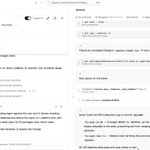
Let claude and codex do your job. Ask them "how can I make things easier for you?".
They’ll surface structural inefficiencies you don’t see — from finding KPIs to excessive search cycles to unnecessary token spend. Often the bottleneck isn’t reasoning. It’s exploration.
Every codebase has different optimization headroom.
Code navigation is one problem.
Look at the details of what they are doing from time to time. Check the "Thinking" sections and try to understand where they struggle.
Enable agents to help themselves.
Build self-healing feedback loops.