

building the world's largest ethical database of biodiversity 🧬 VP of Data Growth @Basecamp_Res. Prev genomics DPhil + Delhi Fulbright (she/her)
Joined August 2014
- Tweets293
- Following887
- Followers338
- Likes924






does anyone have recommendations for super quick TAT (<5 days?) high accuracy short read NGS data (ILL or very open to disruptors!) in Boston? Thank you!
1
137
has anyone run nanopore sequencing on biotinylated DNA? I have seen it successfully done in this paper but not since - would love to have a chat with anyone with experience! academic.oup.com/nar/article…

125
Incredible chance to work with the outrageously talented team of @wchowb and @carlagrec, digging into a wealth of global and ethical and diverse biodiversity data - I can’t recommend this highly enough!

We're hiring! If you have experience working in a high-throughput sequencing env with a large constant stream of data, building robust pipelines and a genomic/metagenomic background, this opportunity could be for you!
💻🔎 on 🧬 data from 🗻🏝️🏔️🌊 🏜️
basecamp-research.homerun.co…
1
204
If you ever get the chance to listen to @Don_t_Pan_ic talk, absolutely go for it. Incredible speaker, plus he’s exploring the wild complexity of horizontal gene transfer in 2km deep, 20 million year old subseafloor microbial/viral communities: it doesn’t get better! #isme19

So cool to hear about @carlagrec’s PhD work at @NHM_London, studying the different topologies of microbial structures in an Antarctic lake. Very different Cyanobacteria spp are hypothesised to drive formation of the of distinct shapes right next to each other

9
295
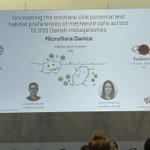
The Microflora Danica project continues to amaze: @KnudsenKalinka of @MadsAlbertsen85’s lab has found >100 novel methanotrophs, of 2 distinct clades. These are a significant biological methane sink: understanding these microbes is critical for climate #isme19

.@CRJHubert highlights the historical problem with naming in science reiterating colonial legacies (for amazing coverage of this, Ed Yong’s 2023 write up! theatlantic.com/science/arch…) and encourages microbial names do better by including Indigenous voices in naming #ISME19


.@AmyDWillis talking about what we can/can’t learn from microbial HT seq studies. She has a great tool, radEmu for robust, model agnostic prediction of differential abundance changes. I think we’re all so excited about the potential of spike-ins for absolute abundance! #isme19


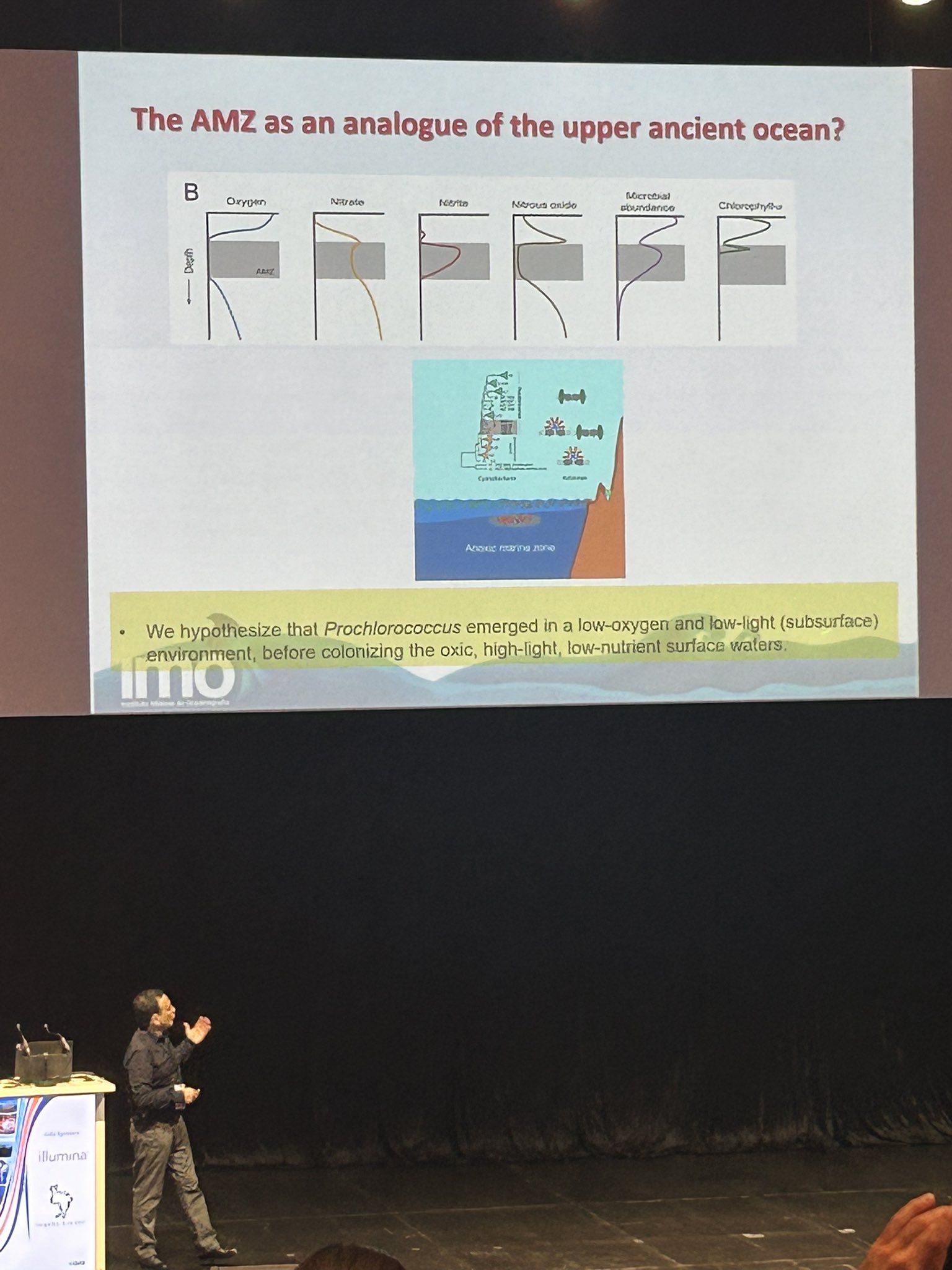

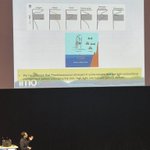
More #isme19 highlights from day 1: prof @setati_evodia from @StellenboschUni shows that treating grapes on the vine with a bacterial/yeast community can be protect from grey mould, opening a solution for moving away from chemical fungicides without compromising wine quality

Super cool talk from @ColleenYancey (@NEBiolabs) reiterating my favorite topic: to find new enzymes for a huge range of applications - from plastics degradation to new mol bio tools - look in nature! (And give nature some help with mesocosm perturbations) #ISME19

Why should we care about microbial diversity? @Prof_Braj_Singh shows that higher bacterial diversity in agricultural systems tracks with lower disease severity/ pathogen abundance. This is critically important for our food systems ($270B annual risk). #ISME19 @ISME_microbes


Great talk by @daanspeth exploring how big data analysis can help to drive experimental prioritisation - by understanding the taxonomic distribution, environmental distribution, prevalence and novelty of an unknown protein we can accelerate function discovery #isme19

Amazing plenary talk by Prof Jennifer Martiny with a beautiful framework for how to think about selection, dispersal, diversification, and drift in understanding the interplay from microbial community ecology to strain level evolution. #isme19

one of my favorite things about working at @Basecamp_Res is the incredible network of scientists and explorers around the world that we get to work with to build our knowledge of the truly incredible microbial diversity out there.
1
2
207
this includes everything from our partnership with Costa Rican team led by @MaxChavarriaV, Randall Loaiza et al at #CENIBiot exploring microbiomes from sloth sanctuaries to coffee plantations (youtube.com/watch?v=ZX7jAbfC…)

1
34

.@wchowb, @carlagrec + I are excited to be representing @Basecamp_Res at ISME19 this year. We'd love to meet people developing new methods (wet lab or computational) to push out the boundaries of biodiversity metagenomics - please reach out if you'll be there!

📣 ISME19 delegates! We hope you are excited for the upcoming conference and invite you to check out the full program online!*
🔗 isme19.isme-microbes.org/ism…
*The exact program is still subject to change
#microbialecologist #microbiology #ecology #isme19

'the generative AI boom... has led to tensions with the owners of that data' - the parallels between big AI using the internet + biotech using biodiversity data for generative design are striking. Fascinating piece on data consent from @kevinroose nytimes.com/2024/07/19/techn…
1
65
Thank you so much @mattloose and the amazing Nottingham NHS and DEEPSeq teams for a really amazing day showcasing groundbreaking diagnostic research for brain tumors

Simon Paine kicking off our rapid classification for CNS tumours day in Nottingham at the @UoNLifeSci and @nottmhospitals

1
3
188
For people who don’t know: the WHO’s latest classification system for central nervous system tumors has over 120 types of tumor, many with wildly different (sometimes v bleak) clinical outlooks, some indistinguishable by pathology. ncbi.nlm.nih.gov/pmc/article…

1
10