

The Peterson Institute for International Economics is a nonpartisan, independent research institution devoted to studying international economic policy.
Washington, DC
Joined March 2009
- Tweets50.2K
- Following4.7K
- Followers115K
- Likes9.5K





"On the broad macroeconomic outlook, things are not looking great" in Brazil, Monica de Bolle says. A hostile Congress "will make it very hard to push any reform through Congress & even try to manage the budget." reuters.com/world/americas/b…

Although China’s current account surplus has grown explosively in the past few years, this is not necessarily because of Beijing’s industrial subsidies, Nicholas Lardy writes in response to @MikeFroman in @ForeignAffairs. The growth of China’s surplus, beginning in 2024, he writes, is more likely explained by a rise in the imbalance between domestic savings & investment. foreignaffairs.com/guest-pas…

Peterson Institute retweeted

“The more some countries move to control key chokepoints, the more others will worry about how those chokepoints may be weaponized and seek to leverage their own,” write Henry Farrell, Abraham Newman, and @YelingT.
foreignaffairs.com/united-st…

What we have seen to date, Alan Wolff writes, is that the executive branch, with its ability to move instantly, has been able to find the means to impose tariffs far faster than the courts can review their legitimacy. piie.com/blogs/realtime-econ…

China’s surplus is not the greatest contributor to imbalances—the US deficit is. As a share of global GDP, the US’ current account imbalance was 2-3x that of China in 2023 to 2024, Nicholas Lardy writes in response to @MikeFroman in @ForeignAffairs.
foreignaffairs.com/guest-pas…
The Fed’s inflation task is like that of a doctor prescribing antibiotics, says Maurice Obstfeld.
Even as the symptoms pass, the patient will be urged to complete the course.
“You may feel better, but finish them,” Obstfeld says. The same course of action applies to the Fed. “When they start to hike, they continue administering the antibiotics for a while until the patient is cured.” bloomberg.com/news/articles/…

What would truly doom Brazil to economic crisis is the kind of authoritarian-inspired politics that a Bolsonaro government could usher in.
foreignaffairs.com/guest-pas…

Reducing the magnitude of global imbalances is a desirable goal, but it is best achieved through international cooperation & not unilateral action, Nicholas Lardy writes in response to @MikeFroman in @ForeignAffairs.
foreignaffairs.com/guest-pas…
Canada is not & will not become a candidate country to the European Union, nor does it want to be. But there are still strong prospects for deepening EU-Canada ties.
By @MalmstromEU & @inumanak: piie.com/blogs/realtime-econ…

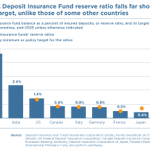
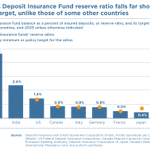
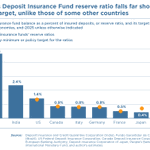
China's Deposit Insurance Fund has a remarkably small financial buffer relative to the deposits it protects. At the end of 2025, its reported balance was RMB130 billion, an estimated 0.1% of insured deposits—far below the fund's 1.5% target.
Read: piie.com/blogs/realtime-econ…

In September 2026, Trump suggested he is open to Chinese automakers building cars in the US. The administration can & should explore ways to ease or remove the barriers to Chinese investment in EVs in the US, Alan Wolff writes. piie.com/publications/policy…

Viewing the world economy as a system of chokepoints has its own deadly blind spot, Yeling Tan & coauthors write in @ForeignAffairs. It is leading policymakers to focus on capabilities rather than strategy—to fixate on what leverage they have, & what leverage others have over them, rather than considering what happens when many countries build up their chokepoint power all at once. foreignaffairs.com/united-st…
What would truly doom Brazil to economic crisis is the kind of authoritarian-inspired politics that a Bolsonaro government could usher in.
foreignaffairs.com/guest-pas…
China’s surplus is not the greatest contributor to imbalances—the US deficit is. As a share of global GDP, the US’ current account imbalance was 2-3x that of China in 2023 to 2024, Nicholas Lardy writes in response to @MikeFroman in @ForeignAffairs.
foreignaffairs.com/guest-pas…
The more governments create bureaucracies devoted to identifying & controlling economic chokepoints, the more a chokepoint logic becomes the default lens through which they make even routine economic policy. foreignaffairs.com/guest-pas…
Peterson Institute retweeted
When policymakers fixate on economic chokepoints, they “focus on capabilities rather than strategy,” write Henry Farrell, Abraham Newman, and @YelingT. “The result is a familiar but dangerous dynamic: the security dilemma.”
foreignaffairs.com/united-st…
Peterson Institute retweeted
Both Bolsonaro and Lula are trying to win over “voters by promising initiatives that boost income and offer household debt relief, but delivering such programs—if it is even possible—would only exacerbate Brazil’s economic woes,” writes Monica de Bolle.
foreignaffairs.com/brazil/br…
The main effects of a drop in international students & workers in the US will take years to materialize, but will likely result in "fewer inventions, fewer new businesses & fewer new industries, at a time when we desperately need all of those things to adjust to the AI shock," @m_clem says. pbs.org/newshour/politics/ho…

Monica de Bolle joined @cnni to discuss the upcoming presidential runoff election in Brazil & how regardless of who wins, either candidate will face challenges in fixing Brazil’s economic woes.
Despite his original skepticism about central bank asset purchases, Klaas Knot, a former president of De Nederlandsche Bank, now sees them as an integral part of the monetary policy toolkit. But effectiveness depends on economic context & fiscal policy. piie.com/publications/policy…
