

Truteń retweeted

Fed hike = the Fed is trying to tighten financial conditions by giving more interest income to the upper leg of the "K" (Boomers) while simultaneously increasing US govt deficits (via higher interest expense).
That's like screwing to try to get your virginity back.
Truteń retweeted

¿Y si el mayor peligro para nuestra sociedad no fuera la maldad, sino la estupidez?
La alarmante teoría de Dietrich Bonhoeffer que explica el mundo de hoy.
La Teoría de la Estupidez de Bonhoeffer:
El peligro silencioso
Durante los años más oscuros de la Alemania nazi, el teólogo y pastor Dietrich Bonhoeffer reflexionó desde su celda sobre cómo una sociedad culta y moderna había caído en la barbarie colectiva.
Su conclusión fue revolucionaria y alarmante:
la estupidez es un enemigo del bien mucho más peligroso que la maldad misma.
👉 ¿Por qué es más peligrosa que la maldad?
Contra la maldad se puede luchar:
se puede denunciar, combatir e incluso legislar en su contra.
El malvado, en el fondo, suele tener conciencia de que está rompiendo las reglas.
Con la estupidez, en cambio, estamos completamente indefensos.
La persona dominada por ella es impermeable a los argumentos lógicos y a los hechos objetivos.
Si se le presentan pruebas que contradicen sus dogmas, simplemente las ignora o las tacha de irrelevantes.
Al sentirse completamente segura de sí misma, se vuelve agresiva y sumamente peligrosa al ser confrontada.
No es un defecto intelectual, sino moral
Bonhoeffer aclaró que esto no tiene nada que ver con el coeficiente intelectual o el nivel educativo. Existen mentes brillantes que operan bajo una profunda estupidez y personas sencillas que desbordan sabiduría moral.
La estupidez ocurre cuando un individuo renuncia voluntariamente a su capacidad de juicio propio.
👉 El contagio social y el rol del poder
Para el pensador, la estupidez es un fenómeno sociológico.
Observó que el ascenso de una fuerte estructura de poder (política o religiosa) infecta de estupidez a gran parte de la población.
Al integrarse a un grupo o adoptar ciegamente una ideología, el individuo sacrifica su independencia interior.
En este estado, la persona ya no piensa por sí misma:
se convierte en un repetidor de eslóganes, consignas y narrativas prefabricadas.
Al delegar su conciencia al colectivo, se transforma en una herramienta dócil capaz de cometer o justificar las mayores atrocidades sin experimentar remordimiento alguno.
👉 La conclusión de Bonhoeffer
La estupidez no se cura con más instrucción o datos, sino con un acto de liberación interna y coraje moral.
Hasta que el individuo no recupere la valentía de examinar sus ideas de forma autónoma y de tolerar la incomodidad de contradecir a su propio grupo, seguirá atrapado en este peligroso letargo.

Truteń retweeted

The destruction of Yugoslavia in the 1990s was the prototype for humanitarian intervention used as regime change.
Yugoslavia was a multi-ethnic socialist federation that had held its independence from both NATO and the Warsaw Pact. Once the Cold War ended, it no longer had any value as a buffer state. A reunified and increasingly assertive Germany pushed for the recognition of Croatian and Slovenian independence, and the United States, under pressure from lobbying firms hired by the Croatian and Bosnian governments, shifted from supporting Yugoslav unity to supporting its dissolution.
The wars that followed, from 1991 to 2001, killed approximately 140,000 people and displaced more than 4 million.
The 1999 NATO bombing of Serbia lasted 78 days and proceeded without UN Security Council authorization, justified as preventing genocide in Kosovo. The bombing killed approximately 500 Serbian civilians and destroyed significant civilian infrastructure, including bridges, factories, and a television station. After the intervention, Kosovo became a hub for organized crime, heroin trafficking, and human organ trafficking, as documented by Council of Europe investigator Dick Marty.
Yugoslavia was the test case that proved humanitarian intervention could be used to bypass the UN Security Council and dismantle sovereign states. Libya and Syria followed the same template.

Truteń retweeted

Skąd się wziął wysoki deficyt budżetowy 🇵🇱 ? Warto przypomnieć jego źródła. Pokazuje je MFW na poniższym wykresie, jako skumulowaną zmianę od 2021 r.👇
Konkluzja: wzrost deficytu jest związany przede wszystkim z:
- Wzrostem wydatków socjalnych — m.in. podwyższeniem 500+ do 800+ (uchwalonym w 2023 r., obowiązującym od 2024), wysoką waloryzacją emerytur, w tym 13. emerytury, wprowadzeniem na stałe 14. emerytury (2023), a następnie rentą wdowią, „Aktywnym Rodzicem” i innymi świadczeniami.
- Wyższymi wynagrodzeniami w sektorze publicznym, w tym dużymi podwyżkami od 2024 r., częściowo nadrabiającymi wcześniejszy spadek płac realnych spowodowany wysoką inflacją.
- Wyższymi wydatkami na odsetki, m.in. wskutek postpandemicznego wzrostu kosztów finansowania długu. W 2021 r. rentowność polskich 10-letnich obligacji spadała poniżej 2%; dziś wynosi około 6%.
- Oczywiście wzrostem wydatków na obronność.
Co ważne, wzrost deficytu nie był efektem spadku łącznych dochodów państwa. Wprawdzie dochody podatkowe jako % PKB spadły — m.in. w wyniku obniżek podatków związanych z Polskim Ładem — ale zostało to z nawiązką skompensowane wzrostem składek społecznych i innych dochodów.
Łączne dochody sektora finansów publicznych wzrosły z 41,9% PKB w 2021 r. do 42,9% w 2025 r. Wydatki wzrosły natomiast z 43,6% do aż 50,0% PKB.
Pogorszenie salda wynikało więc przede wszystkim z tego, że wydatki rosły znacznie szybciej niż dochody.

Truteń retweeted
This is not widely understood by US and western investors.
We will know it is widely understood by US and western investors when they begin ferociously bidding gold higher on rising rates.
Let’s watch.
PS: My friends and clients in LatAm reading this be like 👇

Truteń retweeted

Global bond yields are at their highest level since 2008.
But I’d be very careful with the narrative: “Oh, we’ve been here before. There is no reason to worry.”
Because one thing is definitely NOT the same: the amount of outstanding government debt on which those yields have to be paid.
Budget deficits also look pretty different, read: much worse, than they did in 2008.
So something has got to give.
It can be consumers being taxed much more heavily.
It can be governments spending less, directly impacting people’s quality of life through cuts to Social Security, healthcare, and education.
It can be central banks being forced to abandon their inflation targets to keep interest expenses under control.
Or perhaps a magical AI-generated productivity boom will save us from unsustainable debt trajectories.
I would argue there is a very clear reason to hedge at least part of these risks.


Tons of old-school economists, financial journalists, and market experts have the same knee-jerk reaction when looking at today's bond yields: interest rates were much higher in the 1990s and the first part of the 2000s.
This is their way of saying that nothing has really changed, we've been here before, so let's stick with our outdated investment philosophy and everything will be all right.
But what they are forgetting is debt. That HAS changed. A lot.
Take the United States. Comparing today's 10-year Treasury yield of nearly 5% with roughly 6.5% in the 1990s also means comparing a total debt-to-GDP ratio of around 310% back then with more than 430% today.
So even though interest rates were higher in the 1990s, interest expenses as a percentage of GDP were almost a full percentage point lower.
Concluding from yields alone that we've been here before is therefore simply wrong. Once you take into account the massive debt loads of today's aging economies, the conclusion is almost the exact opposite:
We have never been here before.
And higher yields at today's debt levels are taking us into uncharted territory.

Truteń retweeted

What the U.S. is doing with Venezuelan oil literally parallels what caused the Iranian Revolution
Trump's Venezuela deal is highly similar to the 1954 Iranian Agreement
Both deals structurally bypassed complete National Sovereignty by giving Foreign Entities a dominant operational stake in the oil fields
In the long run, if Venezuela's citizens do not see their lives improve while the U.S. controls their oil, it may cause another Revolution in Venezuela


Truteń retweeted
The moment Ukraine’s fate was doomed.
Bucharest Summit,2008, George W. Bush praising Ukraine for backing NATO’s bloody adventures in Afghanistan and Iraq.
Then he drops the bomb: full-throated support for Ukraine joining NATO.
"Helping advance security and freedom," he says, completely blind to the chaos he’s unleashing.
Let's be clear, this moron triggered a chain of destruction that condemned a generation of brainwashed Ukrainians to die for a fabricated bullshit lie. Manufactured and sold by Western deception.....
Truteń retweeted

Prof Filipiak współpracuje z: AstraZeneca, Bayer, Boehringer Ingelheim, Merck, MSD, Novartis, Servier, Sandoz, Sanofi oraz wiele innych
Ciała doradcze przy RPP, MZ i NIL mają jawne konflikty interesów z branżą farmaceutyczną
Dlatego totalitaryzm medyczny w Polsce ma się dobrze i postępuje, bo chciwość przemysłu nie zna granic
Truteń retweeted

Scott Bessent looks to be intentionally crashing the $.
I studied currency collapses and found that there were 7 indicators that preceded every major currency collapse in modern history.
I then measured the US dollar against those 7.
And as of right now, based on what Scott Bessent did last week, we have hit all 7 indicators.
No country in modern history has met all 7 and avoided a currency collapse. None.
And this doesn't look to be happening to us, it looks to be being done to us, by the people who swore an oath to prevent it. And they are getting rich while they do it.
Full article is up on Substack now (link in bio and it's free). I also give the things I am eyeing to hedge it and what we can do to fight it.

Truteń retweeted

There are two types of inflation:
What the government reports and what the real world is experiencing.
We all know which one to believe.
Just wait until the Fed points to the blue line — or a similar measure — to justify easing financial conditions, even as inflation continues to accelerate.
The debt trap is becoming impossible to ignore.
tavicosta.substack.com/p/the…

Truteń retweeted

Intelligent people live a boring life. They go to bed at 10. Wake up at 6. Eat simple foods. Go for long walks. Read thick books. Say no to things that drain them. The world chases excitement. But they chase calm. Things that align with their soul. A calm routine. A quiet mind. A healthy body. Meaningful work. A small circle. A private life. Their life may look boring from the outside. But from the inside, they experience a kind of freedom most people spend their entire lives searching for.
Truteń retweeted
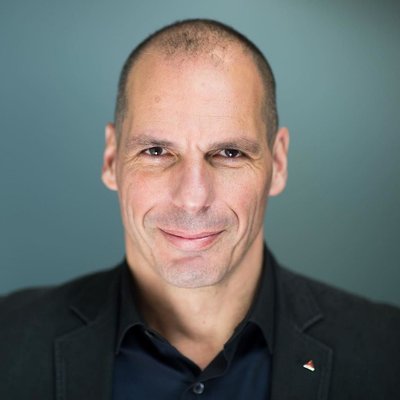
Goodness gracious! For Scot Bessent to enlist Pascal's Wager in the Financial Times against Iran, Washington must be in the psychological state that lies just beyond panic: despair. ft.com/content/cb865200-1a06…

Truteń retweeted
Many investors are questioning the value of the U.S. dollar after the recent interventions by the U.S.
Treasury concerning the yen and, especially, after ‘Operation Twist’ 2.0, in which the Treasury, not the Federal Reserve, bought long-duration bonds financed by issuing short-term debt.
There are two angles to this.
First, should you expect the dollar to collapse in value against the yen or the euro? Not necessarily. Neither currency is remotely capable of replacing the U.S. dollar as the world's reserve currency.
More importantly, both have serious problems of their own.
Japan, at some point, will have to return to some form of yield curve control. Otherwise, interest expenses on its enormous debt load will balloon from near zero to around 10% of GDP. That is outright unsustainable given what it would do to the Japanese budget deficit.
The fate of the euro, meanwhile, lies with the weakest link within the Eurozone. To keep the currency union together, policies, including those of the ECB, must ultimately be aimed at protecting that weakest link, which increasingly looks like France rather than Italy. Political polarization, structurally large budget deficits, slow GDP growth, and one of the world's most expensive social security systems mean France cannot afford structurally higher yields.
And the ECB's Transmission Protection Instrument (TPI), its latest and most opaque policy tool, stands ready to push down yields if the central bank believes they have risen too far. Activation would put downward pressure on the euro against the U.S. dollar. Any serious increase in the perceived risk of a euro break-up, as leaving becomes increasingly attractive to countries such as Germany and the Netherlands when imbalances widen, would do the same.
But second, and much more importantly, focusing only on the value of the dollar against other fiat currencies completely misses the point.
This is a race to the bottom, an endless process of currency debasement needed to keep the debt-driven system afloat. At times, the U.S. dollar will fall fastest. At other times, it will be the yen or the euro.
The point is that all fiat currencies of aging, debt-loaded economies will continue to lose ‘value’ against scarce assets such as gold and bitcoin, and, to varying degrees, art, fine wine, and classic cars.
Most investors spend an awful lot of time trying to hedge the risk of one fiat currency against another. But the real focus should be on protecting your purchasing power and wealth against the continued debasement of fiat money itself.

Truteń retweeted
Roughly 15 years ago, Italy proved too big to fail.
It took an Italian promising “whatever it takes” to keep the Eurozone and the euro together.
Today, investors demand a higher yield from France than from Italy.
How long until we hear “quoi qu’il en coûte”, the French version of “whatever it takes”, accompanied by massive ECB intervention to keep the Eurozone from falling apart?
And yet some still believe the euro could replace the dollar as the world’s reserve currency.
The euro will NOT be the next global reserve currency.

Many investors are questioning the value of the U.S. dollar after the recent interventions by the U.S.
Treasury concerning the yen and, especially, after ‘Operation Twist’ 2.0, in which the Treasury, not the Federal Reserve, bought long-duration bonds financed by issuing short-term debt.
There are two angles to this.
First, should you expect the dollar to collapse in value against the yen or the euro? Not necessarily. Neither currency is remotely capable of replacing the U.S. dollar as the world's reserve currency.
More importantly, both have serious problems of their own.
Japan, at some point, will have to return to some form of yield curve control. Otherwise, interest expenses on its enormous debt load will balloon from near zero to around 10% of GDP. That is outright unsustainable given what it would do to the Japanese budget deficit.
The fate of the euro, meanwhile, lies with the weakest link within the Eurozone. To keep the currency union together, policies, including those of the ECB, must ultimately be aimed at protecting that weakest link, which increasingly looks like France rather than Italy. Political polarization, structurally large budget deficits, slow GDP growth, and one of the world's most expensive social security systems mean France cannot afford structurally higher yields.
And the ECB's Transmission Protection Instrument (TPI), its latest and most opaque policy tool, stands ready to push down yields if the central bank believes they have risen too far. Activation would put downward pressure on the euro against the U.S. dollar. Any serious increase in the perceived risk of a euro break-up, as leaving becomes increasingly attractive to countries such as Germany and the Netherlands when imbalances widen, would do the same.
But second, and much more importantly, focusing only on the value of the dollar against other fiat currencies completely misses the point.
This is a race to the bottom, an endless process of currency debasement needed to keep the debt-driven system afloat. At times, the U.S. dollar will fall fastest. At other times, it will be the yen or the euro.
The point is that all fiat currencies of aging, debt-loaded economies will continue to lose ‘value’ against scarce assets such as gold and bitcoin, and, to varying degrees, art, fine wine, and classic cars.
Most investors spend an awful lot of time trying to hedge the risk of one fiat currency against another. But the real focus should be on protecting your purchasing power and wealth against the continued debasement of fiat money itself.

Truteń retweeted
US Treasuries are the world’s financial choke point,and right now they’re a $40 trillion time bomb.
This mountain of debt is dumping risk on everyone else: jacking up borrowing costs worldwide, wrecking cross-border capital flows, and sucking liquidity out of markets.
The result is a rolling series of global shocks with no end in sight.
The endless flood of new Treasuries has driven risk-free rates higher and is actively throttling any real recovery. Washington keeps printing debt to paper over its fiscal mess.
Markets know this pile is unsustainable, so risk premiums are climbing and long-term yields keep grinding higher. Even JPMorgan’s rates team admits the supply tsunami will keep pushing term premiums up for years.
Because every major asset is priced off Treasuries, the yield spike is raising sovereign debt costs, dollar corporate bond rates, and household credit rates across the planet at the same time. Emerging markets are getting crushed under heavier foreign-currency debt loads.
Companies everywhere face higher financing costs. Industrial investment, cross-border capital, and household credit demand are all getting strangled.
High yields are vacuuming capital out of the rest of the world and back into the US, Reuters and Bloomberg data show the same pattern: as the Treasury pile approaches $40 trillion, yields lurch higher and capital floods out of emerging markets.
The gap between developed and developing financial systems is only getting wider.
The market structure itself is breaking. Long-term stabilizers,foreign central banks and sovereign wealth funds,are dumping Treasuries and walking away. Short-term leveraged hedge funds have become the main buyers.
What used to be the global market’s shock absorber has turned into a volatility amplifier.
The moment data, policy, or geopolitics shift, these funds will dump en masse, yields will spike, and liquidity will vanish overnight.
The IMF has already flagged the danger: rising liquidity stress in Treasuries can turn a local problem into a global cascade and steadily destroy the system’s ability to heal itself.
The blunt truth is that America’s debt mountain has become a systemic risk for the entire world.
Using dollar dominance, the US is offloading the bill for its fiscal recklessness onto everyone else, choking global growth, and ripping apart the existing financial order.
The longer this continues, the more fragile and contradictory the whole system becomes.


