

Professor at the University of Maryland School of Medicine. Neuroscientist studying mitochondria and neuroinflammation. Committed to rigorous, honest research.
Joined January 2020
- Tweets111
- Following194
- Followers141
- Likes211





Brian M. Polster retweeted

I have also been impressed with Dr. Yellman's medical and scientific knowledge, and, even more importantly, he is an amazing human being. I have seen how compassionate he is, how much time and energy he puts in with patients, how he has a vision to provide care for *everyone*. No patient left behind.
At the beginning of Remission Biome, our team made the conscious decision to include severe / very severe patients and it has remained one of our key tenets since then.
We continue to do decentralized research, where everyone can participate from home, and last year Isabel founded our coaching and telehealth program, providing remote care for patients.
Through the coaching model, our care team can work with patients from all over the world, in conjunction with their local healthcare providers. They have gained experience with many servere and very severe patients.
Dr. Yellman is completely aligned. He has also worked with many servere and very severe patients and is going to use what he has learned to help us scale our programs - creating systems, processes, and building the technology needed to serve more patients.


Very exciting news! I had the privilege of meeting Dr. Yellman at the recent #EdgeofMedicine Summit and was highly impressed by his medical and scientific knowledge. Outstanding to hear about his new role with @RenegadeRes.
Brian M. Polster retweeted

Happy Sunday with a new edition of Mitochondria in Health and Disease! 📚
Full edition online: biomed.news/bims-mitdis/2026…
Thank you @Bims_BiomedNews @gavinmcstay2 @mitoscientist @mitoscientists @MitoSociety @MitoSenseInc @MitoAging @MitoAge @mitoworld_org ! 🩶

ALT Mitochondria in Health & Disease, BiomedNews, 22 Nov 2026. The cover shows a mitochondrion and books, plus 8 themes in this issue.
Brian M. Polster retweeted

Many of my recent conversations with other neuroscientists revealed a common concern: the alarming proportion of essentially worthless systems neuroscience papers appearing in the top journals.
Not exactly fraudulent (real fraud is actually not that common), but a familiar combination of weak data, arbitrary interpretations, and elaborate statistical or computational analyses that create an illusion of rigor. Basically highly polished garbage, with a fashionable topic and a narrative designed to appeal to editors.
Of course, none of this is new, but it's getting worse and I don't think outsiders can even get an accurate picture of the latest systems neuroscience any more. As one colleague recently put it, if the public knew just how shaky much of the evidence really is, confidence in the entire field might collapse, and we might all go down if the public loses trust in the whole enterprise, especially now that AI seems to be improving so quickly.
The deeper problem is systemic: our mechanisms for evaluating, rewarding, and propagating scientific results are broken. Scientists who produce reliable work are often marginalized. Their progress is considered too slow, and because of their perceived lack of productivity, often they can't even secure enough funding to keep their labs running. Some can't even get a job. I have seen many examples of this over the years. People with integrity are essentially punished for being meticulous. Meanwhile, the most relentless storytellers and opportunistic careerists accumulate funding, prestige, and influence, as they expand their academic families and place their people throughout the field. Criticizing a member in one of these "Corleone families" carries enormous professional costs.
The result is not just a lot of bad papers. Entire research areas become saturated with unreliable findings and unsupported interpretations, reinforced by citation networks, press coverage, and awards. The longer this continues, the harder it will be to separate fact from fiction, and the greater the eventual damage to neuroscience itself.


Brian M. Polster retweeted

#Mitoscientists get a glimpse into Mitoworld's president & co-founder Gordon Freedman & what motivates him to dedicate his life to advancing #mitochondria research & #mitochondrialmedicine on the Ion Genomics podcast by @HanAndrewP !
iongenomics.bio/p/mitochondr…
#mitochondrialdisease

Brian M. Polster retweeted
Happy Sunday with a new edition of Mitochondria in Health and Disease! 🤍💚 Full edition online: biomed.news/bims-mitdis/2026…
Highlights and "Week at a Glance" in the comments!
Thanks to @Bims_BiomedNews @gavinmcstay2 @mitoscientist @mitoworld_org and all mitoscientists!

Brian M. Polster retweeted

Mitochondriacs are converging on Philly. 🧬⚡
A quick look at where our TRiMAD 2026 community is coming from. We could not be more excited to welcome everyone this weekend. Different cities, institutions, and scientific backgrounds. One common thread: mitochondria. See you soon!
Brian M. Polster retweeted
Join us next Tuesday to hear about our SIGNAL project.

Join our Nov. 10 webinar on the @RenegadeRes SIGNAL study. We’ll discuss how people w/ #MECFS & #LongCovid can join and borrow therapeutic devices for home use at no cost & contribute data to the @BrainInflCollab unhide® platform for research.
Register:
ow.ly/bnIN50ZIvxa

ALT Portraits of four Renegade Research reps who are panelists for the Nov. 10 Solve M.E. webinar on the SIGNAL study. The study lends therapeutic devices to people with ME/CFS and Long COVID at no cost for home use and collects their data for research.
Brian M. Polster retweeted
Happy Autumn Sunday with a new @Bims_BiomedNews edition of Mitochondria in Health and Disease! Full edition online: biomed.news/bims-mitdis/2026…
A few selected highlights below 👇
Thx to @gavinmcstay2, @mitoscientists, @mitoscientist, @MitoAging, @Mitochondria411, @mitoworld_org!

ALT BiomedNews MitDis 8 Nov 2026.
Brian M. Polster retweeted

Lysosomal multi-omics reveals altered sphingolipid catabolism associated with lysosomal dysfunction in the aging brain: cell.com/cell-reports/fullte…
Brian M. Polster retweeted

Check out this exciting preprint from the Poulopoulos lab, led by PIN student Colin Robertson. This work is the first of its kind in prime editing of neurons in vivo. Congrats to the Pou lab!
biorxiv.org/content/10.1101/…

Brian M. Polster retweeted

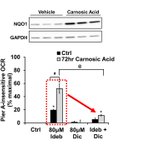
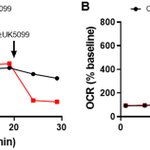
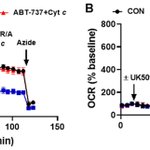
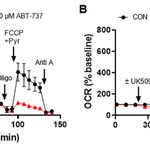
The kits that agilent promotes for its Seahorse xf analyzer system are loaded with ambiguous measurements and misleading interpretations. Friends don't let friends Seahorse (without caution and controls). 🔥📢✊ #mitochondria #CellBiology
jbc.org/article/S0021-9258(2…

Brian M. Polster retweeted

👋🏼 Hi I’m Cali, postdoc with @marykaylobo at @UMMedNeuro Thrilled to be a 2023 travel awardee and attending my first in person ACNP. I’m looking at how stress and drugs impact mitochondria in the brain and periphery. My poster is on Tuesday and I’m on the job market this year! 🤩

Brian M. Polster retweeted

Absolutely thrilled to share the final manuscript stemming from my postdoctoral work with @staci_bilbo So excited that the new lab @MGH_RI is following up on these findings
This post is from an account that no longer exists. Learn more
Brian M. Polster retweeted
We are excited to be back at #SfN23 ! Come check out the amazing work from our UMB trainees: docs.google.com/spreadsheets…

Welcome to #SfN23 🧠!
Whether you're presenting, attending, or just excited for a free tote bag SfN is thrilled you are here.
Brian M. Polster retweeted

Happy to share my latest fundamental neurochemistry review at @JNeurochem, exploring microglial immunometabolism following traumatic brain injury! onlinelibrary.wiley.com/doi/…. Here, we address the links between metabolic and inflammatory changes that follow TBI. (1/3)

Brian M. Polster retweeted

Interested in doing a PhD in a supportive, inclusive, and rigorous learning environment? 👇


Brian M. Polster retweeted
Our Program in Neuroscience encourages applications from students from all backgrounds! We are providing application feedback for those identifying as underrepresented in biomedical science. See below for info on our culture of inclusivity and for details on this opportunity!


