

post is The Museum of Modern Art’s online resource devoted to art and the history of modernism in a global context.
New York and Beyond
Joined November 2012
- Tweets2K
- Following706
- Followers3.1K
- Likes951
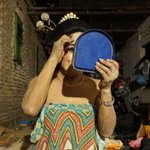




#postarchive Decolonizing gender in Indonesia: Hello, My Name Is Tamarra is a performance piece made to affirm Tamarra’s gender identity within a society still confined by abrahamic religions brought by colonialism and enforced by the state. Read more on how Tamarra utilizes her art, her experiences and ancestral Indonesian gender identities as a way to explore these issues: post.moma.org/hello-my-name-…
#CMAP #ArtandGender #SouthEastAsia #Tamarra

#postarchive Using art to stand against oppression: The importance of the Medu Art Ensemble’s You Have Struck a Rock (1981) poster that became an icon of the liberation movement for women in apartheid South Africa. It still stands as an image of solidarity influenced by global artists and revolutionaries of the time. Read more here: post.moma.org/culture-as-a-w…
#MeduArtEnsemble #Archive #PoliticalArt

#postarchive Estonian artist Sirje Runge incorporated art and industrial design with playful and functional additions to the then grey Soviet infrastructure, reimagining ways to utilize city space and making it more engaging to its people and the environment. Read more of this Vision from the Past here: post.moma.org/sirje-runges-v…
#SirjeRunge #Archive #UrbanArt

“Flashback: A visit with Artist Ketaki Sheth”: Read more about Sheth’s captivating behind-the-scenes photography in a Flashback of some of Bollywood’s iconic figures of the 80s and 90s. post.moma.org/flashback-a-vi…
#KetakiSheth #Photography #CMAP

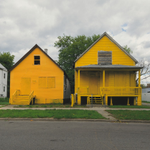
#postarchive What color is urban? What color is gentrification? What color is privilege? What color is poverty? Amanda Williams investigates these ideas in her series Color(ed) Theory that uses color to paint the picture of the Black experience interwoven with the deep-rooted history of systemic racial discrimination in these communities. Read more here: post.moma.org/what-color-is-… #AmandaWilliams #BlackArt #Archives

The story of how Fatma Charfi’s Aberics came into being exudes a mythological aura. Referred to collectively by the artist as Aberics and individually as Abrouc, the twisted-paper figurines are signature elements that became central components in her work through grief. #fatmacharfi #post Read more here: post.moma.org/human-lace-the…

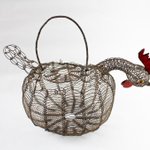
"Open Loop: Reconsidering the Relationship Between Mexican Wire Baskets and Ruth Asawa's Looped-Wire Scultpure": Read here for a deep dive into Ruth Asawa's looped-wire sculptures and their multi-faceted connections to Mexico and the craft of design #TheAmericas #RuthAsawa #ArtHistory #CMAP
post.moma.org/open-loop-reco…

“Archival absences are not accidental gaps in the historical record but rather the effects of political suppression, restricted circulation of information, and structural erasure.” Shaped by the legacy of Suharto’s 32-year-long authoritarian regime, Riska–this week’s post author–uncovers the archives of the Wonorejo Dam project in East Java, Biak Water Tower, and the grave of Arnold Ap. Read this week's article, “Graves, a Water Tower, and a Dam: Encounters with the Archive,” to learn how these historical artifacts are being understood through a contemporary framework. #WestPapua #SoutheastAsia #ArtHistory #Archives post.moma.org/graves-a-water…

RongRong and inri, an artist duo from China and Japan, came together in 1999, united by the same personal and aesthetic questions in photography and performance. In their continuous career, they have been pivotal to shaping the artistic landscape through their core principles in collaboration and open, creative spaces. Read more here! #ArtHistory #EastAsia #OneWorkManyVoices #Photography
post.moma.org/rongronginri-m…

Read how aqui Thami, a Thangmi woman of the Kiratimma first peoples of the Himalayas, roots her creative practice in community as she navigates a complex art world both in and outside of South Asia.
#ArtHistory #BombayMumbai #India #CMAP
post.moma.org/healing-in-com…

“Sisi Kwa Sisi: Us for Us and by Us; Etale Sukuro in Conversation with Donald Maingi”: Founded in 1983 amid Kenya's turbulent political climate, the Sisi Kwa Sisi Collective reframed what art could be for and who it could reach — taking politically engaged work directly to public spaces rather than galleries. #KenyanArt #AfricanArtHistory #ArtAndPolitics
post.moma.org/sisi-kwa-sisi-…

“Animated by spirits, omens, and ritual and narrative traditions, the river continues to be apprehended as a medium of passage, impermanence, and cyclical renewal.” Read how Pamela Corey contextualizes the Mekong River, ebbing and flowing in its contemporary artistic interpretations. #ArtHistory #SoutheastAsianArt #MekongRiver
post.moma.org/mekong-and-met…

“Value Chains: MoMA’s Tour of the Central African Workshop School, 1968–70”, Pujan Karambeigi: From McEwen's Salisbury hub to MoMA's circulating exhibitions, Karambeigi's infrastructure-centered art history reframes how Zimbabwean stone sculpture came to the fore in the United States in the late 1960s. #ArtHistory #MuseumStudies #AfricanArt #ArtHistory #CriticalTheory #AfricanArt
post.moma.org/value-chains-m…

“The ‘modern’ was—and remains—about relations: how to live together, how to keep conversations open, how to practice care even when histories, hierarchies, and inequalities persist.” Read how Grace Samboh recasts the history of modern Indonesia and modern art in Indonesia in terms of conviviality as practice here. post.moma.org/histories-conv…

Dalit literature, a massive genre given it’s only 50–60 years old, is filled with writing about food and water. Dalit oppression is deeply connected to the stomach.
post.moma.org/dreaming-of-fo…

How do artists encounter the curatorial? Art historian Roger Nelson traces histories of curatorial encounters in Southeast Asia through the work of Cambodian artist Svay Ken (1933-2008) and Vietnamese Nhà Sàn Collective (est. 2013), thinking about how artists experience the curatorial “as often fraught, even while such engagements may also be enabling and even nourishing.” Read more here.

Berry Bickle's oral history on Pachipamwe II (Zimbabwe, 1989) offers rare firsthand testimony on how the Triangle Network reshaped contemporary art exchange in Southern Africa during the Apartheid era. post.moma.org/triangle-netwo… #AfricanArtHistory #TriangleNetwork

How does an artist make you feel connected without overwhelming you? Mieke Bal unpacks the quiet power of Nalini Malani's shadow plays, works that refuse linear narrative and collapse ancient myth with 20th-century poetry. post.moma.org/universalizing… #ArtTheory #SouthAsianArt #MiekeBal #GlobalArt #CulturalTheory #cmap

From wartime curfews to corporate sponsors, how did Sri Lanka's major art festivals navigate decades of censorship and change? Jyoti Dhar maps the evolution (and growing pains) of Colombo's biennale scene. post.moma.org/colombo-art-bi… #ArtInConflict #Colomboscope #PostwarArt #SriLankanArt #ContemporaryArt #ExhibitionHistory
