

Your partner for customized and profitable year-round feeding programs. Supporting livestock producers in MB, SK & AB.
Cypress River, MB
Joined August 2017
- Tweets179
- Following645
- Followers435
- Likes461




Prairie Beef Nutrition retweeted

2014 Highline CFR 650 for sale. Good working condition. Great for chopping feed to stretch supplies. $19,950. DM me for more info. This was our backup unit. Retweets appreciated


The first step in developing a grazing plan is to set specific objectives & goals. Goals could include: to increase average calf wt gains by 5%; to decrease the overall number of cattle treated for foot rot & pink eye; or to decrease the impact of grazing on wildlife. #grazing
1
2
One of the largest barriers to expanding a beef herd is often the cost of land for hay & pasture. A well-developed grazing plan can help make the most efficient use of the land you do have. Over the next few weeks follow along as we give tips for creating your own grazing plan!

Prairie Beef Nutrition retweeted

According to data collected by @NDSUExtension agents, the majority of #livestock producers in the state are facing #forage shortages going into the #winter. Here are some tips from NDSU Extension Specialist Janna Block on stretching forage supplies. ag.ndsu.edu/news/newsrelease…
Prairie Beef Nutrition retweeted
Heavy rainfall or snow has prevented #wheat from being harvested in parts of North Dakota this fall, leaving producers wondering what to do with their crops. #Grazing standing wheat is not a common practice; however, it is an option. ag.ndsu.edu/news/newsrelease…

Our most busy & exciting time of the year! We‘ve started collecting ‘19 feed samples. Below are the avg and min/max values from our ‘18 fall feed testing program. When it came to formulating rations last year, protein levels were adequate,but it was often energy that was lacking.

1
2
Especially when we were looking at predicting nutrient requirements for the colder winter months. Nutrient requirements peak for beef cows after calving at 11-12% protein and 65% TDN.
1
1
Prairie Beef Nutrition retweeted

Learn more about drought management strategies at beefresearch.ca/droughtmanag… or download this infographic with key points for producers: beefresearch.ca/research-top…
#CDNBeefConf #bovinnovation

Prairie Beef Nutrition retweeted

Missing purebred Male Border Collie in Douglas,Justice MB. area. Name is Ned has a tag with phone number on collar. Bill Biglieni 204 729 7925 Please call if any information or seen #lostdog, #bordercollie

Prairie Beef Nutrition retweeted

Another perspective: #CDNBeef cattle use marginal land and byproducts we can't to produce nutrient dense protein, all while preserving native grasslands. Something to think about! #agvocacy #DYK #grasslands #CdnAg @weathernetwork @LoveCDNbeef
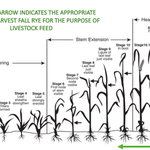
As hay fields continue to struggle due to lack of moisture, we want to give you information about feed alternatives, one being fall rye. If it is harvested at flag leaf to flowering stage, fall rye will have feeding qualities similar to that of barley in the soft dough stage.

If cutting is delayed past these stages, palatability dramatically decreases for cattle. Yields of fall rye silage or hay are generally lower than oats or barley, but may be higher in seasons where there is less rainfall and crops are stressed, such as this year.
1
4
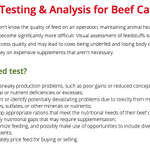
Why Feed Test? Listed below are a few reasons why the @BeefResearch views feed testing an important practice for beef cattle operations, and so do we!

Hoof Health:If your herd is deficient in zinc, copper or selenium, you'll want to provide a vitamin/mineral premix and monitor intake. Most premixes are formulated for 100 grams per head per day. If intake is high or low, changing the salt level can often get intake back in line.

1
4
It's the time of year to take notice of hoof conditions. Cracked hooves, foot rot, abscesses, or long toes, may need a visit to your local veterinary clinic before cows go to pasture.Genetics can play a role, but an animal’s diet also effects hoof quality and overall hoof health.

1
6