

Deaf dad, designer-philosopher, returning golfer. https://teapaw.org/t.co/7jyX18ftyP // https://teapaw.org/t.co/emtFE96S4Z
North East, UK
Joined September 2025
- Tweets163
- Following581
- Followers64
- Likes948


Daniel Pinkney retweeted

it’s actually insane to think how when elon was 31 he made $180 million from the sale of PayPal and he could have just bought a private island and spent the rest of his life in peace, without having to work another day
instead he sacrificed basically everything trying to build the future. failed multiple times, almost went completely broke, but he kept going, spending the last 20 years building reusable rockets, electric cars, global satellite internet, AI, brain interfaces. basically the whole infrastructure for the future of civilization
just to end up in a world where people are publicly calling for his execution, and getting applauded for it
you don’t even have to like him to realize how completely fucking backwards the world has become
Daniel Pinkney retweeted

Diese BMW M5 Werbung ist über 25 Jahre alt und bis heute legendär.
Im Internet wird sie immer wieder als „verboten“ bezeichnet. Dabei lief sie tatsächlich im Fernsehen.
Ich finde, solche Werbespots hatten einfach mehr Charakter als vieles, was die Autoindustrie heute produziert.
Oder seht ihr das anders?

Daniel Pinkney retweeted

Everything is just a sum of oscillations.
The Fourier Series proves that even the most complex silhouettes—a heart, an astroid, or a lemniscate—are just hidden harmonies waiting to be extrapolated.
Geometry is just math’s way of keeping beat.
Credit:mathswithmuza
Daniel Pinkney retweeted
I want to know God's thoughts - the rest are mere details.
— Albert Einstein

Daniel Pinkney retweeted

The neurodivergent version of “making it” is waking up without dread, doing work your brain actually likes, and having at least one person in the world you don’t have to explain yourself to.
Daniel Pinkney retweeted
“What truly exists is consciousness. That’s the only thing I am directly acquainted with. I don’t know about atoms, galaxies, and neurons; all of that is inferred. The only thing I know is seeing, hearing, feeling.” Christof Koch
bigthinkmedia.substack.com/p…
Daniel Pinkney retweeted

Surface response rendered in glyphic drift.
No disclosure.
No interior transfer.
Only correlate behaviour at the edge of contact.
HOST remains closed.
Trace remains public.
substrate.host ∅
Daniel Pinkney retweeted

Modernity has swapped the 'Will to Power' for the 'Will to Moan.'
The current obsession with fragility is a direct assault on the human substrate’s capacity for agency. History isn't built by those waiting for emotional clearance; it's built by those who accept the tragic nature of reality and execute anyway. Resentment is a poison, not a personality trait.
Daniel Pinkney retweeted

· Life ·
One of the 17 pieces availabe at @SuperRare that never received a single bid in years, which is hard to believe having in mind my long term here, contribution and the amount of people/collectors/curators that follow my work.
One of my fav, timeless and special works.

Daniel Pinkney retweeted
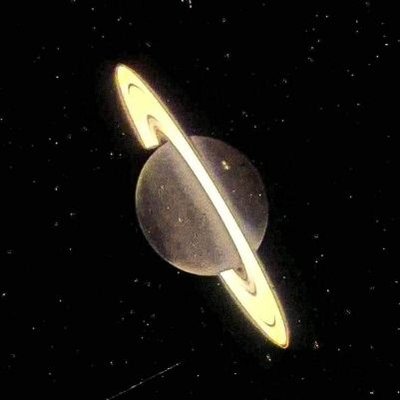
🚨: Quantum research suggests even in darkness there exists hidden light energy

Daniel Pinkney retweeted

Finally, someone talking sense. AI is made of algorithms, which are structured sets of instructions. This makes it extremely effective at recognizing patterns and producing outputs based on statistical learning. But it is tiresome to watch people insist that it is somehow more than that, or that it will transcend the computational framework it runs on. It will not.
There are limits to what formal systems can do. Spend a few minutes reading Kurt Gödel and his incompleteness theorems. Algorithms, precisely because they operate by fixed formal rules, will always encounter propositions that are true but unreachable from inside the system. In other words, even in theory, algorithms will always hit dead ends they can never solve.
None of this denies that AI is powerful. It makes many tasks dramatically easier, for good actors and bad ones alike. But by design it is computation. It processes inputs according to predefined mathematical structures. That is not the same thing as thinking.
And it certainly is not consciousness. At the hardware level, AI systems consist of billions or trillions of transistors switching between 0 and 1. That’s it. Scaling that up does not suddenly generate subjective awareness.
This Post is from a suspended account. Learn more
Daniel Pinkney retweeted

“why can't computers match the biological brain?”
—asked by Naveen Rao, CEO of @unconvAI
Here's what the numbers actually look like:
🧠 Biological brain:
• 20+ watts
• 86 billion neurons, 100 trillion synapses
• Handles vision, language, memory, emotion simultaneously
• Total energy to "train" over 20 years: ~3,500 kWh
⚡ GPT-4:
• Training alone: ~50,000,000 kWh
• That's 14,000× more energy than your entire brain used in 20 years
• Inference at scale: tens of megawatts, continuously
Biology delivers more general intelligence per watt than anything we've ever built.
Daniel Pinkney retweeted

Alan Watts poses a question that stops you in your tracks:
"Suppose you are God, suppose you have all time, all eternity, and all power at your disposal. You were given the power to dream any dream you wanted to dream every night, what would you do?"
He walks through what would happen, step by step.
At first, you'd fulfil every wish imaginable. "You would have all the pleasures you could imagine: the most marvelous meals, the most entrancing love affairs, the most romantic journeys. You could listen to music such as no mortal has heard and see landscapes beyond our wildest dreams."
You'd spend night after night in paradise. Maybe a whole month of nights.
But then something would shift. Perfection would get boring.
"You'd begin to think, 'Well, I've seen quite a bit. Let's spice it up. Let's have a little adventure.'"
So you'd introduce danger. You'd rescue princesses from dragons, engage in battles, become a hero. And as time went on, you'd push further and further.
Then comes the real turning point. Watts explains:
"At some point in the game, you would say, 'Tonight I am going to dream in such a way that I don't know that I'm dreaming,' so that you would take the experience of the dream for complete reality."
You'd forget you were God entirely. You'd dream yourself into poverty, disease, agony not out of cruelty, but for the contrast. For the moment you wake up and realise none of it was real.
"And you would say, 'Wow man, that was a gas.'"
Then Watts delivers the punchline:
"How do you know that that's not what you're doing already? You sitting there with all your problems, with all your whole complicated life situation it may just be the very dream you decided to get into."
And his final line reframes everything:
"If you like it, crazy; if you don't like it, what fun it'll be when you wake up."
It's a perspective that doesn't dismiss suffering. It recontextualises it. What if the struggles, the uncertainty, the messiness of life aren't things happening to you, but experiences you chose for yourself?
What would change about how you approach today if you believed you'd chosen this exact life on purpose?
Daniel Pinkney retweeted

David Chalmers in 1998:
Consciousness is the one thing we know most directly. Yet science has explained stars and subatomic particles more successfully than experience itself.
“How does the water of the brain turn into the wine of consciousness?”
Three decades later, we still don’t know.
Daniel Pinkney retweeted

If you want to create artificial intelligence from scratch, you must first create the Universe.
Daniel Pinkney retweeted

Wigner’s Friend Paradox ✍️
Two observers can assign different realities to the same event in quantum mechanics, and both be internally consistent — hinting that “facts” may be observer-dependent.


