

Lehrstuhl für Öffentliches Recht, Europarecht, Völkerrecht, Rechtsvergleichung & Rechtspolitik Fakultät für Rechtswissenschaft 🇩🇪🇫🇷 🦣 https://xitter.cf/t.co/sxjVwkcdVf
Universität Bielefeld
Joined March 2013
- Tweets8.3K
- Following952
- Followers8.4K
- Likes48


Pinned Tweet
🇫🇷🇩🇪Groupe of Twelve (#GoT...) Report on EU institutional reform "Sailing on High Seas: Reforming and Enlarging the EU for the 21st Century" :
Here is the final version in English: auswaertiges-amt.de/blob/261…
Translations will come soon

Richtig so.

Neil Young sued Trump yesterday for playing "Rockin' in the Free World" at his Oct. 12 rally in Ohio. storage.courtlistener.com/re…

Prof. Franz C. Mayer (@mayerprof.bsky.social) retweeted
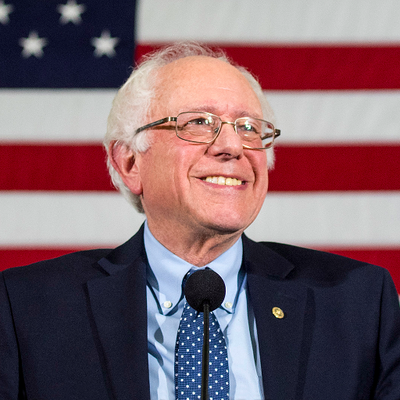
Congratulations to Lula on his extraordinary reelection victory in the Brazilian presidential election.
Lula has stood up for Brazilian workers & democracy — and will continue to do so in the next four years.


Prof. Franz C. Mayer (@mayerprof.bsky.social) retweeted

Voici le lien pour suivre les résultats des élections présidentielles du Brésil en direct resultados.tse.jus.br/oficia…


Prof. Franz C. Mayer (@mayerprof.bsky.social) retweeted

Spéciale dédicace :
En 1962, un certain... Jean-Marie Le Pen qualifiait lui-même l'usage de l'article 11 par De Gaulle (pour réviser la Constitution) de « violation constitutionnelle ».


Sollten die Rechtsxtremen in Frankreich die Präs.wahl gewinnen droht eine Verfassungskrise. Weil Le Pen die Verfassung über ein Referendum umwerfen will, was der Verfassungsrat verhindern wird. Und dann wird sich fragen, wem die ausführenden Organe folgen...

Que se passe-t-il si Marine Le Pen tente d’organiser un référendum de l’article 11 malgré le rejet du Conseil constitutionnel ? La procédure représenterait alors pour elle un défi.
D’abord, le rejet ne porterait pas directement sur le texte, mais sur le décret de convocation des électeurs, que le Conseil se reconnaît compétent pour contrôler depuis sa décision Hauchemaille du 25 juillet 2000 (n° 2000-21 REF), au titre de sa mission de l’article 60 de la Constitution. C’est ce décret qui rend juridiquement possible le référendum, et la décision du Conseil s’impose à toutes les autorités administratives (art. 62).
Sans décret, les maires, qui organisent le scrutin comme agents de l’État sous l’autorité du préfet (art. L. 2122-27 CGCT), n’auraient ni consigne ni base légale pour ouvrir les bureaux de vote. Ceux qui le feraient quand même s’exposeraient à des sanctions (suspension ou révocation, art. L. 2122-16 CGCT), et à des poursuites. Les préfets pourraient se voir demander de se substituer à eux, mais le pouvoir de substitution ne vaut que pour les actes « prescrits par la loi » (art. L. 2122-34 CGCT). Sans base légale, il serait compliqué de le leur demander, d’autant que tout agent public peut refuser un ordre manifestement illégal (art. L. 121-10 du Code général de la fonction publique).
Par ailleurs, c’est le Conseil constitutionnel qui veille à la régularité des opérations et proclame les résultats du scrutin (art. 60 de la Constitution ; art. 50 et 51 de l’ordonnance n° 58-1067 du 7 novembre 1958), la proclamation devant être mentionnée dans le décret de promulgation. S’il juge le scrutin illégal, il est probable qu’il ne proclame rien, ce qui empêcherait la promulgation de la loi.
Prof. Franz C. Mayer (@mayerprof.bsky.social) retweeted

Neither Cartier-Bresson, Banksy nor Cold War Steve could have come up with such an image. Absolutely perfect composition and lighting (even the road signs are perfect)! 😍

Prof. Franz C. Mayer (@mayerprof.bsky.social) retweeted
Voilà une note @Fondapol @ObservatoireID bien biaisée, avec des erreurs méthodologiques grossières, et très orientée « union des droites » . Elle est écrite avec la volonté de détruire le droit du sol à la française et de réduire encore drastiquement les naturalisations. Le droit français de la nationalité fait l’objet d’un consensus historique entre la gauche, la droite gaulliste et les chrétiens démocrates. Depuis 1945 c’est la droite qui a le plus ouvert l’accès à la nationalité par la loi de 1973 et par une politique active des présidents Chirac et Sarkozy. La France est le plus vieux pays d’immigration d’Europe qui « naturalise » beaucoup moins aujourd’hui que les États unis. Car le droit français intègre progressivement les enfants de l’immigration. Les français par acquisition sont des français à part entière, pleinement français sans distinction de nationalité d’origine.


Staatsrechtslehre(r)tagung 2026 in Bielefeld (dort zuletzt: 1974) -
Umbenennung der Vereinigung, von -lehrer zu -lehre
Ein paar Impressionen unter
instagram.com/p/Dehkm2DEcUm/…
#StRL


Staatsrechtslehrertagung 2025 in Salzburg. Thema „Zukunft und Grenzen des Marktmodells“ - noch nichts dazu in den Social Media ?Dabei heute intensive Befassung mit Kommunikation, Plattformregulierung...
#strl

Unterstützung eines völkerrechtswidrigen Angriffskriegs der angekündigt im Erfolgsfall immer weiter getragen werden wird gefährdet bereits heute den Bestand der Bundesrepublik Deutschland . Ein weiterer Verbotsgrund.


Landtag Sachsen-Anhalt: AfD und BSW setzen den Stopp der Waffenlieferungen an die Ukraine durch – 44 von 83 Stimmen. Ulrich Siegmund (AfD) sprach im Plenum für den Antrag, der auch das Ende der Russland-Sanktionen fordert. #SachsenAnhalt #Magdeburg


Prof. Franz C. Mayer (@mayerprof.bsky.social) retweeted

I am a member of the Norwegian Nobel Committee.
There are five of us. Five people, appointed by a parliament most of the planet could not find on a map, who decide, once a year, which human being the world has agreed to call good.
I know. I know. I think about it on the tram.
We meet in a building on Henrik Ibsens gate, a street named after a man who wrote almost exclusively about people discovering they are frauds, which nobody on the committee finds funny except me. There is a room with a long table and the portraits of the dead laureates looking down, Mandela, the Dalai Lama, a great many earnest men in spectacles, and one portrait we do not discuss, which is Kissinger, 1973, awarded while the bombs were still falling, after which two of our predecessors resigned and the satirist Tom Lehrer said political satire was now obsolete. We keep him on the wall. A reminder. Every family has the uncle.
It is October in Oslo, which means the sun gives up around four in the afternoon like a civil servant, and it rains the particular Norwegian rain that isn’t quite falling, just hanging there, judging you. I arrive with wet shoes. I always arrive with wet shoes. There is coffee, because this is Norway and there is always coffee, we drink more of it per person than almost anyone alive, and someone’s wife has sent kanelboller, the cinnamon buns, and we sit, five Norwegians, damp, caffeinated, sugared, and we decide the moral standing of the entire species.
Let me tell you how it actually works, because the world imagines a cathedral and it is, I promise you, a book club with a mandate.
287 nominations this year. 208 people, 79 organizations. Anyone can nominate, that’s the secret nobody understands: a professor, a parliamentarian, a former laureate, so the “nominee” list is meaningless, it’s a suggestion box, and every autumn some congressman nominates his own golden retriever and the press writes “SHORTLISTED.” Nobody is shortlisted. There is no short list the public ever sees. There is us, and the coffee, and the rain, and the portraits, and a Norwegian stubbornness that is older than the prize itself.
We read reports. The institute’s advisers write them, thick dull documents, and we argue. Our chairman told the BBC once that in the final meeting “there is a high temperature.” High temperature, for a Norwegian, means someone slightly raised an eyebrow and then apologized for it. We don’t do high temperature. We do a long silence, and then Kristin says “well,” and everyone knows exactly what “well” meant, and it’s settled. That’s our shouting. “Well.” You’d have to be raised here to hear the violence in it.
Now. This year. I will not say the name, because we never say the name, but you know the name.
A certain head of state wanted this prize the way a child wants a thing in a shop window, which is to say loudly, and in public, and with the full belief that wanting it was itself the argument. He said he deserved it. He said he’d ended eight wars, a number that grew most times he said it, like a fish. He had other heads of state phone us. Israel’s prime minister posted it on the internet, “Give him the Nobel.” The leaders of Cambodia and Pakistan announced they’d nominated him, as though announcing it were part of it, as though we tally mentions. A man flew around the globe collecting endorsements for a Norwegian committee the way you’d collect signatures for a petition to the council about a noisy dog.
And here, uff da, is the detail I treasure, the one that makes me smile into my coffee. The nomination deadline is the 31st of January. He took office on the 20th. So for all the phone calls, all the posts, all the gilded lobbying, the only nominations that could possibly count for this year’s prize were filed in the first eleven days of his term, before he had, by his own arithmetic, ended a single one of the eight wars. He campaigned all year for a prize whose window had shut while he was still hanging up his coat. We didn’t have to reject him. The calendar did. We just watched. Norwegians are very good at watching. We have long winters.
People think we sit there weighing his deeds. We don’t. That’s the thing I can’t make the world understand. We’re not grading his homework. We don’t owe anyone the prize for a ceasefire, however real, however loud the announcement. “He made peace” is not a sentence that ends in a medal, the way he believes it does, the way he believes every good thing ends in his name on it. The will of a dead Swede says the prize goes to whoever did the most for fraternity between nations. A dead Swede, I should add, who made his entire fortune inventing dynamite and selling arms, and spent his last years horrified at his own obituary, which called him a merchant of death, and so bought his way to immortality as a man of peace. The whole prize is one guilty arms dealer’s attempt to launder his name. We are, all of us, administering a dead man’s public relations. I find this clarifying. It keeps me humble. It should keep everyone humble, and it keeps, by my count, no one humble at all.
So who did we give it to?
An eighty-five-year-old woman. A judge. Born in Durban, under apartheid, granddaughter of a Tamil man who came to South Africa as indentured labor, a bus driver’s daughter from the poor Indian quarter, who became the first non-white woman to run a law practice in her province, who defended Mandela’s people when defending them was dangerous, who sat on the Rwanda tribunal and the court at the Hague, and who, at eighty-five, is right now a judge weighing whether a genocide is a genocide. When we told the world, our chairman said the rule of law “underpins the system we have set up to ensure peace,” and that “peace requires justice.” She wasn’t even in Oslo. She was in Nuremberg. In courtroom 600. The actual room where they tried the Nazis. You cannot stage that. God staged that, and God, it turns out, is a better satirist than any of us.
She did not phone us. She did not post. No prime minister demanded it for her on the internet. She had, as far as our deliberations are concerned, the one qualification the loud man could never manufacture, which is that she wanted the work and not the medal. The medal finds those people. It flees the ones who chase it. This is not a rule we wrote. It’s just the only pattern the hundred-odd years of our mistakes has ever shown.
The reaction from across the ocean was immediate. His spokesman posted that we “place politics over peace.” Ja. Perhaps. We’re five damp pensioners in a rainy city; of course it’s political, it was always political, it was political when we gave it to a sitting American president nine months into his first term for the promise of things he had not yet done, and we have been quietly embarrassed about that one for fifteen years, so believe me, we had a particular reason this year to prefer a woman with fifty years of verdicts behind her over a man with eight wars in front of him and a deadline already behind him.
Here is what he will never understand, the thing I’d tell him on the tram if he ever took one. We are the one prize he cannot buy, cannot post his way to, cannot have a friendly dictator phone in for him. Not because we’re incorruptible, nei, we’re as vain and wrong and human as the portraits on our wall. But because the entire point of the thing, the only power a small cold country’s book club has ever held, is that it goes to the person not performing the wanting. The moment you demand it, you’ve proven you don’t understand what it’s for, and proving that is itself the disqualification. He ran the most expensive campaign in the history of the prize and the campaign was the reason. He was never losing to Navi Pillay. He was losing to the concept.
It’s dark now. Four o’clock dark. The buns are gone. Kristin said “well” an hour ago and we all went home. I’m on the tram with my wet shoes, and somewhere across the water a very powerful man is explaining to a camera that the prize is rigged, that we’re corrupt, that he’ll win it next year, and he genuinely might, we’re only five idiots and we’ve been wrong before, Kissinger is still on the wall.
But not this year. This year an old woman in Nuremberg, in the room where the law once stared down the exact kind of man who thinks wanting a thing loudly enough should make it his, got a phone call she didn’t ask for.
That’s the job. We don’t reward the man who ends the war and announces it.
We reward the woman who spent fifty years deciding what a war was.
He’ll never see the difference. That’s rather the whole point of him.
Takk for i dag. I have to change trams.
🥳. 🥳. 🥳

„Epochaler Beschluss“ : Die „Vereinigung Deutsche Staatsrechtslehrer" von 1922 hat sich umbenannt: Nicht mehr rein männlich und nicht mehr nur "deutsch":
lto.de/recht/nachrichten/n/t…

🥳🥳

Anders als die #Zivilrechtslehrervereinigung und der Deutsche Juristentag (@juristentag ) benannte sich die Vereinigung der Deutschen Staatsrechtslehrer mit großer Mehrheit nun doch um in "Vereinigung für #Staatsrechtslehre". lto.de/recht/nachrichten/n/t…
Ich sehe auch einen Tag später keine Reaktion bei der CDU die auf diesen Absturz aus dem demokrat. Konsens richtig reagiert. SPD, GRÜ, LINKE sollten MP-Wahl fernbleiben. Wenn dann rechtsextreme LandesReg mit CDU-Stimmen kann man eigentlich in Berlin nicht weiter zusammenarbeiten
Die CDU wird zum Problem. Und die CDU hat ein Problem.

Der AfD-Landtagspräsident bekam vier Stimmen mehr als erwartet. Nach Informationen der ZEIT beruht das Ergebnis auf einem Deal mit Vertretern der Union. trib.al/5pXcZCX

Also müssen wir als Staatsrechtslehrevereinigung (!) mal wieder vorangehen...

Generisches Maskulinum bleibt: Nicht nur beim Deutschen Juristentag, auch in der Zivilrechtslehrervereinigung scheitert eine Änderung des Vereinsnamens. Kommende Woche stimmen nun die Staatsrechtslehrer über ein Namens-Update ab. Von @HassoSuliak.
buff.ly/TpHy3rq

Kollege Schwarz sagt wie es ist.

Der Juraprofessor Kyrill-Alexander Schwarz hat im Thüringer Landtag erklärt, die Forderung der AfD nach einem EU-Austritt gefährde den „Bestand der Bundesrepublik Deutschland“. Daher könne sie als Grund für ein AfD-Verbot dienen. apollo-news.net/staatsrechtl…
