
AI-Sys PhD student @ucbrise @ucberkeley focusing on systems for self-driving cars
Joined May 2019
- Tweets118
- Following246
- Followers364
- Likes836



Introducing Modular Domain Experts (MoDE), a new multi-domain adaptation technique for LLMs. MoDE independently trains experts on different domains and composes them to boost LLM performance on complex, multi-domain tasks.
Paper: arxiv.org/abs/2410.10181

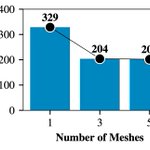
We exploit parallelism in MoDE’s architecture to apply flexible sharding configurations that place experts weights on different devices from the pre-trained model’s weights. Such configurations can reduce communication overheads and improve training speeds by up to 38%.

I’m incredibly grateful for my collaborators at @GoogleDeepMind: Shun Liao, @zhouyanqi30, Chih-Kuan Yeh, Arun Kandoor, and James Laudon. Also, thank you to @ICGog and the Pathways Team for their support and feedback.
Great work by @justinywong_ @luo_michael1234! I've been having a lot of fun voting on the video models.

🚀 Just Launched: VideoArena!🎥
Discover head-to-head comparisons of video clips generated from the same prompts across top text-to-video models. Compare outputs from 7 leading models and we're adding more soon!
🔗 Check out the leaderboard: videoarena.tv
#Text2Video
Proud of what we came up with. The new Berkeley OS prelim balances breadth with depth by connecting key modern advances to ideas introduced in older papers.
Syllabus: ucbosprelim.samkumar.org/

PSA: everybody just take the OS prelims. We rehauled the prelims last semester, and it’s now a pure riot 🎆🎉 cc @samkumar_cs @pschafhalter
Very cool to see another high-performance simulator for self-driving! GPUDrive addresses a key limitation of CARLA (simulation speed) and is even capable of simulating sensors like LiDARs.

Interesting approach from Waymo to use Q/A for remote interventions. Perhaps this is used to improve driving models via RLHF?

We’ve built the Waymo Driver to operate without the need for human intervention, and in order to do that sometimes, it requires additional context from our fleet response team. See their role in helping us safely scale: waymo.com/blog/2024/05/fleet…
Peter Schafhalter retweeted

Spent the last few weeks working on this blog! When I first read the Ring Attention paper, I kind of get the concept yet not really. Diving into the details from the math to compute was incredibly rewarding for our understanding, and hope it be a fun read for you too!

How do state-of-the-art LLMs like Gemini 1.5 and Claude 3 scale to long context windows beyond 1M tokens?
Well, Ring Attention by @haoliuhl presents a way to split attention calculation across GPUs while hiding the communication overhead in a ring, enabling zero overhead scaling
Peter Schafhalter retweeted

📢Excited to release the live Berkeley Function-Calling Leaderboard! 🔥 Also debuting openfunctions-v2 🤩 the latest open-source SoTA function-calling model on-par with GPT-4🆕Native support for Javascript, Java, REST! 🫡
Leaderboard: gorilla.cs.berkeley.edu/lead…
Blog: gorilla.cs.berkeley.edu/blog…
OpenFunctions v2: gorilla.cs.berkeley.edu/blog…

Peter Schafhalter retweeted

Last week was big for embedding models.
OpenAI and Voyage AI released new embedding models: openai.com/blog/new-embeddin…, blog.voyageai.com/2024/01/23….
Researchers at Microsoft fine-tuned Mistral-7B to create a SOTA embedding model: arxiv.org/pdf/2401.00368.pdf.
My 2c on what this changes:
Peter Schafhalter retweeted

I’m very excited to share our work on Gemini today! Gemini is a family of multimodal models that demonstrate really strong capabilities across the image, audio, video, and text domains. Our most-capable model, Gemini Ultra, advances the state of the art in 30 of 32 benchmarks, including 10 of 12 popular text and reasoning benchmarks, 9 of 9 image understanding benchmarks, 6 of 6 video understanding benchmarks, and 5 of 5 speech recognition and speech translation benchmarks. Gemini Ultra is the first model to achieve human-expert performance on MMLU across 57 subjects with a score above 90%. It also achieves a new state-of-the-art score of 62.4% on the new MMMU multimodal reasoning benchmark, outperforming the previous best model by more than 5 percentage points.
Gemini was built by an awesome team of people from @GoogleDeepMind, @GoogleResearch, and elsewhere at @Google, and is one of the largest science and engineering efforts we’ve ever undertaken. As one of the two overall technical leads of the Gemini effort, along with my colleague @OriolVinyalsML, I am incredibly proud of the whole team, and we’re so excited to be sharing our work with you today!
There’s quite a lot of different material about Gemini available, starting with:
Main blog post: blog.google/technology/ai/go…
60-page technical report authored by th Gemini Team: deepmind.google/gemini/gemin…
In this thread, I’ll walk you through some of the highlights.


Peter Schafhalter retweeted

Can GPUs in the ☁️ really drive your 🚗 and make it safer?
We have been studying this question and @pschafhalter will present our findings this afternoon @ieeeiros 2023.
Spoiler alert: Yes!
youtu.be/X3VuA_Tt064?si=nj3V…
For more details, please watch this video based on our presentation at #IROS2023
youtu.be/X3VuA_Tt064
Or read our paper:
arxiv.org/abs/2308.03204
