

Pastor of Heritage Reformed Presbyterian Church. My writings represent my own views, not others. And stop slandering.
Joined April 2009
- Tweets10.5K
- Following1.6K
- Followers2.3K
- Likes22.3K





Thomas Booher retweeted

Or, and hear me out here… we shouldn’t act like we’re smarter than everyone that came before us.
You set up a false dichotomy.
Danny claims to be “Reformed,” but listen to Jerome Zanchi (major 17th century Reformed divine) respond to this sort of errant thinking:
“14. The faithful interpretations of the devout and learned should not be condemned.
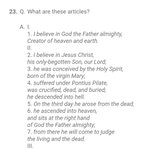
Indeed, although the Holy Scriptures are perspicuous in those things that are necessary for salvation, we nevertheless do not reject the interpretations and explications of devout men who are both learned and skillful, whether they are ancient or more recent, namely, their interpretations and explanations that are pursued on the basis of those same Holy Scriptures and insofar as the Scriptures are explained by the Scriptures and in accordance with the first foundations of faith (1 Thess. 5:21). The sum of these contained in the Apostles’ Creed as well as in the creeds of the truly ancient and holy ecumenical councils convened against prominent heretics.”—Jerome Zanchi; Confession of the Christian Religion (RHB Publishing; 2025), p. 49


The others don't want you trusting or often times even reading the Bible, at least not all of it. They want you to doubt the Scriptures and trust the Church, but they couch this as being unable to understand the Scriptures and yet somehow being able to understand the Church.

America was founded as a Protestant Nation and by God’s grace it will be kept one…
whitehouse.gov/briefings-sta…

Thomas Booher retweeted

guy: “separation of church and state!”
same guy: “church membership should ground immigration policy”

"I am more than willing to have anyone who will be a citizen with me in heaven to be a member of my household here on earth! We are all brothers and sisters in Christ after all!" Oops.
Yeah, just say no to the global citizen error. Being a fellow Christian doesn't make you or give you a right to be a fellow citizen of the same country anymore than being a fellow Christian gives you the right to dissolve families. The distinction between native and foreigner is biblical, and to destroy that is sin. A foreigner in the Old covenant who came to faith in the God of Israel did not become an Israelite as a result. They became covenant members of the Church and Kingdom of God, citizens of the heavenly kingdom, but not citizens of Israel simply due to Spiritual conversion. Foreigners were to be treated well, but they were still to be treated as foreigners, not as natives, and certainly not as if their race or ethnicity somehow magically became of one of the tribes/sons of Israel.
Pentecost did not erase these natural distinctions. The new covenant doesn't destroy nations and distinct races/peoples. God has ordained distinct nations and peoples for the civil good and good order of mankind. Christian fellowship is universal, across the lines of tribe, tongue, and nation, and praise God for that. But it does not dissolve or blur the natural realities and goods of various tribes, tongues, and nations.
Fellow Christians who are naturally drastically different, including in terms of natural affection, culture, language, custom, etc., do not all magically form a healthy nation if you just throw and mix them all together as citizens in one country. Do not remove what God has established for the good of nations and peoples. The Gospel is to make disciples of all the nations, not dissolve the nations and cram them all into one nation that loses all its distinctions by mass mixing/mass immigration.
And don't believe the liberal lies that this is about "hate" or bigotry. We must stop taking our worldview from the unbelieving world and the Egalitarian error.

So good, yet also so obvious to me.
Christ is the sure foundation, and thst is apprehended by faith not by pointing and saying ah, there goes Rome, or Orthodoxy, or the Oriental Orthodox, exclusively and solely the one holy, catholic, and apostolic church.

Thomas Booher retweeted

You can weep over your sin and still love it.
You can fear its consequences while secretly longing to commit it again.
You can confess it with your lips while keeping it enthroned in your heart.
In his 1668 book The Doctrine of Repentance, the Puritan Thomas Watson identifies SIX essential ingredients of true repentance:
1. SIGHT OF SIN: You must see your own wickedness, not merely the sins of others. You must recognize what you are before a holy God.
2. SORROW FOR SIN: You must grieve not merely because your sin has brought you suffering, but because you have offended the God who made you.
3. CONFESSION OF SIN: You must stop excusing, minimizing, and concealing your transgressions. You must accuse yourself and acknowledge your guilt before God.
4. SHAME FOR SIN: You must learn to blush at what you once boasted of. What once delighted your corrupt heart must now humble you.
5. HATRED OF SIN: You must hate what you once loved. Not merely because sin threatens your happiness, reputation, or eternal safety, but because it is hateful to God.
6. TURNING FROM SIN: You must forsake your wicked ways and turn to God with your whole heart. You cannot claim to have abandoned sin while secretly reserving a place for its return.
You have not truly repented merely because you regret what sin has cost you.
The question is whether you now hate the sin you once cherished, and whether your heart and life are being turned toward God.
Repentance is not merely sorrow over sin.
It is a Spirit-wrought change of heart that produces a change of life.

Westminster Confession of Faith 20.1:
I. The liberty which Christ hath purchased for believers under the gospel consists in their freedom from the guilt of sin, the condemning wrath of God, the curse of the moral law;a and in their being delivered from this present evil world, bondage to Satan, and dominion of sin,bfrom the evil of afflictions, the sting of death, the victory of the grave, and everlasting damnation;c as also in their free access to God,d and their yielding obedience unto him, not out of slavish fear, but a child-like love and willing mind.e All which were common also to believers under the law;f but under the New Testament the liberty of Christians is further enlarged in their freedom from the yoke of the ceremonial law, to which the Jewish Church was subjected;g and in greater boldness of access to the throne of grace,h and in fuller communications of the free Spirit of God, than believers under the law did ordinarily partake of.i


Another absolute winner so far. He's saying everything I am thinking and saying, so of course it's great haha.
But I immediately went ballistic reading the foreword to Rock and Sand by Trenham because right off the bat this naked appeal to the Church being "without spot or blemish" is used as if that is true presently and evidently absolutely. Trenham then says as much in his book, and in one of the appendices he shows Patriarch Dositheos claiming the same. Dositheos also says because the Spirit speaks through both the Scriptures and the Church they are the same and equal authority because the Church always speaks from God, cannot err and has never erred, and is incapable of deceiving!
Well, you could only possibly begin to believe that outlandish claim if you believe that Scripture is teaching that the Church entirely and absolutely, presently, is "without spot or blemish". In other words, you have to believe not only that Christ the Head of the Church is glorified presently, but so is the Church herself.
I don't know enough about it, but I imagine this ties in with some of Orthodoxy's particularities about theosis.
Also, good job in the video so far showing how Cyprian's view of the Church is tied in with his sacramentology, and did not gain consensus and basically had to be modified by Augustine and others.
youtube.com/live/ZukCPAM5dNs…
Spot on once again by @Canonandcreed. I almost didn't bother to start watching his stuff because I am typically ashamed of what a lot of those who call themselves Protestants, Reformed, or Evangelical post out there, and a lot of it is theatrics and debates which I find overrated. But Myles here does an excellent job, is thorough, and kindly helps improve/correct the Protestant guy in this video as well.
This is probably a better treatment from the Reformed/Protestant perspective than you are going to get in most of our seminaries today. We have to admit our own issues and ignorance of our own heritage. But that doesn't mean we are wrong, we just need to recover what we have forgotten or misunderstood.
youtube.com/watch?v=9IO_r50T…


Spot on once again by @Canonandcreed. I almost didn't bother to start watching his stuff because I am typically ashamed of what a lot of those who call themselves Protestants, Reformed, or Evangelical post out there, and a lot of it is theatrics and debates which I find overrated. But Myles here does an excellent job, is thorough, and kindly helps improve/correct the Protestant guy in this video as well.
This is probably a better treatment from the Reformed/Protestant perspective than you are going to get in most of our seminaries today. We have to admit our own issues and ignorance of our own heritage. But that doesn't mean we are wrong, we just need to recover what we have forgotten or misunderstood.
youtube.com/watch?v=9IO_r50T…
The Heidelberg Catechism (a Reformed confession) states that Christ “has fully paid for all my sins with his precious blood, and has set me free from the tyranny of the devil” (Q&A 1) and “has redeemed us, both soul and body, from all our sins… and has delivered us from all the power of the devil” (Q&A 34).
That's just a start, of course.
Amen.

Or, and hear me out here… we shouldn’t act like we’re smarter than everyone that came before us.
You set up a false dichotomy.
Danny claims to be “Reformed,” but listen to Jerome Zanchi (major 17th century Reformed divine) respond to this sort of errant thinking:
“14. The faithful interpretations of the devout and learned should not be condemned.
Indeed, although the Holy Scriptures are perspicuous in those things that are necessary for salvation, we nevertheless do not reject the interpretations and explications of devout men who are both learned and skillful, whether they are ancient or more recent, namely, their interpretations and explanations that are pursued on the basis of those same Holy Scriptures and insofar as the Scriptures are explained by the Scriptures and in accordance with the first foundations of faith (1 Thess. 5:21). The sum of these contained in the Apostles’ Creed as well as in the creeds of the truly ancient and holy ecumenical councils convened against prominent heretics.”—Jerome Zanchi; Confession of the Christian Religion (RHB Publishing; 2025), p. 49
Thomas Booher retweeted
This is always the weak defense for his sloppy engagement. I got tons of comments on my video from EO's saying this same thing to excuse Trenham's poor rigor.
If this is going to be the defense then maybe don't write a book so broad brushed that you can't keep your story straight. He has no problem distinguishing between "Protestantism" and "evangelicalism" in his chapter break downs. But then he constantly makes broad brushed claims about "Protestants" that have zero basis in any formal Protestant confession, etc.
A Church that does not formally affirm the ancient creeds and at least one of the Protestant Confessions and/or catechisms should not be counted as a Protestant church/congregation.
Your typical megachurch, non-denom, charismaniac church is not Protestant in any meaningful sense. Azusa Street is only about what, 100 years ago? "No creed but Christ" Mega church non-denoms are even more recent.
Confessionalism is essential to Protestantism. If you are not in such a church, you need to join one for your Spiritual well-being.
Funny that sounds exactly like "Orthodoxy" to me, of necessity.
For Protestants, if/when this sort of thing happens, it is in spite of Protestantism, not because of it.
We believe Protestants in general, across denominational lines, are part of God's one Church, and are most certainly not going to the "Bad Place".

Okay, let's try to think clearly here folks. Trenham in Rock and Sand at a couple points lists things he appreciates about Protestants and that includes emphasis on daily Scripture reading, which he admits the Orthodox today greatly lack/neglect, etc., but yet he emphasizes that Orthodox theology does teach to read the Scriptures regularly.
If I proceeded to write a book and say that Eastern Orthodoxy neglects to teach that the lairy should regularly be reading the Scriptures, I'd be wrong and misrepresenting the Orthodox position to my readers. The Orthodox would howl at this, and rightly so.
The obvious point I am making is that you cannot look at a lack of understanding or poor teaching of a church body's doctrine and claim that is what they have always taught and always believed. Further, you cannot give the impression that this is what their chufch officers affirm in their creeds, confessions, catechisms, etc. It is not.
To say Protestants should do a better job emphasizing various aspects of the atonement is fine. To that I give a hearty amen. But to present as if we do not formally teach all that Trenham states is absurd. Many Protestants still do, and historically all did. Those who do not are doing so out of neglect or ignorance, imbalance, etc., not because this is what Protestant theology requires.


