

Formalizing the Geometric Structure of Phenomenal Experience. ☸️(-+++)☸️
New Orleans
Joined June 2020
- Tweets2.6K
- Following105
- Followers841
- Likes21.8K


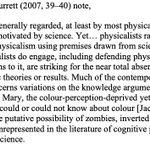
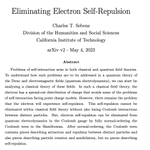


Notably, Buddhist epistemological discourse has many fine-grained terms for "cognition" or "cognitive event"—citta, jñāna, buddhi, and so on—but nothing that maps simply or unproblematically onto "consciousness." The closest I've seen is "cognitively-natured-ness" (jñānarūpatva).


What if consciousness isn't "created" ?

More relevant now than ever... where philosophy meets neuroscience!
What Creates Consciousness? | World Science Festival youtu.be/06-iq-0yJNM?si=x-fH… via @YouTube

73
"Peer review" is predicated on a concept of "peer" that may be falling apart...

Massive. New Harvard study finds that AI-written paper reviews now beat the best human peer reviews on every measure the authors tested.
Peer review is slow and often misses errors. Earlier studies concluded AI should only assist human reviewers, not replace them.
They used 134 reviews from rapidPeer, a Harvard service that pays expert reviewers well. Claude Opus 4.8 reviewed the same 1124 papers, and GPT-5.5 plus 3 former journal editors judged the pairs blind.
GPT-5.5 picked the AI review in all 132 decided pairs, and the editors picked it 87% of the time. Only 5.5% of the AI's claims about the paper were wrong, versus 15.9% for the human reviews.
Teams that depend on expert critique can now let AI do the first full review pass, and keep a human for the final decision.


3
112
Koans are often misunderstood in the West as being entirely impenetrable to rational analysis. But, for example, the koan about "the sound of one hand clapping" specifically concerns the Buddhist analysis of causes and effects/"interdependent co-emergence" (pratītyasamutpāda).
A cause is only designated a cause because it produces an effect, but by definition only exists when its purported effect does not yet exist. Similarly, an effect is only designated an effect in relation to some particular cause, but by definition only exists when its purported cause no longer exists.
So here we have a situation where, by itself, neither the cause nor the effect ("one hand") does anything; for there to exist some real result (e.g., "sound") you need both cause and effect ("two hands"), working together. This is only possible because neither that which is designated the cause nor that which is designated the effect has any independent existence, separate from the other: clapping is just what happens when two hands make causal contact.
Many are (rightfully!) critiquing the looseness of this and similar formulations. I think the underlying intuition *can* be made rigorous, but that doing so requires the Buddhist notion of vāsanā—momentary, quantized, latent potentials—or some formal equivalent.

Nobel physicist Anton Zeilinger suggests reality and information are the exact same thing.
Information is the ultimate building block of existence, meaning matter is just a byproduct of data.


2
6
549


In general, Buddhist epistemology disregards scripture as a source of knowledge. Dharmakīrti in particular has many very interesting things to say about error (bhrānti) and its correction.

Popper’s “creative guesses plus error correction” isn’t an alternative to scientific method, it’s a reasonable short description of it
The distinction is precisely that science builds error correction into the process, while other ways of “knowing” often shield themselves from it, e.g. insisting on scripture, tradition, or authority
In the latter half of this very interesting talk, Neil Turok discusses ghost fields, (±) indefinite metrics, and Krein space. Worth a listen!
H/T @PeterMorganQF
youtu.be/VlP-12yc2f8?si=1kMc…
3
266
Physicists and mathematicians working with GPT 5.5-Pro: how/when do you switch from Standard to Extended Thinking (or vice versa), or do you always keep it in one or the other mode?
1
1
165
I think contemporary Anglophone philosophy of mind needs a richer vocabulary. (Dharmakīrtian) Buddhist metaphysical idealism is not identifiably "panpsychist" in the contemporary idiom—for many reasons, including the absence of anything like the combination problem.

I used to believe in panpsychism, but now I’m not too sure.
Take an electron, for example. It simply doesn’t have enough representational capacity to encode complex feelings (and, frankly, no need).
Where and how would it represent pain, pleasure and all the gamut of emotions and qualia that make up our world? Even if it encodes basic valence somehow, how is the readout happening and is it influencing behaviour.
In retrospect, panpsychism seems significantly handwavy. The binding problem - how simple qualia bits combine to produce our rich experience - is a showstopper.
2
2
283

Excited to share my submission for the #CORE1 competition by @TOEwithCurt!
My video explores how the mathematical assumption of positive-definiteness might be the real root of the cosmological constant problem.
Watch it here:
youtube.com/watch?v=Dkb04sAW…
1
6
934
Things that are simultaneously true about the new @arxiv policy:
1) Gresham's Law → LLM slop is an existential threat to reputable, curated preprint servers
2) Not every reputable preprint server ought to be curated (see, e.g., Zenodo and OSF.io)
3) Publishing preprints is, in theory, supposed to be a service provided for the scientific community
4) Most published preprints are, in practice, line items on a CV, benefiting their author(s) but not the scientific community as such
5) The underlying systemic problem driving the flood of LLM slop from otherwise-reputable scientists (i.e. not counting cranks or crackpots here) is insufficient funding for science, not enough jobs for scientists, totally broken hiring/promotion processes, and so on. Overall the situation is a Mexican standoff + arms race.
6) Lifetime ban on pre-publication as punishment for a single instance of accidentally including harmless LLM artifacts ("if you want, I can...") is Draconian and deleterious to scientific progress. It's OK for preprints to include innocent mistakes and oversights—that's why the "pre-" is there.
7) "People" who commit severe LLM-specific research misconduct, at the level of including hallucinated data tables (or equivalent), should be subjected to corporal punishment and/or drawn and quartered.
Meanwhile, the Swampland Seminar Series (H/T @StringSwamp!) quietly powers ahead with brilliant papers every other week
What is "an observer"
?
Some of Renato Renner's own PhD students refused to work on his result because it disturbed their sense of self.
What he proved (with Frauchiger): quantum mechanics, applied consistently to the physicists who use it, generates flat contradictions… for the quantum observers themselves.
Renner himself went from many-worlds to QBism to what he calls "no man's land." curtjaimungal.com

4
422


A growing body of legitimate science has been exploring the benefits of red light therapy for several conditions, from ADHD, to retinal degeneration, to dermatology
go.nature.com/3NoGcbx
