

Economist/Statistician, MP for Pian Constituency (Karamoja 2006-todate) and an analyst of economic trends and developments in Uganda, EAC and rest of the World
Joined November 2014
- Tweets206
- Following1.4K
- Followers1.8K
- Likes40




Remigio Achia retweeted

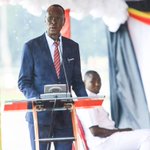
What explains the recent depreciation of the Uganda shilling, and have concerns over the Sovereignty Bill affected foreign currency inflows?
Responding to a question from a journalist, Governor Michael Atingi-Ego points to developments in Uganda's balance of payments, including a widening trade deficit, a deterioration in the services balance and moderating portfolio inflows.
Watch the full discussion on our YouTube channel. youtu.be/F6r9hUrgsu0?si=1x8P…
#MPS2026 #BOUConnects
Remigio Achia retweeted

MUSASIZI IN THAILAND FOR THE 2026 ANNUAL MEETINGS OF IMF AND WORLD BANK GROUP
Finance Minister @henrymusasizi1 accompanied by the Permanent Secretary and Secretary to the Treasury Dr @rggoobi, Governor Bank of Uganda, Dr Michael Atingi-Ego and other senior @mofpedU & Bank of Uganda officials are in Bangkok,Thailand for the 2026 annual meetings of the International Monetary Fund (IMF) and World Bank Group.
The Annual meetings have brought together Ministers of Finance, Central Bank Governors, Development Partners, the Private Sector, Civil Society and Academics to discuss the state of the global economy and issues of international concern.
The core themes for the 2026 annual meetings are: Global economic outlook, financial stability, poverty reduction, mobilizing private capital for jobs and infrastructure, and artificial intelligence (AI) in development.
Ahead of the annual meetings, IMF Managing Director Kristalina Georgieva set the stage for the discussions highlighting three major forces shaping the global economy and these are; the rapid rise of AI, persistently high energy prices, and record levels of public debt. She called for decisive policy action, stronger growth, and international cooperation to navigate an increasingly complex global landscape.
Speaking about AI, the IMF Managing Director said global investment-to-GDP in AI will reach and likely exceed the amounts that went into building the railroads, the electricity grid, or the telecommunication network.
“Love it, hate it, or fear it, AI is here, rapidly becoming a key driver of countries’ relative fortunes in the world economy,” said Kristalina.
On the sidelines of the IMF/Word Bank meetings, the Finance Minister and his delegation participated in the Macroeconomic and Financial Management Institute of Eastern and Southern Africa (MEFMI) combined Forum 2026 under the theme: Artificial Intelligence and Data Analytics for Macroeconomic and Financial Policy.
The Forum provided a platform for policy makers and practitioners to share practical experiences and perspectives on how AI is transforming the financial sector, how to protect Central Banks reserves from spikes in foreign exchange transfers and building a path towards sustainable financing among other policy issues.
H.E Ambassador Betty Bigombe, High Commissioner
of the Republic of Uganda, accredited to Malaysia and Thailand also participated in the MEFMI Forum.


What does depreciation of the shilling mean to us Uganda? What is exactly happening in Our Economy? And what should we do? Here is a simple brief
1/ The Uganda Shilling has lost about 12% against the US dollar in 12 months, and 5.3% in September alone. In plain terms, dollars now cost much more, and that affects all of us!
2/ What we owe: Uganda's public debt is now estimated at USD 37.12 billion (Shs 143.92 trillion), or 54.4% of GDP. This is the total the country owes at home and abroad.
3/ Where we owe it: 56.1% is borrowed in shillings from local lenders. 43.9% (Shs 63.18 trillion) is borrowed in foreign currency. Only the foreign part is hit directly when the shilling falls.
4/ The silent increase: A 12% fall adds about Shs 7.6 trillion to our foreign debt in shilling terms. We didn't borrow a single extra dollar; the same dollars simply cost more shillings.
5/ What it does to the debt ratio: That alone pushes debt from 54.4% to about 57.3% of GDP, a rise of about 2.9 points. This is a currency effect, not a spending decision.
6/ Now, Paying our foreign loans now costs roughly Shs 0.55–0.58 trillion more each year. That money has to come from somewhere in the budget.
7/ Already a heavy load: Debt payments take and estimate of Shs 33.4 trillion, about 40% of the Shs 84.3 trillion national budget. Every extra shilling spent on debt is a shilling not spent on health, schools, roads or farming.
8/ A double squeeze: To defend the shilling, the Bank of Uganda raised the cash reserve requirement to 13.5%, and overnight bank rates rose to 11.5%. This makes borrowing at home costlier too, so government now faces higher costs on both foreign and local debt.
9/ Why you feel it
Energy, fuel and utilities inflation jumped to 14.9% in July. A weaker shilling makes imported fuel dearer, and that shows up in transport, food and power bills.
10/ Is it a crisis?
Not yet. The IMF's stress test assumes a 30% fall; we're at about 12%, roughly 40% of that. The IMF still rates Uganda at moderate risk of debt distress, but the room for further shocks is shrinking.
11/ The warning sign
The IMF projects debt reaching 60% of GDP by 2030/31. Our own Charter for Fiscal Responsibility sets a 50% ceiling, and we are already above it.
12/ What can be done:-
-Explore hedging, such as forward cover or swaps, against further falls.
-Match foreign debt payments with export, oil and remittance earnings.
Borrow for projects that earn revenue, jobs and exports.
-Be transparent when debt rises from currency valuation rather than new borrowing.
-Urgently implement projects that we have borrowed money for
13/ What citizens can do
Follow the debt figures, ask how loans are used, and support local production and exports. The more we earn in dollars and the less we import, the less a falling shilling hurts.
14/ Bottom line
This is not a crisis yet, but it is a warning. Debt is rising, the shilling is weakening, and debt payments are crowding out services. Early, transparent action protects the country. 🇺🇬
Note: Posts 4–6 are mechanical estimates from "Estimates based on published MoFPED, BoU and IMF data"
Remigio Achia shared a file with you
Uganda_Debt_Burden_Infographic:
eu.wps.com/cms/docs/d/cbOakk…
Open in APP:
go.wps.com/egyWqYi4HpVf
1
1
70
Remigio Achia retweeted
Governor Michael Atingi-Ego and Dr. Adam Mugume, BoU Executive Director Research & Policy, will be among the speakers at tomorrow's 9th Annual Bankers Conference 2026 being organized by @ugbankers.
They will share their insights on 'The Role of Uganda's Financial Institutions in Facilitating Tenfold GDP Growth.'
You can attend the event virtually via this link: youtube.com/live/rGS4xpt1qYE…
#BankersConference2026


Remigio Achia retweeted

Ki Kati Uganda. ✈️
From 1st October 2026, fly daily from Entebbe to Nairobi with Jambojet, with one-way fares starting from USD 170.
Flights are now available for booking on our website. Get ready to experience Jambojet in Uganda.
YOUR MONEY IS SHRINKING IN THE BANK – HERE'S WHY!!!
How Uganda's bank savings rates are quietly eroding depositors' money, and why Ugandans need to look beyond fixed deposits
Most Ugandans who keep money in a bank savings account assume it is, at worst, standing still. In reality, it is losing value – steadily and measurably – every single year. This is not a claim about bank mismanagement or dishonesty; it is simple arithmetic once inflation is taken into account, and it matters for every household, trader, cooperative and small business deciding where to keep its money.
HOW IT HAPPENS
The Bank of Uganda's Central Bank Rate (CBR) currently stands at 9.75%, and headline inflation was recorded at 4.0% in July 2026. Adding the two together gives a rough benchmark of 13.75% – broadly, the return a saver needs merely to keep pace with the cost of living and the opportunity cost of holding money rather than spending or investing it elsewhere.
Uganda's five largest commercial banks – Stanbic, Centenary, Absa, Standard Chartered and dfcu – pay ordinary savings accounts as little as 0.25% to 0.5% a year. Even their best advertised savings rates only reach 3.5% to 5%. That gap between what banks pay savers (0.25%–5%) and what savers would need to earn to hold their ground (13.75%) is where the erosion happens.
At the same time, these banks lend out that same money at Prime Lending Rates of 19.3% to 20.5% – and higher still for unsecured retail loans. The difference between what banks pay for deposits and what they charge borrowers is banks' profit margin. It is a legitimate business model, but it means the ordinary saver is, in effect, subsidising cheap funding for the bank while their own money loses real value.
WHAT THIS COSTS THE ORDINARY SAVER
In plain terms: a typical saver using an ordinary savings account loses roughly UGX 130,000 to UGX 135,000 in real value for every UGX 1,000,000 kept in the bank for a year. Even a saver who negotiates or qualifies for a bank's best rate still loses UGX 65,000 to UGX 87,500 per million.
WHY UGANDANS MUST LOOK BEYOND FIXED BANK DEPOSITS
None of this means people should stop using banks – banks remain essential for safety, payments and short-term liquidity. But holding significant long-term savings purely in a low-yield savings account, expecting it to grow or even hold its value, is a costly assumption. Ugandans looking to protect and grow their money should actively explore a wider range of options, including:
1. Treasury bills and bonds – government securities have historically offered yields well above what commercial banks pay on deposits, with the added security of a sovereign guarantee.
2. Licensed money market and unit trust funds – regulated collective investment schemes that typically offer better returns than savings accounts while remaining relatively liquid.
3. SACCOs and cooperative savings schemes – for those preferring community-based instruments, well-run and properly regulated SACCOs often return more to members than commercial bank savings products.
4. Productive investment – in agriculture, small enterprise, or income-generating property – which, though carrying its own risks, offers the potential for returns that outpace inflation in a way idle bank deposits cannot.
5. Diversification – spreading savings across more than one instrument reduces the risk of any single erosion source (inflation, bank policy, or otherwise) eating into a household's entire nest egg.
The underlying message is simple: money left passively in an ordinary bank savings account is not neutral – it is actively losing value. Ugandans, and the institutions that advise them, should treat that as a call to action rather than a fact to quietly accept.
Remigio Achia retweeted

MUSEVENI WELCOMES GRANDSON RUHAMYA HOME: President and First Lady Janet celebrate His Sandhurst Graduation As He Joins The UPDF And Follows A Family Military Tradition. theinvestigatornews.com/2026…

Remigio Achia retweeted

Every Saturday 6am - 10am, Bamutakudde shows up for community. From cleaning to community talk, the turn up and energy keeps growing. Neighbors becoming family. Problems becoming solutions.
When we work together, we win together. #CleanerBamutakudde #SaferCommunities
Remigio Achia retweeted

UPDATE: With Uganda edging closer to first oil, judicial officers are being equipped with knowledge of the petroleum value chain to strengthen the handling of disputes in the sector. #NTVNews
Bank of Uganda Governor Michael Atingi-Ego says the training is aimed at preparing judges to adjudicate oil and gas-related cases as the industry takes shape. He notes that a well-prepared judiciary will be critical to supporting the sector, which the government expects to play a key role in Uganda's journey towards a $500 billion economy.
📹 @mraycho_n
Remigio Achia retweeted

🚨 الصين استبدلت السبورة التقليدية في 60 ألف مدرسة… والغرب ما انتبه!
شركة صينية اسمها iFlytek طورت سبورة ذكية تفهم ما يكتبه المعلم مباشرة.
يكتب المدرس معادلة مثل:
y = x² - 3
وقبل ما يخلص، تظهر للطلاب رسمة ثلاثية الأبعاد للمعادلة.
ولو رسم مثلثًا بشكل سريع، تحوله السبورة تلقائيًا إلى مجسم ثلاثي الأبعاد، يقدر الطلاب يكبرونه ويدورونه ويشوفونه من جميع الزوايا.
الأهم أن التقنية ما تحتاج:
• تطبيق
• جهاز لوحي
• لابتوب
• تدريب معقد للمعلمين
فقط قلم وسبورة تفهم الرياضيات والرسومات لحظة بلحظة.
والتقنية مو مجرد تجربة؛ بحسب المعلومات المنشورة، تم تركيبها في 60 ألف مدرسة داخل 33 مقاطعة صينية، ويستخدمها نحو 160 مليون طالب.
بمعنى أبسط: بينما شركات التعليم التقني تطور تطبيقات تحتاج أجهزة وخطوات كثيرة، الصين دمجت الذكاء الاصطناعي مباشرة داخل السبورة نفسها.
قدامنا جيل كامل يتعلم الرياضيات والعلوم بطريقة تفاعلية من أول يوم… وهذا ممكن يصنع فارقًا تعليميًا ضخمًا خلال السنوات القادمة. 👀
Remigio Achia retweeted

Uganda Airlines hit with stalled Shs 3bn media probe
The current management has had a recurrence of a number of power struggles in the board and management in the past few months.
One of the major talking points is the ‘sweeping’ out of Bamuturaki’s allies, whose contracts have not been renewed. Another major issue is the ‘UNOCalising’ of the airline, which loosely means the head-hunting of Uganda National Oil Company (UNOC) staff to take over key positions at Uganda Airlines.
Meanwhile, there are also allegations of collusion to kill a Shs 3 billion audit probe of the airline’s usage of funds to improve its public image. All these issues have created unease among staff and management.
According to the source, the Ethiopian CEO is yet to understand how ‘certain things’ work in Uganda.
observer.ug/news/uganda-airl…


Remigio Achia retweeted

The other day, bonding with my daughters, one of them sees a moth..
screams.
The other one doesn’t need to see it. She jumps on the bed.
Me?
Totally unmoved. It’s a moth.
A moth!!!
We don’t fear spiders, or mosquitoes or even snakes.
At school, we were shocked - suspicious even- if beans didn’t have weevils.
So a moth?
Anyway, as the helter skelter kavuyo caused by the moth continued…
I thought about Ebola in Uganda.
And how some of our dearest friends reacted…
To be clear, I’m not downplaying the Ebola threat — it’s deadly and serious.
But we know Ebola.
We know the threat it poses and we know how to deal with it.
We are Uganda!
I want to sincerely thank my Chairman @mkainerugaba for confering on me the Patriotic Officer number 96! I pledge in the dream of a better and corruption free Uganda where things work for our people and services are delivered as intended by our Government!
In the same vein, I thank the energy and stamina of our SG in identifying carders from r the League, God bless MK, God bless Uganda! God bless Uganda, God bless Africa!!
For God and my Country!
The current reality of disappearing Partner/support to Uganda! It is happening in Support to Development/Budget Support as well!
PROMISED AIR?: Uganda’s Ebola Victory Exposes the Dark Side of Donor Pledges - UG Diplomat ugdiplomat.com/promised-air-…

1
93
Remigio Achia retweeted
I want to sincerely thank my Chairman @mkainerugaba for confering on me the Patriotic Officer number 96! I pledge in the dream of a better and corruption free Uganda where things work for our people and services are delivered as intended by our Government!
In the same vein, I thank the energy and stamina of our SG in identifying carders from r the League, God bless MK, God bless Uganda! God bless Uganda, God bless Africa!!
For God and my Country!


