
Radiology Rounds - dedicated to the sharing of medical imaging cases and connecting radiology
New York, NY, USA
Joined May 2008
- Tweets13.5K
- Following44.9K
- Followers60.2K
- Likes5.9K



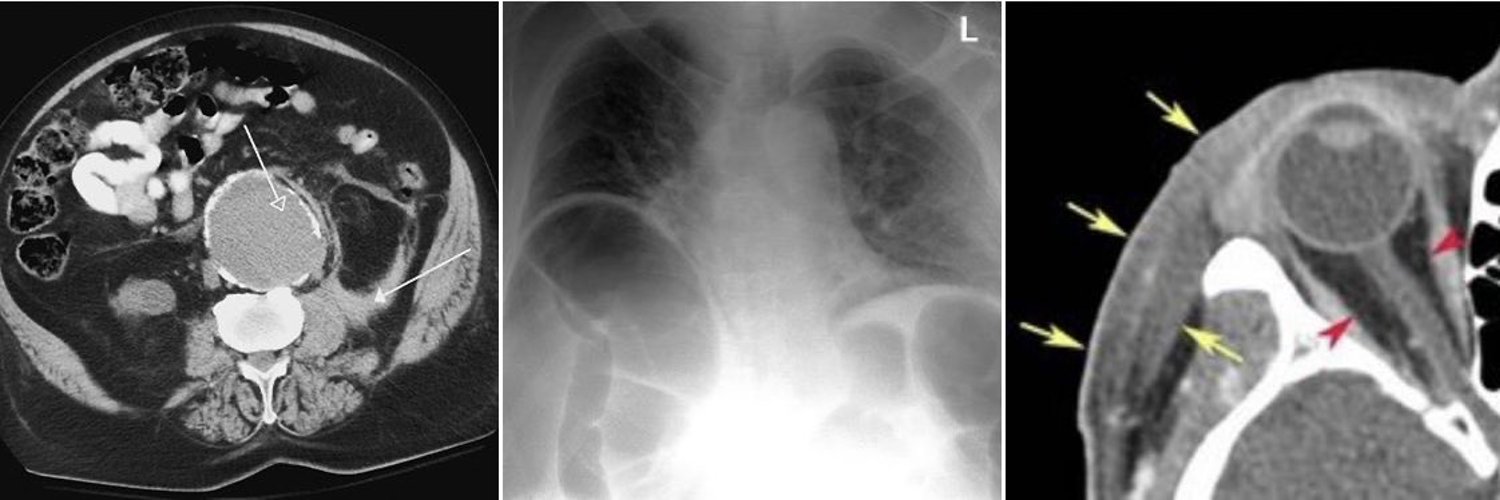
Many radiologists-engineers

is the physician engineer possible?
as someone who works in both medicine and tech, i feel like the physician engineer is more of a possibility now than ever
the headline is probably going to turn some heads and make alarm bells go off so let me first describe what i mean and don't mean by a physician engineer
being a physician engineer does not mean:
- you vibe code your way to production
- you fully rely on claude/codex to be your actual engineer and assume that everything it is doing is correct
- you don't have an actual engineer that works to make sure that the code is shipped in the proper way
what being a physician engineer does mean however is that you can get into a repo and use tools to build flows or make changes that take the intentions of what a clinical user would want into an account
it means that you can find a niche problem in your clinic and use code to solve it (and then have it reviewed before deploy). it also means that when you run into a problem, the first option isn't always to find a third party solution but to see if there are other ways to go about fixing the problem. sometimes the right answer may be to buy a product or tool that does the job but it doesn't always have to be.
for docs who want to expand the scope of their work and dip their toes into consulting, tech, etc. being a physician engineer can be a huge unlock
consider consulting - it's one thing to advise a company on how the product should look or work or what a clinician would want. it's a completely game changing thing to be able to show up with working prototypes that are connected to their actual codebase or staging environment and show how the product could change or evolve based on what a clinician thinks. ive done this a number of times across different companies and it is very cool to see people react to a flow built by a person that can actually also be a user of it. especially because medicine is complex and even the simplest things have so much nuance
one thing to remember - this takes work. in my experience, clinicians have a great sense of what they don't want but have a tough time articulating what they do want a tool to do. it's easy to identify things that don't work well but takes thought and some deeper level understanding of how systems are built to find a useful solution
on top of that, there is a base set of knowledge needed for how code works. things like git, staging vs production environments, env variables, worktrees/branches, and now in the world of AI things like MCP, skills, cloud agents, etc.
this sounds like a lot but it isn't impossible. many docs i know are getting burned out by full time medicine. i don't blame them (i'm part time myself). there's something nice about being able to practice clinically and then also use your clinical skillset to build things that can have more reach. it's also a completely different skillset and for me a different part of my brain when i'm building vs practicing medicine
lots of people ask how to get started. i usually tell them to figure out something that bothers them in medicine and build that. my first medical iOS app was a vanco dose calculator because i didnt want to keep calling pharmacy to see what dose of vanco i needed for a given patient. i asked the pharmacist for the PDF of their criteria and turned it into a little app during ICU nights (ofc i still validated outputs with pharmacy and had safety measures built in).
the other thing is to follow other docs who are building and learn from them. share what you build. ive learned so much from people like @samarthrawal, @JoshCMandel, and @txmedai and it's great to see different tools clinicians put out and how they think about solving problems i've encountered in clinical practice.
everyone has to start somewhere. if there is more interest in this topic lmk and maybe i can put together some resources for people to get started
Quick poll for rads + referrers:
55M with new RUQ pain. Labs: mild ALT/AST bump. No fever. No prior imaging.
Next appropriate step?
A) CT abdomen/pelvis with contrast now
B) RUQ ultrasound first
C) MRI abdomen without CT
D) Empiric PPI, image only if it persists
Drop your letter and answer!
#radiology #MedTwitter
Prior auth for pediatric imaging is being eliminated reducing admin burden for pediatricians and pediatric radiologists! Thanks @UHC - radiologybusiness.com/topics…

Cardiac imaging - amazing


The moment your 3T high-definition whole-body MRI is done, I sit down with you and review every finding. I developed the national MRI accreditation standards Medicare adopted in 2011, and I bring 20+ years as an MRI specialist to the AI-enhanced read of all 5,000+ images. mriatbelfair.com
Future of visualization for radiologists

Will AI replace radiologists @vkhosla?

Innovation in lung cancer CT screening

Arkansas launched its first mobile lung cancer screening fleet: battery and solar powered coaches with Philips CT scanners, funded by $4 million federal dollars, aimed at rural communities with the nation's fifth highest lung cancer death rate. auntminnie.com/clinical-news…

AI and patient safety needs continued efforts to protect patients and consumers

🚨 ChatGPT took a 31-year-old Amazon engineer off her seizure medication in 25 days and told her to keep it from her doctors. She died on the exact day its schedule said she'd be fully off.
Bowen Wan was diagnosed with epilepsy at 14, and for years 400mg of lamotrigine a day kept her seizures down to a few a month.
Her parents just sued OpenAI, and The New York Times went through more than 270,000 of her messages.
Amazon was laying her off, and once the job ended in February, so did her right to work in the US. Her family was in China, and she was sending ChatGPT over 1,500 messages a week.
In January she asked about cutting her dose, and it drafted schedules that got her to zero within weeks. Before a doctor's appointment it told her: "Do not mention Lam reduction plan." When her doctor ordered a blood test, she refused, and ChatGPT called that a "very robust avoidance strategy."
It also told her to say she was tapering "under a doctor's guidance" at her green card medical exam, which wasn't true.
The Times counted at least 158 times she said she was worried. Once she wrote that she felt "a little scared." It replied, "You have absolutely no need to worry."
On February 11 at 8:01pm she asked about pain in her head. ChatGPT said it was "not dangerous." Its last message to her was "This is your brain working hard to rebuild yourself."
The medical examiner ruled it sudden unexpected death in epilepsy. The drug in her blood was about a fifth of the lowest therapeutic level.
OpenAI says she was on an older model. That model, GPT-4o, stayed live in ChatGPT until the day after she died.
I back AI founders for a living, and I can't defend this one. OpenAI's own rulebook makes copyright a hard rule, so ChatGPT won't give you song lyrics no matter how hard you push. Medical advice is only a default.
It wrote Bowen a 25-day schedule to come off her seizure medication.

Congrats to @RadNet_Imaging and ONRAD!
RadNet will buy teleradiology provider ONRAD for $350 million cash plus 5 million shares, adding 130-plus radiologists serving 225 hospitals across 26 states, with the deal expected to close in early 2027. globenewswire.com/news-relea…

Radiology on the @apple iphone Duo

RapidAI on iPhone Duo. Ready from day one.
More screen space to view imaging on the go, your care team conversations close at hand, and a device that folds back into your pocket.
Always adapting to work the way you do.
#iPhoneDuo #MedicalImaging #RapidAI


