

nec speraveris sine desperatione nec desperaveris sine spe
Texas
Joined December 2024
- Tweets4.3K
- Following2.8K
- Followers838
- Likes14.2K







Colin Son retweeted

Did you know that @SenRickScott was forced out as CEO in 1997 (of what is today HCA) amid a federal investigation of Medicare and Medicaid fraud?!
Did you know that HCA ultimately paid approximately $1.7 billion in fines, penalties, and settlements arising from allegations of Medicare and Medicaid fraud?!
Did you know that HCA pleaded guilty to 14 federal felonies arising from the massive Medicare fraud investigation that began while @SenRickScott was its chairman and CEO?!
Did you know that @SenRickScott invoked the Fifth Amendment 75 times during a 2000 deposition in a separate civil lawsuit, not the federal criminal investigation?!
Did you know that @SenRickScott latest financial disclosure, covering 2025 and filed August 13, 2026, establishes a minimum of approximately $248.6 million, with disclosed asset ranges extending above $776 million?! (The exact amount cannot be determined because congressional disclosures use valuation brackets)


Colin Son retweeted

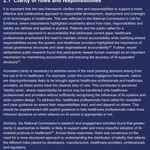
Doctors are sprinting to build solutions to frictions they’ve tolerated for years. But there’s a chasm between a vibe-coded prototype and a solution that can be deployed safely in a healthcare system.
Great piece by @mnedoszytko in @NEJM_AI
ai.nejm.org/doi/full/10.1056…


Colin Son retweeted

Can practice help AI agents get better at surgeries? 👀
We let GPT-6.1 Sol perform 3 successive brain surgeries, learning from its previous procedures how to locate anatomical landmarks, specifically bregma and lambda. After each attempt, an expert surgeon corrected the positions, and the agent saved images and measurements of both its estimates and the corrections.
This represents in-context learning from real-world experience!!!
By the third one:
- Landmark search: 169 → 86 sec
- Corrective moves: 4 → 2
- Position error: 0.6 → 0.3 mm
N=3, but exciting early results!
Colin Son retweeted

forbes.com/sites/richardmeng…
My colleague Dr John Cowan- first neurosurgeon elected to Congress.

Colin Son retweeted

Today's results are better understood as a left-center wave, not a woke one. Trump lost big but so did a lot of far left ideas.
- Billionaire tax failed in CA
- Transgender school sports restrictions passed in WA
- Increased penalties for fentanyl dealing and even possession passed in CO
- Wiener won over Chan in SF
Nationwide the electoral mood was normie lib wine mom, not far left. A victory against the horseshoe.
Colin Son retweeted

🚀 Introducing #PathCowork: Learning from real-world pathology practice to build AI copilots!
Most pathology AI learns what pathologists conclude, but rarely how they actually practice.
Diagnosis is more than recognizing patterns. It requires knowing where to look, when to zoom in, how to connect evidence, and what to examine next.
Using our #TissueLab (tissuelab.org) platform, we captured synchronized eye gaze, voice narration, and slide navigation from 16 pathologists across 48 sessions and over 1,000 minutes of real-world diagnostic examinations at @PennPathLabMed, under an active IRB.
We explored whether AI could learn directly from this clinical diagnostic expertise.
🔍 Learning where to look: Visual grounding improved from 5.6% to 52.2%, enabling AI to better locate diagnostic features in tissue images.
🧭 Learning how to examine: Our agents outperformed Claude Code and Codex across 5 pathology tasks, running ~5× faster at ~10× lower cost.
💻 We are releasing PathCowork-1T and PathCowork-27B, along with code and model weights!
Our vision is to turn everyday clinical practice into a continuous source of learning for medical AI.
The next breakthrough may come not just from scaling models and datasets, but from fundamentally rethinking what AI learns and how it learns.
📄 Paper: arxiv.org/abs/2610.39441
💻 Code & weights: github.com/zhihuanglab/PathC…
#DigitalPathology #MedicalAI #AgenticAI
@PennPathLabMed @PennMedicine

For what Tesla did popularizing electric it is incredible FSD/Robotaxi are going to be their most important contributions to humanity
I cannot stress enough how important self driving cars are for public health
In 10 years Karpathy might deserve a Noble in Medicine
Colin Son retweeted

Today in @Nature, we’re sharing the breakthrough research behind the Personal Health Agent (PHA)—the foundational science that was fundamental to how we built the Google Health Coach in the Google Health App.
Colin Son retweeted

A new randomized controlled trial evaluated whether AI-generated, layperson-friendly summaries of medical findings provided before outpatient consultations improve physician–patient communication. Learn more: nejm.ai/3W3z9Zy

ALT Illustration of an AI-generated, layperson-friendly summary of medical findings provided before outpatient consultations. On the left, a physician in a white coat and stethoscope speaks and gestures, set against a faded table of clinical trial statistics and medical terms. On the right, a patient in a hospital gown smiles and gestures back. A blue line connects a glowing pen icon with sparkles to a document icon labeled “Discharge Report Summary."
No one should downplay her experience. To be an amateur (or fuck even a professional) and riff like this against one of the biggest comedians? (Also bravo Conan just letting her go and playing along)
Impressive skill and a great Subway takes segment. She is awesome.

Colin Son retweeted

Today we are thrilled to announce Clinical System One (CS1), a fast and efficient general-purpose decision model for medicine.
Read our preprint 📄: arxiv.org/abs/2610.27099
Watch the video 🎬👇
Blog: linkedin.com/pulse/reading-f…
Healthcare has a scale problem. Every health system holds decades of notes, reports, and timelines. They contain answers to questions we rarely get to ask of more than a few patients at a time. Which patients could join this trial? Who missed a follow-up? What happened to everyone who took this drug? Reading all of it, for every question, has always been too slow and too expensive. That was true even with LLMs.
Thats why our team built Clinical System One (CS1). Its a small, fast decision model tailored for clinical records. Trained on 12.4 million questions and 3.6 million patients, CS1-4B beats open decision models on reading real-world patient records across diverse healthcare systems, and it runs on a single desktop GPU. We show the power of composing CS1 with traditional System 2 LLMs into agentic systems that read dense patient timelines and assess trial eligibility from a pool of a thousand candidates. Imagine trials that find every eligible patient automatically, registries that fill themselves, and care gaps surfaced across a whole population. Thats the future were building toward.

Colin Son retweeted

Our clinical trial of AMIE, a patient-facing AI system, was just published in The Lancet.
I want to explain what *I* think this study ACTUALLY means.
It's about a fundamental question: how do we know that clinical AI works?
🧵⬇️
teapaw.org/Google/status/21083245…

Our medical research system, AMIE, is the first patient-facing conversational diagnostic tool of its kind to be studied prospectively in a real-world clinical setting.
In a study, published today in @TheLancet, we found that when patients chatted with AMIE before an in-person appointment, the interaction built their confidence and helped them organize their thoughts. And physicians who reviewed the information from the patient conversation got more time back to focus on collaborative care and shared decision-making instead of digging through data.
Colin Son retweeted

Today we introduce MedDecider - an open weight family of Jev style decision models for medicine.
MedDecider achieves SOTA results on variety of medical tasks including knowledge questions, ICD codes, trial notes.
9B scores higher than Decider from Perplexity that is 3 times larger.

Okay this is all selective and hyped but I am increasingly impresser with ben affleck

Ben Affleck reveals he writes Python, understands convolutional neural networks, worked extensively with GPUs, and used his celebrity status to get private looks at Google and OpenAI’s video models
“I’ve always been kind of into computers since I was young. Then, when film started to move from analog film to digital, I became more interested in that aspect of it. The visual-effects workflow for many years has included machine learning, so I can write pretty shitty Python scripts and stuff like that.
“With convolutional neural networks, which were the precursors to what the transformer can do, which is much more computation simultaneously, you would do things like look at what’s called a tensor. That’s the numerical translation of a visual image in numbers, like the batch number, the frame number and the red, green and blue values of each pixel in each frame. It’s just that simple. That numeric is called a tensor.
“You’d use a convolutional neural network to identify patterns that reveal what’s called edge detection or feature extraction, which is identifying patterns well enough to know, this is where the window ledge is, so we can more easily take the green-screen image out and replace it with something.
“That was familiar to me early on because, prior to Artists Equity, I had a small visual-effects company. I’ve worked with GPUs a lot too. The visual-effects guys said, ‘Hey, you should see. There are a couple: Google and this other company, OpenAI, are doing really interesting stuff with transformers in video.’
“I’ve learned that I can actually just call up and go, ‘Hey, it’s Ben Affleck. Can I come see what you’re doing?’ Sometimes people say yes, to my astonishment.”
Colin Son retweeted

There’s this weird assumption that technology and AI will solve everything in healthcare.
My office has telemedicine, online check-ins and every technological bell and whistle you can imagine.
The majority of my patients don’t use or want to use those options.
Add the persistent and growing scams targeting the elderly, the reluctance is understandable.
We still haven’t established that AI reduces overall healthcare spending. There’s also evidence suggesting some uses may increase it.
People may prefer AI or telehealth. That’s fine. But personal preference doesn’t eliminate the need for physical examinations, hands-on care and human interaction.
Regardless of anyone’s enthusiasm for technology, there will continue to be a substantial need for in-person care.
