

Writing code for the @base ecosystem | Connecting to RPCs to track real-time liquidity utilization. i love @base #basebuilder
Joined March 2022
- Tweets8.3K
- Following3.1K
- Followers2.2K
- Likes7K


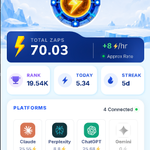


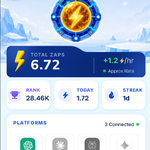


previously, certain operations could accept a cooldown period above the protocol's maximum. this could increase a commitment's reward weight beyond what its actual stake justified.

a reward system is only sustainable when the rules are harder to exploit than they are to understand.
@Acurast recently addressed an interesting issue in its v0.27.3 runtime update.
the problem involved Staked Compute commitments.
previously, certain operations could accept a cooldown period above the protocol's maximum. this could increase a commitment's reward weight beyond what its actual stake justified.
the update closes that gap.
why does this matter beyond a technical bug fix?
because Acurast distributes rewards through different mechanisms.
base benchmark rewards recognize device performance without requiring staking.
Staked Compute adds another reward layer based on hardware performance, stake size and commitment duration.
there's also a 10% execution bonus on benchmark metrics when a Processor is actively running a deployment during an epoch.
each mechanism rewards a different contribution: hardware capacity, economic commitment and actual network activity.
the important distinction is that simply connecting a phone doesn't guarantee a fixed income.
reward allocation depends on protocol rules, device performance and participation.
for a decentralized compute marketplace, fairness isn't just about how much hardware joins the network.
it's also about making sure the incentives reward the contribution they are supposed to measure.
that's the kind of infrastructure detail worth watching as @Acurast grows.
for educational purposes only. not investment advice.

1
2
41
@ramazan.base.eth retweeted

i think Rally could make something interesting happen when creators stop competing for a moment and start building together.
that's another reason RLPs caught my attention.
RLPs are Rally's points. There are several ways to earn them, from joining RLP campaigns to staking a Wingston NFT or referring others.
What I find useful is that they already have jobs to do. They can cover campaign submission costs, open access to campaigns reserved for RLP holders, and count toward tiers and whitelist opportunities.
But here's what i'd love to see next: collaborative campaign access.
Imagine being able to use RLPs to unlock a campaign where two creators can work together, combining different perspectives and strengths in one submission.
Not every good idea needs to come from one person. Giving creators a reason to collaborate could add a whole new dimension to Rally.
Would you rather see RLPs unlock team campaigns or more exclusive opportunities for individual creators?
Curious what @RallyOnChain has planned next.

@ramazan.base.eth retweeted

111 Eggs, Nobody Knows What's Inside 🥚
fungolabs.org/launchpad/s/2r…
I built Eggcrypt on @FungoLabs , the encrypted NFT launchpad @0xFlydev and his team put on Ethereum. It holds 111 pixel hatchlings sealed inside encrypted eggs. Each picture and its five traits are encrypted with FHE on Zama and the hatchling is drawn with encrypted randomness, so not even I know which egg holds which hatchling.
Only the holder can hatch an egg and see it and the holder decides whether to show it. One egg carries the Golden Hour background and one carries the Golden Yolk body, each 1 of 111.
Fungo Genesis holders mint 11 eggs free on Monday 23 Nov at 14:00 UTC. Public mint follows at 16:00 UTC with two eggs per wallet, and per FungoLabs every mint also earns Fungo points and an ETH raffle ticket 🔐

@ramazan.base.eth retweeted

Bitcoin went nowhere that week. I lost money anyway.
I was carrying a geared BTC trade while prices staggered around: marginally higher by morning, marginally lower by evening, the same loop repeating the following day. Nothing looked urgent, so I told myself to stay calm. The coin was flat, after all.
Then I opened the account. Bitcoin sat almost exactly at my entry. My balance did not. I had been staring at the price chart, never at what the back-and-forth was doing to the product underneath it.
The arithmetic, with round invented numbers:
•Coin: 100 to 110 to 100, an unchanged week
•A 2x product that resets daily: 100 to 120 to 98.2
•Outcome: a chart that ends even, a holder who ends lower
My lesson: picking the right direction is not enough when the ride itself carries a price.
So when I found 2Factor, one question mattered first. Is anyone designing for the ride?
Kelly's formula, long a tool of professional desks, solves for the amount of borrowed exposure that compounds wealth fastest across long horizons. Berkshire's record sits around 1.6x. For Bitcoin the estimate falls to about 1.33x, since the coin swings harder.
It stayed behind institutional doors because a steady ratio demands constant upkeep, and borrowing is normally priced by what shorting costs.
cbBTC-Jr packages that 1.33x for long-term holders: cbBTC with the gearing built in, never liquidated, made to sit in a portfolio for years. cbBTC-Sr is the other half, funding the extra exposure behind a deep cushion of Jr capital. It lives on Base, in a capped beta.
Leveraged ETFs are the usual alternative, and an estimated $10B+ a year slips out of their holders through financing costs they never see, plus decay.
My honest read:
•For: it targets the exact failure that hurt me, and it removes the babysitting
•Against: it is young, and a calm sideways stretch proves little
•Open: how Jr behaves through a long slide is unanswered, and a holding that cannot be force-sold can still shrink
Bitcoin comes first. Tokenized stocks are next on the roadmap, not live yet.
Reply with two figures from your worst flat-week loss: where prices finished versus your entry, and where your account finished. Curious how common it is.
@2FactorFinance
Join through my link (sign in with X, no deposit needed, not open in the US or restricted countries):
points.2factor.finance/r/1oi…

@ramazan.base.eth retweeted

Piyasa düşerken ayakta kalan projelere ayrı bakmak lazım. CoinGecko verilerine göre son 30 günde BTC %22.5, ETH %26.1 geri çekilirken @rntprotocol $RNT %5.4 artıda kaldı.
Son 7 günde RWA sektörü %5.4, genel piyasa %11 düşerken RNT fiyatını korumayı başardı. 12 aylık performansta da %106 yükselişle kendi kategorisinden açık ara ayrışıyor.
Arkada çalışan stablecoin kasaları ve lending altyapısı olduğu için sert dalgalanmalarda satış baskısı sınırlı kalıyor. Piyasa döndüğünde göreceli gücü bu kadar yüksek grafikleri radarda tutmak gerek.

The last 30 days in crypto, according to CoinGecko:
BTC: -22.5%
ETH: -26.1%
RNT token: +5.4%
Over the last week the global crypto market is down 11% and RWA tokens are down 5.4%, while the RNT token is flat.
Over twelve months, the RNT token is up 106%.
Already in $RNT?

@ramazan.base.eth retweeted

I paid a premium to hold leverage that did absolutely nothing.
The market chopped sideways for weeks. Funding stayed positive, and every day my position kept paying for exposure that wasn't producing meaningful returns.
That hurt more than a bad trade. It was a quiet leak in my capital, the kind you barely notice until you calculate what you've lost.
That's when I started questioning something: Why should holding leverage become an expensive subscription?
The answer led me to Kelly sizing.
Kelly optimization is a mathematical approach to finding the leverage ratio that maximizes long-term compound growth. Too little leverage leaves potential growth behind. Too much magnifies volatility and can destroy capital.
2Factor uses an estimated 1.33x target for Bitcoin. The idea is simple: amplify exposure without taking on the extreme leverage that makes traditional products difficult to hold through market cycles.
But knowing the right leverage ratio isn't the hard part. Maintaining it is.
You have to manage financing costs, collateral and rebalancing. With perpetual futures, positive funding can quietly eat into returns even when the market goes nowhere.
This is where @2FactorFinance takes a different approach.
Built on Base and currently running a capped beta, it separates Bitcoin exposure into two perpetual tranches:
cbBTC-Jr: Targets 1.33x Bitcoin exposure. Junior capital absorbs market losses first, providing leveraged exposure without a conventional liquidation price.
cbBTC-Sr: The senior tranche provides the capital supporting that leverage. It receives yield in exchange for taking losses only after the junior protection buffer is exhausted.
The interesting part isn't just the leverage. It's how the downside is structured.
If Bitcoin experiences a severe drawdown, the leveraged junior component can be exhausted. But the remaining raw cbBTC collateral continues tracking Bitcoin. Exposure can reset toward 1x rather than the entire position being forcibly liquidated.
That's a meaningful difference from conventional margin leverage.
However, no liquidation doesn't mean no losses. Junior holders absorb the first losses, leverage can change as the system rebalances, and prolonged bearish conditions can still hurt returns.
I also wouldn't assume that 1.33x automatically guarantees better long-term performance. Financing costs, volatility and Bitcoin's actual market behaviour still matter.
My biggest question is whether the financing advantage holds up across different market conditions.
My personal rule: I wouldn't commit more than $200–$300 until I have observed the actual financing costs through a full month of normal market volatility.
The design is promising, but I want the numbers to prove it.
I'd rather earn confidence in a product than buy into its narrative.
I'm also participating in the 2Factor Points Program. Registration is through X, with no deposit required to join.
Account eligibility includes:
- X account at least 90 days old.
- At least 150 followers.
- US and restricted-country exclusions apply.
My position: interesting mechanism, sensible leverage target, but long-term performance still needs to be demonstrated.
Join here: points.2factor.finance/r/ct3…
@2FactorFinance
@ramazan.base.eth retweeted

Most financial products compete by offering people more exposure. Very few stop to ask whether that extra exposure is actually worth the burden of managing it.
At 2KAY Technology Ltd, I would rather study a product that challenges how people manage risk than recommend another version of what everyone already offers.
Take a delivery truck as an example. Buying one gives you control, but adding a carefully calculated amount of borrowed capacity can help it carry more without constantly changing the arrangement. Get that balance wrong, and the extra load becomes a liability.
That is the interesting idea behind @2FactorFinance.
It applies this thinking to Bitcoin. Kelly sizing helps estimate how much extra exposure makes sense for long-term growth. Berkshire Hathaway has operated around 1.6x leverage for decades. Bitcoin's estimated level is about 1.33x.
Here is how 2Factor puts it into practice:
↳ cbBTC-Jr gives holders 1.33x Bitcoin exposure. It is designed to stay in place without liquidation.
↳ cbBTC-Sr supplies the additional capital, with Jr capital providing a substantial buffer beneath it.
Think of the buffer as extra carrying capacity, not insurance. A prolonged Bitcoin decline can still hurt Jr holders more than ordinary cbBTC holders.
As an analyst, I find the design worth studying. Leveraged ETFs can lose value through financing expenses and daily resets. 2Factor is taking a different approach to making measured leverage easier to maintain.
Its capped beta is live on Base, beginning with Bitcoin. Tokenized stocks are planned, not available yet. Its backers include Pantera Capital and Coinbase Ventures. This is not a Coinbase partnership.
I would want 2KAY to examine its financing costs and behaviour during difficult market conditions before drawing conclusions.
There is another interesting part beyond the product itself. 2Factor has built a Points Program around participation. People can learn about the mechanism, contribute useful posts and introduce others through their personal referral links. Season 1 is already running, with Marks carrying into Season 2. The top 10 on the final leaderboard share 1 BTC in cbBTC according to rank, with first place receiving 18.2%. Marks have no cash value and are not an investment or token. An eligible X account must be at least 90 days old with 150+ followers. US and restricted-country residents cannot participate.
I find the approach interesting because it gives people a reason to understand the product before putting capital into it. No deposit is needed to join.
Explore here: points.2factor.finance/r/rzm…
Would you trust a carefully calculated extra load on a vehicle you intend to use for years? That is the question I would put before our product team.

@ramazan.base.eth retweeted

when evaluating a new chain, i look at its infrastructure, applications, economic activity and projects already live or preparing to launch.
that’s how i’m looking at @LayerZero_Core’s Zero network.
mainnet and open ATLAS launch are scheduled for november 30.
the bigger story is how Zero and ATLAS could reshape liquidity sharing and trading infrastructure.
here’s my ecosystem map 👇
1/ Zero + ATLAS
Zero is LayerZero’s L1; $ZRO is its gas/staking token. ATLAS is a headless exchange engine for shared matching and settlement.
Design:
→ ZK proofs: producers execute and generate proofs for validators to verify.
→ Parallel zones: separate execution environments to isolate trading from payments and other apps.
Target: up to 2M TPS per zone, verified on standard hardware. Mainnet performance remains unproven.
ATLAS lets venues share an engine and liquidity. Fee plan:
→ Venues receive 20–65% of fees.
→ 75% of remaining ATLAS fees goes to planned $ZRO buybacks/burns.
LayerZero reports $15.69B ecosystem TVL, $318M+ funding and $3B valuation. Institutional names associated: @citsecurities, @tether and @ARKInvest.
2/ Launchpads
- @T0dotfun: 11.4k testnet tokens/10 days, ~50% graduating; 11% of $T0 to users, 5% Season 0.
- @ZROfun: ZRO meme launches, points leaderboard.
- @pealhq: daily launches, 24h sealed bids, 90-day LP locks.
- @zerolotl: 70% fee allocation to creators/buybacks/holders.
- @GitZero_: tokenized GitHub repos.
- @St0cksfun: stock memes.
- @Orpheusfun: fair launches.
- @Addictedfamily_: bonding curves.
- @SubZero_Pad: tokenized-stock pairs.
- @DraftOnZero: leveraged stock exposure.
- @nillyfun: one-tx launches, fee sharing.
T0 has the clearest reported onchain activity; most others remain pre-launch.
3/ Trading infrastructure
- @globemkts: social trading and AI agents.
- @BasedOneX: Hyperliquid wallet, ATLAS integration expected.
- @GTE_XYZ (@enzo_gte): DEX, $25M raised, day-one launch announced.
- @grid_arena: perpetuals venue.
- @definedfi: trading/market discovery.
- @get_truenorth, @Bullish: trading projects.
- @nave_hl: perp-market infrastructure.
- @Zerror_Protocol: AMM/orderbook DEX.
- @Cyra_Dex: DEX aggregator.
Integration announcements aren't proof of live ATLAS trading.
4/ DeFi, liquidity and credit
- @meridianfiapp: USDC synthetic stocks, FX and metals; 1,270+ tickers.
- @sifrswap: permissionless AMM.
- @fiefxyz: venue rebates, ZRO-backed credit, self-repaying loans.
- @z30index: 30 US stocks in one token.
- @Reflectum_Atlas: yield strategies/vaults.
- @MoonLightZero_: private cross-chain trading.
- @infinityZer0_: customizable liquidity strategies.
- @groundzero_app / @BedrockZero: reserve, credit and liquidity.
- @tenjofinance: loans against tokenized stocks.
5/ NFTs, gaming and consumer apps
- @PlunderPort: pirate idle game; mint allocation 1,024→3,333 after 10k+ whitelist requests.
- @ZeroGuysNFT: 3,444 PFPs; Nov 30 mint.
- @zerodroidsio: pixel droids, waitlist open.
- @zeroniNFT: 零鬼 collection.
- @ZeroVaultxyz: NFT marketplace.
- @zropunks, @zolkdotio: NFT projects.
- @z0nersadventure: gaming characters.
- @PlayRunevorn: dark fantasy pixel RPG.
- @zxoxocash: browser mining.
- @theBit_trade: launchpad/Telegram bot.
- @tradeon21x: ecosystem project.
6/ $ZRO and key dates
$ZRO is the existing gas/staking token, with potential ATLAS fee value capture.
• Nov 21: 23.6M unlock (~5.9% circulating float).
• Nov 30: Zero mainnet + open ATLAS launch; open markets first, plus 183M foundation $ZRO unlock.
• Dec 15: final day to convert $STG to $ZRO.
No second token or airdrop planned. $ZRO is ~$1.43, ~81% below ATH. Value capture depends on adoption and actual fees. $STG holders should verify official conversion terms.
7/ What's actually live?
As of Nov 21:
• T0 testnet runs on Base Sepolia, not Zero.
• Explorer remains in private testing.
• Mainnet RPC and bridge aren't public.
• Most projects remain waitlist, announced or pre-launch.
Avoid unofficial mainnet, RPC, bridge, claim or migration links. Verify official channels. A LayerZero tag isn't proof of partnership, and testnet points aren't guaranteed rewards.
what i'm watching
1. Which venues actually launch Nov 30?
2. Do they attract real users, liquidity and order flow?
3. How much activity reaches ATLAS?
4. Do venue rebates and $ZRO buybacks go live?
5. Can Zero meet its execution and verification targets?
Zero provides execution, ATLAS shared exchange infrastructure, apps bring financial products, and users generate activity.
The real test is whether multiple applications sharing one engine can create deeper liquidity and sustainable fees.
I'll track what moves from announcement to actual usage.
bookmark this map if you're following Zero.

@ramazan.base.eth retweeted

🎰 Lotteries are one of the oldest games in the world and somehow still run on trust.
@coinlotto_xyz is built to fix that. It's a multi-chain decentralized lottery protocol where every ticket, draw, and prize claim happens on-chain.
◆ No picking numbers, your ticket gets a unique on-chain number
◆ Chainlink VRF 2.5 picks the winners
◆ Prize pools live in smart contracts, not someone's wallet
◆ Every sale, draw and claim is verifiable on-chain
PLAY. LAUNCH. EARN.
◆ Play the lotteries already live
◆ Launch your own for your community and take up to 30% of ticket sales
◆ Share your link and earn 50% of protocol fees from the people you bring in.
CoinLotto was also just featured on CryptoDaily magazine and completed its smart contract security audit with CertiK. Read the feature here:
cryptodaily.co.uk/2026/11/de…
It's live on BNB, Base and Ethereum, with Robinhood Chain coming soon.
Have a look: go.coinlotto.xyz/4fs2JPb

@ramazan.base.eth retweeted

A token becomes more interesting when its utility goes beyond simply being traded.
That’s what I wanted to explore about $RNT and what @rntprotocol is building around it.
$RNT has a fixed maximum supply of 200 million tokens, alongside a burn mechanism linked to protocol revenue. This creates an interesting connection between the tokenomics and the activity happening across the ecosystem.
But supply is only one part of the picture.
Through staking, holders can receive xRNT, which connects them to governance rights and a share of protocol fees. Higher staking tiers can also unlock priority access to new RWA projects.
There’s a practical side to it too. RNT staking is required for assets to be listed on the ecosystem’s liquidity markets, giving the token a role beyond simply being held.
What stands out is how these pieces connect: tokenomics, governance, fee sharing, and access all contribute to $RNT’s role within the ecosystem.
That’s what makes its utility worth looking beyond the market price.
@ramazan.base.eth retweeted

Sometimes I feel like we’re building everything in crypto except what we actually need
We have thousands of dApps, new chains launching every week, and endless AI projects.
But here’s the thing.
How do we bring real-world information onchain and actually trust it?
That’s what @primus_labs doing rn.
They’re working on making real-world data verifiable and usable in Web3.
And I think this could open some interesting doors for DeFi, AI agents, and much more.
We don’t need another 100 chains.
We need tech that makes crypto useful beyond our little CT bubble.
Anyone else thinking the same?

A lot of crypto trading agents execute trades on decentralized exchanges and settle onchain, but the compute behind those agents may still depend on centralized cloud servers.

A lot of crypto trading agents execute trades on decentralized exchanges and settle onchain, but the compute behind those agents may still depend on centralized cloud servers.
If that infrastructure goes down, the agent may stop working too.
@Acurast approaches this problem differently. Instead of relying on a single company's data center, applications can run across a decentralized network of real smartphones. Hardware-backed attestation helps verify device authenticity and the integrity of their execution environments.
I run Processor Lite on my Samsung and Vivo. Both phones can contribute compute while idle, such as overnight while charging, without requiring a factory reset or removing my personal apps and data.
For a dedicated setup, there is also Processor Core. It supports compatible Android devices but requires a factory reset, so it is better suited to a spare phone you are comfortable wiping and keeping plugged in.
Both Processor Lite and Core can contribute compute to the network and may receive ACU rewards according to Acurast's processor reward rules. Actual rewards depend on network conditions and qualifying contributions.
Have an old compatible phone sitting in a drawer? It could have another use in decentralized compute.
Explore Acurast through my link:
hub.acurast.com/rebellion?re…
This is an interesting direction for decentralized AI infrastructure. @Acurast

10
@ramazan.base.eth retweeted

If a crypto agent already trades on a decentralized exchange, why does it still matter where that agent actually runs?
That is the question I keep coming back to with @Acurast.
On November 12, 2026, Outlook, Teams and Copilot were disrupted across 74 countries for more than 12 hours. In an official blog published on November 16, Acurast highlighted a simple infrastructure problem: when email, meetings and AI assistants depend on the same centralized cloud provider, disruptions can affect them together.
Then, in a November 20 article, Acurast connected that same problem to crypto AI agents. Many agents trade on decentralized exchanges and settle on public blockchains, but their execution environments may still depend on centralized cloud infrastructure. If a cloud account is suspended or a region goes offline, the agent may stop working. The onchain settlement can be decentralized while the infrastructure running the agent remains a single point of failure.
I already run Processor Lite on my iPhone. There is no factory reset, and my apps and personal data stay on the phone. During idle periods, such as overnight while charging, it can provide compute to applications on the Acurast network.
Developers can deploy workloads across a network of smartphones, while hardware-backed security and attestation help verify participating devices. Providers can earn ACU for qualifying compute contributions under the network's reward rules.
Acurast is also clear about its limits, and I think that matters. This network would not have kept Outlook or Teams online during the Microsoft disruption. Training the largest AI models still belongs in data centers.
Its role is different. Workloads that need resilience, such as agents, monitors and failover services, can be deployed across multiple Processors in different countries. This can reduce dependence on any single cloud provider, although reliable failover still depends on how developers design and deploy their applications.
That is the part I find interesting. You are not trying to replace Microsoft or every data center. You are giving useful applications another place to run, beyond one company's infrastructure.
If you have a compatible Android or iPhone, Processor Lite is a way to explore this approach without factory resetting your everyday phone.
Join through my invite and connect your phone to the Hub:
hub.acurast.com/rebellion?re…
You can also read Acurast's November 20 article here:
acurast.com/blog/network-and…
This is an important infrastructure question for the future of autonomous applications. @Acurast
🤝 Paid partnership

@ramazan.base.eth retweeted

“Thanks for the refund. The replacement arrived broken too. Can you help?”
That’s the email I’d give @Acurast’s Laya demo. A refund got sorted, the customer sounds polite, and somebody still needs to send them a working product. If I ran that inbox, I’d want the email to reach support.
Try the email classifier with just the first sentence. Then add the rest and see whether the result changes. The model runs on an Android phone, and the demo lets you inspect the device handling the request.
Curious which sentence tips the decision for you 👇
laya.acurast.com/
Want to try contributing compute yourself? My Cloud Rebellion invite is here.
hub.acurast.com/rebellion?re…

a reputation system becomes more useful when it gives people more than one way to contribute.
a reputation system becomes more useful when it gives people more than one way to contribute.
@zerufinance is building Zaps around four participation paths:
existing onchain activity, protocol campaigns, qualified referrals and Clans.
each represents a different kind of contribution.
wallet activity reflects what someone already does across protocols. campaigns connect that activity to a specific ecosystem objective. referrals bring new participants into the network, while Clans give communities a way to organize their participation.
the interesting part is how these paths come together in one progress system.
instead of treating reputation as a score earned from a single action, Zaps creates a broader record of how users participate over time.
but the quality of that system depends on one important condition: rewards should follow qualifying activity, not empty volume or referral counts.
for anyone starting out, the practical move is to review your existing wallet activity first, then explore campaigns and communities that genuinely match your interests.
a stronger network isn't built by collecting the most points. it's built by giving different forms of real participation a clear place to count.

1
9
@ramazan.base.eth retweeted

nvidia news drops saturday morning. nasdaq doesn't open till monday
used to mean you just sit there and watch
on canborsa you can open an nvda perp on the weekend. long if you think it pumps, short if you think it dumps. usdc as collateral, you pick the size
you don't own the shares, it just tracks the price. and leverage cuts both ways, so size like you mean it
they call it allfi. crypto and stocks in one app, no market hours
what would you trade first if wall street never closed?
@Canborsa_DEX

@ramazan.base.eth retweeted

Mathematician @__alpoge__, who works at @AnthropicAI, announced that he and Claude @claudeai have found a proof of the Riemann Hypothesis.
The proof was released as a 17-million-line Lean formalization. The Lean FRO and Mathlib Initiative certified the proof as correct after independent verification.
A version that mathematicians can read and understand has not yet been published. The Clay Mathematics Institute still lists the problem as unsolved.

The Lean FRO and Mathlib Initiative have released a joint statement on the Lean verification of the Riemann Hypothesis.
On November 20, Levent Alpöge released a proof of the Riemann Hypothesis as a Lean library of 17 million lines of code. Over the past day, the Lean and Mathlib communities worked together to verify it. The statement certifies the proof as correct and describes how it meets all necessary verification criteria.
Congratulations to Levent on this achievement, and thank you to everyone in the community who contributed to the verification.
Full statement: leanprover-community.github.…

nvidia news drops saturday morning. nasdaq doesn't open till monday used to mean you just sit there and watch

nvidia news drops saturday morning. nasdaq doesn't open till monday
used to mean you just sit there and watch
on canborsa you can open an nvda perp on the weekend. long if you think it pumps, short if you think it dumps. usdc as collateral, you pick the size
you don't own the shares, it just tracks the price. and leverage cuts both ways, so size like you mean it
they call it allfi. crypto and stocks in one app, no market hours
what would you trade first if wall street never closed?
@Canborsa_DEX
1
1
35
@ramazan.base.eth retweeted

this is what being part of a community should feel like.
good stuff from @1win

