

Applying science-based learning and tech to Atelier art training
Earth
Joined December 2014
- Tweets790
- Following479
- Followers844
- Likes674
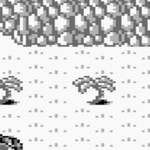
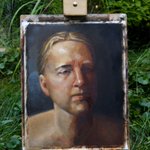




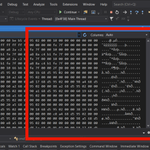

I present to you, an example of a Visual Segfault--a painting where so many errors have accumulated, it's easier to just make a new painting.
I borrowed this term from a class of memory errors in programming languages such as C, C++, and unsafe Rust.
Normally, when a program has an error, it generates an error message to point you directly to the solution.
Segfaults are different, because the actual problem often occurred way earlier, deeper in the operation in the program.
Solving a segfault requires a deep understanding of a program, and a bit of intuition.
Let's see if we can diagnose the actual errors within this painting, so those errors can point us towards the solution:

Were you able to discern anything, based on your own emotional debugging tools?
When I look at the two images at the last post, the simplified reference gives me a feeling of mystery, a feeling of being in the darkness and looking towards the light; perhaps the excitement of being revealed or recognized.
The image on the right produces a "beautiful woman" feeling, maybe a feeling of being in a garden, a feeling of harmony, but that's it. It's a subdued feeling.
At least by my gut feeling, my 2-minute paintover beat my multiple-hour oil painting. That's because my painting contains errors which are muddying its intent.
Like the Latin "errare", my painting has strayed from its original intent, and therefore its emotional impact has been blunted.
Think about that list of errors several posts above: each error points to a fundamental skill that I failed to execute. What might some of these skills be? Which of the skills might have dependencies on each other, evidenced by the chain of cascading errors?
Instead of brute-forcing portrait after portrait, and hoping these skills improve, what if we could design exercises to isolate and train these skills?
And supposing we had such a system, would it take years of training to become "decent" at painting portraits, or could we compress the learning time considerably?
I will leave that for you to consider; good day.
Almost a year ago, I posted my "AI learning system for art", where I used Deep Research pointed at The Math Academy Way by @justinskycak to generate a learning system for a skill domain that didn't already have the skill chart figured out.
The question is "Did it work??" -- Yes it has, obviously, but the journey to get to this point has been so strange, I can't quite put it into words yet, and so I'll start with this general outline of some of the main points:

I found ways to isolate specific skills and study them one at a time, such as training simplification by using a sculpture, and then applying that simplification to my drawings.
It was exciting to spend the day doing exercises like this, and then get a decent painting at the group session, without straining too hard.


I had no idea all this would unfold, when I climbed the steps of my local college library to train with Math Academy two summers ago.
All I can say is that the lessons from Math Academy can be applied to other domains, and "education" in general is far from solved--there is huge room to improve and grow from here.

Pro tip: you can point Deep Research at The Math Academy Way by @justinskycak to generate a learning system for nearly any skill domain.
I'm using mine to learn traditional art (I'm following it and actual results shown)--put the time in and do the reps!

For AI workflows, everyone is stuck on having the AI generate the artifact--e.g. "generate this code" or "generate this image".
But after banging on ChatGPT and MidJourney for 8 hours a day for the last two years, I can say that by far, the move overpowered ability of AI is to tutor humans.
The noosphere does not understand this yet.


