






Pinned Tweet
Understanding Risk-Reward Ratios
Risk-Reward Ratio: This measures the potential profit of a trade compared to the potential loss, helping traders assess whether the potential reward justifies the risk taken.
1:2 Risk-Reward Ratio
Meaning: For every unit of risk (e.g., ₹1), you aim to make ₹2 in profit.
Winning Expectancy: To break even, you only need to win 33% of the time. With a 50% win rate, you would be profitable.
1:3 Risk-Reward Ratio
Meaning: For every unit of risk, you aim to make ₹3 in profit.
Winning Expectancy: You need to win about 25% of the time to break even. With a 50% win rate, your profitability increases significantly.
Key Points to Consider
Win Rate vs. Risk-Reward: A higher risk-reward ratio allows traders to be right less often while still being profitable. For example, with a 1:5 ratio, you only need to win 17% of your trades to break even.
Psychological Impact: Understanding that you can withstand some losses while remaining profitable helps reduce emotional strain, fostering discipline in trading.
Trade Management: Setting clear risk-reward ratios before entering trades promotes adherence to your strategy and mitigates emotional reactions to market volatility.
Long-Term Success: Consistently applying these ratios can lead to long-term profitability. If your winners are substantially larger than your losers, you can still succeed with a lower win rate.
Examples
1:2 Ratio Example:
Risk: ₹100 (buying at ₹10, stop-loss at ₹9)
Reward: ₹200 (target price at ₹12)
Outcome: If you win 4 out of 10 trades (40% win rate):Wins: 4 trades x ₹200 = ₹800
Losses: 6 trades x ₹100 = ₹600
Net Profit: ₹800 - ₹600 = ₹200
1:3 Ratio Example:
Risk: ₹100 (buying at ₹10, stop-loss at ₹9)
Reward: ₹300 (target price at ₹13)
Outcome: If you win 3 out of 10 trades (30% win rate):Wins: 3 trades x ₹300 = ₹900
Losses: 7 trades x ₹100 = ₹700
Net Profit: ₹900 - ₹700 = ₹200
1:4 Ratio Example:
Risk: ₹100 (buying at ₹10, stop-loss at ₹9)
Reward: ₹400 (target price at ₹14)
Outcome: If you win 2 out of 10 trades (20% win rate):Wins: 2 trades x ₹400 = ₹800
Losses: 8 trades x ₹100 = ₹800
Net Profit: ₹800 - ₹800 = ₹0 (break-even)
1:5 Ratio Example:
Risk: ₹100 (buying at ₹10, stop-loss at ₹9)
Reward: ₹500 (target price at ₹15)
Outcome: If you win 2 out of 10 trades (20% win rate):Wins: 2 trades x ₹500 = ₹1000
Losses: 8 trades x ₹100 = ₹800
Net Profit: ₹1000 - ₹800 = ₹200
MOST IMPORTANT TO NOTE
You would need to lose approximately 462 consecutive trades (risking 1% of your total capital each time) to bring your capital down to a negligible amount (close to zero).
This highlights the importance of risk management and maintaining a disciplined approach to trading.
#StockMarket #Tradingview #RiskManagement #Stocks #niftyOptions #trading #moneymanagement

One simple setup. One disciplined approach to risk management.
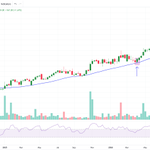
Look at this Inside Bar Breakout setup on Navin Fluorine's weekly chart.
📈 Strong uptrend
📉 Pullback towards the rising 30-WMA
🕯️ Inside Bar formation
🚀 Breakout followed by trend continuation
Now imagine identifying such setups consistently and trading them with:
• A predefined entry
• A predefined Stop Loss
• Proper position sizing
• Maximum 1% risk per trade
You don't need to predict the market.
You need a repeatable setup, disciplined execution, and proper risk management.
This is how you build consistency in trading.
🎯 YOUR HOMEWORK:
Go through as many charts as possible.
Identify Inside Bar setups on:
• Weekly charts
• Daily charts
For every setup, identify:
1️⃣ The prevailing trend
2️⃣ The Mother Bar
3️⃣ The Inside Bar
4️⃣ The breakout level
5️⃣ The Stop Loss
6️⃣ Your position size with maximum 1% risk
Don't just scroll through charts.
Train your eyes to recognize opportunities.
Post the charts you identify in the comments. Let's learn together. 📈
#StockMarket #TradingPsychology

Your emotions are NOT your enemy in trading.
Anger can fuel focus.
Fear can sharpen awareness.
Pressure can bring out your best.
Some traders perform exceptionally well when their backs are against the wall. Others thrive when they are frustrated or challenged.
But here's the catch:
The same emotion that fuels your best trade can destroy your next 10 trades.
The problem isn't feeling emotions.
The problem is allowing emotions to control your decisions.
The difference between a professional and an amateur isn't who feels less.
It's who has learned to control what they feel.
A professional trader doesn't try to become emotionless. They learn to recognize their emotions, understand them, and channel them without violating their trading rules.
Your emotions can be fuel.
But without discipline, that fuel can burn your trading account.
Don't try to eliminate emotions. Master them.
Feel everything. Follow your rules. 🧠📈
#TradingPsychology #StockMarket
3
5
865
🌱 You can't eliminate a weed by cutting its leaves. You have to remove it from the roots.
The same applies to trading mistakes.
You keep promising yourself:
- I won't exit without a Stop Loss.
- I won't average down.
- I won't overtrade.
- I won't chase a stock.
- I won't let emotions control my decisions.
But after a few days, you repeat the same mistakes.
Why?
Because you're treating the symptoms, not addressing the root cause.
Maybe it's:
→ Fear of missing out.
→ Need to recover losses.
→ Greed after a winning trade.
→ Lack of patience.
→ Ego that refuses to accept being wrong.
Your trading mistakes are not just bad habits. They are often symptoms of deeper psychological issues.
Don't just change your trading rules.
Understand WHY you keep breaking them.
Because lasting improvement in trading begins when you fix the trader, not just the trading strategy.
Remember: Cut the leaves, and the weed grows back. Remove the roots, and you create lasting change. 🌱
#TradingPsychology #MindfulTrading
1
5
808
The Transformation of a Trader
Most traders don't decide to change until they face a major loss, blow up their trading capital, lose months of profits, or realise that their trading behaviour is destroying their financial and emotional well-being.
Even then, despite knowing what needs to change, they struggle to do it.
Why?
Because the mind and body have become comfortable with familiar patterns.
Revenge trading. Overtrading. Averaging losing positions. Exiting profitable trades too early. Moving stop losses. Chasing breakouts out of FOMO.
These behaviours may be hurting them, but years of repetition have made them feel natural.
The real challenge is not learning a new trading strategy. It's unlearning the old trader within you.
Moving from an impulsive trader to a disciplined trader requires you to let go of your old identity.
It means accepting small losses without emotional reactions.
It means sitting patiently when there is no setup.
It means following your stop loss even when your ego says otherwise.
It means trusting your system instead of chasing every market movement.
And yes, this transformation will feel uncomfortable.
Your mind will resist. Your emotions will challenge you. Your old habits will try to pull you back.
But remember:
Resistance is not always a sign that you are failing. Sometimes, it's a sign that you are breaking free from the trader you used to be.
The journey from an emotional trader to a mindful and consistently disciplined trader begins when you stop fighting the market and start working on yourself.
Because the biggest transformation in trading doesn't happen on the charts. It happens within you.
We've often heard experienced traders say:
"If you want to make serious money from the stock market, you have to become a full-time trader."
But I respectfully disagree.
Based on my own experience, even a working professional can make good money from trading while continuing their job.
The key is to follow the right approach:
1. Stay away from Options trading.
2. Avoid the pressure of intraday trading.
3. Focus on positional trades.
4. Study daily and weekly charts.
5. Prioritise risk management.
6. Be patient and wait for quality setups.
Remember:
You don't need to be a full-time trader to make money. You need to be a disciplined, rule-based trader.
Your job is not an obstacle to your trading journey. It can actually be your biggest advantage.
Don't quit your job to become a trader.
First, learn to trade profitably while keeping your job.
6
955
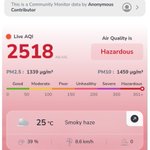
Delhi today looks like Chernobyl! ☢️😡
Difference bas itna hai… wahan nuclear blast hua tha, yahan Diwali celebration! 🤦♂️💨
Very SAD 😢
#DelhiPollution #DelhiAQI

🪔 Muhurat Trading is not just about buying stocks. It's about building the right relationship with money.
A new Samvat. A new beginning. A fresh opportunity to become a better trader.
But remember:
📌 Don't trade because everyone is trading.
📌 Don't buy stocks just because it's an auspicious day.
📌 Don't forget your stop-loss in the excitement.
📌 Don't compromise on risk management.
The real Shubh Muhurat is when you combine:
1. Knowledge over tips.
2. Discipline over emotions.
3. Patience over impulsiveness.
4. Risk management over greed.
5. Consistency over quick profits.
May this Samvat bring you not just wealth, but the wisdom to manage it.
Happy Muhurat Trading! 🪔
Trade Mindfully. Grow Consistently.
1
5
824
Everyone wants to make money during Muhurat Trading.
But here's something worth remembering:
You don't have to trade just because the market is open.
In my last 8+ years of trading journey, I have never taken a trade during Muhurat Trading unless my setup was there.
My rules have always remained the same:
• No setup? No trade.
• No favourable Risk-Reward? No trade.
• No clarity? Stay away.
I don't trade because it's an auspicious day.
I trade when my strategy gives me a valid opportunity.
Sometimes, the most profitable decision is doing nothing.
Trade the setup, not the occasion.
🪔 Happy Muhurat Trading!
1
11
1,866
You don't need to be the most talented person in the room to achieve extraordinary things.
You need to be the person who never stops improving.
One powerful lesson from the book "Hidden Potential" by Adam Grant:
Potential is not something you are born with. It's something you develop.
Don't obsess over how good you are today.
Focus on how much better you can become tomorrow.
In trading, this means:
• Learn from every mistake.
• Accept feedback without ego.
• Focus on improving your process.
• Stay consistent even when results are slow.
• Treat setbacks as opportunities to grow.
Your current ability is not your final destination.
Keep growing. Your potential is far greater than you think.
4
653
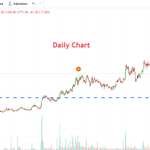
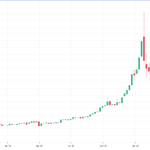
#KMEW is a perfect example of why traders need to zoom out. 👇
Look at the Daily chart.
Every red candle was creating fear.
Every dip was testing traders' patience.
Many probably exited their positions, unable to withstand the selling pressure.
Now look at the Monthly chart.
The stock is just reaching to its ALL-TIME HIGH!
Imagine exiting a stock because of a few scary red candles on the Daily chart, only to watch it make a new ATH.
The market didn't necessarily change its trend.
Your timeframe changed your perception of the trend.
This is one of the biggest lessons in trading:
Don't let short-term volatility make you lose sight of the bigger trend.
I prefer to give more weight to higher timeframes and use lower timeframes for execution.
Because sometimes, what looks like a breakdown on the Daily chart is nothing more than a normal pullback on the Monthly chart.
ZOOM OUT. THINK BIGGER. TRADE MINDFULLY.
#StockMarket #TradeMindful


2
724
One of the biggest challenges in trading is that people often confuse knowledge with competence.
A trader may know:
- 20 technical strategies.
- 50 candlestick patterns.
- Multiple indicators.
- Risk-reward calculations.
But knowing these things doesn't automatically make someone a disciplined trader.
The missing element is often the development of character and the right learning environment.
2
2
712
Instead of simply studying charts for three hours, set a challenge to identify 20 high-quality pullback setups and evaluate their characteristics.
The focus shifts from time spent to improvement achieved.
2
5
752
Growth happens when you are willing to do things that initially feel uncomfortable.
For example:
-Speaking in public when you fear judgment.
-Learning a difficult skill when you feel inadequate.
-Trying a new approach after your old approach stops working.
-Accepting mistakes instead of protecting your ego.
Don't wait until you feel confident. Take action, experience discomfort and build confidence through practice.
For a trader: If you struggle to follow your stop-loss, you need to practise accepting small losses. It may feel uncomfortable initially, but that discomfort is part of developing discipline.
6
654
#Nifty50 hits a crucial resistance zone! 🎯
Downward trendline + horizontal supply zone.
Strong recovery, but resistance is not to be ignored.
Profit booked. Capital protected.
No predictions. No greed. Just disciplined trading!
Let the market decide its next move. We don't have to predict it.
#Nifty50 #TradingDiscipline


📊 NIFTY 50 | Daily Chart
Nifty is shaping up a potential Double Bottom near a key demand zone.
🎯 The setup:
• Strong support around 22,000–22,300
• A breakout above the neckline near 23,100 could trigger bullish momentum
• Next potential target: 24,000 🚀
The risk-to-reward looks attractive if the breakout confirms.
Don’t anticipate. Let the chart confirm.
The best opportunities often appear when the crowd is still doubtful. 📈
Now the real question is…
Would you buy the dip or wait for the breakout? 👇
Comment BUY or BREAKOUT. Let's see how traders are positioned! 📈
#NIFTY50 #Trading #PriceAction #TechnicalAnalysis

2
639
Trading progress often feels like going in circles.
You learn a strategy.
You take trades.
You make mistakes.
You face losses.
You question yourself.
You try again.
And sometimes, you wonder:
"Am I even making progress?"
But here's something most traders don't understand.
Progress in trading is rarely linear.
You will face the same challenges repeatedly:
• Fear of losing.
• Greed after winning.
• Impatience.
• Overtrading.
• Breaking your rules.
But every time you face these challenges, you have an opportunity to handle them better.
The first time, you ignore your stop loss.
The next time, you recognise the mistake.
The third time, you control your emotions.
Eventually, respecting your stop loss becomes part of your character.
That's progress.
You may be facing the same challenges, but you should not be the same trader.
Don't just focus on growing your trading account.
Focus on growing yourself as a trader.
That's the foundation of Mindful Trading.

Your biggest enemy in trading isn't the market.
It's your own nervous system.
Fear makes you exit winners early.
Greed makes you overstay.
Frustration makes you revenge trade.
Ego makes you refuse to accept losses.
The market doesn't need to defeat you.
Your reactions can do that for you.
Master yourself before trying to master the market.
- Inspired by Tom Hougaard
4
8
821
A few months ago, everyone was talking about Silver.
"Silver demand is exploding."
"AI and Solar will drive massive demand."
"Silver is going to Rs.10 lakh!"
Today, Silver is trading around Rs.1,78,000/kg.
From its January peak of Rs.4.27 lakh, it has corrected nearly 58%.
So, what happened to all those bullish predictions?
Here's a lesson every trader must understand:
A good story is NOT a trading signal.
Fundamentals may explain the opportunity.
But PRICE tells you what the market is actually doing.
Never marry a narrative.
Never fight the trend.
Never let someone else's conviction become your financial risk.
Price Action is Supreme.
Everything else is a hypothesis until the market confirms it.
Trade what you SEE, not what you HEAR.
#MindfulTrading

1
2
692
#Nifty50 - 1000+ points rally 🔥🔥
#NIFTY BANGS 400+ UP! 🚀
The setup was hiding in plain sight.
📍 Nifty formed an Inside Bar near a major Support Zone day before yesterday.
📈 Price broke above the Inside Bar.
💥 The result? A sharp 400-point rally.
But here's the real lesson:
An Inside Bar is not powerful just because it forms.
LOCATION is what makes the difference.
✅ Inside Bar near Support
✅ Breakout above the pattern
✅ Momentum follows
The pattern gives you the setup.
The location gives you the context.
Risk management keeps you in the game.
Stop chasing candles. Start studying price action.
Do you trade Inside Bar Breakouts?
♻️ Repost if you believe in trading with a plan.

2
664
30 days ago, I asked you to observe your trading.
Tonight, ask yourself:
Am I trading differently?
If yes → continue.
If no → don't consume another trading course.
Study your behaviour.
Your next breakthrough may not come from a new strategy.
It may come from finally mastering the one you already have.
1
3
631