

Building the FritoLay of Real Food at @ancientcrunch. Get seed oils out of your pantry ➡️ @masa_chips tortilla chips and @vandy_crisps ➡️ potato chips
Tan Land
Joined January 2022
- Tweets12.5K
- Following1K
- Followers73.4K
- Likes21.8K





Tan Man retweeted

Mission flour tortillas have 11 ingredients. A tortilla needs 4, flour, water, fat and salt.
The bag lists enriched bleached flour, water, vegetable shortening made from interesterified and hydrogenated soybean oils, then 2% or less of salt, sugar, baking soda, sodium acid pyrophosphate, distilled monoglycerides, fumaric acid, calcium propionate and sorbic acid.
The shortening is soybean oil that was hardened in a reactor so it acts like lard at room temperature. Baking soda and sodium acid pyrophosphate are a baking powder split in two, so the tortilla puffs on the hot plate in the plant. Distilled monoglycerides are an emulsifier. They keep the starch from going stale and hard, which is why a Mission tortilla is still soft weeks after you bought it. Fumaric acid drops the pH, and calcium propionate and sorbic acid stop mold in a bag that isn't refrigerated.

It's a myth that fried foods are bad, just because they're fried.
People cite several reasons for this, but fact, fried foods can be better than other forms of cooking:
1. High fat content. Tortilla chips are ~1:3 fat to solid matter. But avocados as an example are ~2:1 fat to dry matter, and no one complains about them. Fat itself isn’t bad (ever heard of healthy fats?); rather, it’s the type of fat that matters. If that fat is grass fed beef tallow, then you’re already ahead of the curve
2. Oil rancidity. All oils break down when heated over a long time period, and it’s accelerated by all the crumbs and other bits that fall into the frying oil (tallow is obviously better here, but it's still an issue). However, our fryer geometry has a super small oil volume relative to the quantity of chips we produce. So every 6-8 hours, the tallow is completely turned over and the fryer is fresh again. We also have a filter that continuously pulls out all those crumbs. Restaurant fryers have neither advantage, and those conditions are the worst from a health perspective. It's why restaurant fried food can taste so much greasier than factory-produced snacks.
3. High temperature. A niche criticism of frying is that it occurs at “high heat”. But outside of boiling food, frying occurs at the lowest temperature— Typically around 350°, while roasting, grilling, sauteeing, broiling, etc. are even hotter (and no one complains about them). Our burner/heat exchanger is also much gentler at 500° (we are the only people in the country that have this device) than typical fryer burners, which get up to 1200° from the direct flame (enough for the oil to start “cracking”)
As always, it's not the frying that's the problem, it's how you fry.

Tan Man retweeted

What wrong babe? You hardly touched your dextrose corn syrup MSG disodium inosinate disodium guanylate rice bran sunflower oil sodium diacetate hydrolyzed corn protein buffalo style chicken bites


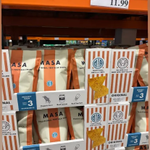
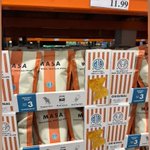
Costco really does sell the same stuff at much lower prices than anywhere else. How?
Having finally launched Masa chips at Costco, I have some insight into this question. There are three reasons:
1. They take less margin than any other retailer. It varies by store and category, but most retail stores markup products 30-50%. Costco very famously takes only 14%. So right there, you're paying a lot less money to the *retailer* for the same exact product. This is the biggest reason
2. Emphasis on larger items/multipacks. Everyone knows that a bigger item has a lower unit cost. That's what they optimize for, so they buy larger items from their suppliers. Masa bags are more than 2x as big at Costco than anywhere else, for this reason.
3. Sourcing in bulk. Costco moves so much stuff (8% of American groceries, ignoring other categories), they can buy a ton from their suppliers at one time, which results in cheaper per unit freight, better economies of scale, etc. We've never shipped entirely full truckloads of finished product to one retailer before, until Costco.
And all this without buying lower quality items than any other competitive store.
While a health oriented customer might not be interested in everything they have for sale (just like at any other store), there is now one more reason to get a membership there.


Tan Man retweeted

It’s with great excitement that we announce a Woolshire sock!
100% USA virgin wool
No Synthetics
No Superwash and no chemicals.
Will be available December.
Limited run.


Tan Man retweeted
These people will look at you in the eye and sell you a 91% synthetic sock, marketed as wool.
Shameful behavior. Our society must not allow this.


Tan Man retweeted

Beyond Meat ($BYND) is cooked.
The SeedOilFree movement has declared victory.
CC @reallytanman

That’s what you gotta do these days
Grocery stores keep precious little back stock so in many stores we’ll be empty shortly after the shelves are filled

I’m the very first to buy @Masa_Chips at my @WholeFoods! Got them before they were even on the floor. Let’s gooooooooo!
@reallytanman

Tan Man retweeted

Autism: Have you heard the ground breaking new human research out of Japan?
Japanese Scientists discovered a significant connection between increase in PUFA fatty acids in umbilical cord blood and severity autism symptoms in children.
Specifically, diols products of the metabolism of arachidonic acid, a type of omega-6 PUFA.
Omega 6 PUFAs are predominantly found in "seed oils" like soy, corn, grapeseed and sunflower.
PMID: 39041066

Many such cases. Flax seed oil was used for industrial purposes until replaced with petroleum derivatives. Fish oil is rotten fish guts. Etc etc

Tan Man retweeted

I’ve been warning people about E407 (carrageenan) for well over a decade…whenever I see someone with a product that has it, but 99% of them don’t care. “Why would they be allowed to put it in there if it’s so bad for you?” is the most common question…
…well, you see, it’s approved because, even though it gets used to cause inflammation in animal studies, and is potentially carcinogenic (only after you swallow it and it degrades…it isn’t carcinogenic before you swallow it 😂) the regulatory bodies aren’t convinced it is harmful at the levels consumed…
…by the time I’m finished saying that, they aren’t listening anymore.

8 months of nausea, vomiting, bloating, and diarrhea attributed to IBS, a meaningless term, culminated in anaphylaxis during a barium enema.
All of this was caused by carrageenan.
A case report details the experiences of a woman with severe gastrointestinal complaints who had an anaphylactic allergic reaction to a barium enema.
The barium enema was being used as a diagnostic imaging test to investigate the patient’s 8-month history of daily nausea, vomiting, abdominal bloating, and diarrhea, which had been attributed to “irritable bowel syndrome”.
It was suspected she had a latex allergy, but tests disproved that. The doctors then performed allergy tests with other components of the barium enema and found she reacted to carrageenan.
Removal of carrageenan from her diet cured her “irritable bowel syndrome”.
“In our patient we can conclude that the anaphylaxis during a barium enema was due to allergy to carrageenan...
The role of carrageenans in the gastrointestinal symptoms of this patient is also of interest. Oral challenges with carrageenan were not performed because of her history of anaphylaxis. Even though she had no urticaria or respiratory symptoms associated with the gastrointestinal symptoms, these symptoms could be due to allergy to carrageenan. It is known that double-blind allergen ingestion challenges in people with food allergy can elicit exclusively gastrointestinal symptoms. A direct inflammatory effect comparable to that observed in animals is also possible but speculative. Further consideration of the possible direct or immunologic effects of carrageenan in the pathogenesis of irritable bowel syndromes or inflammatory bowel syndromes may be warranted, particularly in patients with symptoms exacerbated by milk products, including infant formulas, in the absence of milk allergy or lactose intolerance.”
Ref: Anaphylaxis to carrageenan: A pseudo-latex allergy xitter.cf/lowmegatron/status/208…


Tan Man retweeted

Seed oils are what turn a drink into liver damage, and the experiment proving it was run in 1989.
Same alcohol, same dose, three groups of rats. The only variable was the cooking fat in the feed.
Tallow: none of the features of alcoholic liver disease. Not one.
Lard: minimal to moderate.
Corn oil: the most severe pathology in the study.
The damage tracked the linoleic acid content of the diet almost exactly. Tallow at 0.7 per cent. Lard at 2.5. Corn oil at 56.6.
Same drink. Three completely different livers.
The same group published a paper that year with the finding in the title. Dietary linoleic acid is required for the development of experimental alcoholic liver injury.
Required. Not associated with. Required.
Alcohol becomes acetaldehyde, which cross-links proteins, binds DNA and sits in Group 1 alongside asbestos. That part is settled and it happens to everybody.
The liver destruction runs through a second reaction, and that one needs a fuel you can buy in a bottle for two pounds.
Feeding saturated fat to rats that already had alcoholic liver disease reversed it. The steatosis, the inflammation, the necrosis and the fibrosis.
In 2001 they did it without stopping the alcohol. Ethanol still going in, fibrosis regressing anyway.
Changing the fat did not alter how the rats metabolised ethanol, and it did not change CYP2E1 induction. The alcohol was processed identically in every group.
What changed was the membrane. Saturated fat made the liver resistant to oxidative stress, and a membrane that cannot be peroxidised cannot sustain the chain reaction.
Same mechanism as sunburn, running in a different organ. The alcohol is the ignition. The linoleic acid is what actually burns.
These are rats, and the work is thirty-seven years old.
Nobody has run it in a human being since, and nobody has proposed to.
There is no shortage of people with alcoholic liver disease. There is a shortage of people willing to fund a trial where the treatment is beef fat.

Tan Man retweeted
Seed oils raise inflammation, and the argument about them has been stuck on heart disease for sixty years, which is the least interesting item on the list.
- Heart disease (the plaque itself is largely made of it)
- Migraine (take it out, headache days fall)
- Period pain (cramps run on a chemical built from it)
- Appetite (it raises the signal that makes you hungry)
- Blood sugar (the fat that makes cells stop listening to insulin)
- Fatty liver (now turning up in children who have never had a drink)
- Gallstones (the low-fat diet that swapped butter for oil made more of them)
- Gut (higher intake, higher rates of ulcerative colitis)
- Colon (tumours found loaded with its breakdown products)
- Sunburn (your skin burns the fat you gave it)
- Sperm (the most fragile cell you make, built out of it)
- Your body fat (six years to clear it out)
- Breast milk (whatever the mother ate, the baby drinks)
- Cell membranes (every one of them assembled from what you fried in)
Fourteen departments of medicine, one molecule, and not one of them talks to the others about where it came from.