

Follow Republic Policy — a research-driven think tank shaping discourse on governance, economy, law, politics, HR & society for an informed Pakistan.
Islamabad - Lahore - Karachi -
Joined July 2020
- Tweets32.3K
- Following36
- Followers40.4K
- Likes12K







Pinned Tweet
Republic Policy Think Tank is doing a project titled " National Book Reading Movement ' to create interest in reading books.
Please, be a part of Punjab University Book Fair from 15th to 17th October.
Please purchase republic policy governance model at stalls 69 & 70 Nashriat.


چھ نومبر بروز جمعہ کو شام ساڑھے سات بجے ریپبلک پالیسی کی کتاب " Beyond Four Provinces" کی ملتان انٹرنیشنل بک فیئر میں Inauguration Ceremony ہو گی۔
اس تقریب میں ہم فیڈرل یونٹس، انتظامی یونٹس اور مقامی حکومتوں کے کردار پر بات کریں گے۔
جنوبی پنجاب کے دوستوں سے شرکت کی اپیل ہے۔

Republic Policy retweeted
چھ نومبر بروز جمعہ کو شام ساڑھے پانچ بجے ریپبلک پالیسی کی کتاب " دی بیوروکریٹک کو" کی ملتان انٹرنیشنل بک فیئر میں Inauguration Ceremony میں شرکت کریں۔
اس تقریب میں ہم پاکستانی ریاست اور بیوروکریسی کی کردار پر بات کریں گے۔
جنوبی پنجاب کے سٹوڈنٹس, ایکڈیمیا اور عوام شرکت کریں۔

Syed Zulfiqar Ali (MPA) speaks on the prime duties of a legislator at the platform of Republic Policy
چھ نومبر بروز جمعہ کو شام ساڑھے پانچ بجے ریپبلک پالیسی کی کتاب " دی بیوروکریٹک کو" کی ملتان انٹرنیشنل بک فیئر میں Inauguration Ceremony میں شرکت کریں۔ اس تقریب میں ہم پاکستانی ریاست اور بیوروکریسی کی کردار پر کھل کر بات کریں گے۔ جنوبی پنجاب کے دوستوں، سٹوڈنٹس سے شرکت کی اپیل ہے۔

چھ نومبر بروز جمعہ کو شام ساڑھے پانچ بجے ریپبلک پالیسی کی کتاب " دی بیوروکریٹک کو" کی ملتان انٹرنیشنل بک فیئر میں Inauguration Ceremony میں شرکت کریں۔
اس تقریب میں ہم پاکستانی ریاست اور بیوروکریسی کی کردار پر بات کریں گے۔
جنوبی پنجاب کے سٹوڈنٹس, ایکڈیمیا اور عوام شرکت کریں۔
Visit Multan International Book Fair & Purchase Republic Policy Think Tank’s Books
Republic Policy books are available at Multan Kitab Ghar.
Booth #26–33 | International Book Fair, Multan
Dates: 6, 7 & 8 November 2026

The debate over Pakistan’s governance must begin with a more fundamental question: does the structure of the state reflect the constitutional identity of the country?
republicpolicy.com/pakistan-…

Opinion: Artificial Intelligence and the Crisis of Liberal Democracy: Who Gets to Shape Our Future?
Read more: republicpolicy.com/artificia…

پاکستان میں اقتدار اور پالیسی سازی کے بہت سے اہم فیصلے پارلیمان، کابینہ اور سرکاری اداروں کے بجائے نجی کلبوں، جمخانہ اور اشرافیہ کی مخصوص محفلوں میں ہوتے ہیں۔ یہ کلب محض تفریحی مقامات نہیں بلکہ ایک ایسے غیر رسمی نظامِ طاقت (Informal Architecture of Power) کا حصہ ہیں.
پنجاب میں ڈپٹی کمشنرز کون لگاتا ہے؟ وزیراعلیٰ یا چیف سیکرٹری؟
پنجاب میں ڈپٹی کمشنرز کی تعیناتی کے معاملے پر وزیراعلیٰ مریم نواز صاحبہ اور چوہدری سالک حسین کے درمیان جاری بحث نے ایک بنیادی سوال کو جنم دیا ہے کہ آخر پنجاب میں ڈپٹی کمشنرز تعینات کون کرتا ہے؟
پنجاب کی بیوروکریسی کے اندرونی ذرائع کے مطابق، بظاہر ڈپٹی کمشنرز کی تعیناتی وزیراعلیٰ کرتی ہیں، لیکن عملاً اس پورے عمل کا فیصلہ چیف سیکرٹری پنجاب کی مرضی اور ترجیحات کے تحت ہوتا ہے۔ طریقۂ کار یہ ہے کہ کسی ضلع میں ڈپٹی کمشنر کی تعیناتی کے لیے چند افسران کے ناموں پر مشتمل پینل وزیراعلیٰ کو بھجوایا جاتا ہے۔ کبھی ایک ضلع کے لیے دو، تین یا چار افسران کے نام تجویز کیے جاتے ہیں اور کبھی متعدد اضلاع کے لیے آٹھ سے دس افسران کا پینل تیار کیا جاتا ہے۔ لیکن بنیادی سوال یہ ہے کہ ان ناموں کا انتخاب کون کرتا ہے؟ یہ تمام افسران چیف سیکرٹری کی مرضی اور منظوری سے پینل میں شامل ہوتے ہیں۔ چنانچہ اگر چار اضلاع میں ڈپٹی کمشنرز تعینات کرنے کے لیے بارہ افسران کے انٹرویو ہوتے ہیں تو یہ بارہ کے بارہ افسران پہلے ہی چیف سیکرٹری کے منتخب کردہ ہوتے ہیں۔ وزیراعلیٰ کے سامنے انتخاب انہی محدود ناموں میں سے ہوتا ہے۔
اس صورتِ حال میں بظاہر قانونی اور رسمی اختیار وزیراعلیٰ استعمال کرتی ہیں، لیکن عملاً انتخاب کے امکانات اور دائرۂ کار چیف سیکرٹری متعین کرتا ہے۔ یوں ڈی فیکٹو اختیار چیف سیکرٹری کے پاس رہتا ہے، جبکہ ڈی جیور اختیار وزیراعلیٰ کے ذریعے استعمال ہوتا دکھائی دیتا ہے۔ دوسرے لفظوں میں، وزیراعلیٰ سے تعیناتی کا رسمی فیصلہ تو کروایا جاتا ہے، لیکن انتخاب کا بنیادی مرحلہ پہلے ہی بیوروکریسی کے ہاتھ میں ہوتا ہے۔
اس پورے نظام میں ایک اور قابلِ غور پہلو یہ ہے کہ بیوروکریسی نے سیاسی مداخلت کے خلاف ایک ایسا تصور قائم کر رکھا ہے جس کے تحت ڈپٹی کمشنرز کی تعیناتی میں منتخب عوامی نمائندوں کے کردار کو بھی غیر ضروری یا ناپسندیدہ سمجھا جاتا ہے۔ حالانکہ یہ تصور پارلیمانی جمہوریت اور آئینی اصولوں سے مطابقت نہیں رکھتا۔ آئین کے آرٹیکل 2A کے مطابق ریاستی اختیار عوام کے منتخب نمائندوں کے ذریعے استعمال ہونا ہے۔ وزیراعلیٰ خود بھی اپنے اختیارات پنجاب اسمبلی سے حاصل کرتی ہیں۔ لہٰذا انتظامی مشینری کو منتخب حکومت اور عوامی نمائندوں سے بالاتر کوئی خودمختار قوت تصور نہیں کیا جا سکتا۔
پرویز الٰہی کے دورِ حکومت میں ڈپٹی کمشنرز کی تعیناتی کے لیے ایک کمیٹی کے ذریعے افسران کی سفارشات مرتب کرنے کا نسبتاً بہتر طریقۂ کار اختیار کیا گیا تھا۔ اس تجربے سے یہ سبق لیا جا سکتا ہے کہ تعیناتی کا عمل محض چیف سیکرٹری کی صوابدید یا چند ناموں کے محدود پینل تک نہیں رہنا چاہیے، بلکہ اسے ادارہ جاتی، شفاف اور جواب دہ بنایا جانا چاہیے۔
ریپبلک پالیسی تھنک ٹینک کی رائے میں متعلقہ ضلع کے منتخب ارکانِ قومی و صوبائی اسمبلی، یعنی ایم این ایز اور ایم پی ایز، کو ڈپٹی کمشنر کی تعیناتی کے عمل میں باضابطہ اور مؤثر مشاورتی کردار ملنا چاہیے۔ اس کی وجہ محض سیاسی مداخلت نہیں بلکہ جمہوری جواب دہی ہے۔ ڈپٹی کمشنر ضلع میں وسیع انتظامی، ریونیو اور دیگر حکومتی اختیارات استعمال کرتا ہے۔ وہ مقامی ترقی، عوامی مسائل اور حکومتی ترجیحات پر براہِ راست اثر انداز ہوتا ہے۔ اگر وہ اپنے ضلع کے منتخب نمائندوں کے ساتھ مل کر کام نہیں کرے گا تو عوامی نمائندگی، حکومتی کارکردگی اور سیاسی جماعت کی عوامی ساکھ، تینوں متاثر ہوں گی۔
یہ سمجھنا ضروری ہے کہ سیاسی مداخلت اور جمہوری نگرانی دو مختلف چیزیں ہیں۔ اقربا پروری، ذاتی پسند اور غیر قانونی دباؤ کی مخالفت ضرور ہونی چاہیے، لیکن منتخب نمائندوں کو انتظامی فیصلوں سے مکمل طور پر باہر رکھنا بھی جمہوری اصولوں کے منافی ہے۔
اصل سوال یہ نہیں کہ ڈپٹی کمشنر مریم نواز صاحبہ لگاتی ہیں یا نہی؛ اصل سوال یہ ہے کہ عوام کے منتخب نمائندوں کے نام پر قائم حکومت میں انتظامی اختیارات کا حقیقی مرکز کون ہے؟
پنجاب میں گورننس کی اصلاح کے لیے ضروری ہے کہ بیوروکریسی کو منتخب حکومت کے ماتحت، قانون کے تابع اور عوام کے سامنے جواب دہ بنایا جائے، نہ کہ اسے ایک ایسا خودمختار نظام بنا دیا جائے جو وزیراعلیٰ کے رسمی اختیار کے پیچھے اپنے فیصلے خود کرتا رہے۔ آخر میں مرہم نواز صاحبہ کو چیف سیکرٹری و بیوروکریسی کے کردار پر بھی تھرڈ پرسن فیڈ بیک ضرور لینا چاہیے ۔
@MaryamNSharif
ریپبلک پالیسی تھنک ٹینک
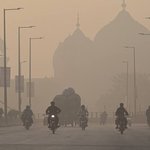
Pakistan’s Pollution Crisis: The Invisible Danger Inside Homes and the Visible Threat Outside
Analysis | Republic Policy
Pakistan’s pollution debate is often reduced to a familiar image: cities covered in smog, hazardous air-quality readings and people struggling to breathe. Lahore has become the most visible example of this crisis, but the problem is no longer confined to one city. Islamabad, Karachi and other urban centres are increasingly experiencing deteriorating air quality. For residents, pollution is not simply an environmental statistic. It affects daily life, limits outdoor activity and raises serious questions about the health and sustainability of urban development.
Yet the public debate overlooks an important distinction. Pakistan is dealing with two forms of air pollution, and they do not receive equal attention. The first is ambient or outdoor air pollution, which includes contaminated air in streets, neighbourhoods and public spaces. The second is household or indoor air pollution, which develops inside homes and other enclosed spaces.
The distinction matters because the pollution people see is not necessarily the pollution responsible for the greatest health burden. Outdoor air pollution attracts attention through smog, visibility and air-quality index readings. Household pollution is less visible and often remains outside the scope of public discussion. Nevertheless, the material presented in this debate suggests that household air pollution has historically imposed a greater health burden than outdoor pollution, with estimates indicating nearly twice as many deaths and disability-related impacts. This comparison requires careful verification against the relevant health datasets, but it raises a policy question that cannot be ignored: why does public attention remain concentrated on outdoor pollution while a substantial part of the problem may exist inside homes?
Two Sources of Exposure, One Public Health Challenge
Outdoor air pollution is the form most commonly associated with Pakistan’s urban environmental crisis. It affects people as they travel, work, study and conduct their daily activities. Vehicles, factories and other sources of emissions contribute to the deterioration of ambient air quality. In densely populated cities, the concentration of these activities increases the number of people exposed.
Lahore offers a particularly visible example. During periods of severe smog, breathing becomes difficult and ordinary outdoor activity can turn into a health concern. The problem is also extending beyond Lahore. Islamabad and Karachi are experiencing growing pressure from deteriorating air quality, while other cities face their own pollution challenges.
Household air pollution, however, requires a different kind of attention. It concerns the quality of air inside homes and other enclosed spaces. Unlike outdoor pollution, it may not be visible from the street or reflected in the air-quality readings that dominate public debate. Its sources, patterns of exposure and health consequences therefore need to be examined separately rather than treated as a minor extension of the urban smog problem.
The important point is that people are exposed to air pollution in more than one setting. A policy response focused exclusively on roads, factories and urban emissions cannot address the full range of exposure. Equally, a strategy concerned only with household conditions will leave the wider environmental problem unresolved.
Why the Nature of Pollution Must Shape Policy
Before governments decide how to control pollution, they must understand what they are trying to control. Different sources of pollution require different interventions. The causes of outdoor air pollution cannot simply be assumed to be the same as those of household air pollution, and a single policy instrument cannot address both effectively.
This is where Pakistan’s environmental debate needs greater analytical depth. Public discussion frequently begins with the visible consequences of pollution: smog, hazardous air-quality levels and the difficulty of breathing. These are important indicators, but they do not provide a complete account of the problem. Policy must also establish where pollution originates, how people are exposed and which groups carry the greatest burden.
For outdoor pollution, this requires examining emissions from transport, industrial activity and other sources contributing to deteriorating urban air. For household pollution, it requires identifying the sources of contamination inside homes and understanding the conditions that expose residents to it. The material presented here does not provide a detailed inventory of household pollution sources or their relative contribution. That evidence must be established before specific interventions can be designed.
Without this distinction, governments risk addressing the most visible part of the crisis rather than the full public health problem.
From Environmental Exposure to Public Health Costs
Air pollution is not merely an environmental concern. It is a public health and economic issue. When people are repeatedly exposed to polluted air, the consequences extend beyond the immediate discomfort of breathing in poor-quality conditions. The resulting health burden affects households, healthcare services and the wider economy.
The distinction between household and outdoor pollution is particularly important in assessing this burden. If household pollution accounts for a larger share of pollution-related deaths and disability than outdoor pollution, as the estimates cited in the discussion suggest, then a strategy centred almost entirely on urban smog will remain incomplete.
Outdoor pollution, meanwhile, affects large populations across shared public spaces. Its consequences are not restricted to people living near industrial sites or major roads. Commuters, workers, students and residents are exposed as they move through the city. As air quality deteriorates, the problem becomes a matter of urban liveability and the public’s ability to use shared spaces safely.
The economic implications also deserve attention. Illness, reduced productivity and the pressure placed on healthcare systems are costs that do not appear in the price of fuel, industrial production or urban transport. Pollution allows some economic activities to impose costs on the wider population without those costs being adequately reflected in public or private decision-making.
This is why air pollution should be treated as a matter of economic governance as well as environmental regulation.
The Need for a More Complete Policy Response
Pakistan needs an air-quality policy that recognises both dimensions of the problem. Outdoor pollution requires a serious assessment of emissions from vehicles, factories and other sources, supported by reliable monitoring and effective enforcement. Household pollution requires its own evidence base, including information about exposure inside homes, the sources responsible and the populations most affected.
The two should not compete for policy attention. They should be addressed through a coordinated public health and environmental strategy.
First, the government needs a clearer national assessment of the sources of air pollution. Data should distinguish between ambient and household exposure rather than combining them into a single broad category. This would allow policymakers to identify the relative contribution of each source and direct resources accordingly.
Second, air-quality monitoring must be connected to public health evidence. Air-quality index readings are useful, but they cannot independently explain the full burden of pollution. Policymakers also need reliable information on exposure, illness, deaths and disability, with clear distinctions between household and outdoor pollution.
Third, responsibility must be distributed across the institutions that shape environmental and public health outcomes. Environmental authorities, health departments, local governments and urban-planning institutions cannot work in isolation. Pollution crosses administrative boundaries and affects people in different settings. Its management therefore requires institutional coordination, shared data and clearly assigned responsibilities.
Finally, policy should be judged by reductions in human exposure and health risks, not simply by the number of regulations issued, inspections conducted or monitoring stations installed. The purpose of environmental governance is to improve the conditions in which people live, not merely to produce administrative activity.
Looking Beyond the Smog
Pakistan’s pollution crisis is larger than the smog that periodically covers its cities. Outdoor air pollution is a visible and urgent threat, but household air pollution represents another dimension that must be brought into the policy debate. Ignoring either one will produce an incomplete response.
The first step is to understand the nature and sources of both forms of pollution. The next is to establish how they affect public health and which interventions can reduce exposure. Only then can governments allocate resources according to the scale of the problem rather than the visibility of its symptoms.
Environmental policy must begin with evidence, distinguish between different sources of risk and connect regulation with public health outcomes. Pakistan cannot address its pollution crisis through seasonal responses to smog alone. It needs a sustained strategy that recognises the air people breathe both outside and inside their homes.
The real measure of clean-air policy is not how clear the sky looks, but how safely people can breathe wherever they live and work.
Republic Policy | Governance. Institutions. Public Policy.
#smog
@EPAPunjab
@PIDEpk
@IPRI_Pak
@SDPIPakistan

Member of the Punjab Assembly Syed Zulfiqar Ali Shah delivered the keynote address at the Republic Policy platform. Reflecting on his responsibilities as an elected public representative, he emphasized that the greatest qualification of a political representative is the mandate received directly from the people through their votes. Therefore, their foremost responsibility is to represent public interests and safeguard the rights of citizens.
Addressing the issue of government land and public interest, he stressed the principle that public interest must take precedence over the privileges of the elite.
Watch his address: youtu.be/PVKlLR15lwE?si=y4ml…

Opinion: The Constitutional Right to Student Unions in Pakistan: A Legal Analysis of the 1984 Ban and Its Aftermath
Aslam Akbar, Student of Law, Bahria University, Islamabad
This article conducts a constitutional analysis of the ban on student unions in Pakistan and determines whether it is constitutional or not with the assistance of Article 17 of the Constitution of Pakistan (1973), which guarantees freedom of association. It maps the law that enabled the ban to take place, to become entrenched in law and to be institutionally maintained over four decades, not only as a matter of policy, but as a multi-layered suppression of a fundamental right.
Read more: republicpolicy.com/constitut…

Op-Ed: Public Transport Is Not a Business: Why Pakistan Must Rethink the Economics of Mobility
Public transport in Pakistan is frequently judged by a narrow financial question: how much revenue does it generate, and how much does the government have to spend to keep it running? By this measure, many public transport systems appear to be expensive and inefficient. Yet this approach overlooks the fundamental purpose of public transport. It is not merely a commercial service designed to recover its operating costs through ticket sales. It is essential economic infrastructure that connects people to employment, education, healthcare and the wider opportunities of urban life.
Read more:
republicpolicy.com/public_tr…

Editorial
Pakistan’s Electricity Crisis Is a Transmission Crisis, Not Just a Generation Problem
The country has invested in producing electricity without building a sufficiently capable network to deliver it. The result is an expensive contradiction: surplus generation capacity, unmet demand and cheaper power that cannot reach consumers.
Pakistan’s electricity debate has long been dominated by a familiar question: how much more power does the country need to generate? Governments have responded by adding power plants, signing generation agreements and expanding installed capacity. Yet the country continues to experience high electricity costs, supply constraints and a persistent gap between the availability of power and its delivery to consumers.
This raises a more fundamental question: has Pakistan built an electricity system that can efficiently transport the power it is capable of producing?
The figures presented in the current debate point to a serious structural mismatch. Pakistan has an installed generation capacity of approximately 44,000 megawatts, while the maximum transmission capacity is estimated at around 26,000 megawatts. If these figures are comparable measures of usable system capacity, the gap is substantial. It suggests that investment in generation has not been matched by the development of the infrastructure required to transmit electricity across the country.
The geographical distribution of generation and consumption makes the problem even more striking. Approximately 56 per cent of generation capacity is located in the north and 43 per cent in the south. Electricity demand, however, is concentrated differently: around 77 per cent of consumption is in the north, compared with 23 per cent in the south.
This imbalance should have been central to national energy planning. A power system cannot be designed by considering generation capacity in isolation. It must account for where electricity is produced, where it is consumed, how much power the transmission network can carry and what it costs to move electricity between regions. Pakistan’s figures suggest that these considerations have not been adequately integrated.
The economic implications are particularly important. The marginal cost of generation in the south is cited at approximately Rs16 per unit, compared with Rs35 per unit in the north. This difference creates an obvious economic opportunity: transmit relatively cheaper electricity from southern generation centres to the northern regions where demand is concentrated.
Yet the transmission network cannot always accommodate the required flows. Consequently, the country may be unable to utilise cheaper generation to its full potential, even while consumers face high electricity costs. Investments in southern energy projects, including Thar coal-based and nuclear power plants, cannot deliver their full national benefit if the grid lacks the capacity to carry their output to major consumption centres.
This is not merely an engineering problem. It is a failure of economic planning. When a country invests in generation without making corresponding investments in transmission, it risks creating expensive assets that cannot be used efficiently. The cost of this mismatch eventually appears in electricity tariffs, capacity payments, constraints on industrial activity and the wider burden on households and businesses.
The Geography of Electricity and the Failure of Planning
The north–south imbalance also exposes a weakness in the way Pakistan approaches infrastructure development. Generation projects, transmission corridors and consumption patterns are often treated as separate planning questions. In reality, they are parts of one interconnected system.
A power plant has limited economic value if its electricity cannot reach the market. Similarly, a transmission line cannot be planned effectively without reliable projections of future demand, generation locations and the changing composition of the energy mix.
The expansion of Thar coal and nuclear generation in the south makes this coordination increasingly important. The country must ensure that transmission infrastructure develops alongside generation capacity, rather than years after investment decisions have already been made.
There is also a broader access question. Despite substantial installed generation capacity, significant sections of the population reportedly remain without electricity access. The estimate that 20–30 per cent of the population lacks access requires verification against current official access data, but the underlying policy contradiction deserves attention: national generation figures mean little to communities that have no connection to the electricity network.
Energy policy must therefore distinguish between three different objectives: producing electricity, transmitting it efficiently and ensuring that households and businesses can actually access it. Success in the first does not guarantee success in the other two.
An Ageing Grid Adds to the Cost
The problem is compounded by the condition of the existing transmission infrastructure. An electricity network must not only have sufficient capacity; it must also operate reliably and efficiently. Ageing equipment, technical constraints, congestion and inadequate investment can increase losses and prevent the system from using available generation effectively.
The cited estimate of approximately 2.5 per cent transmission losses points to another dimension of the problem. Every unit lost before reaching consumers represents electricity that has already incurred a generation cost but produces no corresponding benefit for the end user. Reducing these losses requires modern equipment, improved grid management, regular maintenance and investment in network efficiency.
Pakistan cannot continue treating transmission as a secondary component of energy policy. It is the infrastructure that connects generation investment with economic activity and public access.
A Different National Energy Strategy
The solution is not simply to build more power plants or to shift all investment towards one region. Pakistan needs an integrated national electricity strategy that places generation, transmission, distribution and access within a single planning framework.
First, transmission investment must be aligned with the geographical distribution of demand and future generation. The country needs stronger north–south transmission corridors and a credible assessment of the capacity required to transport electricity from lower-cost generation centres to major consumption markets.
Second, the government must prioritise the modernisation of existing infrastructure. Upgrading substations, transmission lines, grid-management systems and other critical equipment can improve the utilisation of existing assets and reduce technical losses.
Third, generation approvals should be linked to transmission readiness. New power plants should not be planned or contracted without a clear assessment of how their electricity will enter the national grid and reach consumers. The same principle should apply to major renewable energy investments, whose output and location must be incorporated into a coherent grid-development plan.
Fourth, Pakistan needs greater transparency in power-sector planning. NEPRA, NTDC and other relevant institutions should make publicly accessible the data on regional generation, demand, transmission constraints, curtailment, marginal generation costs and system losses. Without reliable and comparable information, neither policymakers nor citizens can properly assess the performance of the electricity system.
Finally, energy planning must be judged by the price, reliability and accessibility of electricity delivered to consumers, not merely by the number of megawatts added to the national capacity.
Pakistan’s electricity crisis reveals a deeper lesson about public policy: infrastructure is only as valuable as the system that connects its individual components. A country may possess power plants, fuel resources and technical expertise, but poor coordination can prevent these assets from serving the economy.
The central challenge is therefore not simply to generate more electricity. It is to build a national grid capable of delivering affordable power wherever it is needed. Until Pakistan corrects this fundamental mismatch, additional generation capacity alone will not resolve the contradictions of its power sector.
The measure of an effective electricity system is not how much power it can produce, but how efficiently and affordably that power reaches the people and businesses that need it.
Read more: republicpolicy.com/pakistan-…

عوامی پالیسی ایک کثیرالجہتی موضوع ہے۔ اس لیے ریپبلک پالیسی کے پلیٹ فارم پر سیاست دانوں کے مؤقف کے ساتھ بیوروکریسی کا نقطۂ نظر بھی سامنے لایا جاتا ہے۔ وفاقی سول سرونٹ (ریٹائرڈ) خواجہ عرفان انور نے ریپبلک پالیسی کے زیرِ اہتمام جم خانہ اور عوامی مفاد کے موضوع پر منعقدہ سیمینار سے خطاب کرتے ہوئے مقامی حکومتوں کے نظام اور اختیارات کی نچلی سطح تک منتقلی پر اہم نکات پیش کیے۔ خواجہ عرفان انور کے مطابق صوبائی حکومتیں اور سیاسی قیادت مقامی حکومتوں کے راستے میں رکاوٹ بنتی ہیں، کیونکہ وہ مقامی حکومتوں کے لیے مختص فنڈز کو نچلی سطح تک منتقل کرنے کے بجائے اپنی صوابدید اور سیاسی سرپرستی کے تحت تقسیم کرنا چاہتی ہیں۔
@Kianwar
Who Owns Pakistan’s State Resources — The Public or the Privileged?
Watch the Full Video: youtu.be/HKW5S3pablo?si=euob…
@AmjadAl06120294
🤖 Made with AI
