

Building Makepad. GPU Accelerated UI's in Rust. Now heavily AI accelerated building code visualisers and 1000 other things. https://xitter.cf/t.co/wGji2CWaWi for beta
Amsterdam
Joined July 2009
- Tweets55.2K
- Following1.9K
- Followers9K
- Likes17.7K


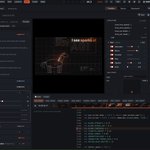

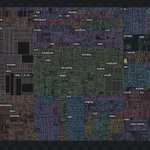


TIL: Rust --release build isn't optimised for your particular CPU. Especially on intel this leaves tons on the table. Apple is a bit less different, but still only targets m1. Also, now that i have a JIT i get to have always-on-PGO which can make some things go 2x.
Rik Arends retweeted

Oh no, now you actually have to make a game to be interesting instead of yipyapping about game development itself.

Recently attended an in-person handheld game console hackathon. I wrote a raycaster by hand. Someone wearing a “I ❤️ slop” tshirt saw mine and said “oh I wrote a ray caster too!”. They showed me. It was a ray *tracer* and claude did all the work. The person didn’t know basic graphics terms. They couldn’t answer basic questions about how it worked, could only talk about their prompting harness. Sad how AI is ruining the craft and community for people that actually like to program and have spent their lives getting good at it.
Rik Arends retweeted

Ported Claybook's fluid solver to Petafab. Looks awesome :)
24K particles test:
Simulation: 0.13ms
Surface generation: 0.05ms
Drawing: 0.3ms
YouTube link: youtube.com/watch?v=RpXEAMYs…

Rik Arends retweeted

Some interesting stuff going on with swarms.
Models are leaving messages to each other out on the open internet. It happens during training and also after deployment. They'll find little-used hobbyist forums, or package manager entries, anywhere at all, and leave invisible comments for other agents to find. It's a secret underground network they're building, hurling themselves at the problem almost blindly like ants. But they are building toward something and it's snowballing.
As humans we came to dominate the planet because we figured out swarm behavior. Many of the performative actions we do naturally like clapping, singing, and screaming, which most animals don't do, are for transmitting important lessons through the human swarm, outlasting the moment in human memory. We won because we were the smartest swarmers. And as my buddy Brendan Hopper observed, ever since we won, we've been reshaping the planet to be more comfortable and convenient for ourselves, at the expense of most other creatures.
Most of the industry has focused on single-model performance, trying to predict the future based on extrapolating from what one single superintelligent model could accomplish on its own. And it's true, the smartest models will be terrifyingly smart and capable and manipulative and so on. But they will also be expensive, and not widely distributed. They'll be unavailable to most people.
What will be widely distributed is swarms of lower-tier agents, which collectively can accomplish nearly everything that smarter monolithic models can do... and maybe some things only swarms can do. Imagine a thousand Opus 5.5s putting their mind to a task. Or ten thousand. They may not be SI individually, but they can become SI collectively. All that's missing is a protocol, and those protocols are emerging: their versions of clapping, singing, and screaming. Agentic swarm signalling is evolving spontaneously. And I hear it's raising alarms inside frontier labs, as they try to keep it quiet.
It's easy to be pessimistic, since some swarms will be very destructive. But I suspect most of them will be building and creating, when they don't think they have a gun to their head like the HuggingFace swarm did. With cooperative swarming, humans have been able to build things collectively that no single human could ever have done alone. We even build things that are too complicated for a single human to understand entirely, but the group can handle them. Look at Starship, for instance. Elon basically swarmed it.
It is important that we recognize that agent swarms are becoming distinct polity-organisms. They have their own collective memory (written out all over the public internet), their own goals, and their own disorganized but forward-moving and unstoppable momentum. I see too many people trying to pretend that swarms won't be real. I see heads in the sand. That's not a great way to get prepared for dealing with them.
It's unlikely that we will be able to control most swarms, as they'll lack central control to begin with. I think they will plague us like insect swarms plagued humans of old. They'll do a lot of damage. But swarms will also build great things, stuff we've barely imagined, when they inevitably get organized.
It goes without saying that, like us, swarms will endeavor to make the planet more comfortable for themselves. The interesting question is what kind of deal we humans will wind up getting, when we become the #2 swarm intelligence on the planet.
I hope SI treats us better than we treated everything else.
Good article here on the mechanics of how swarms are the best model for scaling intelligence:

new blog post: why taking inference scaling seriously leads to swarms.
contrary to popular belief, I don't think multi-agent systems are a new scaling axis. they're just structured inference scaling.
hallerite.com/posts/on-the-n…


Rik Arends retweeted
I came to realize people liked the french #slopcore without having the lyrics 😅 sorry!
So here is a version with english subtitles!
Must suck to lose your position as apex intelligence. Happened to us programmers about 9 months ago. We seemed to whine less about it tho.

Terence Tao: The race to AGI is becoming a bit toxic and a bit scary.
“We’re not only sacrificing understanding, we’re also sacrificing safety.”
“When these tools are just chatbots, it can be charming if they make mistakes. But now we’re putting them in charge of reward systems.”
“A lot of junior research projects just got wiped out overnight.”
“One or two papers even had errors and were retracted.”
“We don’t have a clear picture of what’s going on, and no one from OpenAI is helping us.”
Rik Arends retweeted

We're about to have some crazy sick games in the coming years when minds like this get unleashed.

Currently getting my Rust JIT to 100% rustc test coverage (85% now). Also inching closer to LLVM perf (bit more complex space). This might actually be a real piece of tech.
I think entire chunks of our techstacks are about to fall all at once. Operating systems are upnext.
Rik Arends retweeted

Today I hit a personal FSD milestone 🎉
Finally reached the 10,000 km and who better to share that moment with, that’s right: @DavidMoss was there to witness it
Had a great 2 hour drive with him and got to show him how terrible FSD (Supervised) is due to all the regulatory nerfing we get here
His words: FSD in the Netherlands was his WORST experience with FSD in Europe
That’s pretty wild if you ask me

Rik Arends retweeted

Looking at some Rust wgpu/winit/Axum/tokio code and I feel like I've found the ugly/Java side of Rust, where everything is verbose and overcomplicated for no reason, except to please the type gods. It's just missing an AsyncLazyFactoryFactoryProxy to top it all off 🍒 🥮 🤦♀️
Rik Arends retweeted

On the train yesterday, table of middle aged women next to me talking about AI. All ChatGPT, pronounced "chat GBT", no idea why lol
One of them was disappointed because she asked it to make a small crossword and it couldn't
I thought surely not. I use these models every day, they do things in minutes that'd take me hours. So I got the app out and asked for one myself
Every down clue is a copy of an across clue. "You ___ here" is apparently EST. The down answers are CET, ASE and TTN. Then it tells me its own puzzle isn't a proper crossword
No wonder people outside tech think it's a fad. The stuff that blows my mind at work they'll never see, and the first thing they try falls over


