

Voice Actor (best known as Mojo Jojo & Ghostface Killer), Artist, Puppeteer, Writer, Director. Feed your soul.
Past Time and Timbuktu
Joined October 2013
- Tweets10.6K
- Following673
- Followers6.8K
- Likes9.1K


Roger L. Jackson retweeted


#nw American Mary
the Soska sisters give us a morbidly good time, with body horror/modification, sleaze, and a unique story
Katharine Isabelle is great as always

Roger L. Jackson retweeted

Cab Calloway was THE MAN!! He literally wrote the book on early Harlem Jive Talk . They called it Cab Calloways Cat-olouge ..it was a Hipster Dictionary !! It's alleged that he was Janet Dubois father who played Willona in Good Times.
Roger L. Jackson retweeted

As analyzed in #Strongmen because this is how autocratic chains of command enable the dictator's worst impulses and keep him in a bubble

"The director won’t protect even our most respected analysts when they tell hard truths, so they stopped telling them and learned to avoid topics the White House didn’t want to hear,” newly retired CIA official tells @shaneharris theatlantic.com/national-sec…


Roger L. Jackson retweeted

#OTD in 1947, Hollywood stars like #LaurenBacall, #HumphreyBogart, #MarshaHunt, and #DannyKaye--known as the "Airborne 22"--land in Washington, D.C. on the eve of MPAA president Eric Johnston's testimony in front of #HUAC. #TCMParty

Roger L. Jackson retweeted
This is the moment for us to flex our people power. Voting is one of the most powerful tools available—we must never give up on elections.
My new op-comic, with artwork from Ivan Ehlers, is in the LA Times today. I hope one of these resonates with you. /1


Roger L. Jackson retweeted

The comedy-drama film Limelight opened on this day, October 23, 1952 at the Astor Theatre and at the Trans-Lux 60th Street Theatre in New York City.
Video | The two silent-era legends Charlie Chaplin and Buster Keaton perform a chaotic musical act filled with physical comedy, sheet-music struggles, wardrobe malfunctions, and Chaplin tumbling off the stage into a large bass drum.
Roger L. Jackson retweeted
Strongmen know that having people imagine violence and having violence be part of everyday life is crucial to getting people to accept violence. That is exactly what we see when Hegseth called for “lethality.”
More about this on my Substack, Lucid.Substack.com.


Roger L. Jackson retweeted
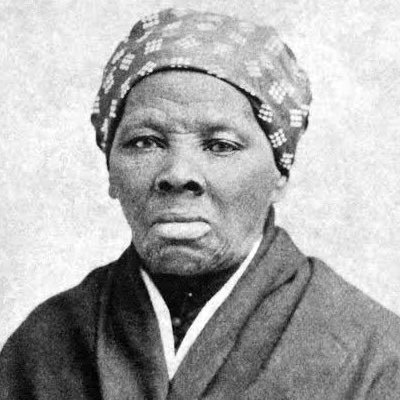
Abdulrahman Ibrahim Ibn Sori was an African prince spent 40 years enslaved in America.
Born in the late 18th century in what is now Guinea, Abdulrahman was the son of a powerful ruler of the Futa Jallon region. He was educated, multilingual, and trained in leadership. While traveling during a military conflict, he was captured, sold into the transatlantic slave trade, and eventually taken to the United States.
Abdulrahman spent more than 40 years enslaved in Mississippi, working on plantations despite his royal background. For decades, he tried to explain who he was, but few believed that an enslaved Black man could be a prince.
Everything changed when a visitor recognized him and helped carry his story beyond the plantation. His case eventually reached international attention and involved diplomatic efforts that extended as far as Morocco. Through negotiations and pressure from foreign officials, Abdulrahman was finally granted his freedom in 1828.
After gaining his freedom, he traveled across the United States raising money in an attempt to free his wife and children, who were still enslaved. Although he never succeeded in freeing all of them, his story became one of the earliest documented cases of international diplomacy being used to challenge American slavery.
Abdulrahman Ibrahim Ibn Sori’s life reminds us that slavery did not erase identity, lineage, or dignity—even when it tried to.

Roger L. Jackson retweeted
Enjoying my sneak of @thescrewballgrl's upcoming #VirginiaGrey bio 🤩 Shown here rehearsing with #GeorgeCukor & new friend #JoanCrawford for the perfume counter scene in #TheWomen. IRL the independent Grey definitely had opinions about her rather controlling new pal. 😉 #TCMParty


Roger L. Jackson retweeted
In 1969, when Black Americans were prevented from swimming alongside whites, Mr. Rogers decided to invite officer Clemmons to join him and cool his feet in a pool, breaking a well known color barrier.
On an episode of Mister Rogers’ Neighborhood, he invited François Clemmons, who played Officer Clemmons, to sit beside him and cool their feet together in a small pool. No speeches. No shouting. No confrontation. Just two men, side by side, sharing water.
At a moment when shared pools symbolized exclusion, this simple act became a powerful rebuke to racism. Mr. Rogers didn’t preach at children—he showed them. He modeled equality, dignity, and friendship in a way that even the youngest viewers could understand. And when he gently dried Officer Clemmons’ feet afterward, he reinforced something even deeper: care, respect, and shared humanity.
This wasn’t accidental. It was intentional. It was courageous. And it was revolutionary in its softness.
Change doesn’t always arrive loudly. Sometimes it comes quietly, through kindness, through example, through the decision to treat another person as fully human when the world says otherwise.
This moment reminds us that representation matters. That teaching children love is one of the most powerful tools we have. And that small actions—done sincerely—can ripple across generations.


Roger L. Jackson retweeted
Queen Nzinga was one of the most formidable rulers in 17th-century Africa.
Queen of the Ndongo and Matamba kingdoms (in present-day Angola), Nzinga Mbande became one of the strongest opponents of Portuguese expansion into Central Africa.
In 1622, she first appeared on the political stage when her brother, the Ngola (king) of Ndongo, sent her to negotiate with the Portuguese governor in Luanda. Determined to establish equality in diplomacy, Nzinga famously refused to sit on the floor before the Portuguese representative. Instead, she had one of her attendants kneel so she could sit at eye level with the governor — a symbolic statement that she represented a sovereign state.
She converted to Christianity during negotiations and took the name Dona Ana de Sousa, using diplomacy as strategically as she used warfare.
When her brother died in 1626, Nzinga became ruler. She reorganized her kingdom, formed alliances with neighboring states, and later aligned with the Dutch when they challenged Portuguese power in the region. In 1647, with Dutch support, she helped defeat a Portuguese army. Even after the Dutch withdrew, she continued resisting Portuguese expansion for decades.
Well into her sixties, Nzinga personally led troops in battle and organized long-term resistance strategies that shaped the region’s political future.
She ruled for nearly 40 years and died peacefully in 1663, having preserved significant autonomy for her kingdom during one of the most turbulent periods in Central African history.
Queen Nzinga remains one of Africa’s most studied and respected monarchs — remembered for her diplomacy, military leadership, and political intelligence.

Roger L. Jackson retweeted
From #TheBestYearsofOurLives' shooting script when Homer (#HaroldRussell) raises his arm to wave to Fred (#DanaAndrews) & Al (#FredricMarch) as their taxi pulls away. Direction for Mrs. Parrish (#MinnaGombell): "...she is forced into a great sobbing release of tears." #TCMParty

Roger L. Jackson retweeted

Very valuable and very sober analysis
"The plot against Ukraine (and Europe): We are now part of the axis of evil."
By David R. Lurie
publicnotice.co/p/trump-puti…

Roger L. Jackson retweeted

Here’s a new 16mm scan of a ‘Screen Song’ cartoon
Ain't She Sweet | 1933 | Screen Songs | Fleischer Studios Cartoon
youtu.be/4DFOagx5Ef0

Roger L. Jackson retweeted
In 1943, the same year #TeresaWright won a Best Supporting Oscar for MRS. MINIVER, she was also nominated in the Lead Actress category for #PrideoftheYankees (losing to MINIVER co-star #GreerGarson). PRIDE is on #TCM this morning! #TCMParty #LouGehrig #BabeRuth
