

There is always room at the TOP📡
East Africa
Joined November 2017
- Tweets15.1K
- Following1.9K
- Followers2.1K
- Likes18.1K




Ronald Ogwal retweeted

I have read some of the reasons cited for the Level 4 advisory and, frankly, my conclusion is that we often become our own worst enemy. We spend far too much time blaming foreign governments for their assessments while ignoring the realities that make those assessments possible in the first place.
Take Ebola. Uganda may currently have no confirmed cases, but the situation in Eastern DRC is worsening. We cannot pretend that developments across the border are irrelevant when we share a porous frontier and significant cross-border movement. Risk assessments are not based solely on today's reality; they are based on the possibility of tomorrow's reality.
Then there is the issue of terrorism. We have deployed our own soldiers to eastern DRC to fight the ADF because we recognise the group as a threat to Uganda's security. If we consider the ADF dangerous enough to justify military operations beyond our borders, how can we be surprised when foreign governments also regard the threat as credible? We cannot simultaneously argue that the threat is serious enough to fight and insignificant enough to ignore.
The advisory's concerns about sudden demonstrations, political gatherings and forceful security responses are equally difficult to dismiss. There is a substantial body of evidence showing that security forces have often responded robustly to political activity. Whether one agrees with those responses or not is beside the point. The record exists. More recently, there have been public calls for demonstrations at the Turkish Embassy. Travel advisories assess risks as they are, not as we wish them to be.
The Anti-Homosexuality Act is another example of self-inflicted reputational damage. Many of us understood before it was passed that significant parts of the law would be difficult, if not impossible, to enforce consistently. Yet foreign governments do not judge legislation based on whether it is likely to be enforced. They judge it based on what the law permits. To them, a law on the statute books is a law that can be applied.
The broader political atmosphere also matters. When ministers and senior officials appear reluctant to publicly challenge prevailing positions, it creates an impression of a political system where speaking openly carries consequences. Again, perceptions matter because they shape how outsiders evaluate risk and stability.
None of this is meant to be unpatriotic. In fact, genuine patriotism requires honesty. We cannot continue creating conditions that raise concerns and then act shocked when those concerns are reflected in international assessments.
Perhaps our greatest mistake is believing that the world is obliged to see Uganda through our eyes. It is not. Countries such as the United States make decisions based on what they perceive to be the interests and safety of their citizens. They do not tailor their assessments to protect our national pride.
Sometimes I think our leaders overestimate Uganda's importance in the global scheme of things. The world is not sitting around looking for reasons to undermine us. More often than not, it is simply reacting to the signals we ourselves are sending. If we dislike the conclusions, we should first examine the evidence that produced them. Until then, we will continue sabotaging ourselves and blaming others for noticing.

UGANDANS
Some of our brothers and sisters have left and camped in the homes of our neighbors and they are shouting over the fence , since you have problems in that home, burn it down!
And we are shouting, we are going to do so meanwhile, they enjoying bread and butter, sausages. Once in a while they gather in one of the neighbors home and drink and make merry!
They enjoy our suffering from a far!


Ronald Ogwal retweeted

Hello Hon @BalaamBarugahar kindly find the attached!!!

Ugandans have been robbed to the core, and honestly, the URA has increasingly become an enemy of the ordinary Ugandan. Instead of acting as a partner in national development, the tax authority is increasingly seen as an institution that squeezes citizens who are already struggling to survive.
People are overtaxed, businesses are struggling, and the cost of living keeps rising, yet the burden continues to fall on the same suffering population.
Taxation should not be economic punishment. Ugandans deserve an accountable tax system that promotes growth, protects livelihoods, and serves the people rather than impoverishing them. How much more can an already struggling citizen endure?
Ronald Ogwal retweeted

THE ABSURDITY OF AFRICAN ELECTION THEFT: Chango Machyo W’Obanda (1927–2013) was a prominent Ugandan Marxist public intellectual, educator and land surveyor. He studied land economics at the London School of Economics, and taught and worked extensively in adult education and extramural studies at Makerere University (including heading its Centre for Continuing Education in the eastern Ugandan city of Mbale). He wrote many journal articles and books (in English).
After the fall of the Ugandan military dictator Field Marshal Idi Amin in April 1979, Uganda attempted a return to electoral democracy in what proved to be a disastrous and stolen vote in December 1980.
Chango stood for Parliament on the ticket of the Uganda Patriotic Movement (UPM), led by a young militant called Yoweri Museveni (yes, today’s President). Chango was barred from standing by the UPC-stacked Electoral Commission because, wait for it, he could not produce a piece of paper proving to them that he was proficient in English, the official language!

Ronald Ogwal retweeted

MR. PRESIDENT @KagutaMuseveni: STOP EATING UGANDA ALONE🚩🚩🚩🚩🚩🚩
We condemn, in the strongest terms, your “Abaana n’Ebyaana” policy — connections over merit formula — of carving out high-level public service jobs for a secret cabal of your family and friends.
It violates the Constitution. It violates international human rights law.
Here is our full statement.
#ResistLawlessness #FreeAllPoliticalPrisoners


Ronald Ogwal retweeted

Gen. @KagutaMuseveni: 'After the investigations we shall handle the matter politically.'
Col. @ChrisOMagezi: "Those who break the law shall be handled without fear or favor. Lt. Gen Peter Elwelu will be fully accountable for his actions in the UPDF General Court Martial."


OPINION: Muzigo pro max; Uganda’s popular housing unit.
Most people who in the past built bangalows with the hope of earning Shs5 million a month are repurposing them to create pro max mizigo links.monitor.co.ug/6pcGa0 @nsengoba #MonitorUpdates


Ronald Ogwal retweeted

Part 3 of my reading of the Saleh–Ogenga "Consociational Democracy Agreement." Its history chapters teach two lessons the authors did not intend.
Lesson 1: Ugandan regimes begin broad-based, and return to broad-based when they are in trouble.
• Obote I: a broad-based cabinet from "every ethnic, religious, linguistic, regional and major ideological group."
• Amin: a broad-based cabinet in 1971. By 1978, facing rising opposition, he called a national forum of 1,000 delegates, called for "national reconciliation and national unity," and set up a Human Rights Committee. Months later he was gone.
• Moshi 1979: the UNLF grand coalition.
• Okello 1985: a broad-based cabinet of "all political parties."
• NRM 1986: "all-inclusive and broad-based," which the paper admits was "also a response to the crisis of legitimacy."
• NRM 2026: a "Consociational Agreement" to bring "willing" parties into the tent.
The broad-based formula is a regime's distress signal. This paper is an admission that the NRM is in trouble: alienated from the people, with power concentrated in a small clique, and now reinventing the wheel.
Lesson 2: It names the problem but refuses to own it. The paper calls claims that the NRA was predominantly Rwandese refugees "erroneous," then admits "the more the refugees joined the NRA, the stronger the NRA became." It blames others for ethnic mobilisation and presents the NRA as the force that "rejected sectarianism." It is silent on October 1990, when roughly half of the 7,000 RPF fighters who invaded Rwanda came out of the NRA, led by a senior NRA commander and a former chief of military intelligence. Did the NRA make no mistakes?
On today's exclusion, the paper's first answer is education: spend more on schools and the gaps will close. Education matters. But some of Uganda's best-educated sons and daughters are locked out. Look at the evidence: • Banyankole, about 10% of the population, held 43.5% of the top 23 UPDF command posts in 2007, and all seven of the most strategic posts were held by Banyankole or other westerners. • Since 1986, (until the time of Lindemann's research) five of six army commanders came from western Uganda, and every officer promoted to full general up to 2009 was a Muhima (Lindemann, Africa Spectrum, 2011). • The Equal Opportunities Commission found western Uganda holding 47% of agency CEO posts in its sample, and six of eight URA commissioners. • The President's son is CDF, his wife runs Education, his brother runs Operation Wealth Creation and co-authored this paper, and his son-in-law runs PACEID. • The CDF reportedly mused online whether a certain Ugandan is "a Muhima" or "a Muhutu" and only apologized after Netizens were outraged. No classroom explains that. This is not a shortage of qualifications. It is recruitment by nepotism, patronage and corruption.
The paper even cites the Equal Opportunities Commission report, but only for Buganda's grievances. It calls the electoral numbers credible even as it calls for EC reform.
So my question to Gen. Saleh and Prof. Ogenga: how does an "Agreement" cure a disease it names but refuses to diagnose? Start with an independent audit of who holds power in the army, intelligence, the civil service, parastatals, procurement and oil, and publish it. Until then, this is not consociation. It is Lesson 1 repeating itself.
Source on the army figures: journals.sagepub.com/doi/10.…

Ronald Ogwal retweeted

TENFOLD GROWTH: YOU CANNOT TURN A BOMBARDIER INTO A ROCKET.
=======
Uganda Airlines flies a fine Bombardier. Fly it faster and it is still a Bombardier. Bolt on a third engine and it is a Bombardier with a problem. A rocket is not a faster aircraft. It is a different machine, with different fuel, guidance and crew. Tenfold Growth is a rocket mission. Our temptation is to fly the Bombardier harder.
Flying harder looks like counting kilometres of tarmac, megawatts installed, industrial parks opened and ribbons cut. Good numbers, and necessary ones. But the Uganda Railway reached Lake Victoria in 1901 as an imperial project, built to give the interior’s resources an outlet to the coast and to pull imperial trade inward. Excellent engineering. Yet it was never designed to leave Africans with railway-building capability or an industrial economy of their own. Today we are borrowing to build a standard gauge railway that once again points to the coast, while a line from Butembo to Bujumbura via Kasese and Kabale, one that would connect Africans to each other, waits its turn. Infrastructure is never neutral. It always works for somebody’s economy.
This is not an argument against airports, roads, power plants or industrial parks. It is an argument against accepting the colonial purpose of infrastructure: moving our raw materials out, bringing finished goods in, and leaving the systems of design, manufacture, maintenance and finance elsewhere.
So the question is not how much we have built, but what we can now do because we built it.
Does an airport create Ugandan engineering, maintenance, food, furniture, logistics, digital-services and aviation-support businesses? Does a road connect farmers to processors, factories to markets and local producers to exports? Does an industrial park grow Ugandan suppliers, technicians, fabricators and technology firms, or does it merely provide serviced land for imported equipment and imported inputs?
At this week’s Doing Business Forum, the answers were sobering. We heard that about 30% of work permits go to construction. Indigenous contractors receive about 15% of the work while supplying 40% of the sweat. Fewer than one builder in ten has formal training. And in 2024, Uganda imported about US$232 million worth of iron and steel.
The irony writes itself. We are importing the industrial skeleton with which we hope to become industrial. We are building a lot. We are not yet building ourselves.
China was unapologetic in its 2015 industrial policy, Made in China 2025. It declared that without a strong manufacturing industry, there can be no strong country and no strong nation. It made manufacturing a survival imperative, and then attached targets to it. And if I may wear Chinese lenses and ask, is the Tenfold Growth Strategy a war footing, or another good story like the ones we have heard before?
So, the full rocket.
The ATMS, not the cash machines, are the engines: agro-industrialisation, tourism, minerals plus oil and gas, and science, technology and innovation. Infrastructure is the launchpad. Industry is the propulsion. Skills and institutions are the guidance. Finance is the fuel, and we currently pour too much of it into plots, rentals and Treasury bills. Nobody has ever harvested a factory from a Treasury bill.
Construction is the assembly hall and the university of this rocket. Every major project should leave behind trained technicians, capable local suppliers, functioning quality systems, equipment-maintenance capacity, and firms able to deliver the next project at a higher level.
One test before we celebrate a completed project: when the foreign contractor leaves, what can Ugandans make, repair or run that they could not before?
If the answer is “the ribbon”, we will keep flying very good Bombardiers, economy class, in an economy designed by somebody else. Wait and see how Yaobai cannibalise Hima and Tororo cements.


Ronald Ogwal retweeted

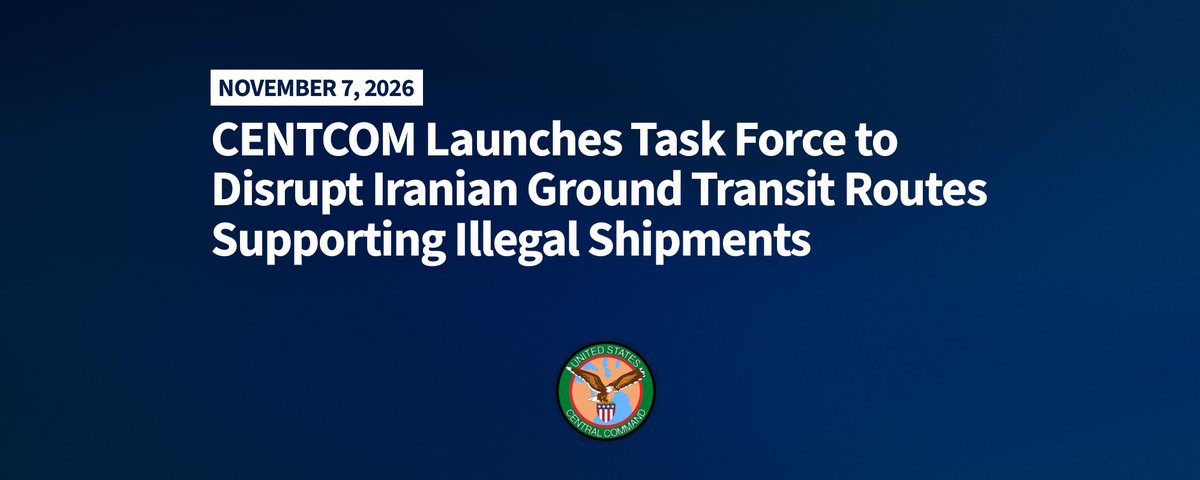
This is CENTCOM inviting Iran to escalate while the Vice President is attempting to negotiate with the Iranians. This is, as CENTCOM calls it, “policy by CONOP,” when the military finds a way to subvert the White House without blatantly disobeying the President, by taking actions that will ensure a war escalates or perpetuates.
This tactic was implemented over & over again in the War on Terror in Iraq, Syria, Afghanistan, etc. Many Americans died, needlessly.
The Iranians have made it clear that they won’t accept negotiations while under threat of escalation. Iranian leadership has stated there will either be war or there will be peace, but they will not sit idly by and wait for the next attack & they won’t tolerate being slowly strangled by sanctions.
Imposing more sanctions, & publicly broadcasting that we’re imposing more sanctions, is brash provocation.
The midterm results sent a message that the President should find impossible to ignore: the American people do not support this war. We want out. The VP is currently in negotiations to end it, & a new Chief of Staff was chosen under the auspices of helping the President do just that.
CENTCOM announcing this escalation is the military working directly against what President Trump is attempting to accomplish. If the President had any desire to escalate, he’d simply do it. Instead, thankfully it appears he is attempting more diplomacy, and CENTCOM must support that.
It’s become abundantly clear that the President needs to install a new national security team, one that’s not tied to starting the war and that can instead end it. To do that, he needs people who can & will get the national security state under control, not submit to it.

Ronald Ogwal retweeted

I simply cannot believe this was aired on corporate US media.
Israel’s absolute impunity is no longer a taboo.
Times are changing.
Ronald Ogwal retweeted

Mr. @Rukwengye update us on the recent statistics please. A country that doesn’t plan for it’s children is a failed state.

Ronald Ogwal retweeted

While representing the people of Lusanja, we hit a dead end trying to find the money to fund their appeal against Mr. Medard Kiconco. Sensing our struggle, Hon. Erias Lukwago connected me with Rtd. Col. Dr. Kizza Besigye, who invited me to his Katonga offices and handed me the funds we desperately needed. I immediately asked for a pen and paper to write an official receipt for the money. Instead, he looked at me and asked, "Where did you write an acknowledgment when you chose to be their lawyer for free?" Speechless, I just walked out.

Ronald Ogwal retweeted

AFANDE GENERAL MK, LET US RESPECT PARLIAMENT AND THE PRINCIPLE OF SEPARATION OF POWERS.
Dear General Muhoozi Kainerugaba Chairman of the PLU,
With utmost respect, I wish to remind you that undermining Parliament is, by extension, undermining the sovereign people of Uganda who elected their representatives to the August House @Parliament_Ug and also means undermining its leader who is the speaker of parliament Rt. Hon Jacob Oboth @ObothOboth.
Parliament is not an institution of political opponents alone. It includes your own allies and representatives, such as Hon. Daudi Kabanda @DaudiKabanda, Hon. Balaam Barugahara @BalaamBarugahar and Hon. Fadil Twala @HonTwallafadil, among others.
It also includes the Executive, represented by H.E @KagutaMuseveni. Vice President Jessica Alupo @jessica_alupo, Rt. Hon. Prime Minister Robinah Nabbanja @RobinahNabbanja and Cabinet Ministers. Disrespecting Parliament therefore risks undermining the very government and President we all serve.
Furthermore, the UPDF @MODVA_UPDF , which you command as CDF, is represented in Parliament by ten military representatives, including senior officers such as Gen. Kavuma and Gen. Gonyi. Parliament also exercises legislative and oversight responsibilities over national defence and security. How, then, can an institution with military representation be discouraged from discussing matters of national security?
In one of your recent posts, you also suggested the possibility of becoming Vice President. Should that happen, you would equally be part of the same constitutional framework whose institutions deserve mutual respect.
Articles 1, 79 and 90 of our Constitution affirm the sovereignty of the people, the legislative authority of Parliament and its oversight responsibilities. As Members of Parliament, we have a constitutional duty to deliberate on matters of national importance, including security, governance, development and international affairs.
General, I offer this advice not out of hostility but out of genuine respect for you, the President, the NRM Government @NRMOnline and the future of our country.
Strong institutions do not weaken strong leaders; they strengthen the nation.
Our shared political mission can only succeed when the Executive @StateHouseUg , Legislature and Judiciary @JudiciaryUG respect one another's constitutional mandates.
I therefore respectfully appeal to you to uphold the dignity and independence of Parliament. Uganda's stability, democracy and future depend on mutual institutional respect, constructive dialogue and constitutional governance.
We can disagree without disrespecting one another. We can correct one another without undermining the institutions we collectively serve.
For God and My Country!

This Post is from an account that no longer exists. Learn more

Ronald Ogwal retweeted

The interesting thing about many of the senior NRM politicians trying to preach patriotism to young people is that their own children, who study and live abroad, are dual citizens.
If told to choose between Uganda and those other countries, their children would not hesitate to choose the latter. Like I was telling one of them, first inculcate the virtue of patriotism in your children.
Ronald Ogwal retweeted
Your post reminds me of a trend from the 1990s that may still be shaping our national reality today. Back then, Makerere University @Makerere admitted only around 2,000 students, securing the absolute top academic talent in the country.
Meanwhile, well-connected and wealthy families often sent students who didn't qualify for Makerere to study at Indian universities instead. Upon returning, many of these individuals were fast-tracked into key positions that ought to have gone to Makerere's top graduates.
I can’t help but suspect that many of the leadership and structural challenges we face today are a direct consequence of placing connections above merit during that era.

The interesting thing about many of the senior NRM politicians trying to preach patriotism to young people is that their own children, who study and live abroad, are dual citizens.
If told to choose between Uganda and those other countries, their children would not hesitate to choose the latter. Like I was telling one of them, first inculcate the virtue of patriotism in your children.
Ronald Ogwal retweeted
According to Dr. Kizza Besigye, the sole conversation worth having with despot Museveni concerns one subject, ie, the orderly packing of bags and exit from power. Anything else is brouhaha and misinformation. New Vision and Gen. Salim Saleh would do well to stop smoking cow dung and calling it national dialogue.
Ronald Ogwal retweeted
INDEPEDENT THOUGHT
I find it deeply patronising when some senior government officials expect Ugandans, and especially supporters of Kizza Besigye, to be grateful that his deteriorating health has finally attracted the attention of people in power. Gen. Salim Saleh said he had placed him in a facility capable of managing his condition, yet in the same breath he said he found him "almost dead". This is not a statement to inspire gratitude. It should shock the conscience of the nation.
How did we reach a point where citizens are expected to celebrate the intervention that comes only after a political opponent has allegedly been allowed to deteriorate to the brink of death? Why it took so long for a man in such a condition to receive the care and attention he needed? Was collapsing in court not enough proof that he is seriously ill?
We have really lost sight of our moral compass. If indeed Gen. Saleh found Kizza Besigye "almost dead", that is evidence of a system that had already failed.
We are truly off the rails as a country if basic human dignity and access to timely care are presented as favours to be celebrated rather than rights that should be guaranteed to every citizen, regardless of their political beliefs.

Ronald Ogwal retweeted

In the immediate aftermath of the 2026 General Elections in Uganda, I was hosted on a leading Luganda language station @AkabooziFm (the sister station to @RadioOneFM90) on Tuesday, January 27, 2026 to discuss post-election Ugandan politics.
I made a case for the need to revisit our system of Governance - our version of democracy. I vouched for a form of consociational democracy whose central pillar is a COLLEGIATE PRESIDENCY.
I have for long held the view that this is the form of democracy that is required to stabilise many of our troubled colonial contraptions (a.k.a countries) created by the European imperialists.
Slightly over ten months later, Gen. Caleb Akandwanaho a.k.a Salim Saleh and Prof. Ogenga Otunnu have introduced this conversation and now all media houses are jumping onto the bandwagon.
I beseech all those in the media that are engaging in this conversation to stress that any form of consociational democracy that does not demystify the Presidency will leave the ordinary Ugandan (mwananchi) with the short end of the stick.
FULL VIDEO: youtube.com/watch?v=jTaBvTWY…
*** END OF POST***