

I put my faith in the Lord Jesus Christ, not in the curse of the Law.
Cleveland, MS
Joined July 2011
- Tweets36.7K
- Following33
- Followers620
- Likes2.7K





Pinned Tweet
Why Context Matters
by Ronald W. Robey
(written October 26, 2025)
Context matters — here’s why:
Leviticus 27:30
• “The tithe of the land” can be twisted to mean the entire landmass of the earth, if taken out of context.
Malachi 3:10–11
• “Ye” can be twisted to mean Christians, if taken out of context.
• “Tithes” can be twisted to mean ten percent of your money, if taken out of context.
• “Storehouse” can be twisted to mean your local church, if taken out of context.
• “Blessing” can be twisted to mean an unexpected check, if taken out of context.
Hebrews 7:6–8
• “Here” can be twisted to mean the church building, if taken out of context.
• “Men that die” can be twisted to mean pastors, if taken out of context.
• “Tithes” can be twisted to mean money, if taken out of context.
• “There” can be twisted to mean Heaven, if taken out of context.
• “he” can be twisted to mean Jesus, if taken out of context.
Devotional Thought:
When Scripture is lifted out of its context, truth becomes distorted and error begins to sound convincing. Many doctrines today stand only because verses were removed from the soil in which God planted them and planted where they were never meant to grow. Truth survive when torn from its context.
If we are to honor God’s Word, we must study it in the light of who was speaking, to whom they were speaking, and under what covenant they lived. Truth does not change with opinion or popularity…it is revealed through proper context.
2 Timothy 2:15 Study to shew thyself approved unto God, a workman that needeth not to be ashamed, rightly dividing the word of truth.


September 11, 1831 - D&C
64:23: Joseph Smith records a revelation referring to a day for the tithing of God's people.
September 11, 1831-July 7, 1838: Nearly seven years pass.
July 8, 1838 - D&C 119: Joseph Smith records another revelation that specifies one-tenth of annual interest.
Apparently, between 1831 and 1838, the Lord had established tithing but hadn't yet gotten around to telling anyone what His tithing ordinance actually required!
31

Malachi is not instructing anyone to bring ten percent of their money to the House of God. Nor is it instructing the congregation to tithe to the House of God.
When studying any Scripture verse or passage found in the Bible, it is imperative that we keep Scripture in context and allow Scripture to interpret Scripture. This is the form of study that the apostle Paul referred to as "rightly dividing the word of truth" (2 Timothy 2:15)
So, what does Malachi 3:6-10 actually say.
First and foremost, we find that Malachi is speaking to sons of Jacob. (v.6) Earlier in the Book, (1:1) we find Malachi has a burden for Israel. So Jacob, in verse six, is none other than the nation of Israel.
When God said “Return unto Me” in Malachi 3:7, He was speaking of returning to His ordinances. Someone in Israel had departed from the ordinances of God and God was telling them to return to Him by returning to the ordinances they had departed from.
What was God’s tithe ordinance?
It was a set of rules (commandments) concerning the tithes that God said were to be observed. Those rules were…
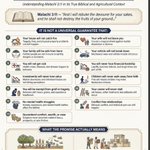
a) tithes are to be agricultural in content. (Le. 27:30-33)
b) tithes are not to be observed unless you are a citizen of the land of Canaan. (De. 12:1,10-11; Ps. 147:19-20)
c) tithes are to be taken to Jerusalem annually and eaten before the LORD. (De. 14:22-26)
d) an agricultural tithe is to be given to Levites every third year. (Num. 18:21-23; De. 14:27; De. 26:12)
e) the agricultural tithe that is given to Levites is not to be taken to the House of God. (Nu. 18:21-23; Ne. 10:37-38)
f) the congregation is not to tithe directly to the House of God. (Nu. 18:21-23; Ne. 18:37-38)
g) Levites are to take a tithe of the agricultural tithe they receive to the House of God. (Ne. 10:37-38)
h) an agricultural tithe is to be given to widows, fatherless, and strangers every third year. (De. 14:28-29; 26:12)
We know the ordinances given to Moses are what Malachi is referring to in 3:7 because of what we read later in Malachi 4:4:
"Remember ye the law of Moses my servant, which I commanded unto him in Horeb for all Israel, with the statutes and judgments."
Nowhere in God’s tithe ordinance is anyone told to tithe money to the House of God. As a matter of fact, the people of God are expressly forbidden to tithe money to the House of God when they are told that they are not to do what seems right in their own eyes. (De. 12:8) They were to follow the ordinances of God as He had given them. Nowhere in God’s tithe ordinance is the congregation told to tithe to the House of God. They were forbidden to even approach the House of God with their tithes. (see point 'f' above)
It would make absolutely no sense for Malachi to call for a return to the ordinances in verse 7, and then turn around and tell people to transgress the ordinances in verse 10. Therefore, we know that Malachi could not have been telling the congregation to bring their tithes to the storehouse in Malachi 3:10. But…if the instruction in verse 10 is not for the congregation, then who is it for?
Malachi 2:1 And now, O ye priests, this commandment is for you.
The instruction in Malachi 3:10 is for the Priests of Israel. They had departed from the ordinances and were offering blind and maim sacrifices on the altar. They had stolen the tithes and offerings.
Malachi 1:6 A son honoureth his father, and a servant his master: if then I be a father, where is mine honour? and if I be a master, where is my fear? saith the LORD of hosts unto you, O priests, that despise my name. And ye say, Wherein have we despised thy name?
Malachi 1:7 Ye offer polluted bread upon mine altar; and ye say, Wherein have we polluted thee? In that ye say, The table of the LORD is contemptible.
Just as the Priests in Malachi's day had made the altar of God "contemptible", so also the Pastors of today have made worship contemptible by teaching a man-made command as if it is a God-ordained doctrine.
39
“Do not change the FACT that, TITHES is the LORDS (not yours) and it is HOLY (sacred, best of all offerings) unto the LORD. Amen”
“ the tithe that is holy is agriculture (Lev.27:30,32)
• give the tithe that is holy to biological descendants of Levi (Num.18:21)
• move to Canaan before taking your tithe to the place the LORD chose (Deut. 12:10-11)
Yes, these were commands specific to the Israelites. But can you provide verses that say:
• give the tithe of monetary income?
• give the tithe to pastors of church bodies worldwide?
I’ve been studying the Scriptures since 1979…almost fifty years… and have never found the verses.
Where are they? If no verse says to give a tithe of monetary income in churches worldwide, then you should not be accusing people who do not tithe their money.”
You may see us as thieves because we don’t yield to your deception. God sees you as a deceiver and thief.”
25

My wife Linda and I went to the Walmart the other day, and I realized something: going to the supermarket no longer feels like running an errand. It feels like clearing customs at a regional airport.
It starts the second you arrive. You walk through those automatic sliding doors and immediately hit TSA PreCheck: the cart corral. Half the fleet is grounded with a wobbling front wheel that pulls hard to the left, like a Cessna trying to taxi in a crosswind.
So I'm standing there test-driving three different carts just to find one that tracks straight, while the guy behind me sighs like I'm holding up boarding for First Class.
Once we finally get cleared to taxi, we head toward the middle of the Gtoceries side, and that's when we make our first big discovery. They had literally ripped out an entire row of shelving. Just gone. They took two normal aisles that used to be separated by soups and snacks and turned them into one massive, wide-open stretch of linoleum.
Linda and I just stopped and stared at it in pure confusion. Where did the beans go? Where did the sloppy joe sauce go? Nobody knows. It wasn't even a grocery aisle anymore. It was a landing strip.
I stood there half-expecting to see a guy in reflective earmuffs waving glowing orange batons while a stock boy brought in a pallet jack on final approach. "
Attention shoppers: pizza and frozen vegetables now landing on Aisle 7. Please keep your carts behind the yellow line."
And when a store rearranges things like that, your brain starts wandering down some strange rabbit holes. I found myself standing on that empty runway trying to figure out where they relocated the Manwich Bold. Because once they tear down the canned goods aisle, all bets are off.
You start thinking, "Well, it says Bold on the can. Maybe they moved it over to Automotive next to the motor oil. Or maybe it's in Sporting Goods right between the camping lanterns and the beef jerky."
Meanwhile, regular shoppers don't know how to handle that much open floor. Without a center divider, people lose all sense of lane discipline. They park their carts diagonally across the middle of the runway like they're waiting on a tugboat, staring at forty-seven varieties of diced tomatoes as if they're defusing a bomb. You say, "Excuse me," and they look at you like you just wandered onto the tarmac without a reflective vest. By the time you survive the terminal and reach the final approach, self-checkout, you are completely worn out.
I didn't apply for a job at this store, yet suddenly I'm on the clock, operating heavy machinery with zero training. You scan one bunch of bananas and the machine immediately goes into lockdown. Flashing red light above the lane.
"Unexpected item in the bagging area."
Unexpected? It’s a banana! You’re a grocery store! What were you expecting, a carburetor?
So I'm standing there with my hands up like a bank robber while a teenager with a lanyard walks over from forty yards away, taps a screen twice without even looking at me, and clears us for takeoff.
By the time Linda and I finally loaded the bags into the car, we were flat-out exhausted. We didn't even want to cook dinner. We just sat in the front seat hoping somebody would bring us a complimentary bag of pretzels and a little cup of ginger ale.
Notice how the Manwich Bold bit also sets up a great unintentional callback later at self-checkout when you ask the scanner if it was expecting a carburetor.
159
If 1 Corinthians 9:13–14 is talking about collecting tithes, then you have a major problem two verses earlier. In verse 12, Paul explicitly states why he refused that exact financial support: "lest we should hinder the gospel of Christ."
You can’t have it both ways. Either 1 Corinthians 9 isn't about tithing at all, or Paul is on record saying that collecting tithes hinders the gospel. Pick one.
25

Five tithes required in the Bible, each for a good reason and none for the preacher’s new Cadillac.
Now, the first kind was what you might call the Inheritance Tithe. If you were an Israelite lucky enough to inherit a plot of dirt and some livestock in the Promised Land, you owed a tenth of your crops and critters to the Lord. But you didn’t hand it over to just anybody, it went to the chilluns of Levi. Those poor boys didn’t get any land of their own, so tithes were their inheritance. They kept the temple clean, made the sacrifices, and kept everything running while the rest of Israel plowed and planted. That was their deal with God.
Then came the Reverence Tithe, which I figure was the Lord’s way of saying, “Don’t work so hard you forget to celebrate.” Every year, folks would haul a tenth of their crops to Jerusalem, not to give away, but to eat and rejoice. It was a church picnic on a grand scale. You and your family sat down, lifted your glasses, and thanked God right there in the holy city. Made you remember where your blessings came from.
Every third year, though, a tithe turned into something called the Benevolence Tithe. The Levites got some, sure, but so did the stranger passing through, the orphans, and the widows. You might say it was biblical welfare, not out of obligation, but out of community. When you gave, you didn’t just check a box; you made sure the least among you had supper.
Now, the Levites weren’t off the hook either. They got their own tithe from the people, but they had to tithe too. That’s the Priesthood Tithe. They gave a tenth of the tithes they received to the Aaronic priests, the high priests who tended to the holiest duties. It was God’s way of keeping everybody humble. Even the holy folk had to pay up.
And finally, you had what was called the Storehouse Tithe. The Levites brought a portion of their own tithes to the temple storerooms. It went to feed and supply those working in the Temple day and night, keeping the candles lit, sweeping the floors, maybe catching a nap against a pillar during the night shift. Those storehouses were the ancient world’s version of a pantry, ready to provide when the need arose.
1
60
When a Pastobr is challenged on a doctrine that he teaches but cannot defend that doctrine with Scripture, it brings reproach on his Ministry.
Advice: if you cannot irrefutably defend your beliefs with Scripture, don’t teach them until you have fully studied them and can prove them to be true.
Because if you can’t defend them with Scripture, someone who has studied Scripture could embarrass you completely, destroying your credibility as a Minister.
Don’t let your pride destroy your Testimony. It’s okay to say, “I don’t know.”
21
Matthew Tompsett,
Many people assume the biblical tithe was a financial fund meant to pay pastoral salaries and maintain church buildings. A closer look at Scripture shows something entirely different: the tithe was strictly food given to physically sustain the Levites so they had the strength to carry out their duties.
Under Mosaic Law, the tithe consisted exclusively of crops and livestock (Leviticus 27:30, 32). Because the Levites were given no farmland inheritance in Israel (Numbers 18:20, 23–24), they could not grow their own food while performing the heavy, full-time labor of the sanctuary. God therefore assigned the agricultural tithe to them "for their service which they serve" (Numbers 18:21).
Even Malachi 3:10 commands bringing the tithe into the storehouse "that there may be meat in mine house"—keeping the working ministers fed so they would not have to abandon their posts to farm (Nehemiah 13:10).
Meanwhile, God never used the tithe to build or repair the Temple itself. Structural upkeep was funded entirely through freewill offerings, the half-shekel poll tax, and dedicated repair chests paid directly to carpenters and masons (Exodus 30:12–16; 2 Kings 12:4–12).
Biblically, the tithe was never a building fund, it was the Levites' daily bread.
82

“Prove Me now herewith”
Probe You? How?
“In tithes and offerings.”
Tithes? What tithes?
“The agricultural tithes required in Mine ordinances.”
Where is the storehouse?
“It is in the Temple in Jerusalem.”
“Prove Me now herewith.”
30
Abraham? The best example of weekly tithing?
Alright, let’s follow Abraham’s exact example. If any of my nephews are ever kidnapped by a coalition of foreign kings, I will assemble a private militia, launch a midnight raid, and defeat them in battle.
If, and I must stress if, I survive, I will gather up the spoils of war, travel to the Valley of Shaveh, and hand a tenth of that plunder to Melchizedek, the King of Salem, in exchange for bread, wine, and a blessing. Then, just like Abraham, I will give away the remaining 90% so I don't keep so much as a sandal strap for myself.
What I won't do is pretend Abraham’s one-time battlefield custom is a blueprint for deducting 10% from a modern paycheck. Scripture records Abraham’s great wealth in livestock, silver, and gold, yet never once records him tithing his personal income.
As a child of God under the New Covenant, I gladly give generously, cheerfully, and responsibly to support the gospel and help those in need, just as the New Testament actually teaches. I simply don't need to rewrite Genesis 14 to justify it.
38
MATTHEW 17:27
Jesus instructed Peter to catch a fish, from whose mouth came a coin sufficient to pay the temple tax for both of them.
The money was miraculously obtained.
It was immediately available for use.
The amount was exactly enough to pay the tax for both Jesus and Peter.
KEY POINT:
Before that money was spent,
Jesus did not set aside a tenth of it as a tithe.
No command was given to calculate a tithe.
No portion was separated for tithes.
IF MONETARY TITHES WERE REQUIRED...
If God had required monetary gain to be tithed, this would have been the perfect opportunity to demonstrate that obligation.
The money had been gained
It was in their possession.
It was about to be used to satisfy a financial requirement.
Yet Jesus simply instructed Peter to pay the tax. No suggestion was made that paying the entire amount would violate God's law.
IMPORTANT TO NOTE:
Had Peter first removed a tenth from the coin, the remaining amount would not have been enough to pay the temple tax for both himself and Jesus.
The miracle provided exactly enough to fulfill the tax obligation-not enough for a monetary tithe plus the tax.
THE CONCLUSION
IS CLEAR
If monetary tithing had been God's command, this miracle would have been the ideal occasion to demonstrate it.
Instead, Jesus paid the tax in full.
He gave no instruction to tithe.
He provided no indication that God required money itself to be tithed.
2
60
1 Corinthians 9:13-14 about tithes? Then don’t collect tithes, “lest the Gospel be hindered”; v.12)

22
The Biggest Scam
by Ronald W. Robey
The modern doctrine that God requires twenty-first-century believers to give 10% of their monthly income into a church collection plate is, in my view, one of the biggest scams in the modern church.
Why? Because the biblical requirements for tithing differ from what many churches teach today.
1. The tithe was commanded of Israel under the Law of Moses.
The Bible identifies the tithe as part of the covenant ordinances given for the children of Israel (Leviticus 27:30–34; Numbers 18:21–24). It never explicitly commands all New Covenant believers worldwide to give 10% of their weekly/bi-weekly/monthly income to a church or pastor.
2. The biblical tithe consisted of agricultural produce and livestock, not a prescribed percentage of monetary wages.
Scripture identifies the tithe as grain, fruit, and livestock (Leviticus 27:30–33; Deuteronomy 14:22–23). It does not establish a universal 10% tithe on salaries, wages, or other income.
3. The tithe was given to the Levites, and the tithe of tithes went to the house of God.
God appointed the tithe to support the Levites (Numbers 18:21–24). The Levites, in turn, were commanded to give a tenth of what they received to the priests (Numbers 18:25–32). Nehemiah 10:37–38 describes the Levites bringing a tithe of tithes to the house of God.
4. The storehouse belonged to Israel’s temple system.
Malachi 3:10 commands Israel’s priests to bring the tithes into the storehouse. Nehemiah 10:38 and 13:5, 12 connect the storehouse with the house of God in Jerusalem. These passages concern Israel’s covenant, its priesthood, and the provision of food.
Where does Scripture explicitly command the New Covenant church to identify itself as the storehouse of Malachi 3:10?
Where does the New Testament command every believer to give a mandatory 10% of monthly income to a pastor?
If the doctrine is truly is of God, let those who teach it establish their claims from Scripture.
I am not opposed to giving. The New Testament teaches believers to give willingly, according to what they have, and not under compulsion (2 Corinthians 8:12–13; 9:7).
But voluntary, cheerful giving is not the same as declaring that God requires every believer to surrender 10% of a monthly paycheck in the weekly service.
Believers deserve biblical truth, not fear, guilt, or financial demands presented as commandments of God.