

T&F throws biomechanics and S&C. MPhil - power training for golf, PhD - biomechanics and physiology of track and field throwing
Joined March 2016
- Tweets384
- Following398
- Followers433
- Likes180





great insights into one of the sharpest minds in track and field/strength and conditioning/power physiology. @ColmBourkeLJ nice podcast!! podcasts.apple.com/nz/podcas…

Thanks to @JustFlySports for a great chat around performance and training. Really enjoyed sharing thoughts and ideas! podcasts.apple.com/nz/podcas…
I’ve been fortunate to have some great conversations with some cool people. Sharing thoughts and ideas. podcasts.apple.com/nz/podcas…

I shared this on LinkedIn. Some of my thoughts around my approach to coaching in competition……the take home…….I don’t coach in competition…..I try to get out of the way linkedin.com/posts/michael-s…
Jordans journey. Jordan (a former long jumper) started Discus in December we’ve been chipping away with the technical elements of discus over the last 5-6 months. Check out his progression
Finding mentors and educators.
Mentors are critical for young coaches, s&c’s and sports scientists as they help guide decision making and stimulate thought. But finding helpful mentors is hard. Here’s some things I think are important:
Find honesty
Mentors provide honesty. If it’s good they tell you, if it’s bad they tell you. If you think it’s good but it’s not they help calibrate your perspective.


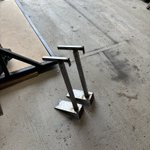
Many don’t know. During covid I learnt to weld to build gym equipment in the build up to Tokyo. Since I’ve been building a few bits


It’s currently in vogue to go at “evidence based” practitioners and peer reviewed sources. Good evidence based practitioners understand the complexity, pitfalls, limits, process and evolution of research. Many cannot see this and give it a poor reputation
You’re unable to view this Post because this account owner limits who can view their Posts. Learn more
Debates holding S&C back
- Bilateral vs unilateral
- To Olympic lift or not
- How strong is strong enough
Better questions
- What are the neuromuscular variables needed to perform? And how do we adapt them?
Neuromuscular variables cross contexts
Thread. Why getting stronger might not make you faster.
1). Commonly the argument for getting stronger to become faster is: F=ma, while the equation is true the application is often not. F=ma is an equation for acceleration and acceleration and maximum velocity…
7). It gets further complicated with cyclical sports as the deactivation time, that is tightly coupled to fiber type, restricts repeat power production (e.g., the agonist is fighting the antagonist as the antagonist cannot switch off fast enough).
This is a very brief and simple description or why people can get stronger and slower. It’s more nuanced and complex and there are modalities to combat the contrasting adaptations but hopefully it provokes thought.
@StrengthDebates