









Incredibly proud the xAI team's execution in bringing on an immense amount of compute so quickly & couldn't be more excited for Elon's vision of an abundant future w/ intelligence spreading to the stars
Over the past weeks I've had the pleasure of getting to know the team at Anthropic & share similar vision - I'm happy to announce I'm joining the team there to focus on compute
Onward towards building a future we're all excited about

SpaceXAI will provide @AnthropicAI with access to Colossus 1, one of the world’s largest and fastest-deployed AI supercomputers, to provide additional capacity for Claude → x.ai/news/anthropic-compute-…


The moon is a multiplier for colonizing the solar system
* Starship's propellant is ~80% oxygen / 20% methane
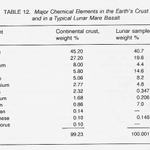
* Moon's crust is ~41% oxygen
* If you make oxidizer on/from the moon, the amount of mass you need to hall up from earth's gravity well goes down by a factor of ~5 to refuel
* If you can make some/all of your payload on the moon that's even less to hall up


For those unaware, SpaceX has already shifted focus to building a self-growing city on the Moon, as we can potentially achieve that in less than 10 years, whereas Mars would take 20+ years.
The mission of SpaceX remains the same: extend consciousness and life as we know it to the stars.
It is only possible to travel to Mars when the planets align every 26 months (six month trip time), whereas we can launch to the Moon every 10 days (2 day trip time). This means we can iterate much faster to complete a Moon city than a Mars city.
That said, SpaceX will also strive to build a Mars city and begin doing so in about 5 to 7 years, but the overriding priority is securing the future of civilization and the Moon is faster.

To Understand the Universe, K2 or you're not even trying
One Team 🚀
x.ai/news/xai-joins-spacex

sometimes time slows because so much is happening, but looking back it will all be a flash - we're pulling some serious G's right now
* 57 years since we put a man on the moon
* 43 years since birth of the internet
* 8 years since invention of the transformer and first LLMs

Exciting long term roadmap at xAI, we’re just getting started - much work to do

A Grokin’ Year in Review:
👉 Expanded from 1 site to 5 sites in the midsouth.
👉450k+ GPUs active across sites with construction in progress to double that number by Q2 2026.
👉3000+ tradesmen and women from the region working 24/7 365 to build the largest supercomputers on earth faster than ever before.
👉Designed and deployed temporary infrastructure, to deliver several hundred megawatts of reliable power to Macrohard.
👉Installed 244,000+ miles of fiber and made QTY 1,304,608 individual connections.
👉Installed over 15 miles worth of cooling water piping.
👉It took 42 days from powering on the first production GB300 to scaling Phase 2 clusters to 100k+

best team to join if you want to innovate on:
* efficiency: intelligence per watt/ mass
* scale: total harnessed energy/ matter
max(total integrated intelligence) from earth to the stars


This is What Winning Looks Like From Space
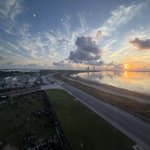
Satellite imagery just caught xAI doing something no press release ever could: painting MACROHARD across the roof of its Colossus 2 datacenter in Tennessee. A building-sized wink at Microsoft, visible from orbit, impossible to ignore.
It reads like a joke, until you look at what’s underneath.
⚆ Colossus 2 isn’t a concept site or a slide in a deck. Power and cooling infrastructure are expanding in lockstep, with the campus pushing toward ~400 MW of active capacity in the near term. Gas turbines are arriving. Cooling towers are multiplying. The build is loud because the progress is real.
⚆ More importantly, this early ramp sits on a much larger foundation. xAI has secured a clear path towards large scale on-site generation, creating a credible trajectory toward more than 2 GW of IT capacity over time. This isn’t aspirational: it’s ordered hardware, permitted infrastructure, and steel on the ground.
The subtext is clear: while others debate timelines, this campus is already running. The roof says MACROHARD. The infrastructure says we’re ahead.

important video to watch
It's not a matter of if but when humanity's time runs out - we can either:
* Self-destruct: nuclear war, pathogens or AI - history is full of fallen civilizations
* Stagnate: rapidly falling birth rates, nanny state, or the future shrinking into a world that's given up doing hard things or thinks of humanity as a virus to earth
* Die off from natural causes: there have been many natural mass extinctions, out of our control - asteroid impact, near earth supernovas, super volcano, eventually the increase in the sun's luminosity leads to a run away greenhouse effect and boiling of the oceans
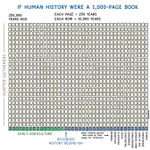
life has been around for ~3.7B years, and has at most 1B years left - so roughly 80% the way done. if life on earth was a US male, it's about 59 years old out of 73 life expectancy, and space travel has only been a possibility in the last 39 seconds of that person's life
intelligent life only evolved once and took 3.7B years to do so, there may be great filters in our past (eukaryotic jump, etc) but we know there is at least one future filter between now and <1B years - can we get off this planet and last longer then 1B years?
we're the first instance of intelligent life we're aware of that is capable of escaping earth and the window is open now and we're not sure for how long, we cant take for granted that if the door closes it will reopen again
but this isn't all protecting downside - there are many many upsides to to reaching beyond earth..
* currently earth where we do everything - our home, our heavy industry, power generation, computation, and dump, out of necessity. It doesn't have to be that way, earth should our bio garden not a mine or factory if possible to move off earth
* space is where we can really scale - near limitless resources, energy, and space
the key pieces to getting there are:
1. cheap mass from earth to moon
2. setting up lunar base w/ power production, lunar regolith refining, and other manufacturing
3. building a mass driver to leverage a small fraction of the giant ball of feedstock that is the moon to expand beyond earth

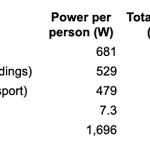
humanity runs on ~20TW raw energy, of which only ~14TW is usable after conversion losses, and of that only ~3TW is electricity, rest is from burning fuel directly
that's 1.69kw / person continuous on avg, but only ~400W is electricity and only ~7W of that is computing
an avg human burns ~115W energy or collectivity ~1TW, so in total we're doing a ~15x multiple on amount of usable energy we harness per human agent
think about how early we are on compute / person - each person should at least have one human worth of computing power which is a 15x from where we are today
* 7.3W to 115W / person
* 60GW to ~1TW total
China does ~1.15TW now - will add +1TW in 10 years
US does ~500GW now - will add +1TW in 100+ years
we have a massive energy generation challenge change that curve, the US has been building new capacity but mostly replacing aging plants so net delivered power is mostly flat
we need to learn from what china's scaled, improve, and leverage our advantages
* squeeze more out of our existing grid w/ batteries
* leverage our amazing solar, gas, and mfg resources
* get out of our own way
* mass to orbit


back when xAI being founded, we took a trip to Starbase and sat overlooking Starship's construction and discussed how thinking in the limit drives inspiration out of desperation - if success is not in the set of possible outcomes long term, you're on the wrong right tech tree
if we aspire to be a type II civ, we necessarily have to have a plan to convert some fraction of our sun's energy (which is 99.86% of our solar system's mass/energy) into useful work
the overwhelming simple answer is a machine that uses the sun's photons to make a carefully crafted chunk of silicon think, transmit information, and radiate the waste
the average power use of ALL datacenters on earth today is just ~60GW, total electrical grid power is just 3.5TW, this is still early earth, there is much left to build and explore
level 1 - craft on earth to orbit ~100 GW / year
level 2 - craft on moon to orbit ~100 TW / year
level 3 - simplify & repeat
A major additional factor should be considered.
Satellites with localized AI compute, where just the results are beamed back from low-latency, sun-synchronous orbit, will be the lowest cost way to generate AI bitstreams in <3 years.
And by far the fastest way to scale within 4 years, because easy sources of electrical power are already hard to find on Earth. 1 megaton/year of satellites with 100kW per satellite yields 100GW of AI added per year with no operating or maintenance cost, connecting via high-bandwidth lasers to the Starlink constellation.
The level beyond that is constructing satellite factories on the Moon and using a mass driver (electromagnetic railgun) to accelerate AI satellites to lunar escape velocity without the need for rockets. That scales to >100TW/year of AI and enables non-trivial progress towards becoming a Kardashev II civilization.