
Founder & CEO,Tiny Magiq; xCognizant[SVP/CIO & Head of Innovation, CKO].Tech,Social, History,Behavior,Neuroscience,KM,Storytelling,Toastmaster,Indus Resrch, Dad
Chennai,India
Joined December 2007
- Tweets20.3K
- Following4.1K
- Followers9.2K
- Likes9.7K




Pinned Tweet
Extreme pivot - our digital transformation envisioning method as an anchor video in animated form. youtu.be/nXAfj0-Urx8 Thnx to @PriyaRaju
Sukumar Rajagopal retweeted

A 72 year old man in Guntur got a knee replacement in June 2025. Within a month, the artificial joint was infected by Pseudomonas aeruginosa, a bacterium resistant to a wide range of antibiotics, including carbapenems.
Months of washouts, a spacer exchange, an arthroscopy and weeks of intravenous antibiotics followed. By Dec, his pain was 9/10. The infection kept returning. Doctors judged further surgery unsuitable given his age and condition.
The team then tried bacteriophages: viruses that infect specific bacteria.
For those interested in the science, this is where the work gets interesting....
Dr Sutharsan Govindarajan's phage lab at SRM University-AP tested the patient's own bacterial isolate against a panel of phages. 3 were selected and genome-sequenced.
In lab tests, each phage alone initially killed bacteria, but this strain subsequently regrew. The 3 phage cocktail suppressed that regrowth.
The cocktail was delivered into the infected knee through a drainage tube over 10 days. The antibiotic colistin was given alongside from day 2. Lab tests had shown that the combination worked better against this strain than either treatment alone.
- On day 6, colistin was stopped after kidney function worsened. The phage treatment continued.
- By day 10, tests of the joint fluid no longer detected the resistant bacterium. Pain had fallen from 9 to 2-3, and the man could walk independently again. His inflammation marker returned to normal a few days after treatment ended.
- At 6 months, he remained antibiotic-free with no recurrence reported. A joint-fluid culture in June 2026 showed no growth of the pathogen.
The clinical team was led by Dr Kalyan Chakravarthy Koganti at Samishta Hospital (SHRI), Guntur. The authors describe this as, to their knowledge, India's 1st reported successful phage treatment of a carbapenem-resistant prosthetic joint infection.
Bharat is rising. 🙏🙏
Source: B. Sivaraj et al., "Adjunctive Phage Therapy for Carbapenem-Resistant Pseudomonas aeruginosa (CRPA) Prosthetic Knee Joint Infection in India: A Case Report", IJID Regions (2026), available online 14 October. DOI: 10.1016/j.ijregi.2026.101047.
Photo 1: Dr Kalyan Chakravarthy Koganti and the research team. (Credit: T. Vijaya Kumar / The Hindu.)
Photo 2: The actual paper's figure, including the patient's before/after knee photos, antibiotic-resistance results and recovery timeline. via Sivaraj et al., IJID Regions (2026), DOI: 10.1016/j.ijregi.2026.101047.


Sukumar Rajagopal retweeted

I was fascinated by the idea of migrating abroad when I was in middle school. I had heard so many “wow” stories about the sons and daughters of my father’s colleagues who had gone overseas.
I wrote the SAT way back in 2003. Got multiple admits, including NUS and NTU. Everything was ready for me to migrate.
But I also got admission to CEG, then among the best engineering colleges in Tamil Nadu. And I did the unthinkable. I chose Mechanical Engineering at CEG over NUS/NTU.
Dad went wild!
At the end of my undergraduate years, I had two choices: GRE or CAT. Dad wanted me to take the GRE and leave India at the earliest. I chose CAT. I stayed back.
I eventually started a venture in one of India's most heavily regulated industries.
And the regulators nearly killed my venture thrice. Closing down MSE. Slashing commissions at their whims and fancies. Arbitrarily increasing net-worth requirements and questioning the very viability of my business.
There were moments when I wondered whether staying back had been a mistake. The system certainly gave me enough reasons to feel that way.
Yet, by God's grace, I survived. Seventeen years of running a company in India.
And despite everything, I still love this country. I don't entirely know why.
Perhaps it is the mananimmathi I experience when I travel through her countryside. Perhaps it is the atma tripti her temples give me. Perhaps it is the inexplicable happiness I feel in Malnad, in my Pandya desam, or in my beloved Travancore whenever I set foot on that soil and walk its paths.
Priceless. Absolutely priceless.
Look at where India was in the 1960s and 1970s and where she is today. She has come a long way.
From confiscatory 97% marginal income-tax rates to a much lower peak rate today. From a hopelessly Fabian socialist model to a mixed economy. From waiting endlessly for a Bajaj Chetak to being able to buy a Toyota in minutes. From waiting years for a telephone connection to becoming one of the world's cheapest mobile-data markets. From mud roads to expressways. From extreme poverty — remember Kamal Haasan eating an apple that had fallen into a gutter in Varumayin Niram Sivappu — to Shimla apples being available even in village markets.
India has travelled an extraordinary distance.
Of course, she could have done much better. She could have become another Singapore in terms of civic infrastructure, public services and urban planning. We have squandered decades and opportunities. There is no denying that.
But she remains India.
I take comfort in how far she has travelled despite decades of socialist policies and political mismanagement, rather than spending every waking moment complaining about everything that is wrong with her.
I can criticise India. I can demand better governance, better infrastructure and better public services. I can be frustrated with her bureaucracy and regulations.
But my affection for her runs deeper than my frustrations.
And perhaps that is what people who constantly compare India with the West fail to understand. A country is not merely the quality of its roads, the efficiency of its bureaucracy or the size of its paycheques. There is also a sense of belonging, a civilisational connection and a peace of mind that cannot be measured on a spreadsheet.
I would rather be a small soul in a country I love than spend my life as an indentured servant in a soulless system.
I had my opportunities to leave. I chose to stay.
Seventeen years later, with all the scars, setbacks and struggles, I still feel it was worth it.
She is far from perfect. But she is mine. She will never ditch me. She will not ask for a VISA to accommodate me as she has soul and I am her son.
And that makes all the difference.
Sukumar Rajagopal retweeted

On this auspicious day of Ashada Ekadashi, I am very happy to announce the launch of my humble attempt to make history interesting.
bharatrajya.com
The idea is actually very very simple
You go to the site, select a year, and It will show you who ruled which part of India at that point in time.

Superb. /via @simonw Substack post


Catching up a bit late on this. Brilliant (goes without saying). It’s a jackpot/revolutionary idea for Knowledge Management. A field that has been waiting for such an idea. Awesome Andrej.

LLM Knowledge Bases
Something I'm finding very useful recently: using LLMs to build personal knowledge bases for various topics of research interest. In this way, a large fraction of my recent token throughput is going less into manipulating code, and more into manipulating knowledge (stored as markdown and images). The latest LLMs are quite good at it. So:
Data ingest:
I index source documents (articles, papers, repos, datasets, images, etc.) into a raw/ directory, then I use an LLM to incrementally "compile" a wiki, which is just a collection of .md files in a directory structure. The wiki includes summaries of all the data in raw/, backlinks, and then it categorizes data into concepts, writes articles for them, and links them all. To convert web articles into .md files I like to use the Obsidian Web Clipper extension, and then I also use a hotkey to download all the related images to local so that my LLM can easily reference them.
IDE:
I use Obsidian as the IDE "frontend" where I can view the raw data, the the compiled wiki, and the derived visualizations. Important to note that the LLM writes and maintains all of the data of the wiki, I rarely touch it directly. I've played with a few Obsidian plugins to render and view data in other ways (e.g. Marp for slides).
Q&A:
Where things get interesting is that once your wiki is big enough (e.g. mine on some recent research is ~100 articles and ~400K words), you can ask your LLM agent all kinds of complex questions against the wiki, and it will go off, research the answers, etc. I thought I had to reach for fancy RAG, but the LLM has been pretty good about auto-maintaining index files and brief summaries of all the documents and it reads all the important related data fairly easily at this ~small scale.
Output:
Instead of getting answers in text/terminal, I like to have it render markdown files for me, or slide shows (Marp format), or matplotlib images, all of which I then view again in Obsidian. You can imagine many other visual output formats depending on the query. Often, I end up "filing" the outputs back into the wiki to enhance it for further queries. So my own explorations and queries always "add up" in the knowledge base.
Linting:
I've run some LLM "health checks" over the wiki to e.g. find inconsistent data, impute missing data (with web searchers), find interesting connections for new article candidates, etc., to incrementally clean up the wiki and enhance its overall data integrity. The LLMs are quite good at suggesting further questions to ask and look into.
Extra tools:
I find myself developing additional tools to process the data, e.g. I vibe coded a small and naive search engine over the wiki, which I both use directly (in a web ui), but more often I want to hand it off to an LLM via CLI as a tool for larger queries.
Further explorations:
As the repo grows, the natural desire is to also think about synthetic data generation + finetuning to have your LLM "know" the data in its weights instead of just context windows.
TLDR: raw data from a given number of sources is collected, then compiled by an LLM into a .md wiki, then operated on by various CLIs by the LLM to do Q&A and to incrementally enhance the wiki, and all of it viewable in Obsidian. You rarely ever write or edit the wiki manually, it's the domain of the LLM. I think there is room here for an incredible new product instead of a hacky collection of scripts.

A frustrating experience with the heavily marketed curapod from my wife Priya Raju.

What kills companies with good products? Poor customer support, logistics, lack of responsiveness & pitiable communication between departments. This is my hellish experience with “Curapod”, a pain remedy for arthritis & other musculoskeletal pain from @LitemedIndia. 1/n
Sukumar Rajagopal retweeted

He graduated in 2008, possibly one of the toughest years to graduate because of the global recession. He studied at Global Institute of Technology, which wasn’t one of the big-name colleges in Bengaluru, and jobs were scarce back then. But that situation actually nudged him toward entrepreneurship. He had a fascination for developing websites and would go around Basavanagudi and Malleshwara visiting small shops, asking if he could build a website for them.
He was relentless and genuine. Some shop owners saw that sincerity and gave him a chance. He ended up building around over 250 websites, often charging as little as two thousand rupees. Out of that experience came a small prototype that caught the attention of Madhura Garments, who eventually acquired his product.
Madhura Garments was a client of Ernst and Young, and through that connection, someone from E&Y got to know about his work and offered him a job. Vittal says he couldn’t even pronounce Ernst and Young back then and had no idea what the firm did, so he declined. The person who offered him the job became a friend though, and when that person later moved to KPMG, he invited Vittal to join him there.
That’s how Vittal entered the world of consulting. At KPMG, he worked on project financing and investment management, picked up new skills, and gained confidence. He then joined Robert Bosch, where he got exposure to their venture funding arm. Bosch offered him opportunities in both the US and Germany, and he eventually relocated to Germany. There, he worked on costing, investment structuring, and large project implementations.
In 2014, while traveling in the US, he met an American at a café who noticed the Robert Bosch badge on his shirt. They started chatting, and when the man asked what he did, Vittal explained that he worked on costing and investment structuring at Bosch. The American said he was trying to build a crowdfunding platform for ideas and asked if Vittal could offer some strategic advice and guidance.
That short conversation became the turning point that introduced him to the world of crowdfunding. He helped the American set up the platform, advised him on strategy, and even made some money along the way. Through that journey, he realized that while crowdfunding was becoming popular in the US, people in Germany didn’t have easy access to such opportunities.
He thought, why not build something for Germany, by Germans, for Germans?
That idea became the foundation for his venture, which went on to become one of the fastest-growing startups in Germany. Eventually, it was acquired by a large German media and publishing group.
Because of his ability to execute and build meaningful things, he later became an ambassador for German startups, representing the Indo-German entrepreneurial bridge.
In 2020, he came back to India. While traveling through Karkala and Udupi, he noticed handmade dolls being sold on the roadside for just fifty rupees, while the same products sold for six hundred rupees in Bengaluru. That gap really struck him, and he decided to do something about it.
That’s how Kreate was born. It’s a platform that helps artisans without GST registration sell their handmade products directly to customers. Today, Kreate has over twenty-eight thousand sellers and has generated over thirty-five million dollars in lifetime sales! Vittal also raised two million dollars in venture funding for the company, and Kreate now stands as a sustainable, profitable venture.
In 2025, he launched Nucleo, a platform that helps investors verify startup data using company identification numbers and helps founders set up clean data rooms and cap tables. It makes the due diligence process faster, easier, and more transparent for both sides.
Vittal’s story is a great example of what persistence and curiosity can create. From building websites for small shops in Basavanagudi to building one of Germany’s fastest-growing startups, and then coming back to empower Indian artisans, his journey is all about grit, reinvention, and purpose.
I really enjoyed our conversation, Vittal. Looking forward to featuring your story soon on @mundhebanni

Thanks a lot to NASSCOM for the collab. Special thanks to Achyuta for the wonderful keynote speech.

Functional skills are critical for freshers entering the workforce because they equip individuals with essential literacy, numeracy, and problem-solving abilities that are directly applicable to real-life and workplace scenarios. From building confidence and adaptability, enhancing employability, bridging gaps in education, and preparing for lifelong learning- functional skills empower freshers with the tools to succeed in their early jobs.
@tinymagiq - a digital transformation firm, believes that today there is a shift to an integrated functional skills paradigm away from the largely separate imparting of technical, soft, domain & process skills, and they use Gen AI to deliver accelerated fresher skilling.
At their Freshers Edge event in Chennai, several industry leaders from technology L&D and HR background came together to explore acceleration of functional skills in freshers so that they could transition smoothly into the workforce and meet the demands of modern tech workplaces.
At the event,
📌Achyuta Ghosh, Head- Insights at Nasscom presented the latest Indian tech trends and skills in demand.
📌Smitha MV talked about how to develop problem solving skills in freshers
📌Sujata Ganesh, Saransh Agarwal, Shoba Sridaran and Sanjay Radhakrishnan discussed culture, ownership, willingness to learn, and leveraging Gen AI for L&D.
We thank Sukumar Rajagopal and the @tinymagiq team for hosting this insightful event and driving this important theme, and we look forward to future collaborations.
Catch some glimpses from the session!
@achyutaghosh @nasscom @ShobaSridaran @rsukumar @tinymagiq @sangeetagupta29 @SrikanthNasscom @arunrajiah @bhaskar2415 @GuhanARS1 @KhyatiKapoor17 @nasscom_member_
#FutureSkills #Workforce #GenAI #DigitalTransformation


Sukumar Rajagopal retweeted

India’s tech industry is on a strong growth trajectory, with revenues expected to reach $282.6 billion in FY25, reflecting a 5.1% increase from last year. The sector is also set to generate 126,000 new jobs, more than double the 60,000 added in FY24, as per our Nasscom Strategic Review Report 2025.
As technology advances, the demand for cutting-edge digital skills continues to rise, shaping the future of work.
We are pleased to announce that @achyutaghosh , Head - Insights at @nasscom , will share his expertise on Skills in Demand in the Indian Tech Sector at an exclusive session.
📌 When: March 19, 2025 | 4 PM onwards
📌 Where: Taj Wellington Mews, Chennai
Achyuta will explore the key skills fueling India’s tech growth and discuss how professionals and organizations can stay ahead in this evolving landscape.
@rsukumar @bhaskar2415
@KhyatiKapoor17 @nasscom_member_
#DigitalSkills #techtrends #techjobs #growth

Tragic and very sad. Even the smallest amount of blood makes it Cat 3 and IG needs to be given per the knowledgeable doctors in this thread.
This quoted post is unavailable.

Sukumar Rajagopal retweeted

I don't know what to make of this... I've been on Twitter since December of 2006. I've been on Threads since it opened up.
What I see in my "feed" is SO different. 80+% of Twitter is negative/angry/mean. 80+% of Threads is light and even inspiring at times.
Is it just me?
Sukumar Rajagopal retweeted

@dsmoley congrats on winning the Lifetime Customer Achievement award at #WDAYRising. Hugely deserved! Gave me goosebumps to hear him describe his brave decision to adopt @Workday in 08 at Flex. I led off my SAP Nation book with that.


Sukumar Rajagopal retweeted

🚨 First patient declared ‘cancer-free’ using indigenous CAR-T cell therapy developed by Tata Memorial Hospital in Mumbai.
It costs 42 lakhs compared to 4 cr overseas.
“While it’s premature to claim a lifelong cure, the patient is currently free of cancer cells,” say doctors.

Sukumar Rajagopal retweeted
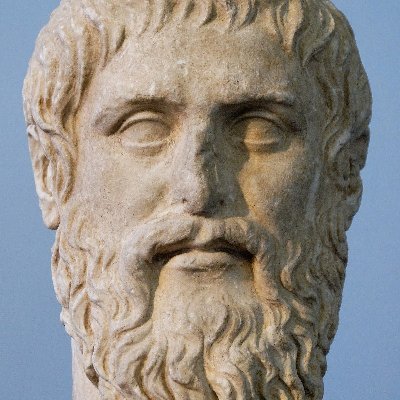
It sounds like a boring topic, but concrete is one of the most revolutionary inventions in history.
For example, concrete now weighs more than everything else humans have ever made combined.
So here's the story of how it has changed the world, for better and for worse...

calculating exact date of vernal equinox in 2550BCE for IVC research. A straight calc of 1 deg precession gives approx 45 days vernal equinox May 12 2550BCE ( from Mar 20 in 2024). other calc say Apr 12 2550BCE. Which is right? Can you help or know someone who can? Pls RT
#aihorizon gen ai panel - Sheila Siddappa, Kyndryl; Aravind of comcast; Venkat of PayPal ; Nelson kulandairaj ; moderated by Dr Sundar of RIT
Aravind - AI agents can accept complex tasks split it into small tasks and execute them and integrate the outputs.