

💰 Helping Solo Business Owners and High W-2 Earners Plan/Save on Taxes ⭐️ Ex-Financial Advisor 👨🎓 Free Course with 12 Tax Saving Strategies⬇
San Diego, CA
Joined November 2018
- Tweets5.6K
- Following576
- Followers2.2K
- Likes36K


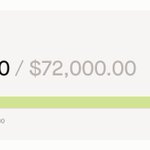


Things I like about this strategy:
- Can't mess up a good plan by being a human (logging into accounts too much, actively trading, trying to time the market with elections, wars, debasement of the dollar, the New World Order, etc.). Just have to sit back and socialize/survive in a minimum-security prison
Things I do not like about this strategy:
- Prison

I run a 1-person business in California
If I did no tax planning or strategy, I'd owe $260K+ in taxes between federal, state, and self-employment taxes
Here's every move I make (and why):
1 - LLC that elects to be taxed as an S Corp. By electing S Corp, I pay self-employment taxes (payroll) on the reasonable salary I set up myself instead of all of my earnings. Example: $150K salary and $450K in distributions saves about $19.5K in self-employment taxes. Every. Single. Year.
2 - Maximize the QBI deduction. I get a $0 QBI deduction since I am a SSTB (specified service trade or business) but I'm putting it here since so many people miss this. I wouldn't want the lowest possible reasonable salary since I'd miss a good chunk of QBI deductions and my salary could be seen as unreasonable. I also don't want a salary that is too high or I'd pay too much in payroll tax. The goal is to find the sweet spot. Example: $60K salary is a $30K QBI deduction versus a $75K QBI deduction on a $150K salary for non-SSTBs at this income level. Big difference. Plus the low salary limits how much I can put into a solo 401K
3 - Solo 401K. This is an easy one and I talk about this way too much. Please don't use a SEP IRA. I could use this to get a $61K tax deferral but I prefer to use this for after-tax contributions rolled to my Roth IRA. This gives me liquidity and access to every dollar I put in tax-free and penalty-free anytime (not locked up till 59.5) and it'll add up to millions in future tax savings by avoiding 28.1% capital gains tax (15% long-term capital gains tax, 9.3% California, and 3.8% net investment income tax)
4 - Pay CA state income taxes through my business. My business elects to pay my state taxes and then I still take a standard deduction on my personal return. Allows me to double dip and a great way to bypass the SALT cap of $40K or $10K if income exceeds $505,000
5 - Track expenses and keep good books. It's not about being perfect here but bad books = wasted money. All business-related stuff goes on a business card and then an accountable plan is used to reimburse myself for my home office, % of utilities, vehicle, etc.
6 - Augusta rule. One I added this year. My business rents my full apartment from me 1x a month to create content, record higher production value videos vs. what I can do in my home office, review marketing, financials, etc.
Then some other things I do/will do that add up:
- Backdoor Roth
- HSA
- Hire wife and add her to the solo 401k plan. Max it at $72K/year with mega backdoor Roth
- Hire kids to spread the income to 0% tax brackets and do custodial Roths
- 529 plans, minimal but some to get up to the $35K # that can be rolled to a Roth
- Trump accounts to backdoor $ into my kids' Roth IRAs
- Automate and not mess up my plan by being a human (picking stocks, selling, trying to time markets, etc)
- Direct indexing
- Cash in California municipals or US treasuries for a higher tax-equivalent yield
- Asset location
Added a US small cap direct index to my plan in Dec of last year.
Very happy with the results. Gets a bit more in losses than my S&P500 direct index.
Up 18.58% YTD and it has $5,363 in losses harvested YTD.
I've posted about direct indexing a handful of times in the past and why I added it to my plan. If you're interested in learning more and whether or not it might be right for you, I did a past webinar discussing why I love it, who it might be great for, etc. Just comment below or DM me and I'll send you the webinar replay

This is wild
I ran some #s on my 2026 tax liability if married vs. not married. Let's say I make $600K this year as a 1-person business in California.
Option 1 - File single and do no tax strategy. Approx $260K in tax owed between federal, state, and self-employment taxes.
Option 2 - File single and do tax strategy. Approx $190K in tax owed, assuming I do an S corp with a reasonable salary, do a solo 401k, PTET election, Augusta rule, etc. (I'm not including backdoor Roth, mega backdoor Roth, direct indexing future tax savings for simplicity).
Option 3 - Legally get married and file jointly. Approx $98K in total tax. Mostly because I can legally add her as an employee to my company for work she does, add her to the solo 401k plan, have her max out contributions, and then we are under QBI deduction phase-out numbers. Aka get $55K deduction that I currently don't get.
So, what would you do? 😂
This is oversimplified, but it shows the progression of how fun great strategy and tax planning can be
Just keep buying
Seen so many people sit on the sidelines since 2017, 2018, 2019 when I entered financial services and then 2022, 2023, 2024, 2025, 2026.


Once again, I'll share my favorite loophole in the US tax code as we're in the back half of the year
The IRS says if I make over $168K filing single or $252K married filing jointly in 2026, I cannot contribute directly to a Roth IRA. But, thanks to the US tax code, I can still get funds into a Roth IRA every single year (up to $72,000 in the 2026 tax year).
It's called the mega backdoor Roth, and here's how it works:
1 - See if your 401K plan supports the mega backdoor Roth strategy. You need the ability to make "after-tax" (not Roth) contributions to your plan and the ability to do "in-plan Roth conversions" or "in-service distributions of after-tax contributions to a Roth IRA." Note: A solo 401k plan is by far the easiest way to set this up. Most 401k plans don't support this strategy with the exception of a handful of big tech companies-Tesla, Apple, Amazon, Uber, Google, Samsara, Salesforce, Uber, etc.
2 - Contribute. Everything you put in grows completely tax-free, and depending on what your plan supports, you have the ability to withdraw what you put in tax-free and penalty-free anytime (not "locked up" till age 59.5). Example: I contribute $72K as a mega backdoor Roth to my solo 401k plan. I can take out this $72K contribution anytime, tax-free and penalty-free, 10 days from now or 10 years from now. And my investments grow tax-free.
That's it.
There are a few nuances in here, so work with your financial pro or reach out to me if you're interested in seeing if this is something you can do. As a fun note,
if somebody has a W-2 plus an eligible side business, they can max out both plans and get up to $144K sheltered between the two plans; the only aggregate max is the $24.5K employee deferral. Example: Max out company 401K pre-tax with a $24.5K employee deferral, get a match, and do the mega backdoor Roth up to the $72K plan limit, and then get up to $72K into the separate solo 401k plan with a $0 employee deferral, optional company contribution, and then a mega backdoor Roth up to the $72K number. $144K total. Fun stuff. Then, stack a regular backdoor Roth on top of this for another $7.5K that grows tax-free :)

I thought I knew a lot about running.
Just run the miles. Get shoes that fit. Not that hard. Then I paid for a running coach. Then, I realized I knew nothing. Had all these blind spots that were hurting my progress. Nutrition (turns out no veggies isn't ideal). Form. Tempo runs. Progression runs. Deloads. Lifting to maintain strength. Etc. Just didn't know what I didn't know.
There are lessons in this.
Here are the lessons I picked up:
1 - When I paid somebody, I took it seriously.
2 - Blind spots are blind spots for a reason. Too close to it and can't see it. Can't tell you how many times I see this with finances/tax planning.
3 - Knowing what to do and actually doing it are 2 very different things. Example: I know to sleep more, lift heavier, etc but that does mean I do these things. Figure out what needs to be in place so that the things you know you need to be doing get done (community, paying somebody, etc)

32-year-old
Makes about $160K base in his W-2 and another $60K net in 1099 income for consulting work he does. Wife makes another $100K/year as a W-2, and they have 2 kids
Before we talked/started working together:
+ Sees my posts
+ Knows there is more stuff he can do but never gets around to it
After we talked/started working together:
+ Confirmed to him that electing S corp on his 1099 consulting wouldn't save him anything in self-employment taxes and would only add the hassle of having to run payroll/file an additional business tax return
+ Confirmed that a SEP IRA could be set up but this would be silly and if he's learned anything at all from my posts, a solo 401k would be the far better option for him
+ Set up a solo 401k not with Fidelity or Schwab so that his plan can support the mega backdoor Roth
+ Claim the $1,500 EACA tax credit for setting up this solo 401k plan ($500 a year over three years)
+ Use the solo 401k specifically for the mega backdoor Roth strategy and not pre-tax employee deferrals or employer contributions since he doesn't want to lock up funds till he is old. Example: Up to his net income minus 1/2 self-employment taxes can be mega backdoored to a Roth IRA which gives him full liquidity/access to his contributions and the account grows tax-free forever. About $58K for him. Fun numbers.
+ Backdoor Roth for him and for his wife. $7.5K each. No issue with pro rata since they don't have rollover IRAs
+ Investments remain simple. VOO. QQQ. Some international. No input from me here; it's the tax code/account being used that makes the same dollars go way further (funds growing in a tax-free account vs. taxable brokerage)
+ His and her 401k contributions are remaining the same. Just contributing up to their company match
+ They adjusted their 401k investments to not be in target date funds since they agreed don't need bonds in their retirement accounts/understand these specific dollars are a 20+ year time horizon
+ 529 plans are opened for the kids and doing $100/month here. No changes made
+ Trump accounts discussed. They've opened them and will likely contribute $100/month to this account as well with the plan to convert to Roth at age 18+. Just have to plan around the kiddie tax
Not much else. Years of procrastination solved in less than 2 hours or so and then it becomes maintenance/iterate from here as things change. I have a consult offer running this week for anybody reading this and interested in doing something similar. Great fit for people in a similar situation

Ryan Odom retweeted
Paper ballots are the smartest, safest way to ensure your vote is secure against attacks by foreign actors. Russia can’t hack a piece of paper like they can a computer. We introduced the Secure Elections Act to ensure our elections are safeguarded. We must be ready.
Ryan Odom retweeted

I see this all the time with 7-figure S-Corp owners:
- $500k–$1M+ profit
- salary under $100k
- still using a SEP IRA
If you are doing this, then you are:
- most likely not hitting a reasonable salary and are at risk of penalties
- getting almost no QBID if you qualify (SSTB vs not)
- can barely put any into your retirement account due to a low salary
- only have the 25% profit share if using a SEP vs having the $24,500 employee side contribution (and potential $8,000 catch up)
- do not get mega bacdoor Roth ability
- lose out on backdoor Roth IRA being tax free
It is time to do the real planning!
I get to work with a lot of high-income 30 - 45 year olds (and those early in the game making $100K - $300K/year with a ramping income)
Many get the basics right but miss critical parts of their plan
Here's a brain dump of the most common mistakes I see:
- LLC not taxed as an S corp when they are consistently over $100K+/year of profit
- LLC taxed as an S corp when they live in TN or NYC where S corp tax savings become negated by additional excise tax or general corporation tax
- LLC taxed as an S corp when they have a W-2 job that already pays their entire Social Security wage base
- Not planning for the QBI deduction
- No plan on the reasonable salary to optimize for QBI deduction and retirement plan contributions (including the mega backdoor Roth)
- Using a SEP IRA when eligible for a solo 401k
- Not doing a backdoor Roth
- Doing a backdoor Roth when they have a SEP IRA, SIMPLE IRA, or rollover IRA (triggers the pro rata rule)
- Always focusing on pre-tax contributions to retirement plans. Roth can often be better from a lifetime tax rate perspective
- Thinking retirement contributions are locked up. Mega backdoor Roth is by far my favorite way for somebody to have great liquidity/access while still capturing tax benefits of tax-free growth
- Not doing a PTET election when above phase-out range or when taking the standard deduction. Only applies to states with state taxes
- Sitting on cash/trying to time markets. Have seen people in cash since 2022, and a basic S&P500 has doubled since then
- Picking individual stocks and having no real strategy. Fine when it is 20% or less of an overall portfolio, but past that the data is horrible for those doing this
- Paying a spouse from a business when there is no need
- Not realizing they can pay a spouse from their business for real work they do and add them to as a participant to a solo 401k plan. Allows them to get up to $72K/year into a plan for a spouse, including mega backdoor Roth
- Ignoring Trump accounts because "Trump"
- Not doing a 529 plan because not sure what college will look like in 10, 15, 20 years. Up to $35K can be rolled into a Roth IRA
- Overcontributing to a 529 plan
- Ignoring insurance
- Being sold insurance they do not need
- Paying a % fee to a financial advisor who provides no real value and has never discussed any tax planning/planning stuff I mention in this post
There's more but this was a fun 2-minute brain game. Also shows why paying for personalized guidance/support becomes worth it (so you aren't led off a cliff following stuff online)
One of the dumbest loopholes in the US tax code
The IRS says if I make more than $168K filing single or $252K married filing jointly in 2026 I cannot contribute directly to a Roth IRA, but with good planning, I can still get funds into of a Roth IRA every single year. It just takes 1 additional step.
It's called a backdoor Roth and here's how it works:
1 - Open a traditional IRA
2 - Contribute the $7.5K max to the traditional IRA as a nondeductible contribution. Convert it to Roth immediately.
3 - Invest the dollars and now they are tax-free forever. May not seem like much but let's say a couple does this at $7.5K/year per person. 35 years. $525K of contributions that grows to $2,584,752 assuming an 8% return. That's $2,059,752 of capital gains that are shielded from capital gains tax. At 15% long-term capital gains + state tax + 3.8% net investment income tax it is a wonderful tax savings (for me, it'd be about a $578,790 tax savings). No RMDs required, so another 10 years of tax-free compounding could be passed down for estate planning as well. Takes 5 mins a year. Just have to watch out for the pro rata rule and make sure Form 8606 gets filed.
I did a video on this with a bit more detail that is posted inside of our free group on Skool. Just DM me or comment below if you want me to send over the link to access it
Started working with a 31-year-old who makes $310K as a W-2 and another $80K to $100K/year profit in 1099 self-employment income. He has a CPA who helps with prep and filing but never anything that feels like proactive strategy
He'd seen my posts constantly (thanks LI algorithm), so he reached out.
Here's a bit of the before/after path we're working on:
Before we talked:
- Maxes his company 401K
- Gets a 3% company match
- Not sure what else he can do so he just invests extra cash into a regular brokerage account at Fidelity
- CPA says he could open a SEP IRA
After we talked:
- Ignore CPA suggestion for a SEP IRA
- Ignore online stuff he sees saying he should open an LLC and tax it as an S corp. There'd be no benefit for him but it would add the hassle of all the things that comes with being taxed as an S corp. Run payroll, have a separate business filing fee, have to do an accountable plan for home office and vehicle expenses, etc. Not worth it at all.
- Reduce his company 401K to get the company match vs. maxing this out. We plan to shift some of his pre-tax stuff to a solo 401k so that he has more control over his investments and the ability to do Roth conversions when he gets married and has kids in 2-3 years
- Open a traditional IRA and open a Roth IRA
- Contribute $7.5K to traditional IRA as a nondeductible contribution and convert to Roth IRA (backdoor Roth)
- Open a solo 401K for his 1099 self-employment income. He is not incorporated and does not need to be to do this
- Then we have a few different ways we can use the solo 401k. Total contributions can be up to $72K (crazy) on top of anything he does to his W-2 401K plan. Example: $72K as a mega backdoor Roth. Or he could do ~35K in deductible contributions and then $37K mega backdoor Roth. Or any mix of the two.
- HSA is an easy one since he's young/healthy, has savings, and no medical expenses atm. He does this through payroll at his W-2 company
- Start a direct index account/strategy and direct weekly investments to this instead of his brokerage account at Fidelity. This is major to reduce future cap gains taxes he'll owe at sale of any of his stocks
- Expense anything ordinary and necessary to his business/1099 income. Aka keep good books. Home office, vehicle, computer, % of wifi, % of utilities, etc. Ideally, he could pay his girlfriend as a contractor for work performed that she does help him with (helps with admin and scheduling for his 1099 work). It'd get him a deduction and her self-employment income, which gives her a playbook for similar stuff we are running for him - home office deduction, solo 401k, mega backdoor Roth, etc
Fun stuff and he's been enjoying the strategy side of this and what is available to him because of the 1099 self-employment income. If you have questions on some of this feel free to comment below or DM me. Everything above is shared w permission from the individual

Independent contractors pay more tax than W-2 unless they actually do the work and do good tax planning
Can't tell you how many times I've seen somebody make $600K and pay $50K more than they need to
+ All $600K subject to self-employment tax
+ Several thousand in underpayment penalties since no estimated taxes made throughout the year
+ Missed deductions because of messy books
+ No retirement plan, etc
My favorite loophole in the US tax code
The IRS says if I make over $168K filing single or $252K married filing joint I cannot contribute directly to a Roth IRA but what I can do is use my 401K plan to get $72K into my Roth IRA every single year
It's called the mega backdoor Roth and here's how I do it:
1 - Open a solo 401K plan since I am eligible with a provider that supports the strategy (not Fidelity/Schwab)
2 - Set up "after-tax" contributions that get immediately rolled to my Roth IRA
3 - Contribute. Everything I put in grows completely tax-free and is also accessible tax-free and penalty-free anytime (not "locked up"). Example: I contribute $72K. I can take out this $72K anytime with no taxes or penalties 10 days from now or 10 years from now.
A lot of larger tech companies support the mega backdoor Roth strategy (Apple, Amazon, Google, Tesla, etc.) but my favorite way to do this is with those who have a 1099 side hustle/those eligible for a solo 401K plan. It stacks on top of what somebody puts in their company 401K plan as well for those with W-2 plus 1099. Example: Max out a company 401K pre-tax at $24,500 and then put $72K into this separate plan, assuming you have at least $72K of net earnings. Fun stuff
Some #s on the tax savings: every $100K of investment gains saves me $28,100 in future taxes owed (15% federal, 9.3% state, 3.8% net investment income tax)

My exact tax plan
- LLC taxed as an S corp (saves ~$12K/year in self-employment taxes)
- Expense anything ordinary and necessary for me to run my business (computer, Google, Calendly, LinkedIn, etc)
- Accountable plan to reimburse myself for my home office, health insurance, vehicle mileage, etc ($10K - $15K/year deduction)
- Augusta rule. My business rents my apartment from me 1x a month for a content day (to record videos, make content, review content, etc). $520 a day * 12 = $6,240 tax free income
- Solo 401k
- Use my solo 401k to get $72K into my Roth IRA (mega backdoor Roth)
- Backdoor Roth to get another $7,500 into my Roth IRA
- Direct indexing to not pay cap gains taxes on realized gains now or in the future. Which avoids a 28.1% tax on every dollar of realized gains
- Asset location. Just means I put my high-risk high-potential-for-reward investments in my tax-free Roth accounts
Pretty much it. Layers get added when married and kids. Add her to payroll (she is a contractor at the moment to me and helps with all my social media stuff). She has her own business so she gets to run a similar playbook. Add her to my solo 401k plan. Use that to get $ into a Roth IRA for her. Trump accounts for kids. 529 plan up to $35K for kids. Etc
Maybe equally important are all the things I don't do. Short-term rentals/buy real estate (great piece of the tax code but I have no interest). Move to Texas - no thanks. Go buy a laundromat, car wash, or small biz.
This is my plan. The fun part is making this your own to match goals, values, etc