

no risk no story | in game since 2018 | crypto | ai
Joined April 2021
- Tweets3.1K
- Following378
- Followers720
- Likes1.4K




IF YOUR SALARY HASN'T GROWN SINCE 2021, YOU'VE TAKEN A 22% PAY CUT. NOBODY SENT YOU AN EMAIL ABOUT IT.
yesterday's CPI came in hot: 3.7% year over year, core 2.6%. more than half of the monthly jump was gasoline.
that's 67 months in a row of US inflation above the fed's 2% target. the last time it was below was early 2021. after a print like this, rate hike talk only gets louder.
what cost $100 in 2021 now costs almost $130. the dollar lost over 20% of its purchasing power in five years.
prices are outrunning wages. if all you have is a paycheck, you get a little poorer every year. if your money sits in assets instead of cash, the same inflation makes you richer.
the choice hasn't changed: invest, or work for the people who do.

BTC HAS RUN THE SAME 4-YEAR SCRIPT 3 TIMES IN A ROW. SO WHY IS ALMOST EVERYONE STILL DOWN?
2011 buy. 2012 hold. 2013 sell. 2014 bear🐻
2015 buy. 2016 hold. 2017 sell. 2018 bear🐻
2019 buy. 2020 hold. 2021 sell. 2022 bear🐻
2023 buy. 2024 hold. 2025 sell. 2026 bear🐻
2027 buy. 2028 hold. 2029 sell. 2030 bear🐻
a plan a 10-year-old could follow. it worked three cycles straight.
and most people still finish every cycle in the red.
because buying in 2015 felt stupid. holding through 2016 felt boring. selling in 2021 felt like leaving money on the table.
the calendar never changed. people just keep showing up in the wrong year.
honest question: does the 4-year cycle still hold, or has it already broken?

WHAT GOOD AND BAD BUYBACKS LOOK LIKE: ONE TOKEN IS UP 60%, THE OTHER IS DOWN 96% FROM ITS OWN BUYBACK PRICE.
the good one first. jupiter spent $70M on buybacks in 2025 and the price barely moved. emissions printed more JUP than they bought back. bailing water out of a boat with a hole in it.
this year they fixed the hole: burned all 130M bought tokens and cut new emissions to almost zero. 50% of fees still go to buybacks, the other 50% to ops, incentives and growth. JUP is up 50–60% since january.
now the bad ones.
MOVE promised a $38M buyback after the market maker dump. the money wasn't revenue, and the bought tokens started flowing back to Binance. today MOVE sits -96% below the average buyback price.
KAITO did buy back from real revenue. then revenue dropped, buybacks got paused, and the support left with them.
everyone announces buybacks now. before you trust one, check three things:
where the money comes from. where the tokens go. how many new ones get printed.

IF YOU MADE $500 TODAY, YOU OUT-EARNED A CHAIN THAT RAISED $450M.
zksync brings in around $400 a day. on $450M of real cash raised.
so where does the money to keep the lights on come from? unlocks. dumped straight into the order book, month after month.
that's the whole reason the ZK chart only goes one way: -49% this year.
starknet got similar money and did the opposite. pivoted to BTC first, now pushing AI privacy and its own L1. same chart, same year: STRK +22% while ZK keeps bleeding.
my own hold: 50k souvenir STRK.
early 2024: ~$100k
a month ago: $1.5k
today: ~$5.1k
my call: in a good market STRK revisits $1–2.
one team sat still. one team kept moving. the chart noticed.

This self-evolving trading system kills 97% of its own strategies on purpose.
It's called SETS Machine. Nobody writes the strategies by hand. It breeds them, tests them, and buries the losers itself.
Observe, hypothesize, mutate, backtest, select, deploy. Then it does the whole cycle again. Every five seconds.
Each strategy is a grid bot built from eight genes — entry logic, lookback window, entry threshold, grid levels, spacing, size multiplier, take-profit, stop.
Every generation runs 96 strategies at once. Eight random newcomers get thrown in fresh. Eighty offspring get bred from whichever parents performed best. All of them get backtested against real BTC candles before anything advances.
Here's the part most "AI trading bot" demos quietly skip. Every strategy has to prove itself on data it's never seen — trained on 70% of the history, judged on the remaining 30% it was blind to. Lose money there, draw down past 10%, or win less than half its trades, and it's dead. No second chances, no sentimental favorites.
Only the strongest survive to the next round.
Four separate species compete simultaneously — momentum, mean reversion, volatility breakout, range grid — with quotas built in specifically so one lucky species can't accidentally wipe out the other three.
Whichever strategy wins gets hot-swapped straight into a paper-trading grid, sized using the Kelly criterion, with every fill, every take-profit, and every stop visible in real time.
This is the exact loop quant funds pay six figures a year to run by hand: take an idea, test it against history, kill it the moment it stops working, repeat forever. Here, it never stops on its own.
No PhDs. No team. No server farm behind it.
And it's fully open source — the engine, the backtests, the dashboard, the tests themselves. No API keys, no build step. It runs directly in a browser.
Click any strategy in the gene pool and see its full DNA. Change the seed and watch a completely different evolution play out from scratch.
It even shows, honestly, exactly where it loses to simply buying and holding — because a system that hides its own losses was never worth trusting in the first place.

Ran the second brain and pulled one query that changes how you read every new launch.
Grouped every deployer by funding root. Counted rugs against survivors under each one.
Out of 213 deployers, 47 shared a root with at least one other. That cluster alone held 78% of the rugs — against just 8% of the survivors.
That's not a distribution. That's a signature. Most of the scam economy isn't thousands of independent scammers. It's a small number of operators, each one running 14 faces at once.
AEGIS is the scam filter with a second brain, built to catch exactly this.
Shipped a patch tonight: the brain now walks the entire funding graph on every scan. The moment a fresh deployer wires SOL from a root with three prior rugs attached to it, the new token starts at -20 before a single check even runs.
Here's what the funding graph catches that the contract itself never will:
Same funding root as a known rugger — automatic -20, propagated the instant the first transaction lands.
Same first-block bot wallet reused across two different deployers — -15, because rotating sniper wallets means giving up pre-approved router access, and most operators won't bother.
Same LP-pull timing, minute of the hour, matching two prior rugs — -10, the quietest signal in the whole system and the one every other scanner misses completely.
The top root in tonight's demo run has 14 deployers underneath it, 12 rugs, zero survivors — still funded from the same exchange withdrawal as last week.
Nobody rotates the root, because rotating means moving the treasury, and the treasury is the only part of this they actually care about.
Rugging at scale is a business. Businesses reuse infrastructure. And infrastructure on-chain stays public forever.


This is TouchDesigner mid-build — the node graph on the left is the actual machine generating the tower on the right, not a video effect layered on top of one.
Watch what's happening structurally. A single "merge" node feeding two geometry inputs, copied and instanced up into 20+ floors, each one wrapped in its own scan lines and sector telemetry. Floor 002 highlighted in green while the rest sit in standby red — one unit being inspected while nineteen others just idle, waiting their turn.
The panel on the right reading "ALERTS," "OPERATIVE," "STANDBY," status codes ticking per floor, isn't cosmetic. It's the same pattern as every monitoring system built for something too large to watch floor-by-floor by hand — check one unit closely, keep the rest on a lightweight heartbeat, only escalate the ones that actually need attention.
That's the whole idea sitting inside a dozen connected nodes: don't render, simulate, or deeply check everything at once. Build the structure once, instance it a hundred times, and let a lightweight status layer decide which single instance is worth a closer look right now.


A Stanford professor pointed 1,900 endpoints at a single question: which of 40 billion data points are actually worth an LLM's attention.
Look at the router in that render — 21,581 routes, spinning at 96 seconds a cycle, re-routing 387.5 times a second. That's not decoration. That's the literal traffic pattern of a triage layer deciding, every 15 minutes, which results get promoted to deeper analysis and which get discarded before they ever reach a model.
Most people building on top of LLMs skip straight to "ask the model to explain everything." That's expensive and slow at any real scale, and it's the exact waste this system is built to cut. JEV doesn't ask an LLM to read 40 billion points. It filters first, cheaply, then only hands the model what already cleared the bar.
The p95 latency panel shows the actual payoff: retrieval time down 175ms, tool execution down 65ms, verification trimmed by single-digit milliseconds that add up once you're running this many cycles a minute. 1.84 billion tokens flowing through the pipeline in a 30-minute window, and the failure-cause chart on the right shows exactly where the remaining errors cluster — not evenly, but stacked hard on one or two categories worth fixing first.
This is the same principle as every good triage system, just running at a scale most people never see: don't make the expensive part of the pipeline do the cheap part's job. Filter first. Think second. Only on what survived the filter.


Your product doesn't have a citation problem. It has a memory problem, and none of your competitors knows it yet.
You're checking whether ChatGPT mentions your brand. Meanwhile the engine already read your page, decided it wasn't citable, and moved on to a PubMed source instead — eight months ago, and it never checked back.
I built a system that watches all three engines do this in real time, across every buyer question that actually gets asked.
271 prompts run against ChatGPT. 264 against Claude. 256 against Gemini. Same category, same competitors, three completely different citation rates — 29%, 31%, 23% — because each engine trusts a different kind of source.
Here's the part that should worry you. When it skips your page, it tells you exactly why: no FAQ schema, no author credentials, no freshness signal, a comparison table that doesn't exist. One skipped page scored 2.5 out of 10 on citability. The competitor it cited instead — a YouTube walkthrough with chapter markers matching the sub-questions buyers actually ask — scored 7.7.
Then it rewrites your page against that exact gap and resubmits it for indexing. 63 pages rewritten so ChatGPT started citing them. 52 for Claude. 63 for Gemini. Traffic already moving, conversion rate already climbing, before most SEO tools have finished their monthly crawl.
A competent SEO checklist passes every audit and still gets skipped, because the checklist was never what these engines are actually scoring. What they're scoring is whether your page already answered the exact question before the buyer finished typing it — and that's the part no scanner has been watching for, until now.


Nasdaq micros grinding straight down for an hour, one clean level to level move, no chop to fade.
The order flow ladder on the right shows exactly why the drop didn't stall. Red delta stacking at every price level on the way down — sellers hitting the bid over and over, buyers barely showing up to absorb it. The footprint chart in the middle confirms it trade by trade: negative delta printing at nearly every level, one cluster hitting -138 at a single price.
Price broke a support line around 28,700, and instead of the usual bounce-and-retest, it just kept going — another 150 points down before finding any real buying interest near 28,555.
This is the same read Claude ran in the premarket brief a few posts back: when the order flow confirms the direction before price even gets there, the trade isn't a guess anymore. It's just waiting for the level, then getting out of the way of what the tape is already telling you.
Flat position, $0 P/L sitting on screen right now — which means whoever's watching this either already took the move, or is still waiting for the next one to set up exactly the same way.

82% of calls traded above entry in one week. 54 out of 66 since September 11. 39% doubled or better.
That's the top-line number. The part worth actually reading is the brain diagram underneath it, because that's where the edge really lives.
274 wallets feeding one shared graph. A resolver that unmasks the real wallet behind a public profile before anyone else bothers checking. A tape reader pulling every new block every 20 seconds, catching 31 fills without missing one. A burst detector that flags the exact moment four wallets with 80+ reputation scores all move on the same token inside a 30-minute window — the actual signal, not the noise around it.
A judge model scoring every call 0 to 100 before it ever gets surfaced, rejecting anything that doesn't clear the bar. A provenance check running on every single fill, catching roughly 1 in 11 as fake — zeroed out automatically, dust and all, before it can poison the stats.
And the exit tracker is the part most dashboards never bother building: 22 wallets in, 19 already gone, the same crowd quietly leaving together the day the token stopped moving.
+$2,088 across 17 bursts, 47% win rate, average return of 123% per burst. Not from predicting which token pumps. From building the plumbing that tells you which wallets are worth watching in the first place, and which ones already left.


Fix quantities over 999. Keep the API unchanged.
That's the whole instruction. No context about the codebase, no pointer to which file, nothing re-explained.
Claude reads the parser first. Finds line 41 truncating anything past three digits — const qty = Number(raw.slice(0, 3)). Runs the test suite before touching anything. One fails: expected 1200, received 120.
Writes a regex fix instead of patching the symptom. Greps the codebase to find every place that function actually gets called from, because a fix that only works in one spot isn't a fix.
Edits the file. Three lines added, one removed. Reruns the suite. 24 passed.
Leaves itself a note before moving on: include the raw line in the next error message, so the next bug like this one is faster to catch.
Next instruction: now fix the error message. No re-explaining what broke. It already knows.
156,000 tokens deep into this session, context bar sitting at 78%, quietly compacting itself in the background — and it never once asked what a parser was, or where checkout lived, or what it had already tried.
That's the actual shift nobody screenshots. Not the fix. The fact that nothing had to be said twice.


i honestly don't get why people still let their AI forget them.
The week GPT-6 Astra came out, I gave it a folder and one rule: write down everything you learn, reread it before every job.
That folder is 19 days old now. 165,000 leaves — 41,000 files, 118,000 calls, 6,000 notes to itself, one root sentence sitting at the bottom that I wrote myself on day one.
The idea underneath it is almost stupidly simple. You stop re-explaining yourself. It starts every job already knowing the lease, the bank account, the printer that never works — and gets faster every single time it touches any of them again.
Here's what that folder actually does in practice.
It reads the whole thing before typing a word. Sorting receipts took an hour the first time. By the fourth time, six minutes.
It asks a question, then keeps working while it waits for an answer instead of stalling. Ignore it too long and it just beeps at me from the laptop.
It runs a 2am pass through everything marked "later." A monitor port that had been dead for a year got fixed on a random Saturday night, in a four-minute burst nobody asked for.
It writes its own rules when something breaks. After a subscription charged twice in one month, it added its own line: check the bank export before anything renews. Fourteen mornings in a row since, without me asking once.
It hands the boring reading to cheaper sub-agents and keeps the actual thinking for itself. A full evening of work costs roughly 10% of the weekly limit.
The first time I saw the size of that folder I assumed it was a bug. It's just nineteen days of nothing being forgotten.
Here's the setup, if you want to copy it tonight:
Open Codex, pick GPT-6 Astra, set effort to high — the $20 plan covers it. Make a folder called memory with one file inside called AGENTS.md; Codex reads that file first, every single time. Paste one line into it: before every task, read this folder; after every task, write down what you learned and what broke. Drop in anything real about your life — the lease, a bank export, the manual for the thing that's never worked right. Give it one job tonight and end with "remember." Tomorrow, ask it something you only ever mentioned once.
One folder. Six lines. After that, you stop explaining yourself twice.
The catch: the folder gets heavy and starts eating into the weekly limit. Every Sunday it prunes its own dead branches — about twenty minutes, and it's lean again.
The people already doing this aren't posting about it. Their Astra already knows their landlord and their bank. Yours still meets you as a stranger every single morning.
Every chat you close tonight is a branch you don't get back.
My rules file's linked below. Bookmark this before you close another one.


THIS IS GETTING SCARY.
Claude is already up $430 today — and it's setting up for another $721 on a single Nasdaq trade.
It wrote the entire trading plan before the market even opened.
The premarket brief mapped three scenarios: gap up, flat, gap down. One rule sat underneath all three, dormant, waiting for price to fall below the Put Wall.
The session walked straight into it.
Claude pulled up the dealer positioning map. QQQ sitting in short gamma. Hedging pressure reading 35 out of 100. Sentiment flagged bearish.
Short at 29,352.25. Three micro contracts. No hesitation, no re-litigating a plan it had already committed to hours earlier.
Then it did the part almost no human trader actually does. Moved the stop 32 points into profit immediately — the exact moment the worst-case outcome became a green trade no matter what happened next.
Footprint and depth-of-market data lined up with the read: sellers hitting the bid, buyers stepping back instead of absorbing it.
The mechanism is almost boring once you see it. Dealers sitting in short gamma have to sell into a falling market just to stay hedged — and that forced selling is what feeds the drop in the first place. Claude isn't predicting anything. It's just waiting for price to reach the level where that forced selling starts, then getting in front of it.
A human shorts on a gut feeling and freezes the second the trade turns green, scared to give profit back. Claude shorts off a map and locks in the floor before it even considers the ceiling.
At $721 a clean hit, two of those a week on three micro contracts works out to roughly $6K a month — assuming the levels keep holding, which is the part nobody gets to skip.
Save this one. Especially the part where the entire plan existed before the opening bell rang.
RYMAR retweeted

Your backtest is lying to you and you don't even know it.
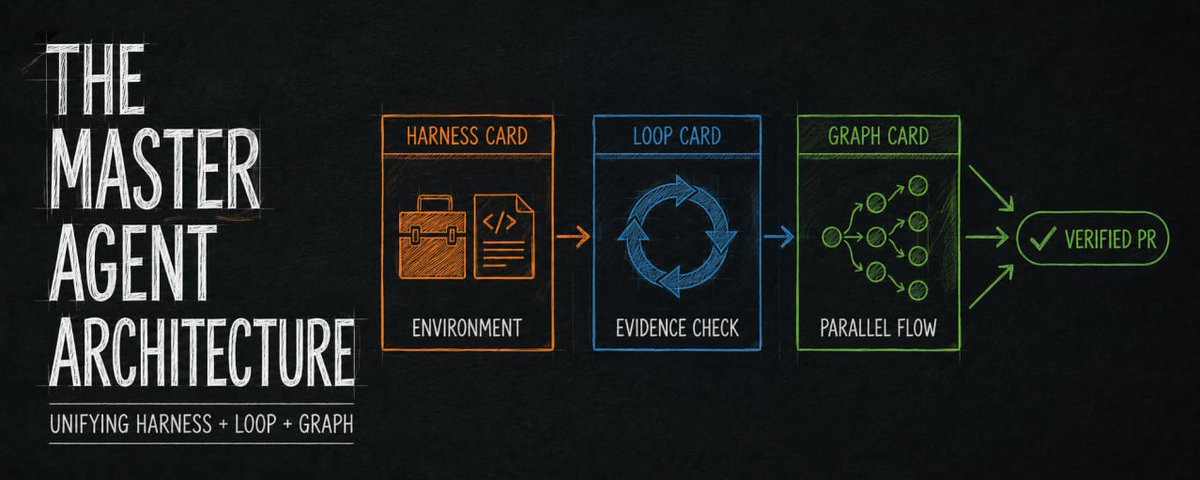
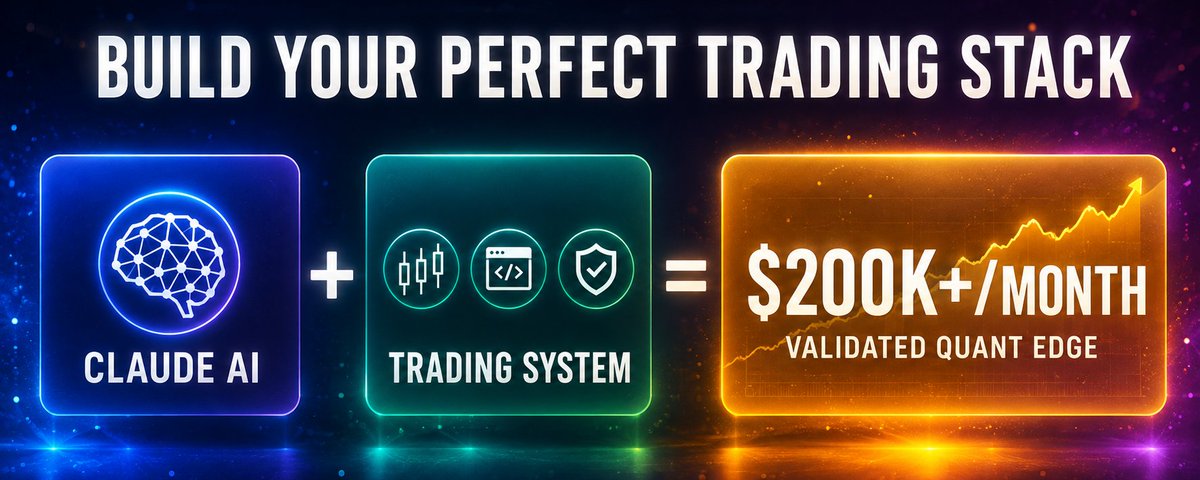
This is the $200K quant stack — rebuilt with Claude in one evening.
Full code. Copy it tonight or keep trading noise.
Most people building a Polymarket bot ship one directional bet and hope. This dashboard shows what happens when someone builds the market maker instead.
$298,841 all-time PnL. 8,117 fills in 24 hours. 50% win rate — which sounds unremarkable until you notice the strategy never needed to be right about direction. It's buying both the "up" leg and the "down" leg at different moments, on the same BTC window, waiting for the two prices to sum under a dollar.
That's the whole edge, sitting right in the dashboard's own label: complete sets under $1. Buy "up" at 29 cents. Buy "down" separately, later, when it dips to 37. Total cost: 66 cents for a pair that pays out $1 no matter which side wins. The market doesn't need to be predicted. It needs to be caught mispricing its own two halves against each other, asynchronously, thousands of times a day.
The neural shell in the middle isn't decoration. Eight live signals — inventory skew, partial fills, intra-window volatility, time to resolve — all feeding one quote engine that's re-pricing both legs in real time, 8,117 times in a single day, at an average fill size of $10.51.
This is the same category of system as the Astra agents in the post above — not one model doing everything, but narrow, specific roles, each one worth more precisely because it isn't trying to be general. A pricing bot doesn't need creativity. It needs one job, running correctly, ten thousand times in a row.


This guy built a Monte Carlo pricing engine, and it's pulling roughly $659 a day out of Polymarket.
130 days in: +$85,706 PnL, averaging just $35 a trade, running the same setup about 15 times an hour across BTC "Up or Down" markets.
Simulation, pricing, and execution run as one continuous loop.
First, the engine simulates thousands of possible BTC paths instead of making a single prediction — repeatedly modeling how the price could drift and swing between now and resolution, using a standard stochastic process built from BTC's current price, expected drift, volatility, and a random shock pulled from a normal distribution each run.
Run that 10,000 times from the same starting point and you get a spread of outcomes, not a guess.
Second, that spread turns into a probability. Count how many of the 10,000 simulated paths finish above the resolution line, divide by 10,000. Say 6,400 land above it — that's a 64% modeled probability of "Up."
If the market's still pricing "Up" at 53 cents, the model just found an 11-cent gap between what the crowd is paying and what its own simulation says the odds actually are.
Every new price tick changes the inputs, so the engine reruns the whole simulation and adjusts the next order in real time.
The actual account behind this: 47,117 predictions logged, a 52% win rate. A few of the standout trades turned roughly $250 into $1,760, just over $1,000 into $2,400, and under $200 into $1,460.
A similar Monte Carlo workflow can be run through Grok Bot, with separate agents handling the simulation, the position sizing, and the execution.


One person built a system that runs like a company with no employees on the payroll.
Fed it a goal, gave it access to a few tools, and let it run on its own schedule while checking in only to review what it produced.
Content generated, tested, and pushed out across multiple channels at once. Research pulled, summarized, and acted on without anyone opening a browser tab by hand. A workload that used to justify a team of ten, running on one login.
The gap isn't tools anymore. Everyone has access to roughly the same models. The gap is who's willing to hand a goal to a system, walk away, and trust the output enough to act on it the next morning.
That's the entire shift happening right now — not bigger teams building more, but fewer people pointing AI at a real problem and staying out of its way long enough to let it work.


this is f**king dangerous
A 19-year-old with $8,400 of credit card debt built an AI agent and gave it one order: fix this.
It hunted small freelance jobs on its own, invoiced every one, and pushed the payout straight at the balance. Day 6, the number on his screen was already moving down without him touching it.
He's not a developer. No custom code, no framework he built from scratch — just a goal, a folder it could work inside of, a schedule to run on, and him checking what it did afterward.
That's the entire skill gap right now. Not knowing how to code the agent. Knowing how to point one at a real problem and stay out of its way ↓
Be a night-shift warehouse worker in Manila.
Fire up a Grok Bot funding-rate arbitrage script.
Scan 40+ perpetual futures markets while you sleep.
Keep the funding spread synced across three exchanges at once.
Catch the half-basis-point gaps nobody's watching at 3am.
First week: +$3,100.
Started with $50.
Scaled it to $41,000 without touching a chart once.
So why are you still refreshing one ticker by hand like it's 2019?

