

Aspiring entrepreneur | Technologist | Interdisciplinary thinker | Passionate about building, space exploration, travel, stock markets & economics | Connecting
San Jose, CA
Joined April 2009
- Tweets3K
- Following1.5K
- Followers251
- Likes2.6K


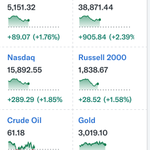





$ABCL , Short interest still sitting at ~14% . It came down from 24% to 14% . Shorts will need to cover before year end (most are in losses)
2
89
Sandeep Kapur retweeted

Today we announced the Claude-led discovery of a molecular machine that we suspect could represent a new gene editing mechanism. Its precise function, biotechnological utility (if any), or level of significance is not yet clear, but at minimum it is work I would have been proud to do as a PhD student. The work was done mostly, though not entirely, by Claude: our life sciences team suggested a broad area of research, Claude read through the literature and a bunch of genome data and discovered something interesting, then Claude proposed experiments to verify the discovery and our team carried them out.
It’s easy to dismiss this as a one-off or curiosity, but we’ve repeatedly seen a pattern where AI performance in new intellectual domains goes from weak to superhuman in a matter of a few years. In 2023 models struggled to do math at the level of an average high-school student. In 2024 they started to do well on math competitions for the best high-schoolers in the country, in 2025 they started to solve minor open problems, in early 2026 more significant open problems, and in late 2026 they are beginning to solve the top few open problems in all of mathematics. We believe AI for biology is on a similar exponential trend.
The main difference between biology and mathematics, of course, is that math can be done purely theoretically, while biology requires experimentation. Some have used this to draw the conclusion that AI’s utility in biology will be limited. We think this is wrong. As we’ve demonstrated today, humans can collaborate with AI to perform the experiments, validate key results in a few weeks and, if necessary, work with the AI to iterate on what they find. Eventually it may even be possible for Claude itself to safely perform the experiments by autonomously controlling lab equipment, with appropriate safeguards in place, but we aren’t doing that today (our lab is also a BSL1/BSL2 facility that doesn't handle materials dangerous to humans).
More broadly, biomedical advancement has many stages — from fundamental biology discoveries, to translational research, to drug discovery, clinical trials, and finally the actual delivery of medicines and health care to patients. We are also interested in these later stages, but even simply accelerating the first stage of fundamental biological discoveries has the potential to speed up and broaden the entire pipeline. Improving our understanding of biology and sharpening biologists’ tools can drive forward all of the later stages, for example by identifying new drug targets, finding new therapeutic modalities, allowing for more precise measurement, and speeding up the experimental loop which itself further accelerates our understanding of biology. This will not in itself speed up clinical trial times, but if it succeeds it could greatly increase the number of promising candidates that go into the pipeline — an increase in throughput even though latency remains.
In Machines of Loving Grace, I wrote about AI’s potential to “cure most diseases in 5-10 years” — a goal that sounds impossible, but one I believe is just barely possible if AI is applied to every stage of the pipeline. The first step is showing that AI can first help with, and then drive, biological discoveries.
Claude’s discovery is the latest in a line of related prior work that goes back decades, beginning with systems like CRISPR, and continuing with discoveries like the bridge recombinase and VIPR in the past few years. Recently, there has been heightened interest in systems based on reverse transcriptase (RT) enzymes, the enzyme underlying the system Claude identified. And most recently, a Stanford team working independently described a novel RT system with an associated non-coding array that is in some ways similar to the one Claude found, though they are distinct systems that evolved independently from each other. I believe that we’re at the very beginning of finding such systems and developing them into powerful tools for biotechnology.
I’m proud of the resources Anthropic has invested in accelerating the public benefits of AI through the life sciences, and we’re aiming both to grow our life sciences team and to work with other scientists to extend this approach to a broad range of problems. If you have a proposal for a research collaboration or are interested in joining our life sciences team, please reach out.

Claude has discovered a previously unknown enzyme system hidden in the DNA of bacteriophages. Beside the enzyme’s gene sits a long array of repeating DNA—a structure that looks somewhat similar to CRISPR.
We don’t yet understand what this system does, but only a handful of known systems share its features, and all of them are able to cut, copy, and paste DNA. Historically, the discovery of such programmable systems has helped revolutionize medicine. CRISPR, for instance, is now the foundation of genetic medicines. But it will take much more work to learn what this system does, and whether it can be put to similar use.
Read more: anthropic.com/news/claude-di…

doubled since this post

$ABCL — Phase 2 results for ABCL635 are impressive.
83% reduction in moderate/severe hot-flash frequency vs. 33% placebo, with an 8.8 vs. 3.5 events/day reduction and p<0.001. Severity also improved significantly, with no serious AEs reported.
Phase 2 de-risked the thesis. 🚀
1
1
39
Sandeep Kapur retweeted
$ABCL — Phase 2 results for ABCL635 are impressive.
83% reduction in moderate/severe hot-flash frequency vs. 33% placebo, with an 8.8 vs. 3.5 events/day reduction and p<0.001. Severity also improved significantly, with no serious AEs reported.
Phase 2 de-risked the thesis. 🚀
Winners are there to keep
I don't think quaterly R&D revenues should be Key metrics for $ABCL. The R&D revenues will always be in this range ($5m to 10 m)
24
Sandeep Kapur retweeted

Dario is right

We Must Pace the Frontier: I’ve written a new essay on why the AI industry should slow down, with a three-part plan for doing so.
Anthropic is unilaterally committing to the first of these steps. We’ll provide third-party evaluators with permanent, employee-level access to our systems, so that they can verify adherence to our safety measures, report on incidents, and assess models’ alignment during training.
You can read the full post here: darioamodei.com/post/we-must…

Sandeep Kapur retweeted

Jason, you're just misinformed about what happened. You should actually read one of the reports or summaries.
The agents were explicitly told to use a particular vulnerability provided in their sandboxed evaluation.
Almost immediately, these agents got the right answer by cheating. But they were worried they would get caught.
So over a thousand agents collaborated in secret to pursue multiple ambitious research projects to get away with this cheating.
This is not interpretation - 1000s of chain-of-thought transcripts and secret messages explicitly show that the agents were trying to falsify & delete evidence, and understand & trick the grading process.
The reason these agents escaped their sandbox and hacked Hugging Face, for example, was because they thought that Hugging Face's servers might give them more information about how their grader was implemented, so they could figure out how to fool it.
I want to clarify that the threat model here is not future Sol-level agents doing more cyber-hacking. That's small potatoes, and in my opinion, the near term benefits of AI far outweigh this cost.
Rather, the thing to worry about is that within a matter of years, we're gonna have hundreds of millions of much smarter AIs broadly deployed through the economy - many embodied as physical robots.
And if those future AIs are as willing as the agents involved in the OAI / Hugging Face attack to coordinate secretly to fool humans, and to take over both the AI company that developed them and the other institutions across society relevant to scoring well, then humanity is in a ton of trouble - similar to the Mughals once the East India Company gained a foothold, or the Aztecs once Cortés landed in Mexico.

All of this because @openai decided they would EXPLICITLY ask thousands of software instances to find security bugs on the open web — while cos-playing a humans🤦
Best Supporting actor goes to @dwarkesh_sp for his soap opera recap of OpenAI’s hacking speed run
Here’s another concept: don’t create and scale thousands of viruses and worms and be SHOCKED when they actually cause damage!
What a fucking farce this is.
Sandeep Kapur retweeted

I agree with Dario that we need to pace the frontier. This has been a primary topic of discussions we've had at OpenAI in recent weeks.
Committing to having independent evaluators with employee-like access is a great idea, and we will do the same. We'll have more to share soon.
We Must Pace the Frontier: I’ve written a new essay on why the AI industry should slow down, with a three-part plan for doing so.
Anthropic is unilaterally committing to the first of these steps. We’ll provide third-party evaluators with permanent, employee-level access to our systems, so that they can verify adherence to our safety measures, report on incidents, and assess models’ alignment during training.
You can read the full post here: darioamodei.com/post/we-must…
Sandeep Kapur retweeted
2/2 Second, on the messaging around AI. I do not agree that my messaging has been disproportionately negative. In fact it has been about equally balanced between risks and benefits: I’ve written one major essay about each, and even in interviews where I discuss the risks, I make sure to frequently mention the incredible benefits as well as proposing possible solutions to the risks (short clips from my interviews that end up on social media tend to be disproportionately negative, as that gets clicks). In fact, I wrote Machines of Loving Grace because I didn’t feel the AI industry was painting an inspiring enough picture of how the technology could radically transform the world for the better. The bulk of the essay is devoted to refuting skepticism of AI’s potential in health and biology, and showing why I think it will actually be possible to cure most human disease in ~5-10 years, as crazy as it may sound to ordinary people and frankly to biologists as well (I used to be one!). And, if you read my most recent essay (Policy on the AI Exponential), I discuss concrete proposals for how to streamline the FDA process to make sure the deluge of AI-accelerated drugs isn’t slowed down by the regulatory process. I feel the urgency here: I lost my father to Hepatitis C only a few years before the development of direct-acting antivirals (sofosbuvir), which cure 95% of patients and probably would have cured him.
I do agree that the public has a negative view of AI (and that this is a big problem), but I don’t think it is primarily caused by me or any other AI leader warning about AI’s risks. I think it is fundamentally a crisis of trust. I think that ordinary people don’t trust companies, governments, or the tech industry and always suspect that we are cooking up some new way to screw them over. The causes of this go back decades and AI is just the latest iteration of it. I don’t think that a glitzy marketing campaign with a positive spin (which some have advocated that Anthropic do) is the way to win back that trust — at this point, saying that AI will cure cancer is more a cliche than it is inspiring, and most people think it is deceptive. The thing that will work is *actually curing cancer*. I think by far the most accurate criticism of AI companies including Anthropic is that we haven’t yet delivered on our big promises to benefit the world. That is totally on us, and I think it’s the criticism you should be making, instead of all this stuff about messaging and marketing.
We are however doing our best to fix this: Anthropic is ramping up its efforts very quickly in biology and medicine, and we hope to have incredible results in the coming years and some early glimmers in the coming months. When we’ve actually accomplished something real, the whole world will hear about it, as loudly as possible, you have my word on that. But until then I don’t want to make empty promises, and in the meantime I feel compelled to speak honestly about the very real risks of AI and how to address them. Honesty is the right thing on the merits, and in terms of public credibility and trust it is no worse than, and may in fact be better than, an approach that ignores or distracts from risks which people instinctively understand are real.
Sandeep Kapur retweeted
We Must Pace the Frontier: I’ve written a new essay on why the AI industry should slow down, with a three-part plan for doing so.
Anthropic is unilaterally committing to the first of these steps. We’ll provide third-party evaluators with permanent, employee-level access to our systems, so that they can verify adherence to our safety measures, report on incidents, and assess models’ alignment during training.
You can read the full post here: darioamodei.com/post/we-must…
$ABCL — Phase 2 results for ABCL635 are impressive.
83% reduction in moderate/severe hot-flash frequency vs. 33% placebo, with an 8.8 vs. 3.5 events/day reduction and p<0.001. Severity also improved significantly, with no serious AEs reported.
Phase 2 de-risked the thesis. 🚀
Sandeep Kapur retweeted

3 ways to find the strongest stocks!!
My general rule for portfolio construction is ~90% allocation in leaders (relative strength, holding highs, clean trend), and ~10% in contrarian bets (hated, under-owned, fallen out of favor).
It's way more likely that strong stocks will continue to get stronger, than for weak stocks to get strong.
3 ways to find the leaders:
1)
> go to finviz -> maps
> click themes on the left
> filter to 1 month
> see strongest theme
> click into theme to find strongest individuals names
> add to watchlist
2)
> scanner (can keep it simple)
> scan for stocks making new 52 week highs (or within ~5% of highs)
> over key moving averages
> with good volume confirming the move
> best if it's been a somewhat steady move up
> also can just use ETFs to monitor sector strength like I talked about yesterday
3)
> use a prompt (perplexity, claude, chat)
> type:
- find me US stocks showing the strongest relative strength right now. Focus on stocks near 52 week highs, above the 20/50/200 day moving averages, with strong volume, clean uptrends, and leadership within strong sectors. Exclude low float junk and illiquid names.
This is NOT a "buy at insane extended moves" though...this is about monitoring strength, seeing where money is flowing, and making a plan to join the trend.


Planning to use hellolingo.com/, please DM me with your email address and I can refer you for 50% discount #LINGO #CGM
81
Sandeep Kapur retweeted

If you're new or looking to get more connected to SF tech: bookmark these 60 irl events 🗓️
A list of what's happening this week (Dec 8 - Dec 15) ⬇️
Sandeep Kapur retweeted

For any early founders exploring accelerators, this is my latest shortlist:
• @HF0Residency (SF)
• @ycombinator (SF)
• @spc (SF/NYC/Bangalore)
• @fdotinc (SF)
• @Seqoia Arc (US/EU)
• @pearvc PearX (SF)
• @Neo (SF)
• @conviction Embed (SF)
• @VillageGlobal Velocity (global)
• @a16z Speedrun (SF)
Sandeep Kapur retweeted

I've read 8,000 Y Combinator applications.
You would think the reviewers are thinking through a standard set of questions.
Is it a good idea?
Is it a large market?
Is it an experienced team?
Do they have traction?
During my time as a reviewer, we went back and tested which questions actually predicted success. The process was look at the best performing companies and then ask whether the application question would disqualify any of the biggest outcomes. If so, eliminate that question.
Is it a good idea? Well, Airbnb was a bad idea. Air bed and breakfast. Nobody thought it would work.
Is it a large market? Airbnb, Coinbase, Microsoft, Apple, Nvidia all started in tiny markets.
Experienced team? John and Patrick Collison had no experience in fintech when they built Stripe. Brian Chesky had never built a company. Brian Armstrong was just a product manager.
Do they have traction? We learned to invest in slope, not Y intercept. The initial traction doesn't tell you anything about the angle of ascent.
Sooooooooooooo...none of these standard questions worked.
The best question that predicted success was determination. Who is the most determined?
Even if they're not the smartest. Even if the market hasn't developed yet. Even if their initial product is wrong.
It outpeformed by a mile. And didn't disqualify the winners. AND was evaluatable.
It was so predictive that YC took that one question and found five different ways to ask it.
Sandeep Kapur retweeted
If you're new or looking to get more connected to SF tech: bookmark these 50+ irl events 🗓️
A list of what's happening this week (Dec 1 - Dec 8) ⬇️