

Head of AI Research and Applications (ex-). Amateur scholar of technology and energy. Father, nephew, second cousin. Opinions own, jokes sometimes stolen.
Sausalito, CA
Joined October 2009
- Tweets6.2K
- Following874
- Followers565
- Likes2.3K








Pinned Tweet
We could save a lot of confusion, time, and wasted effort if we stopped saying "AI" to refer to the new generative software systems such as Claude and ChatGPT. What they actually do is process patterns, so let's call them "pattern processors".
1
4
470
Sam Penrose retweeted

This is a bigger deal than people realise. If LLM training is discovering fundamentally identical latent information, we’re on a path to stop re-training from scratch and instead use training to continuously expand AI knowledge. That’s potentially a huge boon for efficiency and capability.
But it also means that LLMs are gathering something that exists in the world (I.e. concepts), as opposed to being “created” or “grown” as folks like to say.
The verb matters because something grown could presumably expand in size and resource consumption for ever, but something gathered begs the question… at what point have we gathered all the useful concepts in the world. At what point do we reach “peak concept”?
At that point, more training wouldn’t yield more capability. It would just be learning copies of the same information.

🗝️ Introducing Plato's Key. A single rotation lets independently trained LLMs use each other’s representations as their own. No gradients required ✨
With @jerrywliu, @MorrisYau, and @HazyResearch.
🧵 hazyresearch.stanford.edu/bl…
Sam Penrose retweeted

Many of the projects we built after WWII became the foundations of American prosperity. Some went awry.
But American law changed dramatically from the time we made those mistakes to the time we chose to fix them.
My latest at @TheArgumentMag: theargumentmag.com/p/what-ex…

How to read the chart: in ‘22, solar added ~2% to world electricity generation. In ‘23, ~2.5%, in ‘24 ~2.8%, in ‘25 3%. This year it has added 3%+. As long as humanity can find uses for that power — and most of humanity uses less than most Tweeters — solar will grow.

40
Sam Penrose retweeted

Hey, it's me, again. I want to zoom out on BAAJA for a second, because it’s easy to get lost in the weeds & debates about edge cases. I care *a lot* about this bill. Wanted to remind myself why.
The status quo is *terrible* for both climate and affordability. We built 888 miles of high-voltage transmission in 2024; we need 5,000 a year. More clean capacity is waiting in interconnection queues than the entire existing grid. Residential power prices are up about a third since 2019. Demand is surging, and bc clean power can’t connect, we're building a bunch of gas. If this current trend continues, gas could supply half of US power by 2040. The administration is using permitting as a weapon to stop wind and solar projects, including ones already approved. And local restrictions on wind and solar now cover twice as much of the country as in 2022.
I worked in the White House when we passed the IRA. As @BrianCDeese noted, if we had a bill like this in place first, it would have been game-changing. We invested hundreds of billions to put clean energy on sale, then watched projects get stuck in interconnection queues, permitting delays, and fights over who pays for transmission. The money was not the binding constraint; the ability to build was. Let’s not make the next Democratic administration learn that lesson twice!
It's easy to oppose stuff. But BAAJA is a *really, really big deal.* This is the first real federal framework to plan, pay for, and permit big power lines: mandatory planning between regions, clear rules on who pays (based on who benefits), and federal backstop siting that actually works across most of the country. It also ends incumbent utilities’ automatic right to build every new regional line. It will also help actually get projects online, by requiring grid planning and interconnection be done together, and stopping speculative projects clogging the queue. It should protect from political sabotage. Approved projects can’t be yanked for political reasons, and developers can sue if an administration targets a technology like wind for unfair treatment. It's the strongest data center accountability legislation in the country to ensure they pay *more* than the costs they cause and that households don’t foot the bill for AI’s grid upgrades.
This is the most important thing Congress can do for clean energy and affordability right now. We can fight about the emissions and affordability modeling about this narrow bill. But the truth is that this is the necessary but insufficient foundation *every future climate and affordability policy will be built on.*
Sam Penrose retweeted

There is an entire endorsement/advocacy/DC NGO complex built around demanding policies from presidential candidates. Candidates can resist some of this pressure, but it is not easy! And some of the endorsements matter (some of them don't). 3/
Sam Penrose retweeted

1/10 New paper with @azulaguiar and @AMonsivaisC in @rcp_journal.
When did Mexico stop being a democracy?
We argue that the capture of the judiciary, + the lack of electoral integrity in the 2025 judicial election, Mexico crossed the threshold into electoral autocracy.
Hilo🧵

Sam Penrose retweeted

Two interesting ideas here:
1) The 1974 Democratic wave coincided with the 1973 oil embargo and wasn't *just* about corruption
2) the magnitude of Trump's self-imposed oil shock was comparable in magnitude to 1973 that took down incumbent governments around the world


I started a Substack. My first post is on why 2026 is 1974 all over again, and how the same forces, fifty years apart, delivered Democrats their most decisive victory in half a century. ebwinter.substack.com/p/our-…
Sam Penrose retweeted
This insight from @jamestalarico shows why he won in a big way:
"I think it would be a mistake to interpret this election result in TX as a shift in the partisanship of the state."


"I think it would be a mistake to interpret this election result in Texas as a shift in the partisanship of the state," Talarico told me.
politico.com/news/magazine/2…

Sam Penrose retweeted
Is there a better gift on a Saturday morning than the BAAJA managers amendment? I THINK NOT. Quick thoughts below after fast read, but I am confident that this bill is now *materially BETTER* if you care about clean energy, affordability, and climate. Time to pass it, folks. 🧵
“Vanguard”: Jerusalem nails the key dynamic

Part of the problem with “economic populism” discourse is it simultaneously means broadly accepted ideas on the left like raising taxes on the wealthy & corporations, regulating social media companies & AI companies, and increased government intervention in the healthcare market. (All of this mainstream lib economists agree with)
And then there is this intellectual vanguard that also call their project economic populism but they are focused on eliminating the influence of economists, resurrecting tariffs, and treating tons of normal private market activity as presumptively suspect/worthy of govt intervention.
78
Sam Penrose retweeted

This is so wrong
The reason “Trump didn’t steal the elections” is because we & the pro-voter coalition stopped him EIGHT times over the past 21 months
Here’s how: a thread (1/x)

Sam Penrose retweeted
Last night was a historic win for Democrats.
We currently estimate Democrats will win ~57% of the two-party House vote and ~255-260 seats - the best House vote share for either party since Watergate, and likely the biggest majority in more than 30 years.


Sam Penrose retweeted

Ignore the disclaimer, this interview is well worth the time.
I learned a lot from Niko’s discussion with Jacob Glanville, and I think everyone would benefit from few hours of “hardcore immunology”.

My podcasts are way too long and way too technical. Few people have time to sit through 90 minutes of hardcore immunology!
But if there's just one idea to take away from my interview with Jake Glanville at Centivax, a company developing universal flu vaccines and antivenoms, then I think it's this:
First, influenza (and many other viruses or pathogens) mutate so rapidly that we keep getting infected by slightly different versions of them. And so the challenge of making a universal flu vaccine is to elicit antibodies that recognize many different strains, including ones that don't yet exist.
The normal approach to this problem is just to mix together antigens from many different strains and inject them into humans all together. But your immune system then generates separate antibodies against each antigen, without necessarily producing antibodies that recognize ALL of them.
(Imagine a vaccine with 20 different versions of influenza's hemagglutinin protein. Your immune system might make antibodies against version A, others against B, and others against C. But what happens when influenza mutates again, producing version 21? Your body has no antibodies.)
What we really want are antibodies that recognize regions of the virus that rarely change! These so-called "conserved epitopes" are more likely to be shared across past, present, and future strains of ther pathogen.
So Jake, noticing this problem, invented a thing called conservation–concentration coupling. The gist is that, instead of injecting ALL of the antigens into a human at high doses, you deliberately lower the concentration of each one. There's only a tiny bit of each antigen in the vaccine, in other words; too little to elicit an immune response on its own. (If a B cell comes along and recognizes only antigen A, that B-cell won't become strongly activated!)
If, however, a B cell comes along that recognizes some converved region across MANY of the antigens, and it can bind to all of them, then it WILL become activated. Even though each individual antigen is present at a very low concentration, the B cell effectively encounters 20 times as much antigen, or 20x the normal dose. It is stimulated enough to proliferate, while the B cells recognizing only individual strains get "outcompeted."
In other words, you're using antigen concentration to bias the immune system toward making broadly reactive antibodies. This is the key idea behind Centivax, and they've gotten really compelling data that this actually works in mice and humans (~180 patients in their phase I, which is now finished.)
Sam Penrose retweeted

I complain plenty about Oakland city government. But at dinner 2yo swallowed something wrong and started choking. She was still breathing, but with difficulty. When she couldn't talk or make sounds above a whisper we called 911.
You're not supposed to do the Heimlich if the airway is only partially obstructed, apparently, but this meant there was nothing to do at all except stand there and encourage her to cough. "Yell," we would suggest to her between coughs, and she'd make these concerning little whistley sounds.
I think the first police officer was on our doorstep in like 3 minutes, and a fire truck and ambulance within 5. Of course the minute they arrived she coughed successfully and was completely fine.
But if she hadn't been - and when this kind of thing happens it's impossible not to play out what happens if it hadn't been - help was minutes away.
Sometimes it feels like I owe more to our civilization than I could ever possibly repay. I write blog posts, and raise kids, and if I ever need it a dozen strangers will be at my doorstep with unfathomably complicated emergency medicine. I am grateful to the cops and the firefighters and the paramedics and the city of Oakland. I will probably sentimentally vote for some of the bond issues I was on the fence about even though we already have the highest taxes in the Bay.
She's fine. We sang happy birthday to her Mommy a couple minutes later, and she sang the loudest.
Yes, except it was needed a decade before AI started the next wave of change.

We need to remake all our industrial age systems, including education, social security, taxation, healthcare, infrastructure , permitting, etc. Politicians are still in denial about the degree of change that is necessary in light of artificial intelligence.
1
1
347
Sam Penrose retweeted

This isn't a tsunami or anything like that. This is a complete collapse of the Republican coalition.
The New Yorker publishes meticulous first-person narratives. Waymo saves lives, preventing narratives from occurring. Predictably, their writer devotes much of the essay to When The Waymo Went Wacky anecdata rather than grappling with public health and freedom at scale.

Waymo wants us to give up the car keys. But what are we if not drivers? Molly Fischer on the view from the back seat. newyorker.com/magazine/2026/…

1
1
141
Contrast with this outstanding @megmccarron story on how automation plays out in our restaurant industry: nytimes.com/2026/11/03/dinin…

17
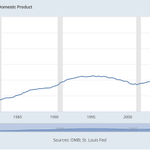
The argument that GDP fails to full capture technological domain shifts is central to, e.g., Gordon’s _Rise and Fall of American Growth_. So yes AI, but also plumbing, supermarkets ...

An anecdote on AI and GDP: My phone had a weird rare bug and wouldn't boot. Instead of buying a new one for $$$ or having it repaired for $$ I used my $20/month AI subscription to debug it, reinstall the OS from an image, and now it's as good as new. By doing this I used **way** more intelligence to solve my problem than I'd normally do, but overall I counterfactually did not increase GDP as much. I am not an expert on this, but if many more things are shaped like this = hungry for intelligence but as a result less GDP-generating, could this be limiting the impact abundant AI will have on growth as we measure it?
1
55