

Join the Orbit — Spot the Change. Connect the Layers. Find What's Next.
Orbit Research
Joined January 2024
- Tweets4.3K
- Following15
- Followers2.6K
- Likes661
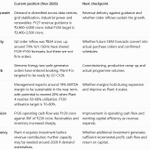
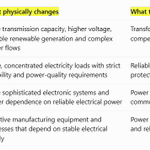


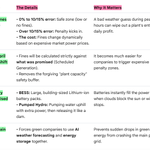
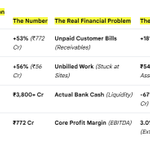


For a moment, if you sideline Coal India and look at RARE EARTH PERMANENT MAGNET MANUFACTURING.
What can we think about?
If you map the complete rare-earth permanent magnet value chain, there are 3 layers.
Upstream – Rare earth ore mining, mineral processing and separation, NdPr oxide production and the availability and processing of heavy rare earths such as dysprosium and terbium.
Midstream – NdPr oxide to rare-earth metal, metal to NdFeB alloy, strip casting and alloy processing, hydrogen decrepitation, jet milling, magnetic-field pressing, sintering, heat treatment, grain boundary diffusion, precision machining and surface coating.
Downstream – EV traction motors, wind turbine generators, industrial motors and BLDC fans, defence and aerospace systems, and consumer electronics.
Now, why should we look at this ecosystem?
India's estimated rare-earth permanent magnet demand is projected to reach around 8,220 tonnes annually by 2030.
Against this, the government has introduced a scheme with an outlay of ₹7,280 crore to establish 6,000 TPA of integrated sintered NdFeB magnet manufacturing capacity.
So, even if the entire proposed capacity comes up, it would still be below the projected domestic demand. This leaves room for additional domestic capacity, provided the economics and execution work.
But setting up magnet manufacturing facilities is only one part of the requirement.
Building this ecosystem will require several specialised capabilities, processes and equipment.
This is where the second order opportunities come in.
These include:
- Rare-earth metal production
- Specialised alloy manufacturing and strip casting
- Powder processing and precision equipment
- Hydrogen handling and inert-gas systems
- Magnetic-field pressing
- Vacuum furnaces, sintering and heat treatment
- Grain boundary diffusion
- Precision machining and surface coating
- Testing, inspection and qualification
There will also be requirements for specialised process chemicals, industrial gases, solvent extraction, industrial automation, process control, maintenance and magnet recycling.
But if you look at the entire chain, NdPr oxide availability is one of the important upstream dependencies.
For the proposed 6,000 TPA magnet capacity, the estimated NdPr oxide requirement is around 2,000 tonnes annually.
The government's scheme identifies up to 500 TPA of assured supply from IREL for selected beneficiaries.
So, additional sourcing and processing capabilities will be important if India wants to scale domestic production.
And this is not the only constraint. India will also need capabilities in oxide-to-metal conversion, alloy manufacturing, specialised processing equipment and customer qualification.
This is where I think the opportunity could emerge.
It may be in NdPr oxide-to-metal conversion, rare-earth alloy manufacturing or integrated sintered magnet manufacturing.
These are the capabilities India is specifically trying to establish.
There are already some interesting developments in this direction.
#AshviniRareEarth has established a pilot plant for NdPr metal production, #PGTech is working on molten salt electrolysis and #ARCI has established a pilot facility covering the process from strip-cast alloy to finished sintered magnets.
The companies that can be studied here include #Midwest, #20Microns, #MegathermInduction, #Electrotherm, #MIDHANI, #PTCIndustries, #PermanentMagnets and #Thermax.
We should also track IREL, NFTDC, ARCI, Ashvini Rare Earth, PG Tech and PolyProtic Chemicals for their roles in developing upstream and midstream capabilities.
However, their exposure is different.
Some are directly involved in magnet manufacturing or have participated in the manufacturing scheme. Others have capabilities in metallurgy, equipment, materials or downstream magnetic products that could potentially become relevant as the ecosystem develops.
The important thing is to understand where the spending will happen, which capabilities will be difficult to build and which companies can actually capture that spending as this ecosystem develops.
#OrbitResearch

So, Midwest wins LOI for 1,200 MTPA rare earth magnet project under ₹7,280 crore government scheme.
1
3
782
Highest research priority:
Midstream - specifically, rare-earth metal conversion and NdFeB alloy manufacturing.
Why?
- India needs to move beyond importing processed rare-earth materials.
- NdPr oxide must be converted into metal and then into specialised NdFeB alloy.
- These are critical inputs for sintered permanent magnet manufacturing.
- Developing these capabilities creates strategic dependence on domestic suppliers.
2
270
Don't rush, read it carefully and understand what exactly is changing, what is gradually coming as the HVDC projects move forward and how all of this connects to the wider power sector.
#POWERGRID incurred ₹16,864 crore of consolidated capex during H1 FY27 with transmission works in hand of approximately ₹2.20 lakh crore as per its Q2 presentation. It emerged as the successful bidder for six transmission projects during Q2, including the ±800 kV Barmer-II–South Kalamb HVDC project. Its first synchronous condenser at Fatehgarh II also points towards investment beyond conventional transmission infrastructure.
#BHEL reported Q2 revenue of approximately ₹9,300 crore, up 24% YoY, and PAT of ₹810 crore, up 120%. Its order book stood at approximately ₹2.58 lakh crore, including around ₹13,600 crore of transmission orders. Its involvement in HVDC, converter transformers, reactors and other power equipment makes it important to track as transmission investment expands.
#HitachiEnergy reported Q2 order intake of ₹4,120.8 crore, up 85.9%, and revenue of ₹2,996.5 crore, up 63.5%. Its backlog reached a record ₹33,335.4 crore, with an operational EBITDA margin of 16.5%. Orders included power transformers, STATCOM, cooling systems, AIS and GIS, while its service orders grew 77%. It is also investing ₹4,000 crore across its manufacturing expansion programme, including the Karjan facility.
#GEVernova reported Q2 order intake of approximately ₹2,440 crore, taking H1 intake to approximately ₹3,580 crore, with a backlog of around ₹21,440 crore. Its manufacturing expansion, HVDC project execution and deeper localisation are important developments. Management is also highlighting opportunities in grid automation, software and asset performance management, with meaningful HVDC revenue contribution expected from FY29 onwards.
#Siemens reported Q2 new orders of ₹6,228 crore, up 37.8%, revenue of ₹5,734 crore, up 17%, and an order backlog of ₹47,034 crore. Its grid infrastructure and automation businesses are important areas to track within this growing order pipeline.
At the same time, #NTPC has 11.6 GW of renewable capacity, around 15 GW under implementation and 6.4 GW under tendering or award, alongside expansion into storage and other generation technologies. Q2 consolidated revenue was ₹54,270 crore and PAT was ₹7,351 crore.
#NHPC has 9,204 MW of projects under construction and a 1,500 MWh BESS allocation. It also commissioned additional capacity at Subansiri Lower, including its fifth 250 MW unit in October.
#JSWEnergy has crossed 15 GW of installed capacity, adding 1.7 GW during H1 FY27, including 1.4 GW of renewable capacity. Its locked-in storage capacity stands at 29.6 GWh, and management has indicated that land, transmission connectivity and equipment supply are secured for its remaining projects.
But the opportunity is not limited to these large companies.
#KSHInternational received a trial order for two HVDC transformers in Europe from a major HVDC manufacturer and signed a five-year supply framework agreement with Hitachi Energy Global for CTC and insulated rectangular conductors. Capacity utilisation was around 76%, with specialised wires above 80%, as its manufacturing capacity continues to expand.
#QualityPower has started manufacturing at its Sangli coil factory and Turkey PCS factory. Its WinWin acquisition has secured 800 kV HVDC insulator orders and 765/400 kV AC orders, adding exposure to HVDC and FACTS components, BESS power conversion and high-voltage insulators.
#TARIL reported Q2 revenue of ₹709 crore, up 66% YoY, an EBITDA margin of 16.1% and an order book of ₹7,237 crore. However, its HVDC qualification and commercial participation timeline is now at least 18 months away.
Now, connect these developments with CEA, the Ministry of Power and Grid-India. Their plans, requirements and projections can help us understand what is gradually changing and what the power sector may need in the coming years.
The transmission planning framework identifies 50,890 circuit km of transmission lines and 433,575 MVA of substation capacity, with estimated investment of ₹2.44 lakh crore for renewable integration. The planning framework covers approximately 537 GW of renewable capacity, including large hydro.
CEA's Cyber Security in Power Sector Regulations 2026 also introduce defined requirements for protecting connected IT and operational technology infrastructure. The general effective date is 1 April 2027, subject to specific provisions.
Because if generation capacity is expanding, transmission infrastructure is being developed and HVDC projects are coming up, the requirement is not limited to moving electricity from one place to another.
The grid is becoming more difficult to operate and control.
The grid is becoming more dependent on storage, digital systems and secure communications.
So, where will the pressure appear?
- HVDC, EHV transformers, converter transformers, GIS, switchgear and conductors.
- STATCOM, SVC, synchronous condensers, reactors and capacitors.
- Protection relays, digital substations, SCADA/EMS, PMU/WAMS and automation.
- PCS, inverters, converters, control electronics and battery management.
- Cybersecurity systems, secure gateways, network protection and monitoring.
- Converter valves, power semiconductors, DC switchgear, HVDC cables, testing and qualification.
We have the option to look at companies like GE Vernova and Hitachi Energy, which are directly connected to large HVDC and grid infrastructure projects. They already have substantial order books, established technology and a visible project pipeline.
Or should we look at the companies connected to the next layers, such as grid automation, substation automation, cybersecurity, power semiconductors and other specialised components?
The recent developments at KSH International and Quality Power also show how the opportunity can extend beyond the main HVDC system integrators into specialised components, power conversion and high-voltage equipment.
Both types of companies may benefit from the changing power sector, but the nature of the opportunity, the time required, the risks and the potential returns could be very different.
So, before deciding which companies to focus on, we need to understand the complete chain.
- What Physically Changed?
- Why Did It Change Now?
- What Does This Reveal?
- Map the Physical System
- Trace the Dependency Chain
- Find the Constraint
- Identify Who Controls the Constraint
- Identify Who Is Forced to React
- Where Does Value Accumulate?
- Who Captures the Value?
- What Is the Market Assuming?
- Are Those Assumptions Correct?
- Does the Market Understand This?
- What Will Change the Market's Mind?
- Validate with Evidence
- Map the Return Timeline
Welcome to the Orbit Research.
drive.google.com/file/d/17JQ…
If you have to choose just one sector out of these three to focus on, which one would you choose?
CDMO
Power
Castings / Forgings / Bearings
And more importantly, why?
Today, @soicfinance published a report covering 34 companies and 255 growth catalysts across these three industries, the data is sourced from @stockscansin.
I went through the entire report and tried to look at it a little differently.
Because when you look at a report like this, it's easy to focus on the number of catalysts, revenue targets or expected growth rates of individual companies.
But does having more growth catalysts necessarily mean that a sector offers a better opportunity?
I wanted to understand something else.
What is actually changing in the economy? Where is that change creating spending? And which areas are likely to benefit as that spending moves through the value chain?
When I looked at all three sectors from this perspective, Power stood out.
Let me explain why.
Take #Hitachi Energy India.
The company is executing two 6 GW HVDC projects. At the same time it is investing 2,000 crore in its Karjan plant which will add 30–40 GVA of transformer capacity.
Then look at #KSH International.
It has received 37 HVDC transformer-winding orders and signed a five-year supply framework with Hitachi Energy.
Now these are important developments but I think there is a bigger opportunity to understand here.
If we look at what is happening in the power sector, the requirement is not just to build more transmission capacity.
As renewable capacity increases and more power needs to be transmitted across longer distances, the grid also has to manage changing power flows, maintain stability and protect itself against disturbances.
So, the spending requirement can extend beyond HVDC projects.
We could see increasing requirements for grid stability, reactive power, protection systems, grid automation, substation automation and eventually grid cybersecurity.
The same economic change can create spending across multiple layers of the value chain, some requirements are already translating into orders and capacity expansion while others could become more important as the grid evolves.
That is why I think we need to look beyond the obvious companies executing large projects and identify where the next constraints and spending requirements could emerge.
Now, this doesn't mean the other two sectors don't have opportunities.
Look at CDMO.
#Acutaas has moved its 1,000 crore CDMO revenue target from FY28 to FY27. It also has four validated products expected to start contributing, each with a projected peak revenue potential of 50–100 crore annually.
In Castings and Forgings, #HappyForgings has secured around 300 crore of annual data-centre-related orders and is investing ₹650 crore in its heavy-forging business. Revenue from the new line is expected to start in Q3–Q4 FY28.
So, there are meaningful opportunities across all three sectors.
But when I compare the nature of the demand, the spending requirements, the bottlenecks and the potential for further spending across the value chain, my current assessment is that Power has the strongest structural opportunity among these three, particularly around grid stability and protection.
I have put together a Change Analysis Report covering all three sectors, looking at what is changing, where the spending is moving, where bottlenecks may emerge and which companies could benefit.
The idea is to look beyond which companies have growth catalysts and understand what is changing in the economy, where the money is going and who is positioned to capture it.
#OrbitResearch
drive.google.com/file/d/1Co_…
Why are people always curious about defence stocks?
National security, huge budgets, unavoidable spending or what?
We all know the kind of returns defence stocks have given over the last few years.
Look at the order books:
#HAL: ₹2,54,538 crore
#BDL: ₹26,176 crore
#BEL: ₹73,882 crore
And then we have #ParasDefence, #DataPatterns, #ZenTechnologies, #AstraMicrowave, #ApolloMicroSystems, #MazagonDock, #Raymond and others.
But if you are looking at defence now, why limit yourself to the companies that everyone already knows and tracks? What about the companies supplying the materials, components and systems required to deliver these orders?
Take HAL. It consumed ₹24,456 crore of materials and components in FY26 of which ₹19,459 crore was imported.
BDL has identified 3,143 imported components and Tier-1 vendor items for indigenisation. It also reports that 228 critical components have been indigenised through the SRIJAN ecosystem.
BEL, meanwhile, has requirements across specialised RF and microwave components, MMICs, semiconductors, processors and other electronic assemblies. It has also identified foreign OEM dependence, critical component sourcing and supply delays as challenges.
Now think about what connects these companies.
An aircraft, missile, radar or warship depends on a much wider supply chain and if production has to increase across these companies, the requirements for materials, components, specialised manufacturing processes, electronics, machinery and testing also become important.
Where will the pressure build? Which requirements will need to be solved and are there only a few companies with the capability, capacity and approvals to meet them?
That is where I think we need to look beyond the final manufacturer.
Take Mazagon Dock. It has identified 174 submarine equipment items for indigenisation. Of these, 55 have been indigenised and 45 are under active development.
But identifying a requirement is only the starting point. We still need to find who can manufacture these items, who can qualify, who will receive the procurement orders and, most importantly, who can capture the money.
Because not every requirement becomes an investment opportunity. Some capabilities already exist, some products may be sourced from existing suppliers and some areas may not have a real supply constraint at all.
So, when I connect the requirements across these defence companies, these are the areas to investigate:
- Precision manufacturing
- Specialised materials
- Specialised manufacturing processes
- Defence electronics and subsystems
- Production machinery and automation
- Testing and qualification
The idea is not to buy every company operating in these areas. It is to find where spending is likely to increase, where supply may struggle to keep up and which companies are actually in a position to solve that problem.
I think this is a much more useful way to find opportunities beyond the defence stocks that are already widely tracked.
But there is another part to this.
Even if we identify the right business, how long will it take for the opportunity to translate into results? 6 months, 1 year or 2 years?
And will the market wait until those earnings show up?
Not necessarily. The market starts pricing in what it believes will happen next. So, a company can be doing well operationally but its stock may not perform if expectations are already high or if the market is waiting for stronger evidence.
That is why we need to look at the business opportunity, the company's ability to capture it, the financial results, market expectations and the price we are paying.
I have been working on reports across different sectors, and I think the same approach applies beyond defence.
Instead of looking at every sector and every stock, understand 2 or 3 sectors well. Connect the requirements, understand where the money is going, find who can capture it and build conviction.
Because knowing the sectors and the stocks is one thing.
Understanding why a particular company can benefit, and having the conviction to act on it, is another.
drive.google.com/file/d/1UWL…
If you remember one month ago I posted about the Growth Catalysts report covering 100 companies where I divided the opportunities into three categories:
- where growth may already be visible and rerating may be harder
- where expectations based rerating may be possible
- where the spending opportunity looks Strong but the business case is still developing
This analysis was based on the report published by @stockscansin by SOIC.
Around 10 days ago, StockScans by SOIC published another Growth Catalysts report, this time covering 250 companies.
This report looked at what businesses are planning, what management has committed to and where the next phase of growth could come from through capex, order books, new products and other opportunities.
Now, if you look at both reports together, you will see that they look at growth from two different angles.
The first helps us understand where growth may already be visible.
The second helps us understand where businesses are preparing to grow next.
So I picked up the latest report and decided to look at it differently this time.
Instead of looking at companies one by one, I started looking at the spending pools and supply chains.
why?
Because when money starts moving across different industries, the opportunity is not always limited to the companies directly working in those industries.
The companies supplying the products, equipment and systems behind them can also benefit.
So I wanted to understand where this money would go, which companies would receive that spending and whether some of the same products and systems were needed across different industries.
Then I connected both reports and this is where things started getting interesting.
Let's start with power and grid infra.
In the 100-company report, #AparIndustries reported overseas utility conductor orders exceeding ₹2,800 crore, with deliveries spread over four years. #DiamondPower reported ₹435.71 crore of hyperscale campus orders from L&T, Sterling & Wilson and Blue Star, along with another ₹52.86 crore from Aurionpro.
Now look at the latest report.
#CGPower's Power Systems order intake reached ₹6,258 crore in Q2 FY27, up 137% YoY. Its unexecuted order book reached ₹18,964 crore, up 81%, while its switchgear facilities were already operating at peak utilisation.
If you put these developments together, what do you see?
Demand is growing across transmission equipment, transformers, switchgear and other electrical products.
But is this demand coming only from the power and grid sector?
Let's look at data centres.
In the earlier report, #TDPower Systems had signed a 10-year generator manufacturing framework agreement with Siemens Energy, along with repeat orders for gas turbine and gas engine applications linked to US data centres.
#HFCL reported an approximately US$1.1 billion optical fibre cable supply contract and an order book of over ₹850 crore for data-centre connectivity.
And in the latest report, CG Power received a ₹900 crore order from Tallgrass for 330 kV transformers serving a US hyperscale data centre.
Now, if you connect this with what we just saw in the power sector, something becomes clear.
The spending is coming from different areas but we are again seeing orders reaching companies supplying generators, transformers, cables and electrical equipment.
So the opportunity may not be limited to one industry, the same companies and products could be linked to more than one spending pool.
Now let's move to aerospace and defence.
The earlier report included companies such as #PTC, #MTAR, #RossellTechsys, #CyientDLM and #Avalon, which are connected to specialised components, aerospace manufacturing and electronics.
In the latest report, #Aequs has a single-source A320 wheel assembly agreement with Safran running through 2042.
#Unimech has more than 250 qualified aerospace parts with another 340-plus in the pipeline.
#ApolloMicro has sole-supplier positions for selected electronic processing systems and sensors in defence programmes.
Now, if you look beyond the company names and orders, what do you notice?
We are again seeing demand for specialised components, precision manufacturing, electronics, sensors and control systems.
The products are different but some of the same capabilities are needed here as well.
And then there is another connection: semiconductors and power electronics.
#CGPower has started commercial production at its OSAT semiconductor facility.
#SterlingTools has started commercial supplies of domestically manufactured HVDC contactors and relays, with seven customers receiving products.
#RIRPower Electronics has received its first overseas order for 120 press-pack SCR thyristors.
Now, why am I connecting all these developments?
Because if you look at the grid, data centres, aerospace and defence together, you will start seeing some common requirements.
Power electronics. Sensors. Electronic systems. Communication. Protection. Monitoring and control.
Electronics, Sensing and Intelligent Control.
This is the common layer I started seeing when I connected both reports.
Think about it, we are not looking at just one industry or one spending pool, we are looking at a layer that is needed across several different areas where money is being spent.
So what if, instead of looking at these industries separately, we start looking at the companies supplying this common layer?
So, how did I reach this conclusion?
This report is all about answering these questions.
#OrbitResearch
drive.google.com/file/d/112Z…
If you can forget the next 10% upside or downside then realistically how can you think about the opportunity you are having now?
See, on March 30 #Nifty came down to 22331 and #crude was around $107.
Then, on April 21 Nifty reached 24576 while crude oil came down to $98. On April 29, crude oil touched $118 and Nifty was at 24177.
Again, on June 8 Nifty came down to 23123 while crude oil was around $87.17
Now look at October 23. Nifty is at 22600 and crude oil is around $116.91
And today is October 26.
So, for a moment think about the situation we are in now, the market can move either way from here, stocks may fall another 10% or it may recover. We don't know.
But the question is not just when the market will recover, the question is when the market recovers how will you be positioned to capture it?
I mean, if you can look beyond the next 10% upside or downside what are the best opportunities you have right now?
You must be seeing a lot of opportunities here and there and you are also having stocks in your portfolio.
So, how strong is your list now? will you add more to what you are already holding, take some fresh positions or keep your capital available for later?
Why am I asking this?
Because finding a stock that can go up is one thing, deciding whether it is the best use of your capital is another.
Let's say you have three stocks that have corrected around 30%, one has a mcap of ₹50k or more, another has ₹10k crore or more and the third has ₹1k crore or more.
Which one would you choose?
The smaller company may have more room to grow but it may also carry execution risk, the larger company may offer better visibility but perhaps less upside at its current valuation.
So, how do you compare them? what return can each realistically deliver, how likely is that outcome and how long will it take?
Now let's look at some actual examples.
#HitachiEnergy is down around 32%, #KirloskarOil is down around 34% and #KRN is down around 40%.
Or take #ShilpaMedicare which is down around 21%, #AzadEngineering which is down around 21% and #MacpowerCNC which is also down around 21%.
Now, the correction is only one part of the picture, these companies have different businesses, growth drivers, valuations and risks.
So, if you have to choose just 1/2 out of these 32 stocks, how will you decide?
What are the signals? What is the evidence? What are the next checkpoints?
What needs to happen for earnings to grow? And what is the recent volume telling you when you look at it alongside the price action?
Because a stock being down 30% does not automatically make it cheap and a stock being down 20% does not automatically make it expensive.
You have to understand what is changing in the business, what the market is expecting and what could happen next. Then you have to compare that opportunity with the alternatives available to you.
This is where opportunity cost matters.
If you put your money into one stock, you are choosing not to put it into another. You may also be choosing not to add to an existing holding or to keep some cash for a better opportunity later.
So, the question is not just which stock has fallen the most, Its which stock offers the best potential return relative to its probability, the time required, the risk involved and the other opportunities you have.
For that purpose, I have selected 32 stocks and extracted some signals from each one.
Yes, there are many more. I will upload another list tomorrow but for now look at these 32 stocks and think about how you should approach them.
The idea is to compare them, narrow down the choices and decide where your capital has the best chance of generating a return over the next year.
#Orbit_Research
drive.google.com/file/d/1fy-…
Look at what is happening across cybersecurity.
GitLab had a critical vulnerability rated 10/10, LiteLLM was poisoned with a password stealer, at eMudhra weak private keys used in digital-certificate infra could be recovered and a Medi Cal billing provider reported a data breach affecting around 970k people.
These are different incidents but they point to a bigger problem - security risks are emerging across software, identity systems, data, networks and critical infrastructure.
Now, if you look at this from an investment perspective when cybersecurity risks increase where does the money actually go?
This is where you need to understand the cybersecurity value chain.
Look, whenever you are choosing a cybersecurity stock first understand which security layer you are actually betting on.
I mean, there are multiple layers in cybersecurity.
Network security, endpoint security, identity security, cyber resilience and data security are some of the established areas where you can find spending and company positioning.
But you also need to look at where the industry is going - AI Agent Security, OT/ICS, and Critical Infrastructure Security are areas worth tracking as new tech and connected systems create new security requirements.
So, let's look at eight US cybersecurity stocks and where they operate in this value chain.
$PANW — Palo Alto Networks has a strong presence in Network Security and is expanding across other security layers, the stock is up 90% YTD.
$CRWD — CrowdStrike has a strong presence in Endpoint Security, the stock is up 100% YTD.
$FTNT — Fortinet is another major player in Network Security is up 120% YTD.
Now look at $NET and $ZS.
Cloudflare and Zscaler operate across different parts of application, network and cloud security, cloudflare is up 50% YTD, Zscaler is up 60% over the last six months, although its 1Y return remains negative at 29%.
$OKTA — Okta focuses on Identity Security, the stock is up 130% YTD.
$S — SentinelOne focuses on Endpoint Security, the stock is up 50% YTD.
$RBRK — Rubrik operates in Cyber Resilience and Data Security is up 52% YTD.
These companies operate across different parts of cybersecurity. Their business models, growth drivers, and ability to win customer spending are not the same.
So, does the stock that has gone up the most automatically become the best investment? Not necessarily.
And does an underperforming stock automatically become cheap? No.
The objective is not to find the fastest growing company or the stock with the highest return, its to find where spending is going, how companies are positioned and whether their business performance can justify market expectations.
And this is not just about US stocks.
Once you understand how the global cybersecurity value chain works, you can start identifying Indian companies connected to the same technologies, products and global players.
I'll share the Indian cybersecurity stock ecosystem soon.
In the document pages 1–72 contain the company specific analysis, from page 73 onward you'll find comparisons of the companies and security layers, their stock returns the available evidence and what it indicates.
drive.google.com/file/d/1l7d…
Arihant's Bharat Connect event included 19 entries across 18 companies with expected growth rates, timelines and management's reasons for growth.
Inox Wind has guided for 75% growth in FY27, Accord Transformer for 70–80%, while HFCL and Avience Biomedical have also given guidance of 60%+.
#HFCL reported Q1 FY27 revenue of ₹1,915 crore, compared with ₹871 crore a year earlier with an EBITDA margin of 23.25%. It's also planning ₹640 crore in capex for FY27.
#AccordTransformer has an order book of around ₹156 crore but some finished transformers were waiting for dispatch or customer clearance.
With #InoxWind, I think the order backlog is around 4.4 GW.
#AvienceBiomedical has guided for at least 60% growth in FY27 with a new manufacturing facility expected to start production in October.
See the difference? HFCL has reported a sharp rise in revenue, Accord has orders awaiting dispatch, Inox Wind has a large order backlog and Avience is looking to add manufacturing capacity.
These are different situations, so we need to check different things for each company.
And even if a company delivers, its stock may not do well if the market has already priced in that growth.
I've analysed all 18 companies in a report, covering what looks strong, what needs investigation, what could go wrong and where to focus next.
The aim is to find companies where the evidence supports the guidance and identify what we need to track next.
- Orbit Research (link in bio)
drive.google.com/file/d/1UqY…
Caliber Mining & Logistics is up more than 10% today.
Yesterday, news came out about coal shortages disrupting power supply and forcing some Indian factories to face blackouts.
#Coalindia is targeting 850 MT of coal supply in FY27, up more than 14% from last year. Its longer-term target is to produce around 1 billion tonnes of coal a year by FY30.
To get there, it has 29 mining projects planned under the MDO route, with a combined capacity of 254 MT a year. Awards have already been issued for 9 of these projects. Coal India also approved 13 mining projects in FY26, adding around 22 MT a year of capacity.
Now look at #Caliber.
More than 80% of its revenue comes from Coal India. In Q1 FY27, Caliber's coal extraction grew 27% YoY to 1.54 MMT, while overburden removal grew 52% to 43.37 million BCM.
It has a ₹9,124 crore order book and management is guiding for 45–50% revenue growth in FY27.
The connection is direct, if India needs to secure more coal supplies, Coal India may need to step up mining, that means more work could come to the contractors who remove overburden and extract coal.
Caliber already works in this part of the chain.
Maybe the market is betting that the push for more coal will create more opportunities for companies like Caliber.
-Orbit Research
20
1,543
As you know the market has been in a downtrend lately and what a time to get a report like this, based on growth catalysts.
If you already have a good portfolio or watchlist, you can match it with these catalysts to see what you might be missing, if not you can use this approach to find where to look and which companies to track.
Let's see how we can do that.
So, if there are 762 growth catalysts across 100 companies, how do you filter them to find where the change is happening first?
More importantly, where are the spending pools growing and where is the money moving?
Yesterday @stockscansin published a report covering 762 growth catalysts.
The first step is to break them into categories.
- Capacity, commissioning and utilisation: 29.0%
- Orders, contracts and customer commitments: 11.9%
- New products, qualification and commercialisation: 11.5%
- Margins, product mix and operating efficiency: 10.1%
- Acquisitions, mergers and portfolio changes: 8.0%
- Capital allocation and balance sheet: 7.6%
- Exports and market expansion: 6.3%
- Distribution and customer reach: 5.0%
- Industry demand, policy and external drivers: 4.9%
- Asset monetisation and project pipeline: 2.4%
- Other or mixed catalysts: 3.3%
See, now you have a starting point.
But these numbers alone don't tell you where the next opportunity is, you need to understand what is changing, why it is happening now and what that change could force the industry to do next.
From the report, three areas stand out to me.
1. Grid Modernisation and Automation
- Substation Automation, Distribution Automation, Protection Relays, Numerical Relays, Power Quality, Grid Stability, etc.
2. Data Centre Power Delivery and Reliability
- Power Distribution, Switchgear Systems, Busbar Systems, Energy Storage, Thermal Management, etc.
3. Aerospace, Space and Defence
- Aerospace Castings, Precision Machining, Engine Components, Surface Treatment, Special Processes, etc.
Why these three?
Because you need to understand where spending is increasing, what new requirements are emerging and which companies can turn those requirements into sustained earnings over the next few quarters.
Let's look at some of the evidence.
Grid and Power
#AparIndustries: Two overseas utilities placed conductor orders worth more than ₹2,800 crore, with deliveries spread over four years.
#DiamondPower: Reported ₹435.71 crore in hyperscale campus orders and another ₹52.86 crore from Aurionpro. Management targeted ₹1,000 crore in data centre orders by March 2027.
Data Centres and Connectivity
#SterliteTechnologies: Reported a US$1.11 billion connectivity award for FY27–FY29, with orders to be placed periodically.
#HFCL: Reported a data centre connectivity order book of more than ₹850 crore.
Battery Materials and Storage
#NeogenChemicals: Management targeted ₹300 crore in FY27 revenue and more than ₹1,000 crore in FY28 as its battery electrolyte business expands.
#Kabra: Reported a ₹133 crore contract linked to its battery energy storage business.
Semiconductors and Electronics
#RashiPeripherals: Reported 131% growth in semiconductor revenue.
#CyientDLM: Reported an order book of ₹2,420 crore.
#SahasraElectronics: Targeted ₹50 crore in semiconductor revenue and had an eSIM commitment for 5–10 million units.
Aerospace, Space and Defence
#RossellTechsys: Reported a multi-year space programme contract worth around ₹400 crore. Management guided for 300–400% combined revenue growth in its space and semiconductor businesses in FY27.
#PTCIndustries: Reported a ₹110 crore BrahMos order for titanium castings and a separate development and supply order from Blue Origin for superalloy castings.
Pharmaceuticals
#KwalityPharma: Its hormone plant targets ₹70–80 crore in FY28 revenue and ₹200 crore by FY29. Management also targeted ₹400–500 crore from bioequivalence-related opportunities by FY29.
Jewellery
#SkyGold: Expanding capacity and targeting an increase in gold metal loans from ₹80 crore to ₹350 crore.
These are just some examples from the report.
But notice something.
A conductor order, a semiconductor revenue target and a space programme contract are not the same kind of signal. They may all point to growth but they tell you different things about how far the opportunity has progressed.
So, before making any decision, you need to understand which stage each opportunity has reached.
Stage 1 — Already Visible: Look for revenue growth, repeat orders, production volumes, utilisation and established customer demand.
Stage 2 — Emerging: Look for large orders, customer approvals, commissioning, production ramp-up and new capacity approaching commercial operation.
Stage 3 — Early / Potential Bottleneck: Look for development programmes, planned facilities, qualification work and early customer discussions.
So, you need to connect three things.
- Where is the spending moving? What is changing on the ground and what new requirements or bottlenecks are emerging?
- Who can benefit? Which companies have the capabilities, customer relationships and financial strength to convert that change into sustained earnings?
- What is the market missing? Are future earnings likely to be better than what the market currently expects?
The first question helps you find the opportunity, the second helps you identify the companies that can capture it, the third helps you determine whether it could become an attractive stock opportunity.
So, the next question is not which companies have the most growth catalysts.
It is which companies can turn these changes into sustained earnings growth and where could the market be underestimating that growth?
Move from identifying growth catalysts to investigating the spending, the bottlenecks, the companies that can benefit and the gap between what the business delivers and what the market expects.
Join Orbit Research for more detailed reports and a clear path to finding these opportunities.
drive.google.com/file/d/16TS…
Connect the defence cycle with the precision engineering cycle, the more companies you put together the clearer the chain becomes.
The opportunity does not stop at the platform, the bottleneck keeps moving.
#MAZDOCK has a ₹18k Cr order book across P15B, P17A and P75, while #GRSE has 13k Cr across P17A, ASW-SWC and NGOPV.
More ships mean more propulsion, power systems, specialised components, testing and eventually MRO.
But where does that requirement show up?
#BHARATFORG has a ₹11k Cr defence order book and is moving into naval turbines, propulsion and MRO.
Now the requirement moves below the platform: precision components → machining → testing → qualification.
That brings #MTAR, #PTC, #BALUFORGE and #OMNITECH into the chain and once these components scale, another requirement appears: more machining capacity.
That takes us to #JYOTICNC with a ₹4k Cr order book and plans for another 10k machines & #MACPOWER is also expanding its machine capacity.
Now ask what those machines consume.
Cutting tools and specialised tooling bring #EMKAYTOOLS and #KENNAMETAL into the chain.
As production gets more complex, automation and repeatability become the next requirement.
That brings #TECHNOCRAFT, #ADOR and #ESAB into the next layer.
But capacity alone is not enough, a defence component still has to be tested, qualified and approved before serial production.
#UNIMECH completed 165 FAIs in Q1 FY27 with around 80% of qualified PCA parts moving towards serial production.
So remember the difference: Installed capacity ≠ qualified capacity.
#CRAFTSMAN has highlighted heavy engine qualification cycles of 4 years.
The bottleneck has now moved from capacity to qualification, now take the same chain into aerospace.
#HAL has a ₹2,54,538 Cr order book and ₹97,028 Cr of fresh FY26 orders.
More aircraft means more engines, components, machining, assemblies and qualification underneath.
That brings #AZAD into the picture, moving from components towards assembly and propulsion integration.
#AEQUS shows the same direction: forging → machining → surface treatment → assembly.
But what happens if the bottleneck moves before machining?
#SANSERA is adding surface treatment, while #PTC covers material → melting → casting → forging → machining → inspection → assembly.
Now the dependency can move upstream into materials and specialised processes, that brings #RATNAVER, #POOJAA and #INDOMIM into the chain.
The deeper localisation goes, the more the bottleneck can move from components to processes and materials.
Now come back to defence systems.
#APOLLO has a ₹735 Cr order book, 150+ indigenous defence programmes and 700+ onboard technologies.
#ASTRAMICRO, #BEL and #DATAPATTNS are moving deeper into radar, EW, avionics, communication and complete systems.
#BDL has a ₹26,176 Cr order book across Akash, Astra, NAG, MRSAM, torpedoes and QRSAM.
As these programmes move into serial production, the qualified subsystems underneath also have to scale.
But missiles create another requirement.
#SOLARINDS has a ₹15,500 Cr defence order book, including the ₹6,084 Cr Pinaka order.
#PREMIER has around ₹1,309 Cr defence order book and is moving into RDX/HMX, countermeasures and propulsion.
Missiles and ammunition are consumed, so the cycle becomes: Production → Deployment → Consumption → Replenishment.
And remember the platforms from the beginning as more aircraft, ships and systems create a larger installed base.
That installed base creates MRO → upgrades → replacement parts → refurbishment → repeat orders.
So the chain becomes: Platform → Subsystem → Component → Machine → Tool → Process → Automation → Testing → Qualification → Assembly → System → MRO
Now the questions change, what does that order book force the ecosystem to build next?
If more aircraft are built - what becomes constrained?
If more machines are installed - what do they consume?
If utilisation rises - what has to be automated?
If components become more complex - where does qualification become difficult?
If qualification becomes difficult - who already has it?
If suppliers take more responsibility - which process moves in-house?
If more platforms are delivered - who earns from the installed base?
The bottleneck does not disappear, it moves.
#OrbitResearch
Join Orbit Research for more clarity — not just understanding | Link in bio.
drive.google.com/file/d/1wS2…
If you look at precision engineering and manufacturing stocks, many have already given very good returns over the last few months.
But the sector is still growing, so if the current leaders have already run up so much, the question is what comes next?
Which kind of companies can benefit from the next stage of this growth?
#MTAR's move from precision components toward assemblies shows that the work itself is becoming more complex.
It now has capabilities across machining, special processes and assemblies, with a ₹5,143 Cr order book and another ₹800 Cr of orders.
That creates demand for suppliers who can take more responsibility than just making one part.
That is where #Azad becomes relevant, Azad has moved into assembly and integration and delivered India's first indigenous expendable turbojet engine to GTRE/DRDO/MoD.
It is also building 8 dedicated plants, each potentially capable of ₹150–180 Cr at maturity.
Component → assembly → engine → certification → serial production.
But moving toward larger and more complex products creates another requirement:
More advanced machines.
#Jyoti's ₹4,732 Cr order book shows that demand for advanced CNC machines is already visible.
But why is demand rising?
Because manufacturers are moving into more complex aerospace, defence, semiconductor and industrial components.
That creates more CNC demand.
Jyoti already has around 6,000 machines/year of Indian capacity and is targeting another 10,000-machine expansion.
#Macpower is already at around 2,500 machines/year, with a new 13-acre facility and 150,000–200,000 sq ft assembly shop being developed.
So the machine layer is adding capacity aggressively, but what happens after those machines are installed?
That is where #Emkay becomes relevant, a CNC machine needs cutting tools to actually produce the component.
More machine utilisation means more drilling, milling, threading and specialised tool consumption.
Emkay makes taps/threading, milling, drilling and special-purpose tools.
Yet Jyoti is at 73× P/E, while Emkay is at 20× P/E.
The market is paying much more for the equipment that creates the installed base than for the consumable layer that benefits when that base works harder.
So the question changes, is the next earnings opportunity in selling more machines or in what those machines consume?
But more tools are not enough when the material itself becomes harder to machine, aerospace and defence increasingly use difficult materials, which makes tool life, accuracy and productivity more important.
That is where #Kennametal becomes relevant, its role is not simply selling another cutting tool.
Hard material → specialised tool → better machining → qualified component.
So the next requirement is not just more tools, its better manufacturing performance.
And once machines run harder, manufacturers need to automate, retrofit and maintain them.
That is where #Technocrats becomes relevant, only around 3.5% of FY26 revenue came from standalone cutting/welding machines.
38.6% came from lifecycle support and 39.5% from customisation/retrofit.
So the opportunity is already shifting from: selling the machine → improving the installed machine base.
Technocrats is at 50× P/E, while Emkay is at 20× P/E.
The market is already putting a higher value on this layer.
So the next question becomes, if machines are running harder, how do manufacturers prove that the output is still within specification?
That creates demand for inspection, testing and process control.
A component can be machined correctly but still need finishing, treatment, inspection or validation before an OEM can use it, more machining creates more dependency on the processes around the component.
And for critical products, the supplier must prove: material → process → measurement → specification → repeatability.
That makes qualification the next bottleneck.
#Unimech shows what this qualification step looks like, it completed 165 FAIs in Q1 FY27, with around 80% of qualified PCA parts moving toward serial production, its FACC agreement is worth US$7.5m over five years.
So: FAI → qualification → customer approval → serial production.
But qualification can take years.
#Craftsman says initial heavy-engine qualification can take 3.5–4 years, that means a factory can exist long before its capacity becomes meaningful revenue.
So installed capacity is not the same as usable capacity.
#Gala shows what happens when qualified capacity starts filling up, its Chennai fastener facility has around 4,600 MT capacity, with Phase 1 already at roughly 70–80% utilisation.
Now more machines and Wada expansion are being added.
Qualification → utilisation → capacity tightens → new capacity.
But #OBSC shows the opposite side, it has around 12,000 tonnes of forging capacity but utilisation is only around 30%.
So more capacity does not automatically mean more earnings.
The question is how much capacity is actually being used?
#Omnitech gives another way to look at this, it has around 3.2 million annualised machining hours, 256+ global customers and an order book above ₹3,055 Cr.
The important number is not only the order book, its how quickly those orders convert into actual machine hours and repeat production.
This is the difference between installed capacity → productive capacity.
And then comes another step qualified capacity.
Two companies can own 100 CNC machines and still have very different usable capacity.
One may have, qualified processes + approved material + inspection + customer approval + traceability + production history.
The other may simply have the machines, that makes qualified capacity more valuable than installed capacity, this is why companies are bringing more processes in-house.
#Sansera is adding surface-treatment capability next to its aerospace and semiconductor operations.
#Aequs already combines: forging → machining → surface treatment → assembly.
#BaluForge combines forging, heat treatment, machining and testing.
#MTAR is adding special-process capability.
#PTC goes even further: material → melting → casting → forging → machining → inspection → assembly.
The reason is every outside process creates another dependency.
#Aequs shows what happens when the supplier takes responsibility for a much larger part of the product, its Airbus wheel programme with Safran covers:
forging → machining → surface treatment → assembly
under a 15-year agreement.
But this creates another dependency, around 99% of aerospace raw material is still imported, so once machining and processes are integrated, qualified material can become the next bottleneck.
That is where #PTC, #Ratnaveer, #Poojaa and #IndoMIM become relevant.
#PTC is building a chain from critical materials through melting, casting, forging, machining and inspection to assemblies.
#Ratnaveer is moving from stainless-steel processing toward Copper Clad Laminates.
#Poojaa is adding its own melting/casting capacity and moving toward new materials.
#IndoMIM can switch between MIM, casting, machining, ceramics, additive manufacturing and metal powders depending on the component.
The manufacturing route itself can become the opportunity.
drive.google.com/file/d/1C3n…
Now the supplier is moving from making a part to taking responsibility for the product.
#Aequs owns more of the wheel manufacturing chain, #Azad is moving toward propulsion systems, #PTC is moving from material toward assemblies.
#Sika goes even further:
Engineering → manufacturing → assembly → testing → certification → integration → MRO.
The larger the responsibility, the deeper the customer qualification.
And once a supplier becomes qualified, customer wallet share can increase.
One product becomes another, one programme becomes a larger programme.
That is why we see dedicated plants, build-to-suit facilities, additional machines, surface-treatment lines and assembly facilities across the sector.
The capex is not always just for more volume, Its often for taking over more of the customer's manufacturing chain.
Then another layer appears: the installed base itself becomes a market.
Machines need:
retrofit → repair → upgrades → MRO → lifecycle support.
#Technocrats is already heavily exposed to this, #Ador is moving into robotic welding, automated cells, cobotics and laser welding. #ESAB is moving toward process automation, digital manufacturing and lifecycle support.
So the money does not stop when the machine is sold.
So the chain is becoming:
Material → Machine → Tool → Process → Automation → Component → Special Process → Testing → Qualification → Assembly → System → MRO
And around the whole chain:
Engineering + customer qualification + documentation + traceability + process know-how.
That changes how I would hunt for stocks, don't just ask who has the biggest order book?
Ask what does that order book create next?
More machines create tool demand.
More utilisation creates automation demand.
More complex components create inspection and qualification demand.
More qualification creates demand for special processes.
More customer responsibility creates integrated manufacturing.
More integration creates demand for qualified materials.
And a larger installed base creates MRO and retrofit spending.
The next bottleneck keeps moving and that is where the next opportunity can appear.
The next stock may not be the company benefiting from today's bottleneck, it may be the company benefiting from what today's bottleneck creates next.
I also run a research supergroup called Orbit Research, where we look for these bottlenecks and the companies that could benefit before the market fully recognises them.
If you’re interested, you can contact here for the details - wa.link/k02qui