

A philosophy of sustainable performance. Regulation, agency, and closing the gap between intention and action.
Joined November 2021
- Tweets9.8K
- Following239
- Followers949
- Likes20.2K




Pinned Tweet
If you have the ability to comfortably wake up, believe in yourself, and act on it, you are far more fortunate than you think.
Believing in the ability to act on your better judgment proves that you have something to offer life; You’re no longer waiting for it to offer something to you.
Luck produces when life decides to meet you in the middle. Hard, conscientious, work will always inch you closer to the other side.
Don’t count yourself out when you haven’t really shown up in the way that you could, there’s still time.
Gripping onto what’s slowly fleeting goes against the nature of our existence. We’re born into a reality where society forms what’s deemed valuable to have or not to have. As you grow, acquiring and losing these things, you slowly come to realize that you’re left with yourself. This realization can be perceived through the lens of isolation or freedom. To know that nothing is truly ours, apart from the wisdom and virtue we cultivate through our experiences, is subtly freeing. But to know that we can’t physically hold onto everything we want is somewhat frightening. It’s human to fear losing what we care for and love. So where does this bring me? Love what you presently have. Enjoy the little things, because what they leave within us is something we can carry forward.
And suddenly, they no longer seem so little.
1
2
33
Progress doesn't always need to look like productivity, it can simply be a progression of becoming more comfortable expressing yourself.
I’m learning that the goal isn’t to eliminate the emotions that come with difficult decisions, but to stop letting the anticipation of those emotions dictate what we choose. There’s no strength in pretending a decision won’t hurt, but there is strength in accepting that it might, and making it anyway.

A decision you can't settle often isn't a puzzle. You already know what you'd pick, but you're dreading how one of the outcomes would feel. Say you're thinking about quitting. You can picture the first Sunday night afterward, lying awake wondering if you made a mistake. The decision looks hard because that Sunday night comes with it.
1
42
For people who are naturally action and outcome-oriented, there’s this tendency to believe that progress always requires us to do something: To intervene, make a move, create an outcome..
But I’m now realizing that there’s a distinction between being unable to make a decision and consciously deciding that no action is necessary.
They might look the same from the outside, but they’re fundamentally different.
Sometimes restraint is the decision, and sometimes the ability to sit with uncertainty rather than immediately trying to resolve it is where the growth actually happens.
1
23
Not every day is perfect, some carry more weight than others, but I’m beginning to think the value of life isn’t necessarily measured by how good or bad our experiences are. It’s also about the quality of our presence within them; How rich, meaningful, and authentic are the moments we’re actually living?
1
4
82
I’ve been learning that being on good terms with someone doesn’t always mean being in communication.
Sometimes it’s simply having no hostility, no resentment, and no desire to interfere with their life. Just genuinely wishing them well, even if you’re no longer part of it.
Not every meaningful connection needs to be restored for it to remain meaningful.
3
69
I think there’s a point in personal development where you begin to realize how much of your identity has been shaped by the need to maintain it.
You become accustomed to being perceived a certain way, and without necessarily realizing it, you start making decisions that reinforce that perception.
There’s a certain freedom in pursuing what genuinely interests you without needing every expression of yourself to be understood, admired, or validated by others.
1
39
I think there's a point in personal development where you begin to realize that understanding yourself and improving yourself aren't necessarily the same thing.
You can become increasingly aware of your patterns, behaviors, and limitations without fundamentally changing how you live.
Awareness creates the opportunity for change, but it's what you do with that awareness that determines whether anything actually changes.
1
2
46
The more you understand why someone behaves the way they do, the easier it can become to rationalize their behavior.
Understanding someone's circumstances can provide context, but it doesn't necessarily justify their actions or change how those actions affect you.
Empathy and judgment aren't mutually exclusive; Being able to understand someone doesn't mean you have to overlook what you're experiencing.
3
46
I’ve been realizing that one of the greatest benefits of getting ahead isn’t having more time to do more, but having the freedom to do less; to change direction, take an unexpected opportunity, or simply enjoy the moment without feeling like I’ve lost momentum.
There’s something valuable about creating enough stability in your life that flexibility no longer feels like falling behind.
1
2
79
I'm starting to realize how much confidence comes from experience rather than preparation.
Yesterday, I was hesitant to set up my tripod at the gym and record myself—I felt a little self-conscious even though it was something I'd been wanting to do.
Eventually, I just set it up, recorded a few clips, and went about my workout. Nothing particularly significant happened, but I think that's what made the experience valuable.
We spend so much time preparing ourselves to feel comfortable doing something, when the comfort we're looking for can only come from actually doing it.
3
38
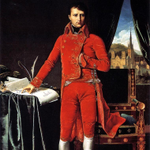
Napoleon is endlessly studied for his intelligence, ambition, and strategic thinking. But I've always found Toussaint Louverture just as fascinating, particularly when examining the psychology behind his leadership.
Born into slavery, Toussaint rose to become one of the most influential figures of the Haitian Revolution. Beyond his military success, what interests me is his understanding of human behavior, power, and perception.
French General Pamphile de Lacroix described Toussaint's soldiers as regarding him as an “extraordinary being.” Another French officer, Colonel Vincent, called him “the most active and indefatigable man” imaginable.
Beyond military intelligence, he demonstrated an ability to inspire loyalty, maintain authority, and cultivate an extraordinary reputation. Yet his character was deeply complex; He fought to preserve freedom from slavery, yet imposed strict labour conditions and concentrated power in his own hands, his pursuit of freedom was accompanied by a strong desire for order and control.
There's an interesting psychological contradiction here: how does someone who understands oppression so intimately come to believe that maintaining freedom requires such extensive authority?
What's equally striking to me is Napoleon's later reflection on his decision to confront Toussaint, during his exile on Saint Helena, Napoleon reportedly admitted:
“The design of reducing it by force was a great error.”
He believed he should have governed Saint-Domingue through Toussaint instead, recognizing the strategic value of a leader whose influence he had underestimated.
What I find most revealing about Toussaint is the tension between what he sought to protect and the methods he believed were necessary to protect it; When we become deeply invested in preserving something, how easily can our sense of responsibility develop into a need for control?
We spend so much time studying the minds of figures like Napoleon, I wonder how much we're overlooking by not examining people like Toussaint Louverture with the same curiosity.


3
43
Sometimes growth is about developing enough trust in your own judgment to move through life without needing to control every part of it
You become more intentional with your responsibilities, more confident in your decisions, more comfortable allowing things to unfold naturally..
There's a certain freedom that comes with that kind of growth
1
3
95
I’ve been thinking about how opportunity extends beyond what you can earn from it; sometimes the value is in the environments you’re exposed to, the people you meet, and the perspective you develop along the way.
3
3
130
I spent a good portion of this year trying to optimize my life around having more time.
More systems, more structure, more ways to make the most of every day. Ironically, I was spending so much time managing my life that I was taking time away from actually living it.
What I’ve come to realize is that I don’t necessarily need to know where every action is going to take me. I have a better understanding of who I am, what matters to me, and what I want to pursue. That’s enough to give my days direction without needing to control every hour.
I’m learning there’s a difference between building a life you want to live, and constantly preparing yourself to live it.
1
35
Much of what we call wasted time is a real need expressed through the wrong action.
You need rest, so you end up scrolling.
You need clarity, so you overthink.
You need direction, so you
reorganize your plans.
I’ve learned the problem isn’t always the feeling itself, but the action we’ve associated with it.
2
7
109
I've learnt the outcome offers a brief moment of satisfaction; but there’s greater reward in developing the capacity to keep learning, adapting, and acting.
The greatest part of scaling yourself is in fact, the act of scaling yourself.
4
64
There's a point where constantly taking in information starts to feel less useful than putting your understanding into practice.
You can spend years developing your perspective, but until you give it some form of expression, you don't really know what it can contribute outside of yourself.
2
5
101
Sometimes having the freedom to do whatever you want becomes its own kind of pressure.
You start questioning whether you’re making the best use of your time, even when there’s nothing particularly urgent demanding it.
I think there’s value in being able to enjoy an ordinary afternoon without needing it to become something more.
1
4
86
I think we’ve reached a point where hardship itself is almost treated as a virtue.
People take pride in how much they suffer, sacrifice, and endure, as though difficulty alone makes something worthwhile.
But there’s a difference between pursuing hardship and developing the character to endure it when necessary.
The goal isn’t to suffer more; it’s to become someone who can face difficulty without being consumed by it.