

Official journal of the #Schizophrenia International Research Society (SIRS). Sharing research and breakthroughs with the global schizophrenia community.
Joined March 2017
- Tweets885
- Following438
- Followers3.2K
- Likes1.3K




Despite growing use of mental health apps, this new review by @JohnTorousMD and team finds that apps for schizophrenia remain rare and understudied. App interventions were examined across many criteria, listed below. Find out how well they worked:
sciencedirect.com/science/ar…

Back in 2017, @keshavanms proposed that aberrant salience might explain how artificial neural networks generate hallucinations - and illustrated it with his own art. Note the difference between the top and bottom pictures. A timely read today around LLMs: sciencedirect.com/science/ar…

1
172
Does blended care (with technology) work in schizophrenia? Is it feasible or effective? This new (April '24) review from Amit Baumel and team explores: linkinghub.elsevier.com/retr…

Why and how might yoga differ from other mind-body approaches in schizophrenia? sciencedirect.com/science/ar…
277
Sapienza and colleagues examined the kynurenine pathway in treatment responsive, versus treatment resistant, schizophrenia (TRS). Plasma levels were increased in individuals with TRS: sciencedirect.com/science/ar…
Chen and colleagues examined the prevalence and incidence of physical illnesses after a diagnosis of schizophrenia during a three year follow-up. Compared to the general population, incidence of physical illness was higher within one year of diagnosis: linkinghub.elsevier.com/retr…
Tandon +colleagues review what we currently know about the schizophrenia construct, its causes, pathophysiology, clinical expression and treatment based on an iterative, multi-phase consensus building process involving 50 international experts in the field sciencedirect.com/science/ar…
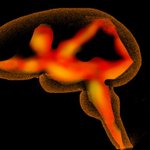
Our editor, @keshavanms, designed this amazing cover art for the brand new February 2024 edition of @SchizRes. Read the latest published papers today: sciencedirect.com/journal/sc…

The role of the gut microbiome in the development of schizophrenia sciencedirect.com/science/ar…
1
2
544
Peripheral and central biomarkers associated with inflammation in antipsychotic naïve first episode psychosis: Pilot studies sciencedirect.com/science/ar…
Schizophrenia and disruption of circadian rhythms: An overview of gene... sciencedirect.com/science/ar…
What do we know and what are the gaps in “Cardiac healthcare disparities and electrocardiography (ECG) differences in schizophrenia at end of life”. Find out today with this new paper, linkinghub.elsevier.com/retr…
245
Hot of the (digital) press: “Adverse perinatal pregnancy outcomes in women with schizophrenia: A systematic review and meta-analysis” sciencedirect.com/science/ar…
New data on this important issue, reports that ethno-racial differences extend across the psychosis continuum. sciencedirect.com/science/ar…
2
260
My favorite journal is:
8%Schizophrenia Research
8%Schizophrenia Research
17%The above two choices
67%All of the above
12 votes • Final results 1
339
Have you seen the latest issue of Schizophrenia Research and the exciting new cover art by our editor, @keshavanms . Learn about this art, and how it relates to the science by reading: sciencedirect.com/journal/sc…

Trends in socioeconomic inequalities in incidence of severe mental illness (SMI) – A population-based linkage study using primary and secondary care routinely collected data between 2000 and 2017: Also new in @schizres sciencedirect.com/science/ar…
Movement initiation and preparation in subjects with schizophrenia - The amplitude of the readiness potential as a biological marker for negative symptom severity. New in @SchizRes : sciencedirect.com/science/ar…
Free to read -> "Detecting at-risk mental states for psychosis (ARMS) using machine learning ensembles and facial features". Results are encouraging for large-screening purposes in low-resource settings: sciencedirect.com/science/ar…

5
854
Potential mechanisms between psychotic-like experiences and suicidal ideation in the context of COVID-19: A longitudinal study. Could this be a new potential targets for future suicide prevention? sciencedirect.com/science/ar…
216