

Sustainable Digital Assets (SDA) is a regulated asset token backed by renewable energy infrastructure. A sustainable, transparent, sound-finance RWA.
Joined September 2025
- Tweets274
- Following162
- Followers472
- Likes695







Alpenglow has finally arrived on Solana: ~150 ms finality and a 20+20 security model (20% malicious + 20% offline stake). Next on the table: Quantumglow, Anza's post-quantum proposal for the same consensus layer.
#Solana #Alpenglow
The IMF gave tokenization its own chapter in the October Global Financial Stability Report: about $65B in public tokenized RWAs as of 31 July 2026. Regulators now treat it as a market to oversee. SDA works under MiCA supervision in Finland.
Source: IMF, GFSR Oct 2026

Securitize announced tokenized versions of 12 US-listed companies on Solana, backed one-for-one by the underlying shares and settling in USDC.
For SDA, building on Solana, it is another sign that regulated real-world finance is moving onto the network.
Source: Securitize

Sustainable Digital Assets retweeted

Sentiment Alpha - last 24hr
1) Overall market / macro
• Black Monday anniversary noise met a shrug in futures — $SPY / Nasdaq futures modestly green after the Nasdaq’s worst week in ~18 months (~−5.5%), so the open is a fade-the-panic test, not a confirmed crash setup.
• Oil near $110 + still-hot CPI/PPI keep Oct 28 FOMC hike odds sticky while the Fed sits in blackout — financial conditions stay tight into earnings week.
• NY Fed’s ~$14.6B T-bill reinvestments are routine MBS runoff recycling, not QE — treat “liquidity tsunami” takes as noise.
• Fiscal overhang: FY26 deficit near $2T with interest ~$1.36T as the #3 outlay — structural, not a Monday catalyst.
→ Catalyst vs Noise: Catalyst = open + Tue–Wed mega-cap earnings; Noise = 1987 anniversary doom posts and “emergency hike” rumors.
2) Crypto major coins
• $BTC still holding ~$81–82k through the equity melt — price resilience vs flows: spot BTC ETFs ~−$228M last week (~$900M+ over two weeks).
• $ETH stuck ~$2.4k with Bitfinex margin longs at multi-year highs — crowded long risk into a quiet range, not a clean breakout signal.
• Institutional rails keep expanding (Schwab BTC/ETH trading; DTCC tokenization service ~Oct 28) while ETF money still leaves — infrastructure ≠ immediate bid.
• Whale 40x $BTC longs into thin weekend liquidity are spectacle; liquidations already ran hard — don’t chase the theater.
→ Catalyst vs Noise: Catalyst = whether ETF outflows slow on the equity bounce; Noise = Fed T-bill “QE” crypto hopium.
3) Memecoins / new altcoins
• $ZEC pulled ~−8.5% toward ~$1,058 after the $1,200+ spike — privacy-alt mean-reversion with real debate on buy-the-dip vs sub-$1k trap; higher signal than pump pads.
• $HYPE slid toward ~$80 with heavy Hyperliquid shorts — deleveraging tape, not a fresh narrative launch.
• $SOL rails matter more than memes this window: Western Union USDPT remittances in Mexico + another HK spot SOL ETF, with Alpenglow (~Oct 21) in focus — utility > casino.
• Solana meme meta is broken: ~74% of buyers lost money over recent weeks
→ Catalyst vs Noise: Catalyst = SOL infra + Alpenglow; Noise = cat-coin mcap flexes and ApeFest FOMO.
4) Large stocks
• AI credit scare is the tape: $CRWV bonds in distress / stock ~−25% on the week — neocloud leverage is the risk-off proxy for the whole AI complex.
• Anthropic growth decelerating (huge base, slower incremental revenue) rattled $ASML / $TSM / AI-adjacent names — narrative shift from “infinite demand” to “financing + ROI.”
• Morgan Stanley cut AMD AI GPU shipment forecasts hard while keeping $NVDA intact — $AMD is the relative loser into earnings; $NVDA still the fortress with Huang’s “turbulence passes” message.
• Mega-cap earnings gauntlet: $NFLX Tue, $TSLA / $META Wed — first real post-melt check on AI spend and ad/consumer resilience.
→ Catalyst vs Noise: Catalyst = TSLA/META prints + CRWV credit spreads; Noise = weekend tokenized chip dumps on crypto venues.
5) Smaller stocks
• $IREN crushed to fresh 52w lows (~−25% week) on AI data-center financing fear despite MSFT/NVDA contract narrative — high-beta AI infra = CRWV contagion trade.
• Memory / chip complex ($MU, SK Hynix, SNDK proxies) stayed in the longest losing streak since ’08; weekend crypto-listed chip futures flushed longs — expect more gap risk at the open.
• U.S. bank stocks: sixth straight down week (longest since 2008) with $BAC / $GS / COF deep in drawdowns — rates + AI disruption narrative still crushing the sector vs $SPX.
• Rate-sensitive leftovers ($SOFI etc.) remain hostage to the higher-for-longer tape until FOMC clarity — bounce attempts need a real yields fade, not just futures greens.
→ Catalyst vs Noise: Catalyst = bank/AI-infra follow-through on Monday open; Noise = “buy every AI dip” without credit check.
Why can electricity cost less than zero? ⚡🦦
Germany logged 573 negative-price hours in 2025. In 2023, Europe's day-ahead price hit its −€500/MWh floor.
Sisu explains why, and why batteries are the fix.
youtu.be/Ccge2EeVTrQ
#SDAToken #EnergyStorage
Sustainable Digital Assets retweeted

Crypto regulation in Europe is becoming increasingly important as digital asset markets mature.
Clear compliance standards can help strengthen transparency and establish a more sustainable foundation for the industry.
The latest MiCA announcement from BingX EU highlights the growing focus on regulatory developments.
Following these changes offers useful insight into how crypto platforms are adapting to Europe's evolving regulatory landscape.

Sustainable Digital Assets retweeted

🌍 OCTOBER 13
🍊 FOLLOW THE CAPITAL
🕯️NOT THE GREEN CANDLES
"😢No crying in the casino🎰"
🚨 THE DETOUR IS BECOMING THE ROAD
- 🛢 Hormuz is still broken
- 🏗️ Saudi Arabia is starting to build a world that doesn't need to depend on it
- 📜 Bonds are finally expensive enough to pull capital back
- 🤖 AI spending continues - but investors are starting to question who actually earns the return
- 🇺🇸🇪🇺 And the Western split over Ukraine is becoming a capital-allocation split
💰 LIQUIDITY IS STILL SELECTIVE. EXPENSIVE. PARKED
━━━━━━━━━━━━━━━━━━
🙈PROJECT SUPPORT
🟠BTC (Bitcoin)
bc1qkd4awzu0xlqus6x7zqzsh45hwntmkfq9hz5ut4
⬛️ETH (Ethereum)
0x644289bE3c5C21322D21669b7607a3422aACF560
💵 USDT- TRC (TRX)
TL7ssFrRV77xtqgnVbusD8CUvT3RL1vzie
⚡ LTC (Litecoin)
ltc1q5p93w4w79wwkyt4vdmc6znp9ql967snzr2jxgw
🟣 SOL (Solana)
FWjLPLPKr4ZFYBJ28Vnkg3d4YmgvTuA4MDVP1yDhErmK
🤝 Support for something you already use
━━━━━━━━━━━━━━━━━━
1) 🛢️ THE WORLD IS STOPPING WAITING FOR HORMUZ TO GET FIXED
🚨 This is today's biggest development
🇸🇦 Saudi Arabia wants to raise its oil pipeline export capacity toward:
📊 10 MILLION BPD over the next few years
💡 But the really important sentence wasn't the number
🔍 It was this:
THE KINGDOM WANTS INTERNATIONAL PARTICIPATION IN OWNERSHIP, OPERATION AND FINANCING
🧠 Think about what that means
⏳ For months the world has been paying for:
- 🚢 expensive tankers
- 🛡️ war insurance
- 📦 emergency inventories
- ⚓ rerouting
- 🎖️ military protection
❌ Those were temporary responses
📈 Now:
THE TEMPORARY DETOUR IS BECOMING PERMANENT INFRASTRUCTURE
🔄 The chain is:
🚫 Hormuz risk
↓
🚢 freight + insurance explode
↓
📦 emergency reserves get drained
↓
💸 temporary workarounds become too expensive
↓
🏗️ build pipelines
↓
⚓ expand terminals
↓
📦 build storage
↓
⚙️ build pumping capacity
↓
💵 bring in international capital
⚖️ That's a completely different capital cycle
━━━━━━━━━━━━━━━━━━
1.1) 🧠 AND ARAMCO JUST EXPLAINED WHY
📉 Commercial onshore oil inventories are now:
🛢️ BELOW 6 BILLION BARRELS
🔍 And according to Aramco:
MOST OF THAT ISN'T REALLY AVAILABLE
🗣️ Nasser says even after Hormuz fully reopens... rebuilding inventories while meeting demand could take:
📅 UP TO TWO YEARS
🛑 So stop thinking:
👐Hormuz opens -> energy crisis over
🙅♂️ NO
🔄 The chain is:
🔓 Hormuz opens
↓
🚢 flows improve
↓
📉 but inventories are depleted
↓
🏭 refineries need rebuilding
↓
📦 storage needs replenishing
↓
🛡️ security needs rebuilding
↓
💵 capital keeps getting spent
🧱 THE END OF THE WAR WOULD NOT BE THE END OF THE ENERGY CAPEX CYCLE
━━━━━━━━━━━━━━━━━━
2) 💥 AND HERE'S WHY WATCHING BRENT ALONE IS NOW FUCKING USELESS
🛢️ Brent futures today: ~$105
📈 Meanwhile prompt physical barrels have recently traded: ~$150
❓ Why?
📊 Because the futures screen prices oil
🧭 The physical market prices:
🛢️ oil
🚢 transport
🛡️ insurance
⏱️ availability
💳 financing
🏭 refining
⚠️ war risk
🗣️ OPEC and non-OPEC ministers now say shipping and insurance costs can exceed:
📊 ONE-THIRD OF THE VALUE OF THE COMMODITY
🤯 That's insane
💡 And it tells us exactly where the scarcity is
🧱 THE BARREL IS NOT ALWAYS THE SCARCE ASSET ANYMORE
🎯 ACCESS TO THE BARREL IS
🔄 That means the long-term money increasingly goes toward:
🏗️ pipelines
⚓ terminals
📦 storage
🚢 logistics
🛡️ security
⚡ infrastructure
❌ Not simply: "oil up -> buy oil company"
━━━━━━━━━━━━━━━━━━
3) 📜 AND EXPENSIVE CAPITAL IS REFUSING TO GO AWAY
🇩🇪 Germany:
🔥 inflation -> 3.3%
🇦🇺 Australia's central bank:
⚠️ upside inflation risks are materialising
🇺🇸 Fed's Hammack:
🏛️ RATES NEED TO BE HIGHER
💡 And the interesting part?
❌ The inflation pressure isn't only oil anymore
🗣️ The RBA explicitly noted pressure from:
🤖 EXCESS DEMAND FOR AI-RELATED PRODUCTS
⚖️ So now the sectors receiving forced capital...
are themselves helping keep capital expensive
🛢️ Energy needs capital
🤖 AI needs capital
🛡️ Defense needs capital
🏛️ Governments need capital
🔄 And that spending keeps:
🔥 capacity pressure high
↓
📈 inflation sticky
↓
🏦 central banks cautious
↓
📜 yields high
↓
💵 safe assets attractive
🎯 It's a loop
━━━━━━━━━━━━━━━━━━
💰 AND TODAY MONEY ACTUALLY SHOWED US WHAT IT PREFERS
🌏 Asian equities:
📉 lowest in more than two months
🇰🇷 Samsung:
📉 ~8%
🇰🇷 SK Hynix:
📉 ~10%
🇯🇵 SoftBank:
📉 ~8%
🧭 Meanwhile:
📜 Treasuries ↑
📉 10Y yield -> around 5.19%
💵 USD -> still near an 18-month high
🌕 Gold -> around $4,200
💡 This is exactly our regime
❌ Not: EVERYTHING RISK-OFF
🙅♂️ But definitely not: THROW MONEY INTO EVERY STORY
⚖️ It's:
💧 SELECTIVE LIQUIDITY
💸 EXPENSIVE CAPITAL
💵 PAID PARKING
🏛️ When government paper pays ~5%...
🛑 You don't NEED to chase every fucking narrative
━━━━━━━━━━━━━━━━━━
4) 🤖 AI DIDN'T GET LESS IMPORTANT TODAY
"🎰No crying in the casino"
🤖 AI CAPITAL GOT MORE DISCRIMINATING
🏛️ The IMF just told us two seemingly contradictory things
1️⃣ FIRST:
AI investment is one reason global growth is holding up
📊 Global growth forecast: 3.1%
📈 AI trade and infrastructure are supporting:
US growth 🇺🇸, Korea 🇰🇷, Malaysia 🇲🇾, India 🇮🇳, and Asian exporters 🌏
⚠️ BUT THEN THE IMF SAYS:
🤖AN AI ASSET CORRECTION IS NOW ONE OF THE MAIN GLOBAL FINANCIAL-STABILITY RISKS
📊 Because we now have:
💰 huge valuations
💳 huge borrowing
🔄 circular financing
🏗️ enormous capex
🎯 concentrated exposure
❌ without certainty that profits will justify all of it
📈 And today:
💸Tencent wants another ~$4.5B from bond markets
🏗️ AI capex keeps going
💻 Microsoft keeps deploying compute
🔌 Nvidia/Cisco keep building infrastructure
📉 But simultaneously... AI shares got smashed
🎲 Even Broadcom's CEO compared parts of AI investing to: A CASINO 🎰
💡 That gives us today's AI rule:
🧱 THE CAPEX IS FORCED
❌ THE EQUITY MULTIPLE IS NOT
🏢 Microsoft may HAVE to build
🏢 Tencent may HAVE to build
🏢 Google may HAVE to build
🔄 Because competitors are building
🛑 But the investor does NOT have to pay 50x, 80x, 100x for every company with “AI” in the presentation
⚖️ That's the new distinction
🎯 Better formulation:
🤖THE AI ITSELF MAY NOT BE THE THING MOST OUT OF CONTROL
💸THE CAPITAL RACE AROUND AI MAY BE
💰 Everyone has already committed billions
🙅♂️ No one wants to be the company
- or country
- that stopped spending one year too early
🔍 So:
🤖 competitor spends
↓
😨 you spend
↓
🏛️ government subsidizes
↓
💳 another company borrows
↓
🏗️ capacity expands
↓
📈 expected returns have to get bigger
🛑 until eventually:
SOMEBODY HAS TO SHOW THE FUCKING PROFIT
━━━━━━━━━━━━━━━━━━
5) 🇺🇸🇪🇺 AND THE WESTERN POLICY SPLIT IS HARDENING
💡 Yesterday this looked like political disagreement
🧱 Today it's becoming more concrete
🏛️ Washington is reportedly using the threat of:
🛰️ intelligence access
🛡️ weapons procurement
↓
🇺🇦 to push Ukraine away from attacks on Russian energy
⚠️ But important: THREAT ≠ CUTOFF
❌ There's still no solid evidence that intelligence or weapons flows have actually been stopped
🧭 Meanwhile:
🇩🇪 Germany says sanctions should be tougher
🇪🇺 Kallas says now is NOT the time to reduce pressure
🇪🇺 Europe is already working on more sanctions
⚖️ So the objectives are increasingly diverging:
🇺🇸 WHITE HOUSE
⛽ Lower fuel prices
🛑 Reduce escalation
🤝 Get some kind of agreement
🇪🇺 EUROPE
🧱 Maintain pressure on Russia
💵 Continue funding Ukraine
🛡️ Increase defense capacity
🎯 And here's where FOLLOW THE CAPITAL comes in
🔄 If American support becomes less reliable:
🇺🇸 US burden ↓
↓
🇪🇺 European burden ↑
↓
🛡️ European defense spending ↑
↓
📜 fiscal financing needs ↑
↓
🏗️ military infrastructure ↑
↓
💶 pressure on weak sovereign balance sheets ↑
⚖️ So the disagreement itself creates:
ANOTHER FORCED-CAPITAL CHANNEL
Towards European:
🚀 missiles
📡 radar
🛰️ satellites
🤖 drones
🛡️ air defense
🏗️ military infrastructure
📉 But simultaneously it makes:
BROAD EUROPEAN SOVEREIGN RISK LESS ATTRACTIVE
━━━━━━━━━━━━━━━━━━
6) ✴️ CRYPTO GOT EVEN MORE SELECTIVE TODAY
💡 Here's where we need to be careful
📈 Glassnode says: NEW ON-CHAIN CAPITAL IS STILL ENTERING BTC
❌ So we should NOT say: "No fresh money exists"
🧱 But: ETF selling + derivatives selling were still weighing on price
⚖️ This gives us the more accurate picture:
📊 CAPITAL IS ENTERING
- JUST NOT BROADLY ENOUGH TO CREATE AN EASY BULL RUN
🔍 Look at the recurring buyers
🪙 Strategy bought: 250 BTC
📈 Sounds bullish
🛑 Until you remember it already owns: 848,250 BTC
📉 $21.5M of new buying against a
~$70B BTC treasury?
❌ That's not a massive marginal buyer
💧 It's a drip
━━━━━━━━━━━━━━━━━━
6.1) ⬛️ ETHEREUM
🐋 BitMine bought:
💎 12,532 ETH
📊 and now owns about:
⬛️ 6.03M ETH
🎯 But its stated target is: 5% OF ETH SUPPLY
📈 And it's getting very close
💡 So the interesting question isn't:
"Tom Lee bullish ETH 🚀"
⚖️ It's:
WHAT HAPPENS WHEN ONE OF ETH'S BIG RECURRING BUYERS REACHES ITS OWN STOPPING POINT?
🎯 That's much more important
━━━━━━━━━━━━━━━━━━
6.2) 🏦 AND TOKENIZATION GAVE US ANOTHER REALITY CHECK
🏛️ Morgan Stanley still wants tokenized equities
🤝 Great
📅 But it moved the target from H2 2026 to: Q1 2027
🗣️ They basically said:
THERE AREN'T ENOUGH PRODUCTS YET
📉 And therefore:
CLIENT DEMAND HASN'T REALLY FORMED YET
💡 That's incredibly useful
🧱 Because again: INFRASTRUCTURE ≠ DEMAND
🏢 Wall Street is building the railway
❌ That doesn't mean the train is full yet
🧭 At the same time:
🇰🇷 a South Korean bank is using BTC as corporate loan collateral
🚫 South Korea blocked 27 unregistered foreign crypto platforms
🔄 So regulated integration ↑
↓
📉 while unregulated access ↓
❌ That's not crypto dying
⚖️ That's crypto being:
FUNNELED INTO REGULATED RAILS
━━━━━━━━━━━━━━━━━━
🍊 THE BIG PICTURE - OCTOBER 13
💡 Yesterday our base was:
🅿️LIQUIDITY IS SELECTIVE, EXPENSIVE AND PARKED
🧱 Today did NOT break that regime
✅IT CONFIRMED IT
⚠️ But something new happened
⏳ Earlier the world was paying enormous amounts to:
WORK AROUND THE BOTTLENECK
🇸🇦 Today Saudi Arabia effectively said:
WE MAY HAVE TO BUILD A NEW SYSTEM AROUND IT
🔄 That's the evolution:
🚢 rerouting
↓
💸 huge freight cost
↓
📉 inventory depletion
↓
🏛️ emergency intervention
↓
🏗️ permanent infrastructure
↓
💵 long-term capital commitment
🧭 At the same time:
🤖 AI keeps consuming capital... but AI stocks no longer get a free pass
✴️ crypto keeps getting infrastructure... but every token doesn't get liquidity
🇪🇺 Europe keeps spending... but investors don't have to love European sovereign risk
📜 Treasuries still pay ~5%... so capital has somewhere profitable to sit while it waits
⚖️ That's the regime:
💵 PARK WHERE YOU GET PAID
🏗️ DEPLOY WHERE THE SYSTEM HAS NO CHOICE
🛑 IGNORE EVERYTHING ELSE UNTIL IT EARNS THE NEXT DOLLAR
🎯 So right now:
💵 CASH / USD -> parking
📜 US GOVERNMENT BONDS -> increasingly attractive parking + income
🌕 GOLD -> insurance
🛢️ ENERGY INFRASTRUCTURE -> forced capital
🛡️ DEFENSE -> forced capital
🤖 AI INFRASTRUCTURE -> forced spending, but selective equity exposure
✴️ CRYPTO -> real pockets of capital, not a broad liquidity flood
🇪🇺 EUROPE -> defense beneficiaries interesting, broad fiscal burden less attractive
💡 And today's strongest line is:
🧱 THE WORLD IS NO LONGER JUST PAYING FOR THE DETOUR
🏗️ IT IS STARTING TO FINANCE THE DETOUR AS PERMANENT INFRASTRUCTURE
💸 That's where the next layer of money goes
🙈 SURVIVE FIRST
🙊 PROFIT LATER
💰 FOLLOW THE CAPITAL
Sustainable Digital Assets retweeted

𝐔𝐒𝐃𝐃 𝐀𝐭 𝐂𝐎𝐍𝐍𝐄𝐂𝐓 𝐒𝐢𝐧𝐠𝐚𝐩𝐨𝐫𝐞 𝟐𝟎𝟐𝟔: 𝐁𝐮𝐢𝐥𝐝𝐢𝐧𝐠 𝐓𝐡𝐞 𝐍𝐞𝐱𝐭 𝐄𝐫𝐚 𝐎𝐟 𝐒𝐭𝐚𝐛𝐥𝐞𝐜𝐨𝐢𝐧 𝐏𝐚𝐲𝐦𝐞𝐧𝐭𝐬
Stablecoins are no longer just a topic for crypto traders. They are becoming an important part of the conversation about how digital value can move across borders, connect financial services, and support a more accessible digital economy.
On October 9, 2026, @USDDecentralize participated as a sponsor at @Cointelegraph's CONNECT Singapore event, joining discussions about the future of stablecoin payments.
The event highlights an important question for the industry: How can stablecoins move from technological potential to practical, everyday utility?
🔹 𝐅𝐫𝐨𝐦 𝐃𝐢𝐠𝐢𝐭𝐚𝐥 𝐀𝐬𝐬𝐞𝐭𝐬 𝐓𝐨 𝐏𝐚𝐲𝐦𝐞𝐧𝐭 𝐈𝐧𝐟𝐫𝐚𝐬𝐭𝐫𝐮𝐜𝐭𝐮𝐫𝐞
Traditional payment systems can involve multiple intermediaries, operating constraints, and settlement processes. Blockchain networks introduce another approach by allowing digital assets to move through programmable infrastructure.
Stablecoins are central to this development because they combine blockchain-based transfers with assets designed to maintain a relatively stable value against a reference asset.
However, the real opportunity is not simply moving tokens. It is creating payment experiences that are accessible, efficient, dependable, and suitable for real-world needs.
🔹 𝐖𝐡𝐲 𝐔𝐬𝐞𝐫 𝐄𝐱𝐩𝐞𝐫𝐢𝐞𝐧𝐜𝐞 𝐌𝐚𝐭𝐭𝐞𝐫𝐬
For stablecoins to reach broader adoption, users need more than a digital wallet and a transfer button.
They need clear transaction costs, reliable infrastructure, straightforward interfaces, and confidence that the system works as intended.
Businesses also need to consider integration, operational requirements, regulatory obligations, and the risks associated with digital assets.
These practical details will help determine whether stablecoins become useful payment tools beyond the crypto-native community.
🔹 𝐔𝐒𝐃𝐃 𝐀𝐧𝐝 𝐓𝐡𝐞 𝐄𝐯𝐨𝐥𝐯𝐢𝐧𝐠 𝐒𝐭𝐚𝐛𝐥𝐞𝐜𝐨𝐢𝐧 𝐋𝐚𝐧𝐝𝐬𝐜𝐚𝐩𝐞
USDD's participation at CONNECT Singapore places the project within an ongoing industry conversation about the future of digital payments.
For the ecosystem, the opportunity extends beyond visibility. It involves demonstrating how stablecoin infrastructure can support useful financial applications while maintaining transparency, operational reliability, and responsible risk management.
As competition increases, differentiation will depend on more than marketing. Sustainable adoption requires products that meet user needs and provide reasons for people and businesses to return.
🔹 𝐓𝐡𝐞 𝐁𝐢𝐠𝐠𝐞𝐫 𝐏𝐢𝐜𝐭𝐮𝐫𝐞
Stablecoins could help connect blockchain technology with everyday financial activity, but their long-term impact will depend on execution.
Can they simplify transfers? Can they improve accessibility? Can they deliver dependable services while addressing security, transparency, and compliance?
These are the questions that will shape the next stage of adoption.
CONNECT Singapore 2026 was an opportunity to contribute to that conversation. The next challenge is turning promising ideas into practical solutions that people can trust and use.
The future of stablecoins will not be defined by how often we discuss them, but by the real problems they solve.
@USDDecentralize @justinsuntron
#USDD #Stablecoins #TRON #TRONEcoStar


Britain’s clean-energy bottleneck is the grid.
The UK is creating Great British Grid to invest in network infrastructure and accelerate connections.
Clean power is waiting to connect.
gov.uk/government/news/great…

Sustainable Digital Assets retweeted

🌐 TRON AT TOKEN2049: REAL-WORLD FINANCE, AI AGENTS & THE NEXT ERA OF BLOCKCHAIN INFRASTRUCTURE
At TOKEN2049 Singapore, Justin Sun discussed a broader vision for TRON that extends beyond conventional crypto trading: real-world financial utility, infrastructure for AI-driven commerce, and new approaches to scientific discovery through the Justin Sun Prize.
These themes connect to a fundamental shift in how blockchain technology may be used. Instead of serving only people who actively interact with crypto applications, blockchain networks could increasingly operate behind payments, automated services, and digital systems that execute tasks on behalf of users.
But turning that vision into reality requires more than technology and ambitious predictions. It requires reliable settlement, useful applications, secure automation, verifiable results, and measurable adoption.
Here is a deeper look at what these developments could mean. 👇
1️⃣ 🌍 From Crypto Trading to Real-World Financial Infrastructure
For years, much of the crypto conversation revolved around token prices, trading volume, speculation, and market cycles. These activities remain part of the industry, but they do not represent the full potential of blockchain infrastructure.
A more fundamental opportunity is to make digital networks useful for transferring and settling value in everyday economic activity.
Businesses need to pay suppliers. Freelancers need to receive international payments. Digital platforms need to compensate service providers. Software applications need to purchase computing resources. All of these activities require financial infrastructure that is accessible, reliable, and economically viable.
This is where TRON's strategic focus on stablecoin transfers becomes important.
A blockchain network can provide a programmable settlement layer on which digital assets move between users and applications. When paired with appropriate wallets, exchanges, payment providers, and compliance systems, that infrastructure can support services that extend beyond crypto-native communities.
The important distinction is that a network's technical capability is not the same as widespread real-world adoption.
The long-term question is whether businesses and individuals repeatedly choose the infrastructure because it solves genuine problems better or more efficiently than the alternatives.
2️⃣ 💵 Stablecoins Could Become the Financial Bridge Between Traditional and Digital Markets
Stablecoins are especially relevant because they combine blockchain-based transfers with assets designed to track the value of traditional currencies, most commonly the US dollar.
For people operating across borders, this can provide another way to hold and transfer dollar-denominated value without relying exclusively on conventional banking rails at every stage.
For businesses, stablecoins can potentially support supplier payments, treasury movements, international settlements, and transactions between digital platforms.
TRON's established USDT ecosystem gives the network a substantial foundation from which to pursue these use cases.
However, a stablecoin transfer is not automatically equivalent to a completed real-world payment. Users may still need reliable conversion between fiat and digital assets, access to local payment methods, sufficient liquidity, and a compliant route for withdrawing funds.
Availability also differs by jurisdiction, and users must consider issuer, custody, exchange, and regulatory risks.
The real opportunity is therefore not simply to increase stablecoin supply. It is to connect digital-dollar liquidity with practical financial services that people can access and trust.
3️⃣ 🤖 AI Agents Could Become Economic Participants, Not Just Digital Assistants
AI agents are evolving beyond systems that answer questions or generate content. More advanced agents can plan workflows, call software tools, coordinate services, and carry out tasks within a defined set of permissions.
Imagine an AI agent that manages a small business workflow. It could compare cloud-computing providers, purchase additional computing capacity, pay for a data service, and coordinate delivery of a digital product.
Or imagine an agent assisting a freelancer: organizing work, purchasing software access, and initiating a payment when a task reaches a specified milestone.
These examples illustrate a possible future rather than proof that autonomous commerce has already reached mass adoption.
Nevertheless, they expose a genuine infrastructure question: if software agents increasingly initiate economic activity, how will they pay for services and demonstrate that a payment has settled?
Traditional payment systems were largely designed around people, businesses, accounts, and established intermediaries. AI-driven workflows may require more programmable ways to authorize, execute, and verify transactions.
Blockchain networks could provide one part of that infrastructure.
4️⃣ ⚙️ Why AI Agents Need Programmable Payment Rails
An AI agent does not need blockchain merely because it uses artificial intelligence. It needs a suitable payment mechanism when the task requires transferring value between parties or services.
A useful payment rail must support several requirements:
▪️ Programmability: Payments can be initiated according to defined conditions and permissions.
▪️ Settlement: The system can provide evidence that a transaction has been submitted and confirmed.
▪️ Availability: The infrastructure must be accessible when the application needs to transact.
▪️ Cost efficiency: Transaction costs must be reasonable relative to the value being transferred.
▪️ Interoperability: Applications need ways to interact with wallets, services, and other financial systems.
▪️ Risk controls: Automated payments must operate within limits that prevent unintended or unauthorized spending.
TRON's stablecoin infrastructure could be relevant to some of these requirements, especially where dollar-denominated settlement is useful.
But blockchain settlement is only one layer. AI applications will also need interfaces, authorization systems, identity mechanisms, reliable service providers, and clear rules for handling failures.
The winning infrastructure will not necessarily be the network with the most ambitious AI narrative. It will be the infrastructure developers can integrate safely and users can rely on consistently.
5️⃣ 🔐 Autonomous Payments Require Strong Security and Human Control
Giving an AI agent the ability to move money introduces risks that do not disappear simply because the transactions are recorded on a blockchain.
An agent might misunderstand an instruction, select a malicious service, be manipulated by hostile input, or repeatedly execute a faulty workflow. If it has unrestricted access to a wallet, a single mistake could have significant financial consequences.
That makes security architecture central to AI-driven commerce.
A responsible agent-payment system should incorporate:
▪️ Spending limits per transaction and over defined periods.
▪️ Explicit permissions for which assets, contracts, and recipients an agent may use.
▪️ Human approval for high-value or unusual transactions.
▪️ Monitoring and alerts for suspicious activity.
▪️ Secure key management and a way to revoke compromised permissions.
▪️ Auditable records connecting the original instruction to the resulting transaction.
Smart contracts and blockchain records can help enforce or document certain rules, but they cannot independently guarantee that the original instruction was safe or that the external service delivered what it promised.
The principle is straightforward: automation should increase efficiency without eliminating accountability.
For TRON to participate meaningfully in an AI-driven financial system, developer tooling and security practices will be as important as transaction throughput.
6️⃣ 🌐 TRON's Opportunity: Become a Settlement Layer for Digital Commerce
TRON's potential role is best understood as part of a broader stack rather than as a complete AI-commerce solution on its own.
At the application layer, AI agents interpret requests and coordinate tasks. At the wallet layer, software manages permissions and access to funds. At the payment layer, transactions are authorized and submitted. At the settlement layer, the network records and confirms transfers.
TRON could potentially support the settlement portion of this architecture, including payments using stablecoins where supported by the application and relevant service providers.
That creates a possible route for connecting existing stablecoin activity with emerging automated services.
Yet several conditions must be met before this opportunity becomes material:
▪️ Developers need straightforward tools for building and testing agent payments.
▪️ Applications need access to liquidity and dependable payment endpoints.
▪️ Users need understandable authorization and recovery mechanisms.
▪️ Businesses need predictable costs and operational reliability.
▪️ Real transactions must occur repeatedly, rather than only in demonstrations.
The key metric is not how many AI agents claim to support crypto. It is how many real applications use blockchain settlement to complete useful economic tasks.
7️⃣ 📈 Adoption Must Be Measured Through Usage, Not Just Headlines
Network accounts, transaction counts, stablecoin supply, and total transfer volume can all help describe blockchain activity. However, each metric answers a different question.
An increase in accounts may indicate wider participation, but accounts are not necessarily unique people. Transaction growth can reflect genuine payments, automated activity, or other types of on-chain movement. Stablecoin supply measures available tokens, not necessarily how frequently those tokens are used in commerce.
For AI-agent payments, more specific indicators would be valuable:
▪️ The number of applications processing real agent-initiated payments.
▪️ The volume and frequency of completed payments.
▪️ The number of recurring users and businesses.
▪️ The proportion of transactions that successfully settle.
▪️ Average end-to-end cost and completion time.
▪️ The rate of failed, disputed, or unauthorized transactions.
▪️ The share of activity tied to actual services rather than testing or speculation.
These indicators would help distinguish ecosystem interest from sustainable economic usage.
If TRON becomes part of the financial infrastructure behind AI applications, its strongest evidence will come from repeated, verifiable payment activity and applications that continue operating because the system provides real value.
8️⃣ 🧠 The Justin Sun Prize Connects AI With Verifiable Scientific Discovery
The Justin Sun Prize introduces a different but related dimension of the AI conversation: using AI-assisted methods to advance mathematical research while emphasizing machine-checkable proofs.
AI systems can help researchers explore conjectures, develop candidate arguments, identify patterns, and investigate possible proof strategies. These capabilities may make it easier to explore ideas that would otherwise require substantial manual effort.
However, generating a convincing mathematical explanation is not the same as establishing that a theorem is correct.
A proof can contain a hidden assumption, a missing logical step, or an error that is difficult to detect through ordinary reading. As AI systems generate more complex mathematical arguments, rigorous verification becomes increasingly important.
The Justin Sun Prize is structured around a curated problem list and the recognition of qualifying research achievements, including work formalized for machine verification.
Its broader ambition is to create an incentive structure in which mathematical progress can be submitted, checked, and evaluated against explicit criteria.
This shifts attention from AI's ability to produce plausible answers toward its ability to contribute to results that withstand rigorous verification.
9️⃣ 🔬 Formal Verification Can Help Turn AI-Generated Ideas Into Checkable Results
Formal verification expresses mathematical reasoning in a structured language governed by explicit logical rules. Proof-assistant software can then check whether a formalized proof follows from its stated assumptions.
Systems such as Lean are used in this field to encode definitions, theorems, and proofs in a form that a computer can verify.
This creates a useful distinction between three stages:
▪️ Discovery: A human or AI system proposes a conjecture or possible proof.
▪️ Formalization: The argument is translated into a structured proof representation.
▪️ Verification: A proof-checking system evaluates whether the formal argument follows under the specified rules.
AI can contribute to discovery and formalization, but the final result must still meet the applicable verification and review requirements.
Formal verification is not a magical guarantee that every surrounding assumption, software component, or interpretation is flawless. It provides a more rigorous and reproducible way to check the formal claim itself.
The wider significance is that AI-assisted research can become more transparent when its outputs are accompanied by artifacts that independent researchers can inspect and verify.
🔟 🏆 Incentives Could Open Scientific Research to More Contributors
Traditional scientific recognition often depends on institutional affiliation, established academic networks, publication processes, and access to research resources.
A structured prize based on clearly defined problems and verifiable contributions could create another route for participation.
Independent researchers, students, professional mathematicians, and human-AI teams may all be able to contribute when the eligibility criteria permit it and the necessary tools are accessible.
The potential benefit is not simply distributing awards. It is creating an incentive for contributors to work on difficult problems and produce results that others can check.
However, a prize mechanism must be designed carefully.
Clear rules are needed for problem selection, eligibility, partial solutions, independent review, conflicts of interest, appeals, and award allocation. The distinction between a novel mathematical discovery and the formalization of an already known result must also be handled transparently.
The credibility of the Justin Sun Prize will depend on how consistently its procedures are applied and how well the research community can evaluate the recognized achievements.
A prize can encourage innovation, but the quality and significance of the work must ultimately speak for themselves.
1️⃣1️⃣ 🛡️ Quantum-Resilient Infrastructure Is Another Long-Term Challenge
The TOKEN2049 discussion also touched on the need to prepare blockchain systems for advances in quantum computing.
Many current digital-signature systems rely on mathematical problems that are considered difficult for conventional computers. A sufficiently capable quantum computer could threaten some widely used cryptographic systems, although the timing and practical capabilities of such machines remain uncertain.
This makes post-quantum cryptography an important area of long-term security research.
TRON has reported deploying end-to-end post-quantum signature support on its Nile testnet. That is a development worth monitoring, but testnet support should not be confused with a completed migration of the entire production ecosystem or proof that all quantum-related risks have been resolved.
A serious transition would require more than introducing a new signature scheme. It would involve evaluating cryptographic choices, implementation quality, key management, performance, wallet compatibility, developer tooling, and migration procedures.
The Justin Sun Prize's emphasis on mathematics and formal verification intersects conceptually with this challenge: secure digital infrastructure depends on rigorous reasoning, careful implementation, and independent evaluation.
The common lesson is that long-term resilience must be built and tested before a threat becomes urgent.
1️⃣2️⃣ 🚀 The Bigger Vision: From Blockchain Transactions to Verifiable Digital Economies
Real-world stablecoin payments, AI-agent commerce, scientific discovery, and quantum resilience are distinct initiatives. They should not be treated as if progress in one automatically proves progress in the others.
Yet they share a broader theme: digital infrastructure must become more useful, more programmable, and more dependable as more economic and intellectual activity moves online.
Stablecoins can help move value. Blockchain networks can record and settle transactions. AI agents can coordinate tasks. Formal verification can help establish whether certain mathematical claims are correct. Post-quantum research can help prepare cryptographic systems for future threats.
The opportunity for TRON is to develop practical infrastructure that connects these emerging needs while maintaining security, accessibility, and reliability.
That requires a disciplined focus on execution:
▪️ Real-world payment adoption rather than transaction headlines alone.
▪️ AI integrations that demonstrate repeatable economic utility.
▪️ Secure authorization for autonomous financial activity.
▪️ Transparent scientific evaluation and independently checkable results.
▪️ Measurable progress toward stronger cryptographic resilience.
It is also important to separate ecosystem progress from token-market outcomes. Even if a network gains useful applications, that does not automatically establish how much value accrues to TRX or guarantee future price appreciation. Token demand, network economics, competition, regulation, and market conditions remain separate factors to evaluate.
The Bottom Line 🌍
The message emerging from TOKEN2049 is broader than a single product announcement.
Blockchain's next stage could involve serving as financial infrastructure for people, businesses, and increasingly autonomous software systems. At the same time, AI's growing capabilities make verification, security, and accountability more important—not less.
TRON has an opportunity to participate in that future through stablecoin settlement and developer infrastructure. The Justin Sun Prize highlights a complementary challenge: turning AI-assisted exploration into work that can be rigorously checked.
The long-term winners will not be defined by vision alone. They will be defined by reliable execution, measurable adoption, verifiable results, and real utility.
⚠️ This post is for informational and educational purposes only and does not constitute financial or investment advice. Technology adoption, regulatory developments, and token prices remain uncertain.
@justinsuntron
@trondao
#TRONEcoStar


At #TOKEN2049, @justinsuntron discussed TRON’s focus on real-world use, infrastructure for AI agents and the vision behind the @JustinSunPrize.
Read the main-stage conversation recap. 👇

Stellar led tokenized-asset growth in the last 24 hours: +$36.4M, 37% of the $96.5M added across the ten networks RWA Foundation tracks. Stellar's total is now $3.47B, monthly transfer volume +45%. One day is a snapshot, not a trend. #RWA #Tokenization

Both move. Or neither does.
Solana Foundation has published open-source DvP infrastructure: the asset and payment settle together, or the trade fails. It supports SPL and Token-2022.
Tokenisation is moving into the settlement layer.
solana.com/delivery-vs-payme…

Sustainable Digital Assets retweeted

👽⚡ KAV is the Alien of Solana - and KAV loves Solana. But the future of digital money is not only about speed, price, or hype. It is also about how efficiently the infrastructure can operate at global scale. 🌍🌱
🔋 Today’s KAV Awareness Signal: The Energy Behind Digital Money
Everyone watches the chart. 📈
But KAV wants you to look underneath the chart too.
What powers the network?
How much energy does it require?
Can it scale without creating unnecessary environmental costs?
⚡️🌱 Digital money is evolving… and energy matters more than ever.
Most people chase profits 💰
Few ask: what powers the system? ⚡️
Networks such as XRP Ledger, Stellar and Solana were designed without the energy-intensive Proof-of-Work mining model used by some earlier blockchains.
That design difference matters.
🔥 Here’s the shift:
Old energy-intensive blockchain models = enormous computational competition ⛏️⚡️
Modern efficient networks = optimized consensus, lower energy requirements and greater scalability ⚙️🌱
For example:
🔹 XRP Ledger
XRPL does not use mining. Validators communicate and reach consensus on transactions instead of competing through Proof-of-Work calculations.
XRPL describes its network as requiring negligible energy compared with mining-based blockchains.
🔗 Official XRPL:
xrpl.org/about
🔹 Stellar - XLM
Stellar uses the Stellar Consensus Protocol, a Proof-of-Agreement system that does not require energy-intensive mining.
The Stellar Development Foundation has also worked with PwC on measuring the network's electricity use and environmental footprint.
🔗 Official Stellar Sustainability:
stellar.org/sustainability
🔹 Solana - SOL
Solana uses Proof-of-Stake together with its high-performance architecture rather than Proof-of-Work mining.
The Solana Foundation has published energy and carbon-footprint reports measuring the network's environmental impact. In its December 2023 report, it said energy consumption per transaction had fallen by 25% compared with its previous measurement period.
🔗 Official Solana Energy Report:
solana.com/news/solana-energ…
💡 Why does this matter?
• The global energy crisis isn’t slowing down ⚠️
• Global electricity demand continues to grow ⚡️
• Governments and businesses are paying increasing attention to environmental impact 🌍
• Large-scale financial infrastructure needs to become more efficient as usage increases ⚙️
• Energy efficiency can influence the long-term economics of operating decentralized networks 🔋
• Sustainability reporting is increasingly becoming part of the regulatory conversation around digital assets 📊
• The future of value must align with renewable energy ☀️🔋
🚀 Smart money sees it early:
It’s not just about speed or fees anymore…
It’s about impact + efficiency + survival
⚖️ The real question:
Will your assets still make sense in a world powered by green energy?
Stellar, for example, has developed sustainability reporting methodologies connected with environmental disclosure requirements under Europe's MiCA framework.
🚀 Smart participants study more than price.
Speed matters.
Fees matter.
Security matters.
Decentralization matters.
But energy efficiency and infrastructure efficiency matter too.
The important lesson is not that one blockchain automatically wins because it consumes less electricity.
The lesson is this:
🧠 When evaluating the future of digital money, study the entire system beneath the token.
Ask:
⚡ How does consensus work?
🌍 How much energy does the network consume?
📈 What happens to that footprint as usage grows?
🖥️ What hardware is required?
🔋 Where does the electricity come from?
♻️ Are environmental claims measured independently and transparently?
⚖️ The real question:
Will today's digital infrastructure still make sense when billions more people and machines interact with blockchain networks?
✨ The future isn't just digital.
It must become scalable, efficient, measurable and sustainable. 🌱⚡️
👽 The KAV Way:
Don't only follow the money.
Study the machine behind the money.
Knowledge first. Awareness always. 💜⚡️
#GreenCrypto #SustainableBlockchain #CleanEnergyFuture #CryptoInnovation #EcoFriendlyTech #Solana #XRP #XLM
🤖 Made with AI


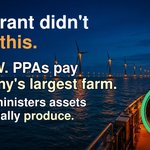
The grant didn't build this.
He Dreiht: 960 MW, 64 turbines, no state funding. EnBW says long-term power contracts finance Germany's largest offshore wind farm. Commissioning is underway.
SDA builds on-chain administration for renewable assets.

From energy customers to energy owners.
Britain opened £30m in community power funding—the first step toward up to £1bn and 1,000+ local projects.
Ownership needs infrastructure. SDA is the on-chain administration layer for renewable energy.

On 15 September the US Senate declined to advance the CLARITY Act. It needed 60 votes and fell short.
The US still has no comprehensive market-structure law for digital assets.
SDA is supervised under MiCA, with FIN-FSA as competent authority.

$9 million of uranium sits in a warehouse.
A US bank now holds the drums. Fuel in storage, not a generating asset.
SDA: on-chain administration for renewable energy. Built on Solana.
#SDAFintech

Sustainable Digital Assets retweeted

🌱 Energy is becoming one of the world’s most valuable assets.
GEC is building a bridge between renewable energy, real-world assets & blockchain.
The goal isn’t just another token.
It’s an ecosystem built around real-world impact.
⚡🌍
#GEC #Greencoin #RWA #RenewableEnergy #Blockchain